

GCL Day 5: PBG finally break through, claiming first win of the season
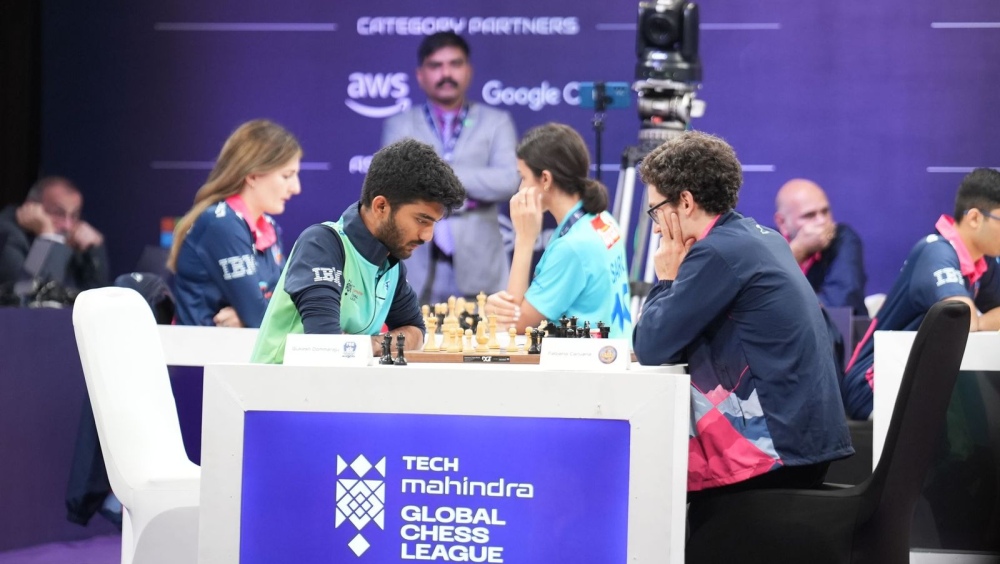
PBG Alaskan Knights finally came to life on Day5 of the Global Chess League in Mumbai. They defeated the team of Alpine SG Pipers 12 – 8, scoring their first win of the season. On the top boards, Triveni Continental Kings beat upGrad Mumba Masters 9 – 5 and Ganges Grandmasters edged Fyers American Gambits 8 – 7 keeping the title race tight. Day five of the Global Chess League in Mumbai brought a dramatic breakthrough for the PBG Alaskan Knights, who defeated the Alpine SG Pipers 12–8 to claim their first victory of the season. Meanwhile, at the top of the table, the Triveni Continental Kings beat the upGrad Mumbai Masters 9–5, and the Ganges Grandmasters edged the Fyers American Gambits 8–7, keeping the title race wide open. The day marked a turning point for the Knights, who entered with four consecutive defeats. Playing with nothing to lose, PBG went all-out against Alpine, with Arjun Erigaisi, Kateryna Lagno, Leinier Dominguez, and a resurgent Gukesh all scoring victories. Standings after Day 5 The reigning champions, Triveni, now stand alone at the top with 12 Match Points after defeating Mumbai in their direct duel. Ganges joined Mumbai on 9 Match Points, thanks to another strong performance from Javokhir Sindarov, who scored a quick win over Richard Rapport. The Fyers American Gambits and Alpine SG Pipers remain on 6 Match Points each, with PBG closing the gap to 3 points as the final rounds approach. Match 13: upGrad Mumbai Masters vs Triveni Continental Kings (5–9) Day five opened with a clash of leaders. The upGrad Mumbai Masters and Triveni Continental Kings both came into the round on 9 Match Points. Their rivalry dates to the first season in Dubai, where Mumbai won both round-robin matches, but Triveni took the title in a sudden-death final. In Season 2, the champions struck back twice. Meeting again at the top of the table in Season 3, both sides knew this match could shape the rest of the league. From the start, the play was tight and tense. Mumbai had the White pieces, but Triveni were often ahead on the clock and, at times, slightly better on the board. The first result came on the Superstar board, where Shakhriyar Mamedyarov faced Vidit Gujrathi. In a sharp English, Vidit twice seized the initiative, but Mamedyarov held firm. With both players short of time and no clear path forward, they repeated moves and agreed to a draw. Soon after, Wesley So and Wei Yi also split the point in a game where both pushed but failed to create decisive chances. The early draws set the tone for the match. The outcome hinged on the Icon board. Maxime Vachier-Lagrave and Alireza Firouzja rattled out their moves in a Scheveningen Sicilian, a fast-paced duel between two of the world’s best blitz players. With Black, Firouzja solved all the opening problems and gained an edge thanks to a superior pawn structure. MVL defended well for a long time, but small inaccuracies crept in. The critical moment came with 34.Nf1, a natural-looking move that was in fact a serious mistake. Firouzja did not find the best continuation but did enough to seize the advantage. The final phase was riddled with mutual errors in a time scramble, but MVL was the last to slip. Triveni earned four Game Points and a commanding lead on the top board. On the women’s boards, Mumbai searched for a way back. Humpy Koneru and Zhu Jiner played a controlled game that never strayed from equality, ending in a quiet draw. The other women’s game was more tense. Alexandra Kosteniuk and Harika Dronavalli reached an opposite-coloured bishops endgame, known for its drawing tendencies. With no way to break through, the players agreed to another draw. The final word belonged to the prodigy board. Following sharp exchanges, Marc’Andria Maurizzi emerged with an extra rook but could not escape a perpetual check, leading to yet another draw. This confirmed that the match would be decided by Firouzja’s win alone. When the dust settled, Triveni Continental Kings had won 9–5 in Game Points, with one victory and five draws. The defending champions moved into sole first place, while Mumbai slipped back into the chasing pack—still very much in contention but no longer alone at the top. Match 14: Alpine SG Pipers vs PBG Alaskan Knights (8–12) This duel was a must-win for both sides. Alpine SG Pipers came in on the back of two straight victories and 6 Match Points. PBG Alaskan Knights were still on zero after four rounds and had not won a single individual game. After the coin toss, PBG chose to play with White. Their captain promised “fireworks on the boards,” and his team delivered from the first moves. The Knights adopted sharp, aggressive play across all boards. The first breakthrough came on the Superstar board, where Arjun Erigaisi faced Anish Giri in a Queen’s Gambit Declined. Arjun seized the initiative early, and by move 18 his attack was nearly decisive. On move 21, he sacrificed a piece, tearing open the black king’s shelter. PBG took a 3–0 lead in Game Points. Almost simultaneously, Kateryna Lagno struck on the women’s board. Facing Hou Yifan in a Sicilian, she punished an early mistake, trapping Black’s queen in the centre. Two moves later, Hou was forced to give up her queen for a rook. Lagno converted smoothly, giving the Knights another three Game Points and a 6–0 lead. Alpine hit back through their most reliable player of the season. On the second women’s board, Nino Batsiashvili outplayed Sara Khadem in an Indian setup. Khadem was worse from the early middlegame and never recovered. Batsiashvili kept control, adding another win to her impressive Mumbai record and closing the gap to 6–4. The momentum seemed to shift completely on the prodigy board. Leon Luke Mendonca, the hero of Alpine’s last two matches, delivered another strong performance. Facing Daniel Dardha in an English Opening, he outplayed his opponent in the middlegame and
Kirill Chukavin and Margareth Olde triumph at 2025 Estonian Championship
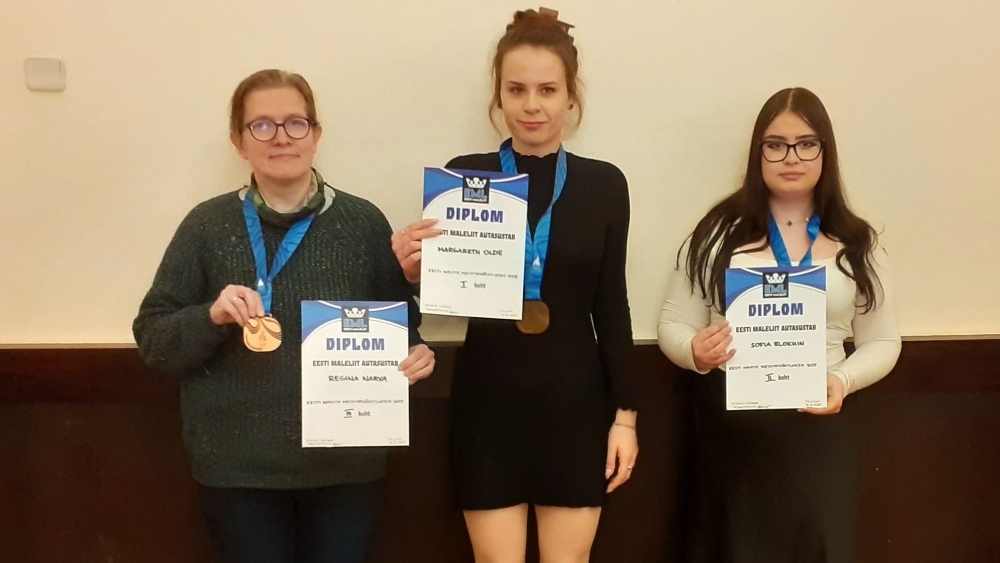
FM Kirill Chukavin and WIM Margareth Olde emerged victorious the 2025 Estonian Championship finals held from December 11–18 at the Paul Keres Chess House in Tallinn. For the second consecutive year, both the Open and Women’s championships were contested in a knockout format, featuring 16 players in the Open section and 8 in the Women’s section. In the Open section, 23-year-old FM Kirill Chukavin captured his first senior national title by defeating three-time champion GM Meelis Kanep (last year’s bronze medallist) in the final match. IM Ilja Sirosh completed the podium, winning the match for bronze. Final Standings – Open Section FM Kirill Chukavin GM Meelis Kanep IM Ilja Sirosh In the Women’s section, WIM Margareth Olde successfully defended her title. The final match against WFM Sofia Blokhin was an extremely tense battle, with classical games rapid and blitz tie-breaks all ending in 1-1 draws. Olde ultimately prevailed in the decisive Armageddon game. Final Standings – Women’s Section WIM Margareth Olde WFM Sofia Blokhin WFM Regina Narva Complete results (both Open and Women’s) Photos: Estonian Chess Federation (www.maleliit.ee)
Africa’s rising stars shine at 16th African Youth Chess Championship in Harare
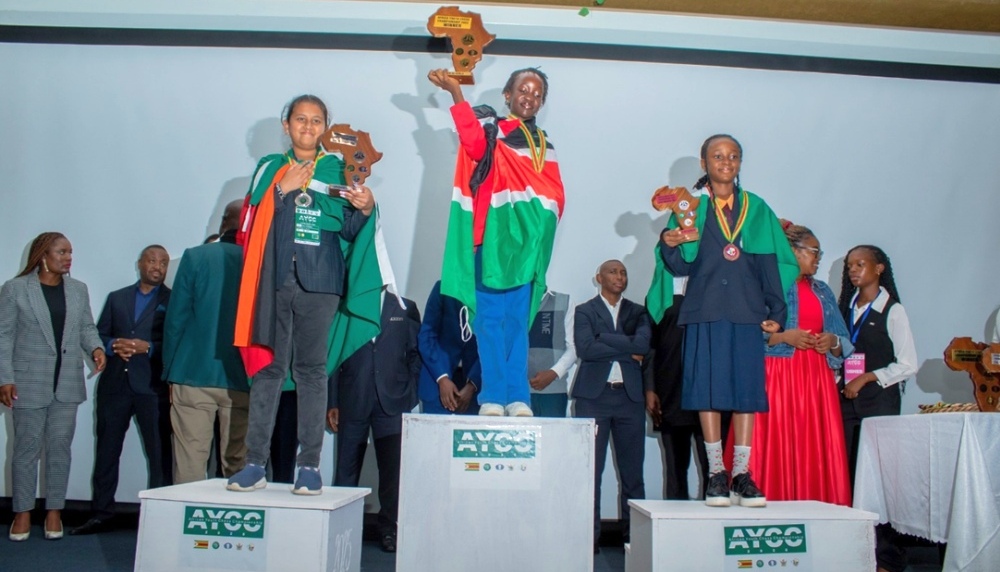
The 16th African Youth Chess Championship (AYCC) 2025, organised by the Zimbabwe Chess Federation under the patronage of the African Chess Confederation (ACC), concluded on Saturday, 13 December 2025, in Harare, Zimbabwe. Contested over nine rounds in the Swiss system, the championship attracted over 500 budding chess talents from 18 African countries, making it one of the largest editions in the history of the event. The championship showcased Africa’s rising chess stars across multiple age categories, delivering high-quality competition marked by fighting spirit, discipline, and exemplary sportsmanship. After intense and closely contested nine rounds played in a spirit of fair play, the champions emerged in all categories as follows: Under 8 Girls Under 8 Girls🥇 Gold: Saishanvi Nalamalpu (Botswana) – 9🥈 Silver: Tariro Nota (Zimbabwe) – 7🥉 Bronze: Awuor Jayne (Kenya) – 6 Under 8 Open 🥇 Gold: Adam Djerroud (Algeria) – 8🥈 Silver: Nathan Rehse (South Africa) – 7🥉 Bronze: Gene Mukhwana (Kenya) – 7 Under 10 Girls 🥇 Gold: Amanda Breetalizah (Kenya) – 8🥈 Silver: Nikhil Vankhedekar (Zambia) – 7½🥉 Bronze: Adaeze Agusionu (Nigeria) – 7½ Under 10 Open 🥇 Gold: Nathaniel Manyeki (Kenya) – 8½🥈 Silver: Ngwao Keoletile (Botswana) – 7🥉 Bronze: Elvis Tumusiime (Uganda) – 7 Under 12 Girls 🥇 Gold: Michelle Nwankwo (Nigeria) – 8½🥈 Silver: Winnie Kaburo (Kenya) – 8🥉 Bronze: Anil Suhana (Uganda) – 7½ Under 12 Open 🥇 Gold: Rannveer Tak (South Africa) – 7½🥈 Silver: Apollo Ahumuza (Uganda) – 7🥉 Bronze: Ryan Danson (Kenya) – 7 Under 14 Girls 🥇 Gold: Cassidy Elizabeth (Kenya) – 8🥈 Silver: Juliet Asaba (Uganda) – 7🥉 Bronze: Lucy Fantalis (Kenya) – 6½ Under 14 Open 🥇 Gold: Abdelmalek Bensidi (Algeria) – 7½🥈 Silver: Davidson Waweru (Kenya) – 7🥉 Bronze: Michael Schwartz (South Africa) – 7 Under 16 Girls 🥇 Gold: Zaki Mohamed (Egypt) – 8🥈 Silver: Oudhia Ait (Algeria) – 7🥉 Bronze: Correia Monteiro (South Africa) – 6½ Under 16 Open🥇 Gold: Cyprian Mbaabu (Kenya) – 7½🥈 Silver: Zhengfei Li (South Africa) – 7🥉 Bronze: Omprakash Shoubhith (Uganda) – 6½ Under 18 Girls🥇 Gold: Sana Omprakash (Uganda) – 8🥈 Silver: Deborah Quickpen (Nigeria) – 7🥉 Bronze: Natalie Banda (Botswana) – 7 Under 18 Open🥇 Gold: Rafael Sharon (Zambia) – 8🥈 Silver: Ahmed Kandil (Egypt) – 8🥉 Bronze: Raphael Felix (South Africa) – 7 Complete final standings (all categories) In addition to the competitive awards, twenty-five players were honoured with Fair Play Medals, sponsored by Amor Sport Consultancy. These medals were awarded to players who consistently demonstrated exemplary sportsmanship, respect for opponents and arbiters, adherence to the Laws of Chess, and positive conduct both on and off the board throughout the championship. Speaking at the closing ceremony, ACC President Tshepiso Lopang expressed her sincere gratitude to the players for their outstanding performances and commitment to fair play, to parents and coaches for their cooperation and support, to the arbiters for ensuring the smooth and professional running of the tournament, and to all partners and sponsors whose contributions made the championship a resounding success. The 16th African Youth Chess Championship once again reaffirmed Africa’s growing strength in youth chess and the continent’s bright future on the global chess stage. Written by African Chess Confederation Photo Credit: Ally Chess Academy
GCL Day 4: Triveni and Mumba pull ahead as PBG sink to fourth straight loss
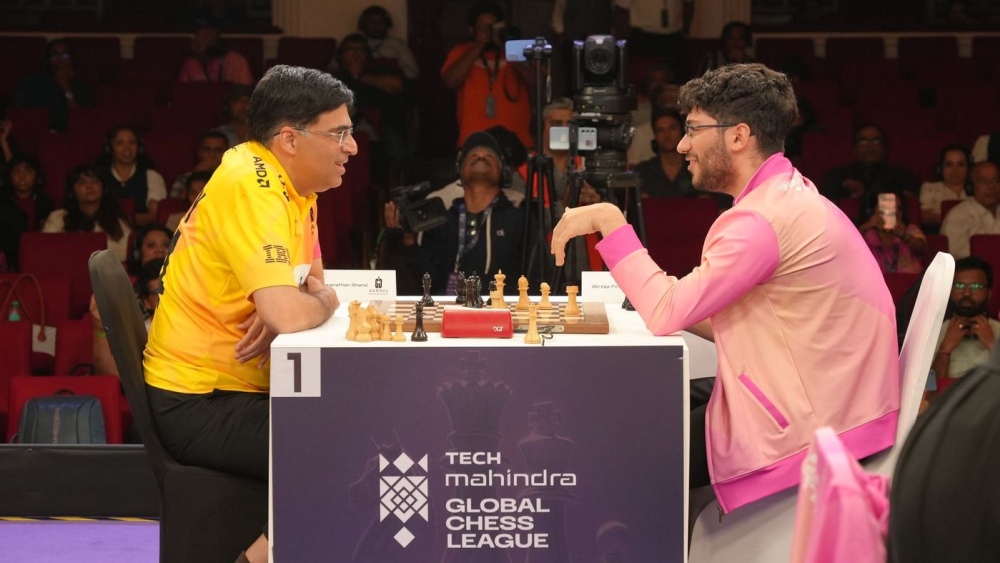
Day 4 of the Tech Mahindra Global Chess League reshaped the race at the top. The upGrad Mumbai Masters crushed the PBG Alaskan Knights 18–2, the Triveni Continental Kings hit back with an 11–6 win over the Ganges Grandmasters, and the Alpine SG Pipers rolled the Fyers American Gambits 10–4 to stay in the fight. It was a day when the favourites showed their strength. Triveni immediately recovered from their loss to the Gambits, with Alireza Firouzja and Wei Yi leading the way against Ganges. upGrad roared back after their defeat by Alpine with a ruthless performance against PBG, while the Pipers confirmed their revival as Nino Batsiashvili and Leon Luke Mendonca again delivered on the lower boards. The only team unable to stop the slide was the Knights, who suffered their fourth straight loss. Standings after Day 4 After four rounds, the upGrad Mumbai Masters and Triveni Continental Kings share the lead on nine Match Points, with upGrad slightly ahead on Game Points (51 to 43). The Ganges Grandmasters, Fyers American Gambits, and Alpine SG Pipers form a tight chasing pack on six Match Points each and remain very much in contention. The PBG Alaskan Knights are rooted to the bottom on zero, needing a perfect finish to have any hope of climbing back into the tournament. Match 10: Fyers American Gambits vs Alpine SG Pipers (4–10) Day 4 opened with a clash between two teams fresh off big wins. On Day 3, the Fyers American Gambits had shocked the defending champions Triveni Continental Kings 10–8 after Volodar Murzin turned a lost position into a match-winner on the prodigy board. The Alpine SG Pipers had finally broken their bad run by beating the upGrad Mumbai Masters 9–7, thanks to Leon Luke Mendonca delivering checkmate in another must-win prodigy game. The Gambits started the round on six Match Points, the Pipers on three. All eyes were on the Icon board, where Hikaru Nakamura faced Fabiano Caruana. The two US stars tested each other in a classical line of the Petrov. For most of the game, it was a pure theoretical battle between two well-prepared players, with many moves that looked strange to the audience still being theory. After the counterintuitive king move Kd7, Nakamura calmly walked around the stage and checked the other boards. Caruana then went for an exchange sacrifice, pushing his h-pawn down the board. The position looked tense, but the engines and the players knew it was balanced. After 59 moves, they agreed to a draw in an equal endgame. On the first men’s board, Anish Giri and Vladislav Artemiev also repeated preparation, reaching a balanced position where neither side could make real progress, and soon split the point. The second men’s board followed a similar script. Praggnanandhaa and Richard Rapport tested a rare line of the East Indian Defence. Rapport played creatively as usual, while Pragg never lost control despite spending more time on the clock. The game stayed level and ended in another draw. The real drama of the match came on the women’s and prodigy boards. Hou Yifan, the former Women’s World Champion, faced Bibisara Assaubayeva. Hou created a thorn-in-the-flesh e6-pawn in an Alapin Sicilian, emerging clearly better, but did not find the best continuation and sacrificed a pawn instead. After accepting the sacrifice, Bibisara defended patiently, equalised, and steered the game to a draw. On the second women’s board, Teodora Injac, playing the King’s Indian against Nino Batsiashvili, was clearly better for most of the game, building pressure and forcing Nino on the defensive. Then, in the space of three moves, everything changed. The position turned around, and Injac began to run low on time. Batsiashvili also slipped, blundering and allowing Black to win a bishop for two pawns. The ensuing endgame was about even, but Injac could not find a clear path. Move by move, she helped White advance her queenside pawns. Batsiashvili, in turn, allowed her opponent to blockade the pawns along the dark squares, handing Black the decisive advantage again. However, when the time came to collect these passers, Injac made a couple of mistakes, letting White’s king penetrate the kingside. After trading rooks, Injac was left with only a bishop while Batsiashvili had three pawns marching forward. In the time scramble that followed, Teodora made a grave error, moving her king back to e7 (instead of forward to e5 with a draw), which immediately changed the evaluation from “equal” to “lost” for Black. Nino showed good technical control and converted her advantage. The Pipers scored three vital Game Points and moved ahead 7–4. On the prodigy board, Leon Luke Mendonca once again became the main hero for Alpine. Facing Volodar Murzin, he won a pawn early and took over the initiative. Although Mendonca’s conversion was not ideal, Murzin was the last to err in a slightly inferior endgame. Leon finished the job and secured another three Game Points for his team. With four draws and two wins, the Alpine SG Pipers took the match 10–4 in Game Points. They climbed to six Match Points and joined the leading group in the standings. For the Fyers American Gambits, it was a painful defeat. After their inspiring comeback against Triveni, they managed to create only one serious winning chance across six boards and will want to move on quickly from this match. Match 11: PBG Alaskan Knights vs upGrad Mumbai Masters (2–18) This was a make-or-break moment for the PBG Alaskan Knights. After three straight losses, they were the only team without a single Match Point. On the other side stood the upGrad Mumbai Masters, still part of the leading pack despite their painful collapse against Alpine on Day 3. The Knights had the small practical edge of playing with the White pieces, but the pressure of needing a result in front of the home crowd felt heavy from the start. On the Icon board, World Champion Gukesh D met Maxime Vachier-Lagrave. The French grandmaster had started the season well,
FIDE delegation participates in UNHCR Global Refugee Forum

From December 15 to 17, 2025, a FIDE delegation consisting of André Voegtlin, Chair of the FIDE Social Commission, and Anastasia Sorokina, Chair of the FIDE Commission for Women’s Chess, attended the UNHCR Global Refugee Forum (GRF) in Geneva. The GRF is the world’s largest international gathering on refugee issues, convened every four years. It serves as a critical platform for UN Member States and a diverse array of stakeholders—including international organizations, NGOs, civil society, the private sector, and refugee representatives—to discuss and forge concrete solutions for the challenges confronting refugees and their host communities. The Forum was established to bolster the practical implementation of the Global Compact on Refugees (GCR). Adopted by the UN General Assembly in 2018, the GCR seeks to transform the global response to refugee situations through more predictable and equitable responsibility-sharing. Its four key objectives are: Easing pressures on host countries; Enhancing refugee self-reliance; Expanding access to third-country solutions (such as resettlement and complementary pathways); and Supporting conditions in countries of origin for safe, dignified, and voluntary returns. The FIDE delegation participated in several side events. One of particular interest was “Gender Equality and Ending Violence Against Refugee Women and Girls,” a multi-stakeholder event featuring a keynote intervention by Khalida Popal of Girl Power. Focus:The event centered on the critical issues of gender equality and the protection of refugee women and girls from gender-based violence (GBV). It highlighted the unique vulnerabilities and strengths of this demographic. Key Outcome:It served as a platform to advance and gather support for a specific pledge on “Gender Equality and Protection Against GBV” under the “Avec Elle” initiative. This pledge represents a concrete commitment by various actors to take actionable steps toward these goals within the refugee response framework. The FIDE delegation found the Forum an invaluable opportunity to engage with the latest developments, challenges, and partnerships in the global refugee response. The focus on gender equality and protection aligns closely with FIDE’s core principles and operational priorities. The delegation will analyze the insights and connections gained to inform FIDE’s ongoing and future strategies in supporting displaced populations, with a particular emphasis on promoting the rights and empowerment of women and girls. The delegation also held productive meetings with the Sport for Refugees Coalition, engaging with representatives, leaders, and colleagues from the sector. These exchanges focused on cooperation opportunities, best practices, and the role of sport as a tool for the inclusion, protection, and empowerment of refugee communities. The Sport for Refugees Coalition was represented at the Global Refugee Forum Progress Review by a wide range of international sports federations, organizations, foundations, and advocates. Participating sports federations and governing bodies included: FIFA Foundation, UEFA, World Athletics, the International Basketball Federation (FIBA), the International Judo Federation (IJF), the International Chess Federation (FIDE), Special Olympics, LIV Golf, and the Norwegian Olympic and Paralympic Committee and Confederation of Sports (NIF). They were joined by major foundations and sport-for-development organisations such as Adidas Foundation, Scott Foundation, Olympic Refuge Foundation, the Yusra Mardini Foundation, Girl Power, Play International, Klabu, and Union Sportive des Jeunes Réfugiés (USJR). The forum also featured high-profile refugee advocates and athletes, including Zakia Khudadadi, Paralympic medalist and UNHCR High-Profile Supporter and Masomah Ali Zada, Chef de Mission of the Refugee Olympic Team at the Paris 2024 Olympic Games and UNHCR High-Profile Supporter. André Voegtlin and Anastasia Sorokina welcomed the extensive cooperation plans discussed with UNHCR colleagues ahead of the World Chess Olympiad 2026 in Uzbekistan.
Battle for the final Candidates spot: Women’s Events 2024-2025 race heats up
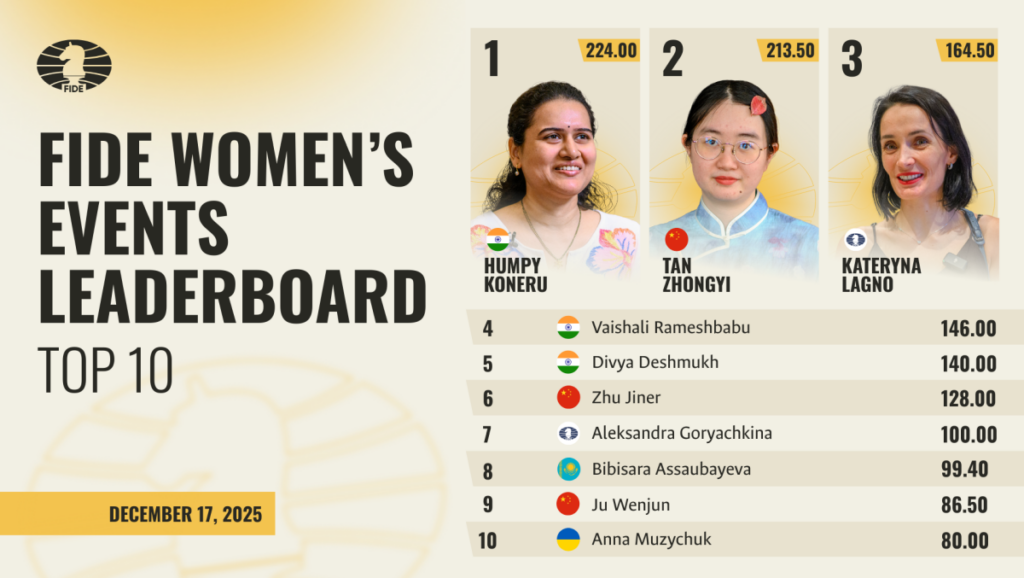
The Women’s Events 2024-2025 has entered its decisive phase. Following the triumphs of Vaishali R and Kateryna Lagno in the Women’s Grand Swiss, all seven leading players in the Women’s Events race secured qualification for the Women’s Candidates 2026 through various pathways. The eighth and final spot in the competition – which will determine the challenger for the women’s world title – remains open. Currently leading the race for that last berth is Bibisara Assaubayeva (99.4 points), who sits eighth, just behind the already-qualified players. Given her impressive resume in fast time controls, the two-time World Women’s Blitz Champion appears to have the strongest claim on paper heading to the Women’s Rapid and Blitz Championships 2025. Chasing her are Song Yuxin, Anna Muzychuk (both on 80 points), the winner of the 2022–23 Women’s Candidates Lei Tingjie (62 points), and the experienced Harika Dronavalli (58.5). All four remain strong candidates for the final slot, provided they deliver strong results at the upcoming events in Qatar. Further down the standings, young Afruza Khamdamova, former Women’s World Champion Alexandra Kosteniuk (both on 38.5), Mariya Muzychuk (26.40), Nana Dzagnidze (25), Ulviyya Fataliyeva (20), and Irina Krush (20) still have mathematical chances. With significant number of points available at the upcoming Women’s Rapid and Blitz Championships, none of them can yet be ruled out. Each of these contenders faces the formidable challenge of outperforming the competition in the season’s final events to claim the last coveted place in the Women’s Candidates 2026. We maintain a dedicated page on our website for the FIDE Women’s Events 2024–2025, featuring the latest information on eligible tournaments, current standings, and regulations. Visit: FIDE Women’s Events 2024-2025
FIDE U9–U17 Rapid & Blitz Chess Championship kicks off in Antalya, Türkiye
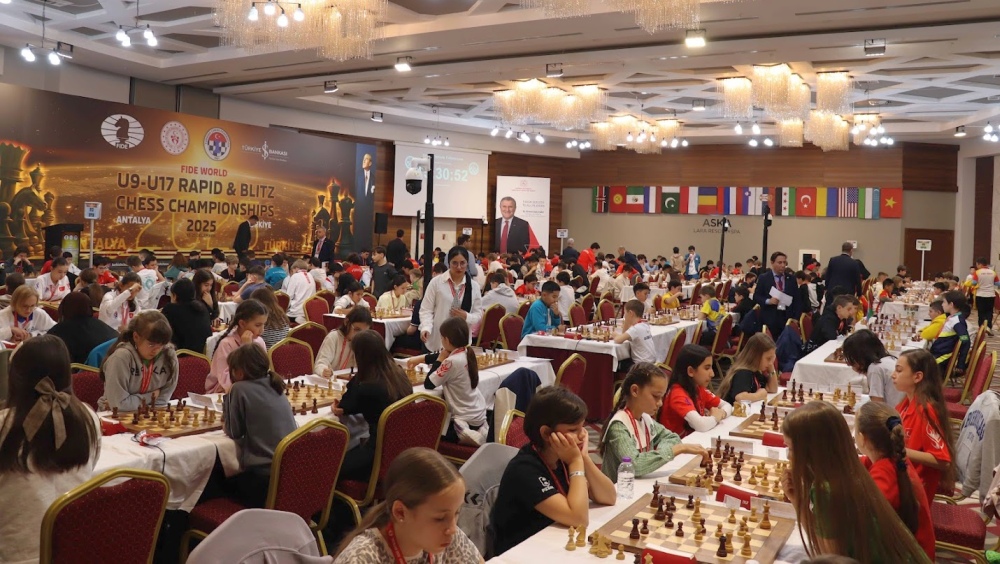
The FIDE U9–U17 Rapid & Blitz Chess Championship, organized by FIDE and the Turkish Chess Federation, officially commenced on December 16 at the Aska Lara Hotel in Antalya. A total of 314 participants from 33 countries, including 97 titled players, are competing in the event. Both the rapid and blitz events are 9-round Swiss tournaments, held across five age groups (U9, U11, U13, U15, U17) and separate Open and Girls sections. The rapid segment will be played over three days, followed by the two-day blitz tournaments. The top seeds in the open categories (from U17 to U9, respectively) are: IM Arda Çamlar (TUR), GM Yağız Kaan Erdoğmuş (TUR; pictured above), Andrey Kryakvin (FIDE), FM Marc Llari (FRA) and Marc Barcelo Melnyk (ESP). WFM Alexia-Andreea Iordache (ROU), WFM Rosha Akbari (IRI), WCM Kristina Zavivaeva (FIDE; pictured below), WFM Alisa Genrietta Yunker (FIDE), WCM Eliza-Ioana Badescu (ROU) headline the girls categories. The opening ceremony was attended by FIDE President Arkady Dvorkovich, along with the President of the hosting Turkish Chess Federation Fethi Apaydin; TCF Deputy President Bulent Mert Dikec; FIDE Events Commission Honorary Chair ABD Chief Events Inspector Ozgur Solakoglu; TCF Board Member and FIDE Events Commission Member Alper Efe Ataman; Kemal Can Comez, Betul Buyukasik, and other sports sport and federation officials. Arkady Dvorkovich and Fethi Apaydin made the first ceremonial moves, officially launching the competition. Pairing and results: [HERE] Official website: youthrapidblitz2025.tsf.org.tr/ Photo gallery: photos.app.goo.gl/8haNV29TMiGgSNvm8 Written by Özgür Akman Photos: Ozan Koşar
Cape Verde Championship 2025: Mariano Ortega retains title
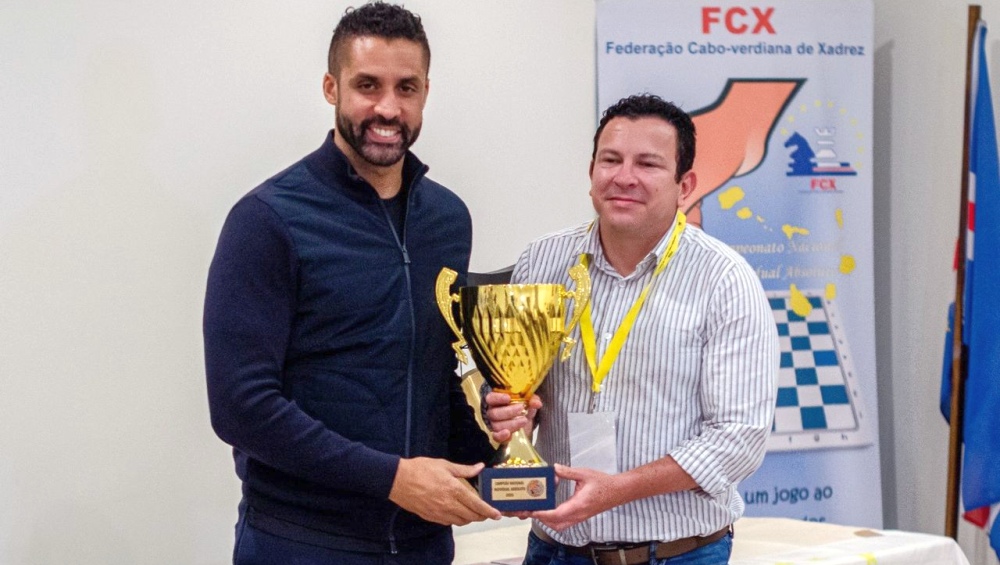
International Master Mariano Ortega has reaffirmed his dominance in Cape Verdean chess by successfully defending his title as Absolute National Champion. The championship was held from December 7–14 at the Hotel Oásis Atlântico Porto Grande in the city of Mindelo on the island of São Vicente. The 9-round Swiss event brought together 26 players from across the country and the diaspora. Featuring a strong field and a highly competitive atmosphere, the event proved both challenging and exciting. Mariano Ortega dominated the competition, winning all nine games to claim his fifth national title. This achievement cements his status as the leading figure in Cape Verdean chess and serves as an inspiration for a new generation of players. His success celebrates his personal milestone and underscores the growth and rising competitiveness of chess in Cape Verde, as demonstrated by the high-quality games and genuine sportsmanship on display throughout the event. FM Diogo Alho (pictured above, right), who fell to Ortega in Round 4, won all his other games to secure the silver medal. CM José Carlos Vaz completed the podium with a score of 7/9. Final standings (chess-results) The closing ceremony was presided over by the Minister of Sport of Cape Verde, Dr. Carlos Monteiro, who highlighted the progress of chess in the nation and commended the efforts of the national federation. Photos: Federação Cabo-verdiana de Xadrez
GCL Day 3: Four teams share the lead after Triveni and Mumba lose
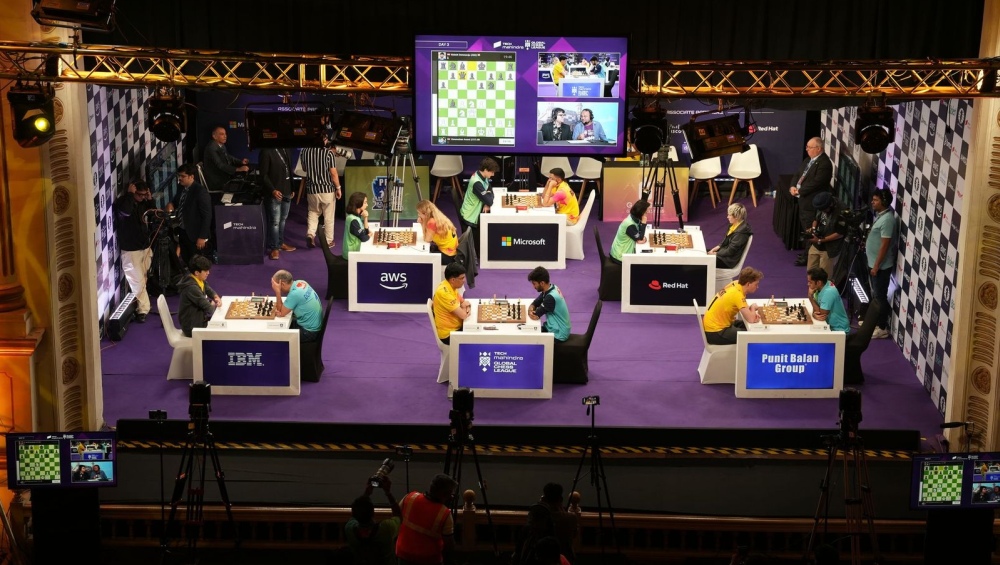
After three days of play at the Global Chess League, no team remains undefeated. The third day of the Tech Mahindra Global Chess League brought big changes. Both previously unbeaten squads, Triveni Continental Kings and upGrad Mumbai Masters, suffered their first losses. Fyers American Gambits edged Triveni 10 to 8 in a tense clash decided on the prodigy board, while Alpine SG Pipers finally broke through with a 9 to 7 victory over upGrad, their first win of the season. Earlier, Ganges Grandmasters opened the day by sweeping past PBG Alaskan Knights 12 to 3, with Viswanathan Anand scoring his first win in Mumbai against World Champion Gukesh. After three rounds, the standings have tightened completely. Four teams now share the lead on six Match Points each: Triveni Continental Kings, upGrad Mumbai Masters, Ganges Grandmasters and Fyers American Gambits. upGrad hold a narrow edge on Game Points (on 33), just ahead of the defending champions Triveni (on 32), with Ganges (on 29) and the Gambits (on 25) close behind. Standings after Day 3 Alpine SG Pipers are now back in contention with three Match Points following their late win over upGrad. PBG Alaskan Knights remain at the bottom of the table, still looking for their first match victory. Match 7: Ganges Grandmasters vs PBG Alaskan Knights (12:3) The third day of Season three opened with two teams moving in opposite directions. Ganges Grandmasters had just found their form with a 13 to 7 win over Alpine SG Pipers on day two, after a very tough start against upGrad Mumba Masters. PBG Alaskan Knights came in still shaken by their 3 to 15 loss to Triveni Continental Kings. They were also still without a match victory after a narrow defeat to Fyers American Gambits on day one. From the outset, it was clear that Ganges had carried their momentum into this round. Across the boards, they were the ones pressing, while the Knights struggled to find their footing. A heavy loss for PBG soon seemed a real possibility. The first result, however, was peaceful: on the prodigy board, Daniel Dardha and Raunak Sadhwani repeated moves and agreed a draw. After their dramatic earlier games in the league, this time neither side took full risk and the match began with one Game Point each. The first breakthrough came from Javokhir Sindarov. Facing Leinier Dominguez, accepted a pawn sacrifice for which Black got more than sufficient compensation. However, a serious mistake on move 25 by Leinier cost him dearly – White managed to neutralize all his threats and liquidated into an endgame with an extra pawn and more active pieces. Dominguez fought on and played on for some time, but there was no real hope. Ganges took the 4 to 1 lead in Game Points. On the Icon board, the spotlight fell on the all-Indian meeting of two World Champions – former and current. Viswanathan Anand had lost both his games so far in Mumbai and needed a result. Playing with White against Gukesh in a Sicilian, Anand seized space and gradually built up initiative, keeping Black under constant pressure. He eventually broke on the queenside and promoted his c-pawn, creating deadly threats to Black’s king. Gukesh had to resign. On the second men’s board, Arjun Erigaisi faced Vincent Keymer. Under pressure for much of the game, Arjun defended accurately and steered the position to a draw. Ganges then struck again on the women’s board. Polina Shuvalova, fresh off her Day 2 win over Hou Yifan, defeated over Kateryna Lagno in a very complex game riddled with mutual mistakes. Polina eventually emerged from complications with an extra piece, and the rest was a smooth sailing. Another three Game Points went to Ganges, stretching the lead to 10 to 1. The last hope for PBG lay on the remaining women’s board. Sara Khadem outplayed Stavroula Tsolakidou and reached a better endgame. Tsolakidou made several mistakes in mutual time trouble, but Khadem did not manage to find the most precise continuations. The advantage slipped away, and the game simplified to a drawn position. Another half point each went on the scoreboard. When the dust settled, the final score was 12 to 3 in Game Points for Ganges Grandmasters. With three wins and no losses in this match, they continued their strong recovery. PBG Alaskan Knights, on the other hand, suffered their second heavy defeat in a row and remain under pressure to turn their season around. Match 8: Triveni Continental Kings vs Fyers American Gambits (8:10) The day’s second match pitted the defending champions against one of the most dangerous challengers. Triveni Continental Kings had started the season with two wins: they beat Alpine SG Pipers by 9-7 on and then crushed PBG Alaskan Knights by 15-3. Fyers American Gambits arrived on three Match Points from two rounds. They had defeated PBG Alaskan Knights on the opening night, then narrowly lost to upGrad Mumba Masters. Both teams fielded their strongest lineups. For Triveni this meant Alireza Firouzja, Wei Yi, Vidit Gujrathi, Zhu Jiner, Alexandra Kosteniuk and Marc’Andria Maurizzi. For the Gambits it was Hikaru Nakamura, Richard Rapport, Vladislav Artemiev, Bibisara Assaubayeva, Teodora Injac and Volodar Murzin. The first decisive result came on one of the men’s boards. Richard Rapport played a fine positional game against Vidit Gujrathi. Step by step, he restricted White’s pieces and built a kind of geometric cage around the white king. Vidit spent a long time searching for a defence but there was no way out. The Gambits took the first win of the match and four Game Points. Triveni struck back spectacularly on a women’s board. In a very sharp Scotch, Alexandra Kosteniuk emerged with two minor pieces against Teodora Injac’s rook and a pawn. The position remained balanced for a long time, but in Injac misplayed walking her king into a mating net. Kosteniuk finished the game by checkmating with a pawn – a rare sight in top level chess. Her win brought three Game Points and leveled
FIDE World Senior Team Championships 2026: Registration now open
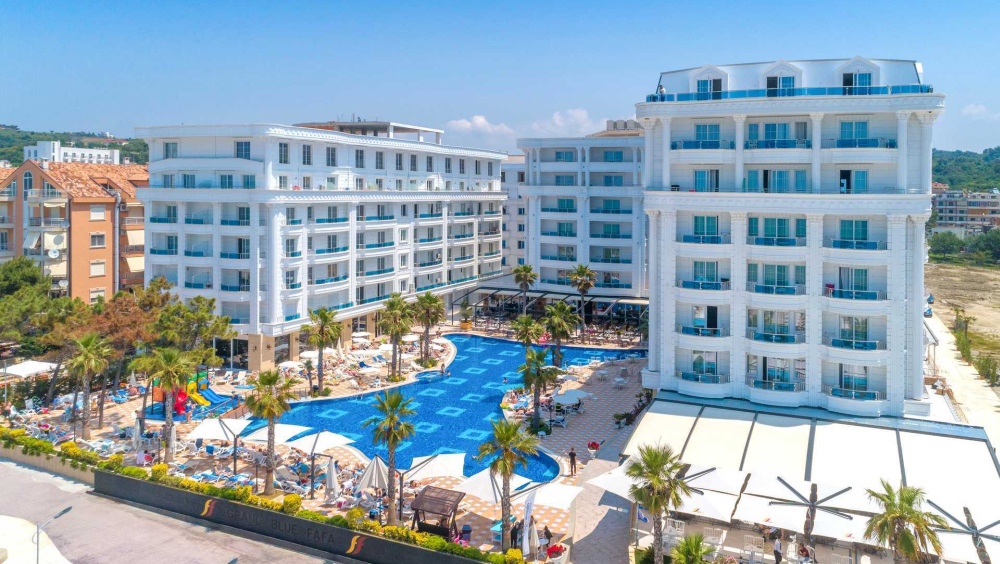
FIDE and the Albanian Chess Federation invite all FIDE member federations and eligible teams to participate in the World Senior Team Chess Championships taking place in Durres, Albania, from April 18 (arrival) to April 29 (departure), 2026. The championships are open to all players, regardless of rating or title, who have reached or will reach the required age during the calendar year of the competition. National federations shall register their teams in accordance with the official regulations. The event will feature four: age 50+ and age 65+, Open and Women, with separate events for women with a minimum of 10 teams from at least 2 continents. The registration deadline is February 18, 2026. FIDE Senior Teams Championship official website (coming soon): worldseniorteam2026.fide.com Email: worldseniorteam@fide.com Registration form (DOCX) Invitation letter, regulations, and registration details (PDF)