

Champions crowned at Asian Senior Chess Championships 2025
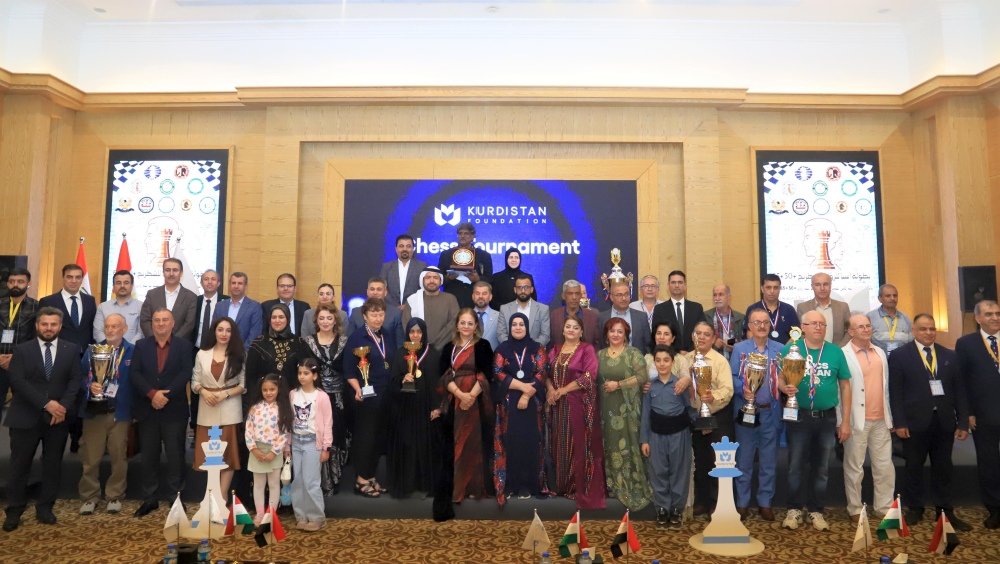
The Asian Senior Chess Championships 2025, held in the 50+ and 65+ categories, took place in Erbil, Iraq, from October 4–14. The competitions—nine-round Swiss-system tournaments with classical time control—were organized by the Iraq Chess Federation under the auspices of the Asian Chess Federation and FIDE. Over-50 category: Aziz Umarbekov crowned champion In the Over-50 category, Aziz Umarbekov of Kyrgyzstan captured gold with a commanding 7.5/9, demonstrating remarkable consistency, composure, and tactical precision throughout the tournament. Close behind, IM Hussein Ali Hussein Al-Ali of Iraq—the hometown favorite from Erbil—delighted local supporters with his resilient play, securing silver with 7 points. GM Ramil Hasangatin (FIDE), who led early in the event, suffered a loss in the penultimate round but finished strongly to claim bronze with 6.5 points. CM Marwan Aboudi of Jordan and CM Joseph Ebenezer of India both scored 6 points, rounding out the top five in a tightly contested field. Adding to the host nation’s success, Iraqi players swept the Best Woman awards in the Over-50 category. Iman Mahdi Ahmed earned top honors with 4.5 points, followed by WCM Jwan Jamal Mohammed Ameen in second place (4 points) and Dilpak Ali Hamzah in third (3.5 points). Over-65 category: Marat Primbetov claims gold The Over-65 category witnessed equally fierce competition. Marat Primbetov of Kazakhstan clinched the title on superior tiebreaks with 6.5 points, edging out FM Hossein Aryanejad of Iran, who also scored 6.5 to take silver. Randolph Schain of Cambodia completed the podium with 6 points, while Aliasghar Akhavan Rad of Iran and FM Ali Jalal Adil of Iraq followed closely with 5.5 points each. The Best Woman in this category was WGM Galina Strutinskaia (FIDE), who scored 5 points in a highly competitive field. Blitz Championship The concluding blitz tournament merged both age groups, producing fast-paced excitement as players battled for final honors. Although the event combined the divisions, awards were presented separately by age category. GM Ramil Hasangatin (FIDE) bounced back brilliantly to capture the Blitz Over-50 title with 7.5 points, sharing the top score of WGM Galina Strutinskaia (FIDE) and FM Hossein Aryanejad of Iran. In the Blitz Over-50 section, Hasangatin took gold with 7.5 points. Hussein Ali Hussein Al-Ali of Iraq, maintaining his strong form from the classical event, earned silver, while CM Salih Al-Aqrabi of Yemen secured bronze—both finishing with 6.5 points after an intense race for the podium. The Blitz Over-65 section brought another success for WGM Galina Strutinskaia, who captured gold with an outstanding performance of 7.5/9. FM Hossein Aryanejad of Iran, a former national champion, earned his second silver medal of the tournament, demonstrating impressive consistency across both formats. CM Abdul Kareem Kashush from Iraq completed the podium with 6 points, proudly securing bronze for the host nation. In the Best Women blitz category, Iraqi players continued to shine: Dilpak Ali Hamzah won gold with 4 points, followed by WCM Jwan Jamal Mohammed Ameen (3.5 points) and Bayan Jamal Mohammed Ameen (3 points). Special recognition On the sidelines of the final rounds, Hisham Al Taher (second from left), General Secretary of the Asian Chess Federation, accompanied by Dhafer Madhloom (left), President of the Asian Zone 3.1 and the Iraqi Chess Federation, and Dr. Dlzar Hama Salih Qadir (right), President of the Khanzad Chess Club, paid a courtesy visit to Dr. Rebar Ahmed, Minister of Interior of the Kurdistan Region. During the meeting, Hisham Al Taher presented the Asian Personality of the Year award to Dr. Rebar Ahmed, in recognition of the late Barzani’s selection as Asia’s Personality of the Year, acknowledging his enduring legacy and support for regional development and culture, including the promotion of chess in Kurdistan and Iraq. A historic 1974 photo shows the late Kurdish leader Mustafa Barzani playing chess with American journalist Dana Adam Schmidt—a moment that inspired the Asian Chess Federation’s 2025 tribute. As the curtain fell on the Asian Senior Chess Championships 2025, Erbil reaffirmed its place as one of Asia’s most welcoming and vibrant chess destinations — where legends of the game continue to write new chapters in the timeless story of chess. For full results, visit chess-results.com Live games at Lichess
Norway Chess Launches New World Championship – Approved by FIDE

The new championship, titled the Total Chess World Championship Tour, will consist of four events each year and crown a combined champion across three disciplines – Fast Classic, Rapid, and Blitz chess. “We expect this to become one of the most prestigious events in the entire chess Calendar,” says Kjell Madland, CEOof Norway Chess and of the new championship. Key Highlights: A brand-new World Championship format in chess, organized by Norway Chess, has been officially approved by the International Chess Federation, FIDE. The Total Chess World Championship Tour will crown an overall champion across three disciplines: Fast Classic, Rapid, and Blitz. The winner will be crowned FIDE World Combined Champion. The tour will consist of four tournaments per year in various global cities. Minimum $2.7M annual prize pool across the Tour ($750k per event for the first three events; $450k for the Finals), plus performance bonuses. A pilot tournament is planned for fall 2026, with the first full championship season in 2027. The initiative comes from the organizers of the prestigious Norway Chess tournament, and the official World Championship status agreement was signed with the International Chess Federation (FIDE) in early October. The vision of the Total Chess World Championship Tour is to find the player who best masters the disciplines Fast Classic, Rapid and Blitz combined. Fast Classic is an innovation of classical chess, featuring a time limit as short as 45 minutes plus a 30-second increment per move. This will receive rating as classical chess. “We are looking for “The Total Chess Player” – a versatile, tactically intelligent, and technically skilled athlete who seamlessly adapts to multiple time controls,” says Kjell Madland. The tour will take place in various cities across the globe and during the final stop an overall winner will be crowned: the official FIDE World Combined Champion. A one-tournament pilot version will kick off during fall 2026, to test the new tour format, with the full official tournament to follow in 2027. “We want to create an entertaining tournament using cutting-edge technology, innovative and engaging TV and streaming broadcasts, and faster formats to open up the sport of chess to a broader audience than ever before. We expect this to become one of the most prestigious events in the entire chess Calendar. We are very honored by the strong trust FIDE has shown in the project. From the very beginning, the federation has been an active and engaged partner — ensuring the project aligns with FIDE’s vision and standards. We want to thank them, and especially the FIDE President, for their close involvement and support,” says Kjell Madland. Prize Pool and Bonuses The Total Chess World Championship Tour features a robust prize pool: a minimum of $750,000 for each of the first three events. The Finals, which crown the FIDE World Combined Champion, will award at least $450,000 to a four-player field. Additional performance bonuses will be available for the highest point total at each tournament and for the top overall score across the Tour. “For the fans” FIDE President Arkady Dvorkovich expresses strong support for the initiative. “We are always looking for ways to innovate and push the boundaries of what chess can be. Although chess is already one of the most popular games in the world, its growth potential is still enormous. With the Total Chess World Championship Tour, we give players a new title to compete for, and the audience a faster tournament format, and we hope the tournament can captivate both the existing chess fans and new audiences,” says FIDE President Arkady Dvorkovich. “We see this as a great addition to the traditional and prestigious World Chess Championship, where we crown the undisputed champion of classic chess. The championships will complement each other and offer even more excitement for the fans. This is not a short-term initiative, but a long-term agreement between FIDE and Norway Chess,” he added. Norway Chess is now inviting potential host cities, investors, and partners to engage in discussions about joining the Total Chess World Championship. For more details on the tournament format, see the separate document (PDF). https://youtu.be/3annvv6988A Facts about Norway Chess: Founded in 2013, Norway Chess has quickly become a fixture on the elite chess calendar. It’s regarded as one of the world’s most prestigious and innovative international chess tournaments. The event helped professionalize chess, treating it as a modern sport and viable commercial product. Norway Chess introduced the world’s first women’s tournament with prize money equal to the open sections. Facts about FIDE: The International Chess Federation (FIDE) is the governing body of the sport of chess, and it regulates all international chess competitions. It was recognized by the International Olympic Committee as a Global Sporting Organization in 1999. Initially founded in 1924 in Paris under the motto “Gens una Sumus” (Latin for “We are one Family”), it was one of the very first International Sports Federations, alongside the governing bodies of the sports of Football, Cricket, Swimming, and Auto Racing. It is now one of the largest, encompassing 201 countries as affiliate members, in the form of National Chess Federations.
Ukraine and Poland crowned European Team Champions 2025
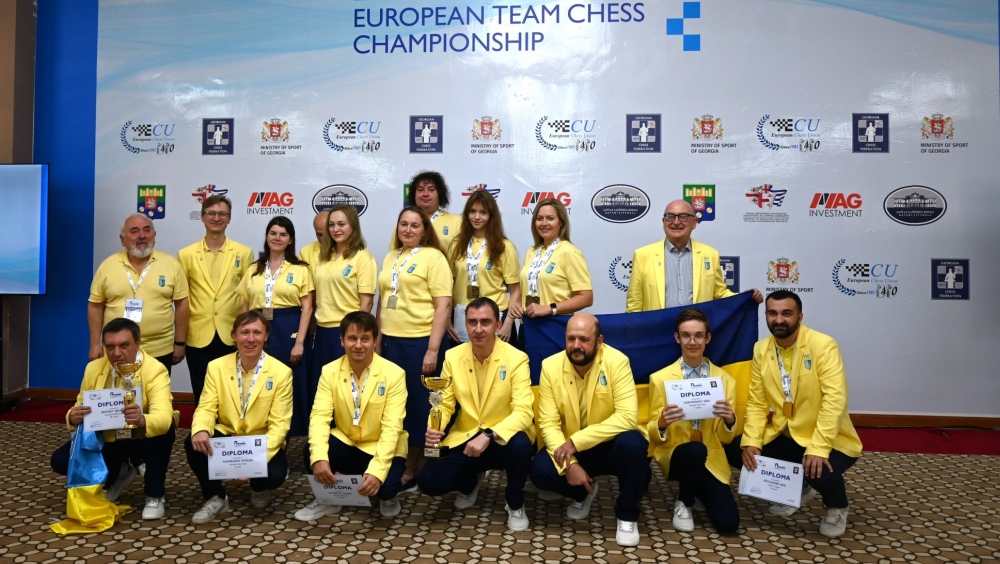
The European Team Chess Championship 2025 concluded on October 14 in Batumi, Georgia. A dramatic final round decided the winners in the open section as Ukraine and Azerbaijan entered it tied for first place. Azerbaijan faced Serbia, while Ukraine took on England. The higher-rated Azerbaijani team were favourites against Serbia, but the Serbians delivered a convincing 3–1 victory. GM Alexey Sarana (SRB, 2661) defeated GM Shakhriyar Mamedyarov (AZE, 2742), GM Aleksandar Indjic (SRB, 2618) outplayed GM Rauf Mamedov (AZE, 2655), and GM Robert Markus (SRB, 2535) overcame GM Aydin Suleymanli (AZE, 2614). GM Eltaj Safarli (AZE, 2630) was the only Azerbaijani to score, defeating GM Velimir Ivic (SRB, 2638). Serbia’s victory secured them a medal. With this result, Ukraine needed only a 2–2 draw against England to clinch the title. They already had the upper hand, as GM Ihor Samunenkov (UKR, 2568) held a decisive advantage against GM Luke McShane (ENG, 2614), while GM Anton Korobov (UKR, 2596) and GM Igor Kovalenko (UKR, 2669) both had extra material in drawish rook endgames. The first-board game between GM Ruslan Ponomariov (UKR, 2633) and GM Nikita Vitiugov (ENG, 2654) had already ended in a draw. Samunenkov eventually converted his advantage into a full point, while the other two games were drawn, allowing Ukraine to clinch the title with 15 match points. Azerbaijan and Serbia tied for second place with 13 match points, but Azerbaijan had superior tiebreaks to claim the silver medal, while Serbia took bronze. Final standings – Open In the women’s section, Poland won the European Women’s Team Chess Championship 2025 after defeating Azerbaijan in the final round. IM Oliwia Kiolbasa (POL, 2388) outplayed IM Gulnar Mammadova (AZE, 2323), while IM Alina Kashlinskaya (POL, 2450) and IM Klaudia Kulon (POL, 2336) drew solid games against IM Khanim Balajayeva (AZE, 2351) and WIM Ayan Allahverdiyeva (AZE, 2220), respectively. IM Aleksandra Maltsevskaya (POL, 2394) also drew her rook endgame with an extra pawn once it became clear that her team had secured the match victory. With a final score of 16 match points, Poland claimed gold. Ukraine — the only team to defeat the champions — took silver with 14 match points after a 2–2 draw against Armenia in the final round. Despite a final-round loss to Bulgaria, Germany secured the bronze medal with 13 match points. Final standings – Women The best individual players by board are: Open Board 1 (Open): GM Richard Rapport; 2.GM Vincent Keymer, 3.GM Anish Giri Board 2 (Open): GM Alexey Sarana; 2.GM Jorden Van Foreest; 3.GM Laurent Fressinet Board 3 (Open): GM Eltaj Safarli; 2.GM Aleksandar Indjic; 3.GM Jones Gawain Maroroa Board 4 (Open):GM Igor Kovalenko; 2.GM Lorenzo Lodici; 3.GM Dimitrios Mastrovasilis Board 5 (Open):GM Ihor Samunenkov; 2.GM Isik Can; 3.GM Frederik Svane Women Board 1 (Women): IM Mai Narva; 2.IM Stavroula Tsolakidou; 3.GM Alexandra Kosteniuk Board 2 (Women): GM Anna Ushenina; 2.IM Sabrina Vega Guiterrez; 3.WGM Hanna Marie Klek Board 3 (Women):IM Oliwia Kiolbasa; 2.IM Lela Javakhishvili; 3.IM Ann Matnadze Bujiashvili Board 4 (Women): 1.GM Bella Khotenashvili; 2.GM Natalia Zhukova; 3.IM Gulnar Mammadova Board 5 (Women): WGM Kateryna Dolzhykova; 2.WFM Bozhena Piddubna; 3.WIM Silvia-Raluca Sgircea The closing ceremony was attended by the ECU President Zurab Azmaiparashvili, Head of Adjarian Autonomous Republic Sport Department Irma Nizharadze, ECU Vice Presidents Malcolm Pein, Gunnar Bjornsson, and Alojzije Jankovic, ECU Commercial Chief Adviser Moshe Slav, President of the Azerbaijan Chess Federation and FIDE Vice President Mahir Mammedov, President of the Georgian Chess Federation and FIDE Special Task Director Akaki Iashvili, and other distinguished guests. Text and photos: European Chess Union Official website: etcc2025.com/
Record number of teams and countries compete in FIDE Intercontinental Online Chess Championship for Prisoners
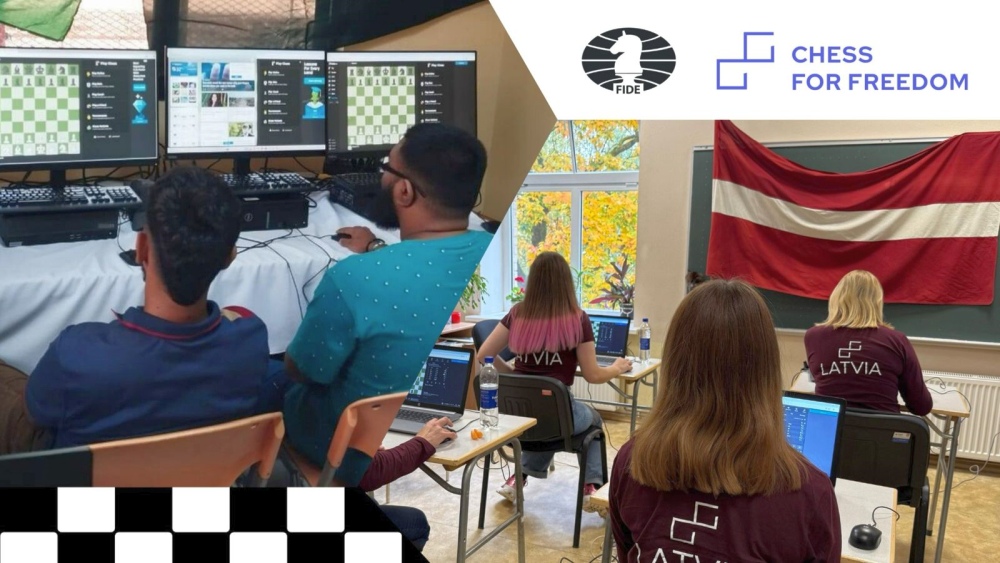
What began as a modest chess programme in a Chicago jail has grown into a worldwide movement. The fifth edition of the FIDE Intercontinental Online Chess Championship for Prisoners has set a new participation record, with 135 teams from 57 countries competing between 14th and 16th October. The first chess programme for inmates and detainees was launched by the Cook County Sheriff’s Office in Chicago in 2012. In 2019 they organised their first international tournament. Two years later, they partnered with FIDE. Since 2021, the International Chess Federation and Cook County Sheriff’s Office have been working together on the “Chess for Freedom” programme, aimed at inmates across the world, helping them learn essential life skills through chess. The central event of the programme is the FIDE International Online Chess Championship, which has over the years attracted teams from nearly 60 countries worldwide. The event is held around the mid-October to coincide with the celebration of the International Day of Education in Prison. Observed on 13th October, it highlights the importance of education in correctional facilities as a fundamental human right and a pillar for rehabilitation and improvement. The fifth edition of the Championship for Prisoners takes place between 14th and 16th October and is one of the final events in the Year of Social Chess, which highlighted the role of chess as a tool for inclusion and empowerment. The competition is split into three stages – the group stage (14th), the championship stage (15th) and the finals (16th). This year set a new record, with 135 teams from 57 countries taking part. The lineup includes 89 teams in the Open section, 26 in the Women’s, and 20 in the Youth. Several countries are making their debut, among them Eswatini, Guyana, Lesotho, Poland, Aruba, and St. Kitts and Nevis. Each team has four players, and the games are played entirely online with 10 minutes for each player plus a five-second increment from move one. “We all make mistakes in life. But as long as we are alive, we can learn” The event was opened by FIDE President Arkady Dvorkovich, who said that playing chess offers a direct path to self-motivation, logical thinking, stress reduction, and foresight of consequences, all “important pillars for a good life”. “We are all human. We all make mistakes in life. But as long as we are alive, we have a chance to learn from them and correct them. It takes a lot of courage to change, and that is why I want to warmly welcome you all on behalf of the entire chess community and thank you for taking part in this event”, said Dvorkovich in his message to the players. Dana Reizniece, the Managing Director and Deputy Chair of the Management Board of FIDE, who has been deeply involved in social chess programmes around the world, explained why the governing body of chess decided to engage in this project. “Chess teaches us focus, resilience and consistency. It sharpens the mind and allows us to channel the energy in a constructive way. Chess also gives hope. Hope that growth is possible, hope that change is possible.” Global coverage This year’s event is accompanied by a live broadcast which started at 6 AM CET and finished around 8 PM CET – nearly 13 hours in total. Apart from live commentary of the games, the broadcast featured special reports, presentations, and live conversations with guests from Australia to America who spoke about their experiences with the Chess for Freedom project. The life of a chess player in prison: Experiences from Australia to U.S. Tom Noiprasit works as an Education Services Coordinator at the Macquarie Correctional Centre, a maximum-security prison for male offenders located in Wellington, in the Orana region of western New South Wales, Australia. The facility has had a chess team for the past five years. A software engineer and former consultant, Noiprasit moved to teaching before taking a position at the Macquarie Correctional Centre. He noted that a common misconception people have is that education in prison is about “fixing people,” when it is more about helping them develop skills. As Noiprasit explains, the ambitions of people in prison are not much different from those on the outside – they want a job, a career, and they want to have a house to build their own life around. “Our job is not to judge people in prison but to make sure when they come out, they can choose to be what they want to be.” Different prisons have different rules when it comes to using computers for chess or anything else. In most cases, prisons do not allow inmates to use computers. Instead, they are given books and magazines where they can read about chess games and analyse. “It helps them talk to one another and practice social skills as well,” Noiprasit noted. While access to the internet seems like an everyday thing for most people, it’s not the case for those behind bars. “Access to the internet is a big thing and you need to be fully supervising this,” says Noiprasit. Prison officials also have to check very carefully who should be permitted to access the internet. “It could be anything – using the internet could bring up trauma, or an inmate who usually might not do a wrong thing might be tempted to do it.” “Emotional self-regulation and, in particular, the ability to let go are the main skills relevant for inmates when it comes to chess,” Noiprasit concluded. In Singapore, Grandmaster Goh Wei Ming – who visits prisons once a week to play chess – pointed out that “all inmates who participated in the Chess for Freedom programme exhibited much better behaviour, according to prison officers.” “We had a case of a player who had very high blood pressure. When he was playing for the first time, he had a counsellor with him, reminding him to look after his blood pressure. Two years into the programme, he is now much calmer and
FIDE Social Chess Storytelling Challenge: Deadline extended

FIDE has extended the deadline for submissions to the FIDE Social Chess Storytelling Challenge 2025. Participants now have until November 30, 2025, to submit their stories under the theme “Every Move Counts.” The challenge invites filmmakers, educators, and chess promoters worldwide to showcase how chess is changing lives and strengthening communities. From classrooms and rehabilitation centers to local clubs and public spaces, these stories reveal how the game can inspire growth, connection, and inclusion. Participants can enter two categories; Professional or Grassroots (Amateur), and are encouraged to submit short films that highlight the social impact of chess in creative and authentic ways. Winners in each category will receive a FIDE trophy and an invitation to the Opening Ceremony of the 2026 Chess Olympiad, including accommodation for two nights for two guests. Selected stories will also be featured during the 2025 FIDE Social Chess Conference and promoted across FIDE’s official media channels. Participation is open to everyone, regardless of age or nationality. New submission deadline: November 30, 2025 Submit your film here: fide.com/social2025-storytelling-challenge/#send
5th FIDE Intercontinental Online Chess Championship for Prisoners set to begin
The 5th FIDE Intercontinental Online Chess Championship for Prisoners will take place from October 14 to 16, 2025, bringing together incarcerated men, women, and youth from correctional facilities around the world to unite through the shared language of chess. Organized in collaboration with the Cook County Sheriff’s Office (Chicago, USA), this championship is part of FIDE’s Chess for Freedom initiative, which promotes social inclusion, rehabilitation, and personal growth through the game. Now in its fifth year, it has become one of the world’s most meaningful examples of chess’s power to transform lives. This year marks another record in participation, with 135 teams from 57 countries confirmed. The lineup includes 89 teams in the Open section, 26 in the Women’s, and 20 in the Youth. Several countries will make their debut, among them Eswatini, Guyana, Lesotho, Poland, Aruba, and St. Kitts and Nevis. Each team consists of four players, all currently incarcerated. Matches will be played online on Chess.com with a time control of 10 minutes plus a 5-second increment. The event will be supervised by FIDE arbiters to ensure fair play and smooth coordination across correctional institutions on different continents. Format October 14: Group StageTeams will be divided into groups and play in a round-robin format. Grouping will be based on geographic region and time zone. October 15: Championship StageThe top two teams from each group will qualify for the Championship Round, which will also follow a round-robin format. October 16: Finals and Placement MatchesThe final stage crowns the champions in the Open, Women’s, and Youth categories. Placement matches will determine the overall team rankings. The Group Stage and the Finals will be broadcast live on FIDE’s official YouTube channel with commentary, interviews, and inspiring human-interest stories. The 2025 commentary team includes Michael Rahal, Angelika Valkova, and Charlize van Zyl, who will guide the audience through the action, highlight the impact of the Chess for Freedom program, and share the stories of participants from around the world. The broadcast will also feature guest appearances from chess officials, arbiters, and correctional representatives, offering insights into how chess education is being introduced in rehabilitation systems worldwide. Around the world, teams get ready Preparations are underway across continents as prisons and federations organize training camps, online test matches, and workshops in anticipation of the Intercontinental Championship. In Malawi, the Prison Service has been especially active following the success of hosting the Chess for Freedom Continental Championship and Workshop earlier this year. Prison teams from Zomba, Bvumbe Youth, Maula, and Kachere facilities have been training regularly with support from the Malawi Chess Federation. At Maula Prison, players recently took part in a training session with the team described by officials as “sharp, focused, and ready to take on the competition!” The country has become one of Africa’s most committed participants in the program, placing second in multiple categories at the continental level. Photo: Dadaz Chess Academy and The Gift of Chess Elsewhere in Africa, Zimbabwe, the winner of the recent Continental Championship, enters as one of the continent’s strongest contenders. Kenya continues to expand its “Chess in Prisons” program through the Correctional Service, beginning with Nairobi West Prison. Beyond Africa, new programs are emerging in Guyana, where the national federation has introduced chess training at the Lusignan Prison, and in Aruba, which is fielding a team for the first time. The United States, Paraguay, Croatia, Singapore, and Kazakhstan have also confirmed their participation, showing how correctional institutions worldwide now recognize chess as a valuable tool for education and reintegration. https://youtu.be/OYkCQf5-fMg About Chess for Freedom The Chess for Freedom initiative was launched by FIDE in partnership with correctional institutions around the world to make chess accessible to inmates as an educational and social tool. It promotes critical thinking, emotional control, and teamwork, helping participants gain valuable skills for reintegration into society. Since the first Intercontinental Championship in 2021, the project has grown into a global movement. Thousands of inmates have taken part in regional and international tournaments, workshops, and educational programs across six continents. This year’s edition, the largest so far, reflects the unifying message of the Chess for Freedom initiative: chess transcends walls, borders, and circumstances, offering a bridge to learning, reflection, and hope. The 5th FIDE Intercontinental Online Chess Championship for Prisoners will be held from October 14 to 16, 2025, on Chess.com, with live coverage on FIDE’s YouTube channel.
FIDE World U9-U17 Rapid and Blitz Championships 2025: Registration deadline extended
FIDE and the Turkish Chess Federation invite all the member federations to participate in the FIDE World U9-U17 Rapid & Blitz Championships 2025. The event will be held in Antalya, Türkiye, from 15 December (arrival) to 21 December (departure) 2025. The competition will feature five age categories: U9, U11, U13, U15, and U17, with separate open and girls’ events. Players who placed 1st–3rd at the FIDE World School Rapid & Blitz Chess Championships 2024 are granted the personal right to participate in the corresponding (or higher) age category, provided they meet the age requirement as of 1 January 2025. FIDE member federations are encouraged to register their participants and may enter an unlimited number of players. Registration deadline has been extended to November 15, 2025 E-mail: youthrapidblitz@fide.com Invitation letter (PDF) Official website: youthrapidblitz2025.tsf.org.tr/
Celebrating 40 years of the European Chess Union: A legacy of unity, growth, and excellence
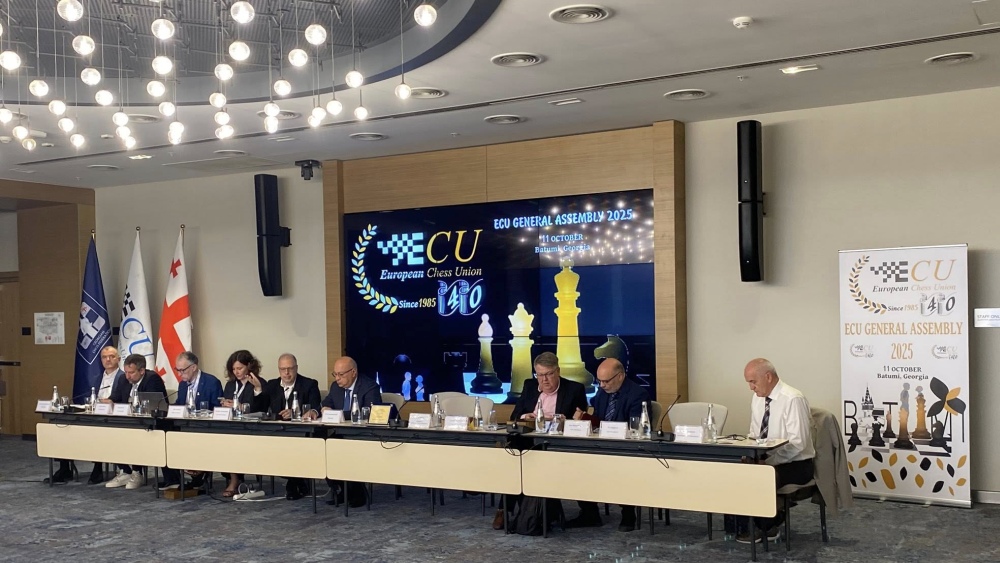
FIDE and the global chess community warmly congratulate the European Chess Union (ECU) on the momentous occasion of its 40th anniversary. Founded in 1985 in Graz, Austria, the ECU has grown into one of the most active and influential continental federations within FIDE, uniting 54 national chess federations across Europe. Over the past four decades, the ECU has played a vital role in advancing chess at all levels — from grassroots and school programs to elite competitions. It has organized countless continental events, including its flagship European Individual Championships and the European Club Cup, as well as numerous team and youth tournaments, helping to shape generations of European chess talents. Beyond the board, the ECU has championed innovation and inclusivity, promoting educational chess initiatives and gender equality in the sport. “I hope that FIDE and the ECU will work together to rebuild and refresh the foundation of European chess in the years to come. FIDE is ready to partner with you and assist in this endeavor. We are committed and await the guidance of this General Assembly on what we should prioritize next year to promote chess in Europe and globally,” said FIDE President Arkady Dvorkovich at the ECU General Assembly, held during the European Team Championship in Batumi. The FIDE President was the guest of honor at Saturday night’s gala celebrating the European Chess Union’s 40th anniversary. In recognition of their efforts and contributions, Arkady Dvorkovich presented ECU President Zurab Azmaiparashvili and ECU Secretary General Theodoros Tsorbatzoglou with the FIDE Medal of Merit. As the ECU enters its fifth decade, it continues to look ahead with ambition — building on a rich legacy of excellence, cooperation, and passion for chess. Happy 40th Anniversary to the European Chess Union!
European Team Championship 2025: Ukraine and Poland lead with three rounds to go
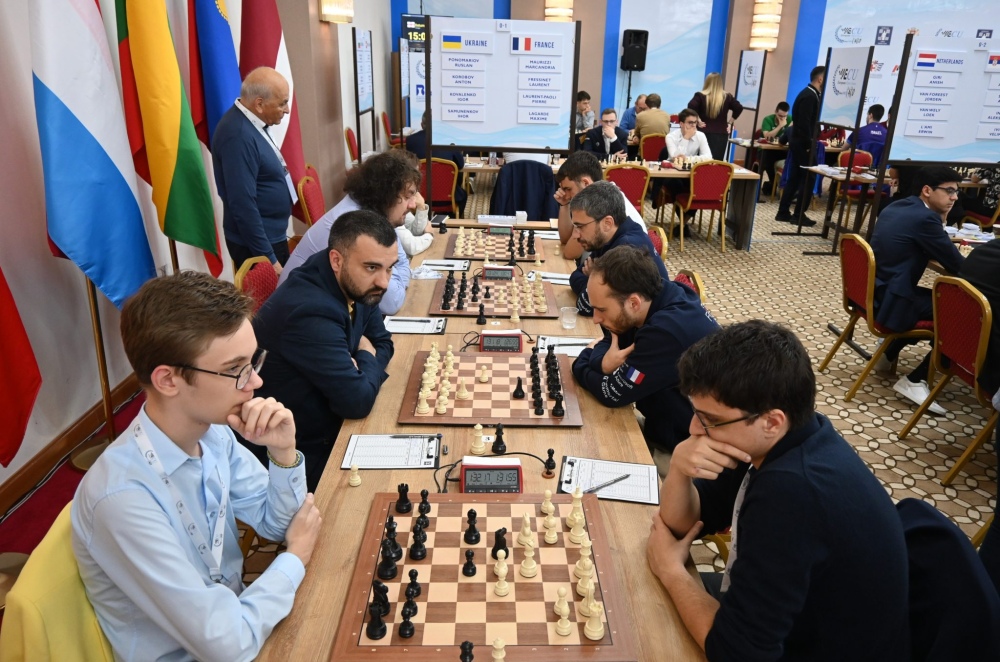
After Round 6 of the European Team Chess Championship 2025 in Batumi, Georgia, Ukraine and Poland hold the sole leads in the Open and Women’s sections, respectively. Ukraine scored a narrow victory over France, thanks to GM Igor Kovalenko (UKR, 2669), who defeated GM Pierre Laurent-Paoli (FRA, 2570). GM Ruslan Ponomariov (UKR, 2633) had a promising opportunity to score a full point against GM Marc’Andria Maurizzi (FRA, 2624) but missed the key idea to transpose into a winning pawn endgame, and the game ended in a draw. The encounters on the second and fourth boards were solid and also concluded in draws. With this result, Ukraine preserved its sole lead in the tournament with 11/12 match points. The Netherlands emerged victorious against Serbia, posting a convincing 3–1 win to stay within striking distance of the leaders. GM Anish Giri (NED, 2759) defeated GM Alexandr Predke (SRB, 2634), while GM Jorden Van Foreest (NED, 2697) outplayed GM Alexey Sarana (SRB, 2661). The games on the remaining two boards were drawn. The Netherlands trails Ukraine by just one team point, while Azerbaijan, which defeated Armenia 2.5–1.5, now sits in third place. In the Women’s Championship, Poland extended their lead to three match points after a commanding 3–1 victory over Georgia. IM Alina Kashlinskaya (POL, 2450) beat GM Nana Dzagnidze (GEO, 2496), and IM Aleksandra Maltsevskaya (POL, 2394) prevailed over GM Nino Batsiashvili (GEO, 2469), while the other two games were drawn. Poland leads with a perfect score of 12/12, followed by Germany, Ukraine, and Romania, each with 9 match points. October 11 is a free day, and Round 7 will start on October 12 at 15:00 local time. All results, rankings and pairings can be found HERE. Photo gallery by ECU Live video broadcast of the games with commentaries by GM Alojzije Jankovic and WGM Keti Tsatsalashvili can be found on the ECU TV platform or ECU YouTube channel. Text and photos: European Chess Union Official website: etcc2025.com/
2025 FIDE World Rapid & Blitz Championships: Registration open
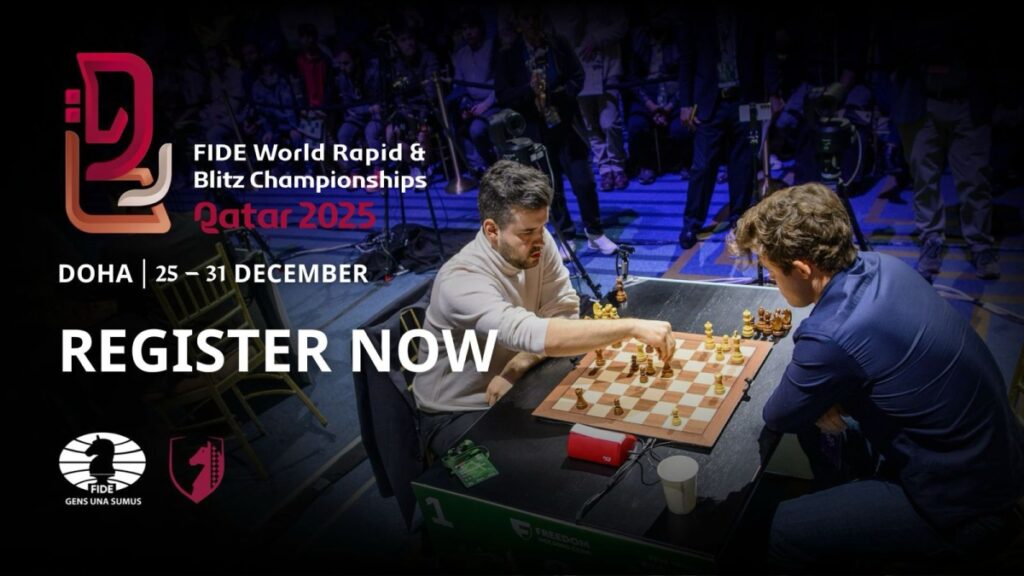
What better way to end the year than with a high-stakes chess tournament featuring the world’s top players, a one-million-euro prize fund, and popular fast-paced time controls? The 2025 FIDE World Rapid & Blitz Championships offers exactly this to chess players and fans around the globe. This year, from December 25-31, the annual event heads to Doha, Qatar – a world-class setting for a world-class competition. Registration is now open, and FIDE invites all eligible players to take part in one of the most exciting events on the chess calendar. Register now Tournament Overview Rapid: Open section: 13 Swiss rounds Women’s section: 11 Swiss rounds Blitz: Two-stage format: Swiss stage: 19 rounds (Open), 15 rounds (Women) over two days Knockout stage: Only the top four players from the Swiss stage proceed to the semifinals (Open and Women). Matches in the knockout are over four games, and ties after these lead to a “sudden death” game. Prize fund Open Rapid Championship: €350,000 Open Blitz Championship: €350,000 Women’s Rapid Championship: €150,000 Women’s Blitz Championship: €150,000 Eligibility Players with a FIDE rating of 2550 (Open section) or 2250 (Women’s section) or higher in any recent FIDE rating list (Standard, Rapid, or Blitz) are eligible to participate. Reigning national champions also qualify regardless of rating. Players who do not meet the above criteria may be nominated by the FIDE President and/or the organiser. Registration Entry fee: $100 for the Open section and $50 for the Women’s section. Late entry fee: Double the original fee if paid less than 10 days before the tournament. Travel & accommodation support Open section players rated above 2750 and women’s section players rated above 2500 will have travel and accommodation covered. The 2024 medalists (gold, silver, bronze) will have full accommodation covered. Accompanying person fee: Accompanying person’s fee in amount of 100 USD must be paid by 1 November 2025, which covers: Transportation during the event: airport-hotel-airport, hotel-playing hall-hotel; Accreditation; Visa support; General admission ticket Registration can be done HERE. The deadline for submitting entries is November 01, 2025. All foreign players and their accompanying persons shall stay only in the official hotels, which can be booked while completing the registration form. Regulations for 2025 FIDE World Rapid & Blitz Championships: Open (PDF) Women’s (PDF) With exciting formats, strong incentives for top performers, and full global attention, the stage is set in Doha for one of the landmark events of the chess calendar.