

FIDE extends bidding deadline for World Championship Match 2026
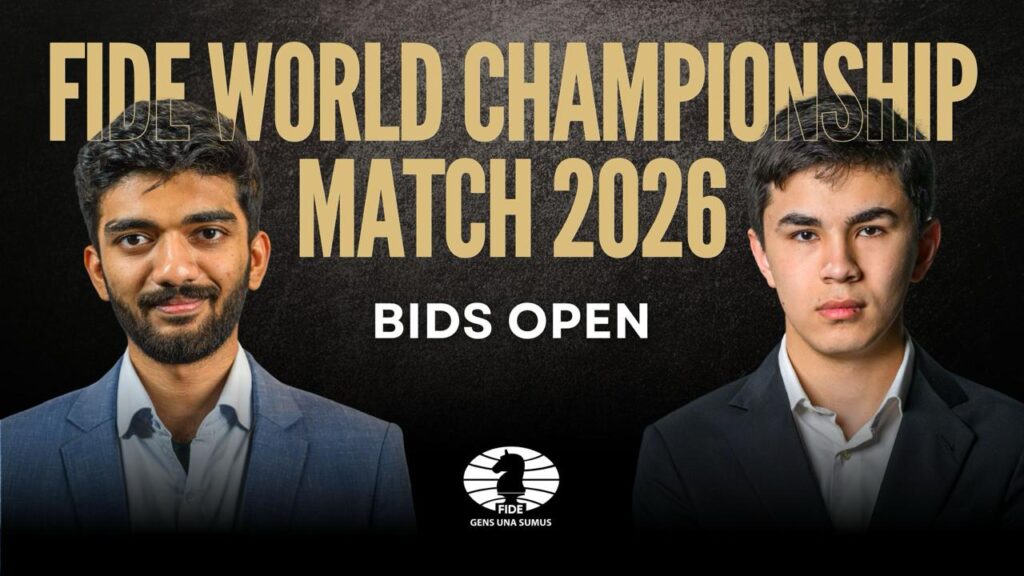
FIDE has received several letters of intent from the potential organizers of the FIDE World Championship Match 2026. At the same time, providing formal guarantees takes more time than expected due to significant budget requirements. FIDE has therefore extended the formal bidding procedure until June 21, 2026. This provides sufficient time for bidders to supply all the required documentation for hosting the most prestigious event on the chess calendar. The Applicant shall fill in the Bidding Form. The Applicant must indicate the exact breakdown of the budget by item, including proposals for payments to FIDE for the commercial and sponsorship rights, payment for the broadcasting rights, and the distribution of sponsorship and broadcasting rights between FIDE and the Organisers. A signed copy shall be submitted via email to the FIDE Secretariat at office@fide.com.
FIDE launches Excellence Awards

FIDE has launched the FIDE Excellence Awards, a new biennial awards programme established to recognise outstanding achievements, individuals, events, federations, teams, creators, and initiatives across the global chess community. The awards recognise excellence over the previous two-year cycle, beginning after each Chess Olympiad and culminating at the next Olympiad. The inaugural FIDE Excellence Awards ceremony will take place in September 2026 in Samarkand, Uzbekistan, during the 46th FIDE Chess Olympiad. Nominations are now open, and members of the global chess community are invited to submit candidates through the official FIDE Excellence Awards website. “The FIDE Excellence Awards give the global chess community an opportunity to recognise the people, organisations, and projects that help our game grow and thrive,” said FIDE President Arkady Dvorkovich. “Chess excellence is reflected not only in sporting achievement at the highest level, but also in tournament organisation, federation work, education, innovation, media, and initiatives that create meaningful impact around the world.” Award categories Awards will be presented across six regular categories and five discretionary categories, celebrating excellence both on and off the board. Nomination and selection process Nominations must relate to achievements and contributions made during the current Olympiad cycle. Multiple nominations may be submitted across different categories, provided each submission includes supporting information explaining the candidate’s achievements and impact. The selection process will take place in three stages: Stage one, running from June 1 to June 30, 2026, invites the chess community to submit nominations online. Following this, the FIDE Excellence Awards Working Group will review submissions and compile longlists. During stage two, from July 1 to July 15, 2026, the FIDE Excellence Awards Jury will review the longlists and select the official shortlist in each category. The shortlists, consisting of ten nominees per category, will be published on July 15, 2026. In the final stage, the FIDE Excellence Awards Panel will vote to determine the winners, who will be announced during the official ceremony in Samarkand in September 2026. The FIDE Excellence Awards recognise world-class players, breakthrough creators, outstanding federations, and projects that use chess to create a positive impact in society, celebrating excellence across the global chess community. Submit your nominations here. Nomination deadline: June 30, 2026 Official website: https://excellence.fide.com/
FIDE June 2026 rating list published

The top echelon of the FIDE June 2026 rating list was shaped by the Super Chess Classic Romania, TePe Sigeman 2026, Sardinia World Chess Festival, Open International de Lecci, and other open tournaments around the world. While women’s top 10 remained intact, the open upper tier saw several changes. Fabiano Caruana reclaimed second place on the list after finishing second at the 2026 Super Chess Classic Romania, while World Championship Challenger Javokhir Sindarov reached his career-high fourth position in the top 10 Open. Photo: Michal Walusza Arjun Erigaisi returned to the top 10 Open, following his runner-up finish at the TePe Sigeman 2026 (+10 points), where he was edged out by Magnus Carlsen in a tiebreaker. Biggest rating gains in top 100 Open and Women Shubhi Gupta WFM IND 2426 (+184) Atwell, Rose FM USA 2410 (+27) Vantika Agrawal IM IND 2388 (+21) Yan, Tianqi WIM CHN 2378 (+18) Kurmangaliyeva, Liya FM KAZ 2362 (+16) Martirosyan, Haik M. GM ARM 2651 (+15) Karthikeyan, Murali GM IND 2661 (+13) Svane, Frederik GM GER 2657 (+12) Pranesh M GM IND 2644 (+12) Milliet, Sophie IM FRA 2373 (+12) Shubhi Gupta (pictured below) became the undisputed winner in this category following her impressive run in two tournaments in Germany – Munich – Muenchner Normenturniere and Wolfgang-Unzicker-Normenturnier – earning her a whopping 184 rating points. The Indian teenager debuts in the top 100 Women list, soaring right to the 32nd position – a remarkable achievement. Photo: Shahid Ahmed Meanwhile, Rose Atwell continues her rapid ascent in the rankings. In May alone, she added 27 points to her rating tally after finishing second in the Southern California State Championship. Notably, over the last five months the American teenager has increased her rating by 120 points. Liya Kurmangaliyeva overperformed in the Kazakhstan Women’s Chess Championship and Turkic Women’s Team Championship, while the newly crowned Chinese Women’s champion, Yan Tianqi (pictured below), not only won her maiden national title but also earned 18 points, reaching her career-high 63rd position on the women’s list. Photo: Chinese Chess Association Frederik Svane’s victory at the Sardinia World Chess Festival translated into 12 rating points, while Pranesh’s shared second place at the Open International de Lecci brought him an identical gain. Vantika Agrawal of India, her compatriot Murali Karthikeyan, and Haik Martirosyan from Armenia delivered solid results in both aforementioned competitions, collecting 21, 13 and 15 rating points, respectively. Visit: https://ratings.fide.com/
Overseas Family School: A model for educational chess in Singapore

By Abel Talamantez, FIDE Chess in Education Commission In 2026, designated as the FIDE Year of Chess in Education, the FIDE Chess in Education Commission is actively engaged in initiatives that promote the value and benefits of integrating chess into school curricula worldwide. Part of this initiative is to visit school sites that have a history of success in integrating chess as part of their school curriculum so that we can learn what makes the program a success. The hope is that we can bring those ideas back to our local programs and implement or scale chess programs in schools. The FIDE EDU recently sent a delegation of commission members, instructors, educators, and federation representatives to Singapore to visit Overseas Family School (OFS), an international school with approximately 3,000 students in grades K-12 from over 70 countries. In the educational chess community, OFS has earned a stellar reputation as a model of educational chess, or chess used as a learning tool to enhance 21st-century skills in the classroom and beyond. As a 2024 recipient of the FIDE Gold School Award, OFS provided the ideal setting to observe how chess can be seamlessly integrated into a school’s academic culture. The delegation included FIDE EDU Commission member IA/SLI Abel Talamantez (USA); Commission member GM Abhijit Kunte (IND); SLI Jedidiah Huang (SGP); IA/SLI Ton Tung (VIE); SLI Tuan Nor Hariz (MAS); NA/LSI Dishal Ruwinga (SRI); FI/FA/LSI Muhammad Firdaus Ismael (MAS); as well as Singapore Federation officials IM Enrique Paciencia and Mr. Alex Chia. Over three days, we shared our backgrounds in chess education, observed classes from grades 1 through 5, and assisted with a family team tournament on the final day. Here is what we discovered: Day 1: Presentations and background On the first day, we were welcomed by Head of School Vanessa McConville, EDU Commission member and OFS chess instructor Dijana Dengler, and Philipp Ziegler, who together form the school’s chess instruction team. We toured the classrooms and were amazed at how deeply chess is woven into the school’s culture and how impactful it is as a learning tool. Separate classrooms are dedicated to the lower and upper grades, both with appropriate-age chairs and tables. What really stood out were the types of tools used for classroom organization. Ollie, the mascot of the chess program, is used to provide emotional support for some of the early-grade students. Since OFS is an international school, some students enroll without knowing any English, which is the main language of instruction. For these students facing challenges of integrating into a new environment, the game of chess, with help from Ollie, provides a way for kids to feel comfortable in learning and acclimating to the new surroundings. Ollie (far right) and other plush toys are used as part of classroom communication and emotional-support strategies Following the tour, delegation members presented their own experiences in chess education. SLI Jedidiah Huang shared how his background in scriptwriting informs his use of storytelling and character development in lessons. After lunch, we continued exchanging insights and discussing pedagogical approaches. SLI Jedidiah Huang discussing his use of characters and storytelling in class Day 2: Classroom visits The classroom visit day was the most anticipated, as we finally observed the program in action. From the moment students entered, the deliberate preparation was evident. Soft, calming music played as children arrived, and instructors maintained a gentle, focused tone that kept students settled and attentive. The session incorporated physical movement through “chess yoga” to prepare young minds for learning – an activity we enthusiastically joined. The 50-minute class follows a structured rhythm: a 15–20 minute lesson transitions into practical play, with smooth shifts between meditation, movement, instruction, and gameplay that sustain student engagement throughout. One of the OFS chess classrooms One activity that was tons of fun involved dividing the class into three groups, lined up in three rows, with about 7-8 players per group. Each team received an identical board position and stood roughly 20 feet from an empty board. One by one, players had to pick up a piece, balance it between two fingers, and carefully transfer it to the correct square on the empty board without dropping it – a mistake meant starting over. Teams raced to complete the transfer, and midway through, the challenge intensified: students had to balance the pieces on their heads. When all the pieces were transferred, the contest was judged based on speed and accuracy. This is a great activity in which an entire class can participate regardless of skill level. We also observed a clever memory-training variant using a specially designed magnetic board with white pieces only on one side and the black pieces set up under the board on the other side. White makes a move, and then the board is spun so that we see black’s pieces, and they make a move. The trick is you must remember the setup of the opponent’s position, since you can’t see their pieces when you make your move. This creative exercise sharpens visualization and positional recall in a playful, interactive format. This chess variant has players make a move then flip the board around for the other side to counter (you must remember where the other side’s pieces are)! Day 3: Family tournament On the final day, the delegation helped with the OFS family tournament, where a student and parent participate as a team, with parents playing against parents and kids against kids. Their combined team score after 6 rounds determines a winner. This concept shows another way in which the OFS chess program engages with families. It was a fun, non-rated event, officiated smoothly by IA Lee Peng Keong. We also had the honor of having Mr. Priyanga Nanayakkara, Minister of the High Commission of Sri Lanka, in attendance for the event. After the event, the top 5 teams received prizes from FIDE. Concurrently, GM Abhijit Kunte hosted a “take-all-comers” simultaneous exhibition, adding to the day’s festivities. Photo caption: The venue for the family tournament
FIDE Open Aid Project 2026: Selected events announced

FIDE is pleased to announce the open tournaments selected to receive financial support under the 2026 edition of the Open Aid Project. The selected events were chosen on the basis of their classical time control, competitive strength, historical track record, geographical location, and the structure of their prize fund distribution, with particular attention paid to provisions for women, veterans, and players from developing countries. The project, launched during the COVID-19 pandemic, was originally created to help tournaments navigate a period of severe financial uncertainty while supporting chess professionals whose livelihoods depended on regular competition. Since then, it has become a recurring part of FIDE’s support for the global open circuit. The 2026 edition of the programme, run by FIDE with the support of Freedom Holding Corp, provides targeted assistance to selected open tournaments taking place between June and December 2026. Organisers from around the world submitted applications, with the chosen events meeting the programme’s criteria aimed at promoting accessible, inclusive, and sustainable tournament organisation. The following tournaments have been selected to receive support through the 2026 FIDE Open Aid Project: IMPORTANT UPDATE: Three tournaments have been added to the list: Argentina – Masters Ciudad de Buenos Aires (13-21 June) Croatia – Split Open (6-14 August) Estonia – Paul Keres Memorial (27 July – 2 August) This list is not final, as some applications are under additional review. “Open tournaments are integral to the growth of chess across the world,” said FIDE President Arkady Dvorkovich. “The Open Aid Project began during the pandemic, when this kind of financial support was urgently needed to help events survive and to support chess professionals through a very difficult period. We are pleased that it has become a regular initiative. By supporting tournaments across different countries and regions, we help strengthen opportunities for players, organisers, and local chess communities while contributing to the long-term development of our sport.” Through the Open Aid Project, FIDE continues its commitment to supporting tournament organisers and reinforcing the global calendar of open competitions, ensuring that high-quality playing opportunities remain available to chess communities around the world.
FWUTCC 2026: Eight teams secure places in over-the-board final

FWUTCC 2026: Eight teams secure places in over-the-board final The field for the final stage of the 2026 FIDE World University Team Chess Championship (FWUTCC) is beginning to take shape, with eight teams securing qualification through the tournament’s online stages. Organized by FIDE, the championship is open to university students born between January 1, 2001 and December 31, 2008, who are officially enrolled at the institution they represent. The championship features three stages. During the first stage, the Online Swiss Qualifiers held on May 2 and May 9 on the Lichess.org gaming platform, the top 32 university teams were determined. These teams continued their campaign in the second stage, the Online Knockout, which took place on May 16 and May 17, also on Lichess.org. As in the first stage, the teams competed in a four-versus-four format under a rapid time control of 10+3, allocating 10 minutes per game with a 3-second increment for every move starting from the first. The first round brought together the top teams from the Americas and Africa regions alongside those from Europe and Asia. The 16 winning teams returned the following day for another round of play-off matches to determine the eight teams advancing to the over-the-board final. The eight teams that qualified for the over-the-board final through the online stages are: The final stage of FWUTCC 2026 will take place in Almaty from August 4-9. The event will feature 16 teams: the eight online qualifiers together with eight wild card entries selected by FIDE and the organizers. The final will begin with a group stage, where the 16 teams will be divided into four balanced groups and compete in a double round-robin format. The top two teams from each group will advance to the knockout phase, consisting of quarterfinals, semifinals, a third-place playoff, and the final. All games of the final stage will be contested under a fast classical time control of 45+30. The winning team will become the FIDE World University Team Champion and receive a prize of €25,000. The team finishing second will be awarded €15,000, while the third-place team will receive €10,000. The remaining 8 wildcard teams will be announced in due course. For any questions, contact worlduniversity@fide.com. Full details and registered teams: worlduniversities2026.fide.com
Media accreditation opens for the FIDE Chess Olympiad 2026

FIDE is pleased to announce the opening of media accreditation to the FIDE Chess Olympiad, the FIDE Chess Olympiad for People with Disabilities, and the FIDE Congress. Dates:3rd FIDE Chess Olympiad for People with Disabilities – September 10-17, 202646th FIDE Chess Olympiad – September 15-27, 2026FIDE Congress – September 19-28, 2026 Location: Samarkand, Uzbekistan Every two years, national teams from across the world gather under their flags at the FIDE Chess Olympiad, representing the highest level of team competition in the game. Established champions and emerging talents meet across the board, carrying both global reputations and national pride. Media registration form: https://chessolympiad2026.fide.com/accreditation-for-media Official websites: 3rd FIDE Chess Olympiad for People with Disabilities https://dis-olympiad2026.fide.com46th FIDE Chess Olympiad https://chessolympiad2026.fide.comFIDE Congress https://congress.fide.com We invite all media representatives wishing to cover the event to submit their accreditation applications via the media registration form above. Accreditation is open for all members of the written press, photographic press, online media, and writers and photographers working for publications and/or websites of the FIDE National Member Federations. Accredited event media will collect their badges onsite at the events. A valid travel document containing a photo must be presented to receive media accreditation. The FIDE Chess Olympiad organisers will ensure a comfortable working environment for all Accredited Media, providing a range of facilities and services at the level established at major FIDE events. We look forward to your coverage of the FIDE Chess Olympiad, the FIDE Chess Olympiad for People with Disabilities and the FIDE Congress!
2nd Continental Championships for Prisoners conclude with a record number of countries/teams participating
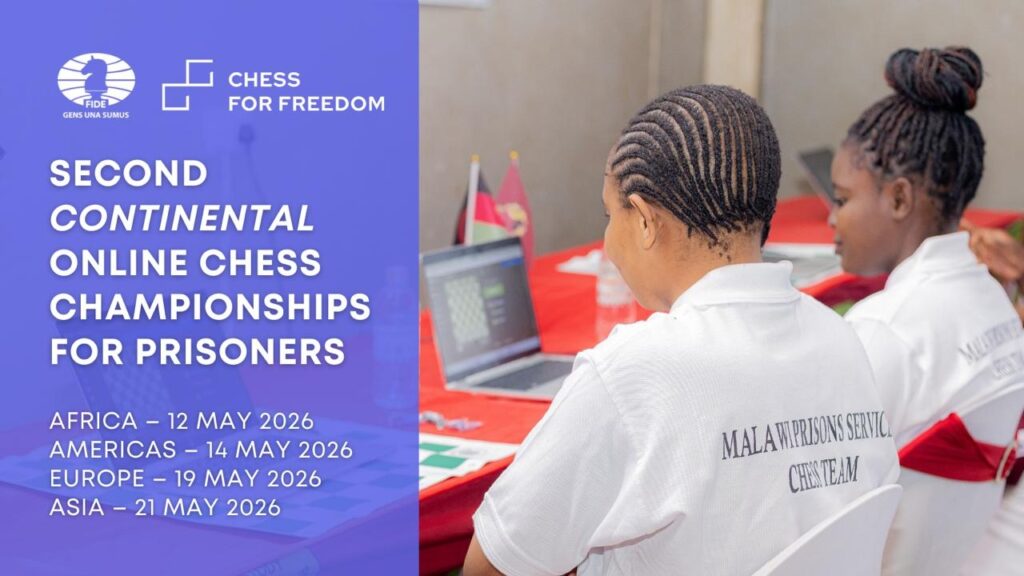
By Mikhail Korenman, Chess for Freedom program coordinator A record number of 50 countries (42 countries in 2025) and 71 Male (50 teams in 2025), 21 Women (13 teams in 2025), and 19 Youth (13 teams in 2025) teams participated in the 2nd Continental Chess Championship for prisoners that was held from May 12 to 21, 2026. The African Continental Championship featured teams from Zimbabwe, Malawi, Kenya, Ghana, Eswatini, as well as new countries Nigeria, Namibia, Madagascar. Both Zimbabwe Male and Women teams finished at the top of their groups, with Zimbabwe Male team winning the overall competition. The Ghana team was second overall and won 1st place in the Youth category. Malawi Male, Women, and Youth all finished 3rd in their respective categories. The American continental championship featured teams from the United States, El Salvador, Colombia, Mexico, Argentina, Jamaica, Aruba, Guyana, Uruguay, Saint Lucia, Grenada, and Paraguay. Both Salvadorian teams won the championship in their categories with Male team winning the overall event. The USA-Chicago team finished overall second, with Mexico in third place. The Mexico Women team finished second, and the USA-Kansas Women team third on Women championship. Guyana Youth team emerged as the winner in the Youth category. The record number of countries/teams participating in the European championship included Serbia, Armenia, Romania, Norway, Ukraine, Croatia, England, Spain, Poland, Latvia, Germany, the Czech Republic, Italy, Georgia, and Greece, and new countries of Belgium and Albania joined this year. Male team Serbia 1 won the overall competition as well as Male group. Ukraine finished second and Armenia third. Alongside the competition, Italy hosted the European Chess for Freedom workshop (the report was published here). Women section was dominated by the Georgian teams, with England finishing third. The Youth competition winners are Serbia, England, and Ukraine. The Asian continent was represented by teams from India, Mongolia, the Philippines, Kyrgyzstan, and Singapore, and a group of four teams from the Australian region – Australia, South Australia, and a new one from Vanuatu. The overall competition winners are two Youth teams from India. Mongolia won the Male and Women sections. India was second in both categories. With the growing number of teams from the Australian continent, we hope to have the Australian continental championship next year in a separate section. We very much appreciate all support from a large group of Chess for Freedom country coordinators and their time and efforts they are putting toward the Chess for Freedom program. We would like to thank all correctional facilities, their administrations, and staff for supporting the Chess for Freedom program. We thank a large group of chess enthusiasts and professional coaches who deliver training to many incarcerated men and women. A special thank you goes to a very professional group of tournament directors led by Chief Arbiter Nebojsa Baralic from Serbia and Deputy Chief Arbiter Ana Srebrnic from Slovenia, Chief Fair Play Officer Andy Howie from Scotland, and a great chess.com team for the full support and professional run of the events. Important upcoming dates: October 13-15, 2026 is the VI Intercontinental Online Championship for Prisoners. March 17-19, 2027 – Chess for Freedom conference in Chicago (registrations will open soon). About Chess for Freedom The Chess for Freedom initiative was launched by FIDE in partnership with correctional institutions around the world to make chess accessible to inmates as an educational and social tool. It promotes critical thinking, emotional control, and teamwork, helping participants gain valuable skills for reintegration into society. Since the first Intercontinental Championship in 2021, the project has grown into a global movement. Thousands of inmates have taken part in regional and international tournaments, workshops, and educational programs across six continents.
Mitrabha Guha wins Commonwealth crown

Indian Grandmaster Mitrabha Guha emerged as the Champion of the Commonwealth Chess Championship 2026 after drawing his final-round game against compatriot Rohith Krishna at Hotel Citrus, Kalutara, Sri Lanka. Guha remained unbeaten throughout the tournament, scoring six victories and three draws to clinch the title with 7.5 points. Sri Lanka’s Ranindu Dilshan Liyanage finished as the runner-up with 7 points, while India’s Srihari L R completed the podium with 6.5 points. The Under-20 category, which was merged with the Open section, Sakline Mostafa Sajid from Bangladesh delivered an impressive performance to win gold. He edged out India’s Ethan Vaz, who secured the silver medal with an identical score of 7 points. In the other major categories, India’s Mary Ann Gomes captured the Women’s title, Singapore’s Sreekarthika Velmurugan won the Under-20 Girls Gold medal, while India’s Ebenezer Joseph came out on top in the Veteran category. Among the youth champions, Malaysia’s Siva Kumar Nirish Kumar won the Under-18 Open title, while India’s Saranya Devi Narahari claimed gold in the Under-18 Girls category. India’s Goutham Krishna H and Akshaya Sathi emerged victorious in the Under-16 Open and Girls categories, respectively. In the Under-14 section, India’s Shaunak Badole and Mysha Perwez won the Open and Girls titles, respectively. Sri Lanka’s Kiringoda Thehas Rithmitha clinched the Under-12 Open gold medal, while India’s Manya Abhishek Drolia secured the Under-12 Girls title. India’s Tamizh Amudhan S and Nakshatra Gumudavelly won the Under-10 Open and Girls titles, respectively. In the Under-8 category, Sri Lanka’s Wijesinghe Y M Dihela Thevin secured the open title, while India’s Pritika Nandi won the Girls title. Final standings (all sections) In a colorful closing ceremony, the Honorable Arun Hemachandra, the Deputy Minister of Foreign Affairs and Foreign Employment Government of Sri Lanka; Bharat Singh Chauhan, Chairman of the Commonwealth Chess Association; and Luxman Wijesuriya, General Secretary of the Commonwealth Chess Association, along with officials of the Chess Federation of Sri Lanka, presented the trophies and medals to the winners.
The growth of chess in Africa
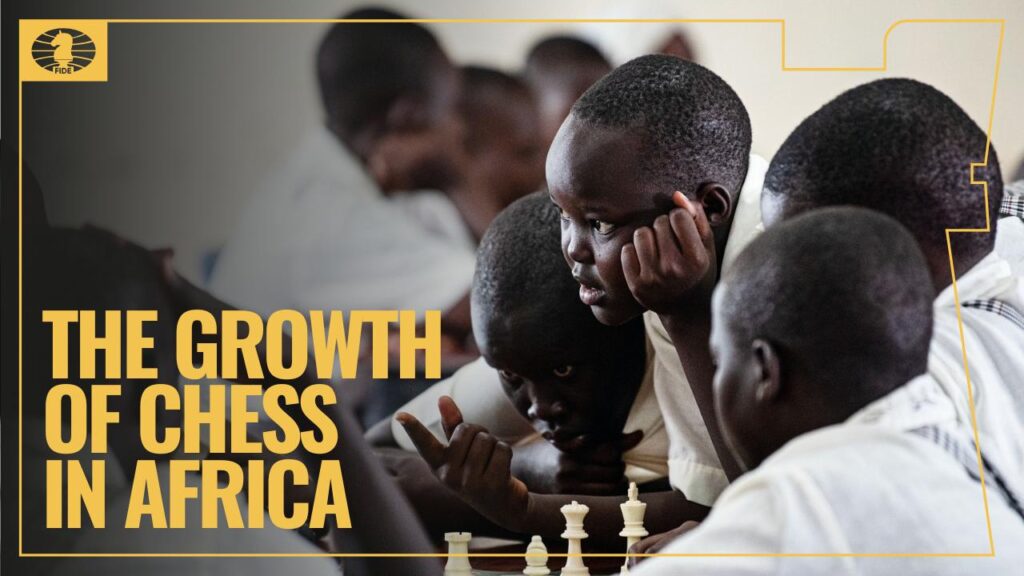
Since 1963, 25 May has been celebrated as Africa Day. It marks the founding of the Organisation of African Unity, when heads of state from 32 independent African states met in Addis Ababa, Ethiopia, to sign the OAU Charter. For chess, it is also a chance to look at a continent where the game is growing fast. Chess in Africa has expanded considerably since the 1960s. Out of 54 countries, 51 are members of FIDE. It is no longer about a few strong federations, but about systematic projects in schools, youth events, national and international tournaments, as well as projects for prisons, refugee camps, and women’s chess. The shift towards a greater emphasis on chess in Africa was noted by FIDE’s decision in April 2026, to approve a rotation principle for the Chess Olympiad, giving Africa priority for hosting the 2032 event. “With its cultural diversity and heritage, as well as having a growing young population, Africa has the greatest potential for chess growth in the world, and this is what we are trying to nurture,” FIDE President Arkady Dvorkovich said. “Over the years, FIDE has worked closely with African federations and international organisations on promoting chess at club and national levels, but also as a tool for social development and inclusion. Our vision is to help Africa host the Chess Olympiad in 2032 and use this as a catalyst for chess development in the continent,” Dvorkovich added. The growing chess landscape Since 1960, Africa has hosted two Interzonals (Sousse in 1967 and Tunis in 1985) as well as the FIDE World Chess Championship 2004, where Rustam Kasimdzhanov won the title. In 2011 the Commonwealth Chess Championship was held in Africa for the first time. In recent years the number of international events has grown, showing a clear shift. In 2023, the FIDE World Cadet Championships U8, U10 and U12 were held in Sharm El Sheikh, Egypt. The event had six sections, Open and Girls in U8, U10 and U12. The 13th African Games A major milestone was crossed at the 13th African Games, which took place in Accra, Ghana, from 8 to 23 March 2024, where chess was included among 23 sports. The chess programme began with a Mixed Team Rapid event, which attracted teams from 18 countries. That year Morocco hosted the Casablanca Chess event, as part of Morocco Chess Week. It brought together Magnus Carlsen, Hikaru Nakamura, Viswanathan Anand and Bassem Amin in an event where play was based on positions from historic games. In 2025, Freestyle Chess Grand Slam Finals were held at Grootbos, South Africa, with many of the world’s elite players taking part. Levon Aronian won the South Africa final, defeating Magnus Carlsen 1.5 to 0.5, while Carlsen secured the overall 2025 Freestyle Chess Grand Slam Tour title. This year at least two significant international events will take place in Africa. The African Continental Stage of the FIDE ISCF World Schools Team Championship 2026 will be held in the Cape Town area, from 6 to 11 July 2026. Also, in August, Nigeria is set to host the FIDE World Amateur Rapid and Blitz Championships. Popularising chess in African societies Africa is becoming an important centre for social chess initiatives. Federations from the continent are the top beneficiaries of FIDE’s Development programs and are actively engaged with FIDE on projects to promote the sport across society. Since 2021, FIDE has been running the Chess for Protection programme at the Kakuma and Kalobeyei refugee camps in Kenya. Conducted in partnership with the UNHCR, the project gives children regular access to chess lessons, chess clubs, training materials, tournaments and mentors, in an effort to improve psychosocial wellbeing, support social integration, empower girls and connect talented players with the wider chess world. Kakuma Girls Chess Club In June 2025, more than 330 girls took part in an in-person training camp at the Kakuma Girls Chess Club. The same year Malawi hosted the Chess for Freedom Continental Championship and Workshop for Africa in Lilongwe, the first in-person project conference for the continent. Many correctional facilities in Africa also took part in the FIDE competitions for prisoners. In 2025 Zimbabwe won the African Continental Championship for Prisoners in both the Open and Women’s sections, building on the 2021 success where they finished second. African players on the global scene The continent is fielding a growing number of players in international events, including among the elite. Bassem Amin of Egypt (pictured above) became the first African player to cross the 2700 ELO barrier. His peak rating was 2712 in January 2019 and he remains one of the symbols of African elite chess. In 2007 another Egyptian player, Ahmed Adly, won the World Junior Chess Championship in Armenia. In 2025, Tunde Onakoya from Nigeria, together with Shawn Martinez from the U.S., set the official Guinness World Record for the longest chess marathon. They played for 64 hours in Times Square, New York, from 17 to 20 April 2025. Tunde Onakoya sets an official Guinness World Record for the longest chess marathon A promising road ahead Chess in Africa is moving in the right direction. More federations are active, there are more social initiatives, and there is greater interest in supporting the game. With more events coming and with Africa given priority for the 2032 Olympiad, there is now a real chance to build a stronger chess infrastructure. But the work ahead is not small. Many players face high barriers – from limited access to chess boards and equipment to coaching, availability of rated events, and high travel costs. Some federations need more support with organisation, funding, and long-term planning. Girls and young players need clear paths from school chess to serious competition. FIDE recognises this and plans to increase support. If the growing chess momentum in the continent is matched by investment and support, Africa can become the biggest growth region in world chess. Written by Milan Dinic Photos: Stev Bonhage, James Keivom, Michal Walusza, and Niki Riga