

FIDE President targets regional growth during Baku Open visit
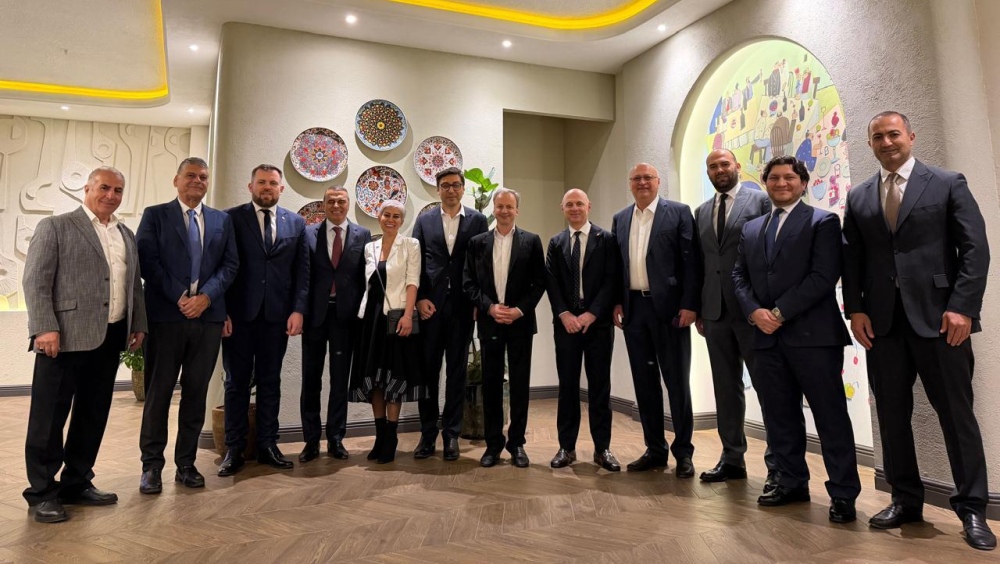
FIDE President Arkady Dvorkovich attended the closing ceremony of the 2026 Baku Open. He met with regional officials and federation leaders to discuss the growth of the game in the South Caucasus The Baku Open – which established itself as one of the premier chess events in the Caucuses region – attracted nearly 900 players from 13 federations. The top Grandmaster tournament was won by GM Movahed Sina from Iran. FIDE President Dvorkovich held talks with presidents of chess federations of Azerbaijan, Georgia, Spain, and Türkiye. He also met with European Chess Union President Zurab Azmaiparashvili and Secretary General of the FIDE Management Board, Łukasz Turlej. The meetings focused on upcoming international events and existing projects aimed at the promotion of chess in the region and globally. The FIDE President also met with Azerbaijan’s Minister of Sport, Farid Gayibov, and the deputy minister of science and education to discuss the greater integration of chess into society and education. In his remarks, Farid Gayibov emphasized Azerbaijan’s rich chess traditions and noted the contribution of the Azerbaijan Chess Federation to the development of the sport. The minister also stated that the support for sport provided by Azerbaijani President Ilham Aliyev helps ensure that international competitions are held at a high level. “Azerbaijan has long supported chess through state programs, hosting major events such as the 2016 Olympiad or World Cups. The country remains a vital hub for our sport,” Dvorkovich said. “Their state support serves as a model for the region. We are working closely with them as well as with regional chess federations to ensure this momentum leads to new projects across the South Caucasus,” he added. The 2026 edition of Baku Open, the event held since 2023, took place at the Baku Crystal Hall in Baku, Azerbaijan, from April 28 to May 6 and boasted a $50,000 prize fund.
Sina Movahed triumphs at Baku Open 2026
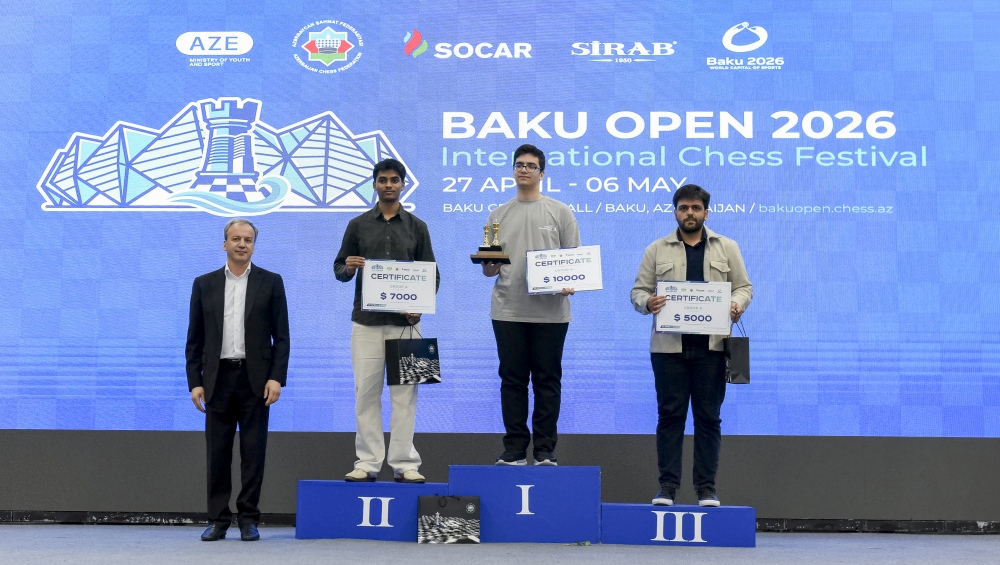
GM Sina Movahed of Iran, who turns 16 this month, emerged victorious at the Baku Open 2026, finishing with an impressive score of 8/9. The 2026 edition of Baku Open, the event held since 2023, took place at the Baku Crystal Hall in Baku, Azerbaijan from April 28 to May 6 and boasted a $50,000 prize fund. The festival featured three tournament sections (9-round Swiss): A (players rated 2250 and above), B (players rated 2249 and below), and C (players under 12) and brought together nearly 900 players from 13 countries. The main event (Open A) was a fiercely contested tournament with as many as five players sharing the lead after Round 6. In the next round Chakraborty Mayank and Sina Movahed scored victories over Anand Pranav and Khagan Ahmad respectively and surged ahead. Round 8 saw the clash of co-leaders in which Movahed pulled off a crucial victory. Heading into the final round a full point ahead of five players on 6/8 (including the second seed Ruslan Ponomariov), Movahed prevailed over Pranav in a topsy-turvy battle and secured the title. A large group finished on 6.5/9. Based on tiebreaks (average rating of opponents), the podium was completed by India’s Santhosh Parvathareddy Ajay and local IM Khazar Babazada. Final standings (Groups A, B, and C) The closing ceremony was attended by Minister of Youth and Sports of Azerbaijan, Farid Gayibov; FIDE President Arkady Dvorkovich; President of the European Chess Union, Zurab Azmaiparashvili; President of the Azerbaijan Chess Federation, Mahir Mamedov; President of the Turkish Chess Federation, Fethi Apaydın and other officials. As part of the ceremony, a video showcasing the most memorable moments of the festival over the past three years was shown. In his address, Farid Gayibov emphasized Azerbaijan’s rich chess traditions and acknowledged the contribution of the Azerbaijan Chess Federation to the development of the sport. He also noted that sustained support from President Ilham Aliyev enables Azerbaijan to host world-class international competitions. Fethi Apaydın, President of the Turkish Chess Federation, underscored the strong cooperation between Turkish and Azerbaijani sports authorities, stating that events like the Baku Open deepen the brotherly ties between Türkiye and Azerbaijan. FIDE President Arkady Dvorkovich stated that Baku would remain one of the key centers on the global chess map. At the conclusion of the ceremony, winners and top-finishers of the tournaments were awarded medals, diplomas, and commemorative gifts. Photos: Azerbaijan Chess Federation
World Cadets Cup U8–U12: Registration closed as player limit reached
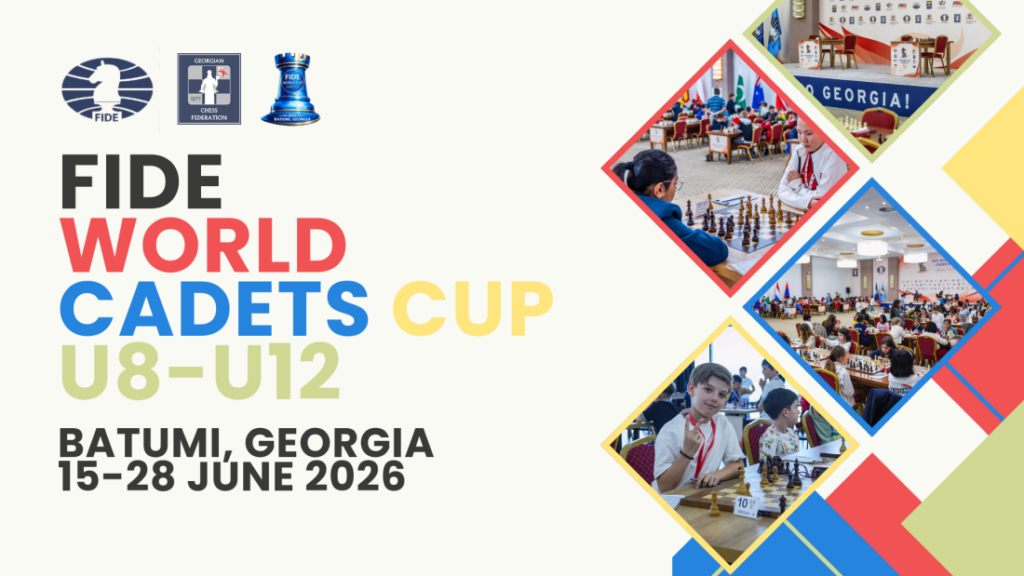
Dear National Chess Federations, We would like to inform you that the registration deadline for the World Cadets Cup U8–U12 (April 15, 2026), scheduled to take place from June 15-28, 2026 in Batumi, Georgia, has now passed. As of today, the event has reached full capacity, with 606 registered players representing 67 countries. All quotas have been filled and the maximum number of participants having been reached. Consequently, registration is now officially closed. Please note the following: It is no longer possible to register players under invited or personal right categories. Requests for invited player spots submitted after May 1 will not be considered. No additional players can be entered under standard registration procedures. In exceptional cases, the Organizing Committee may review applications submitted by national federations for additional players and accompanying persons. However, such participation – if approved – will be fully at the expense of the nominating federation, in accordance with the event regulations. For further details, please refer to the official website: https://wcc2026.fide.com/ We kindly ask all federations to acknowledge this notice and refrain from submitting further registration requests under normal entry categories. Thank you for your cooperation and understanding. Sincerely, FIDE EVE Commission
FIDE Council issues reminder on pre-election conduct

The FIDE Council has issued a formal reminder regarding electoral regulations ahead of the 2026 General Assembly, which will take place at the end of September. FIDE reminds all federations, officials, and potential candidates that the FIDE elections are set for 26 and 27 September 2026. According to FIDE rules, the official electoral period starts three months before the elections, which in this case would be 26 June 2026. Candidates are reminded that they should not campaign or promote their candidacy before the official start of the electoral period. The Council notes that, according to the Electoral Rules, election campaigning is only allowed during the electoral period: Electoral Rules Art. 7 Electoral campaign: 7.1 Electoral campaigning and promotion of candidatures are allowed only to the extent permitted under the Electoral Rules and during the electoral period. The electoral period starts three (3) months before elections. Promotion means any act or action that may enhance the level of awareness of a particular candidature. It includes advertising, campaigns or any organised or planned action for the election of a candidate. Electoral campaigning shall be understood as any activity undertaken by candidates or those acting or working for them with the aim of canvassing votes. The Council also highlighted rules regarding undue advantage, such as providing money, services, gifts, jobs, debt forgiveness, tickets, hospitality, or similar. Article 9 clearly outlines sanctioned behaviours: 9.1 Offering, either directly or through an accomplice, any undue advantage to a Member Federation, which is any ascertainable enhancement in the beneficiary’s situation, legal or economical, is a prohibited practice. An undue advantage shall mean anything of more than nominal value in any form, including in particular but not limited to a payment, a benefit in kind, money, property, a service, a loan, forbearance or forgiveness of indebtedness, promise of future, employment or promotion, a favour, gratuity, honoraria, tickets or passes to an entertainment, social or sporting event, without consideration of equal or greater value in return. Advantages are not undue if they are of minor value in conformity with social customs. Thus, the following are excluded from the definition of undue advantage: complimentary attendance, including food and beverage, at charitable or campaign events, complimentary attendance, food and beverage offered by the sponsor of a widely attended event, awards, plaques, and other ceremonial items customarily presented in recognition of service in chess or within FIDE, promotional items having no substantial resale value, gifts from a family or household member, food and/or beverage of limited value, chess materials distributed freely to all Member Federations and to the members of their delegations. Article 9.9 notes that Candidates should refrain from campaigning before the official electoral period starts, in full respect of the Electoral Rules. Certain customary items of nominal value, such as limited hospitality or low-value promotional materials, may be permissible under the Electoral Rules. FIDE Electoral Rules and the FIDE Ethics and Disciplinary Code provide for substantial penalties for violations of the aforementioned rules. FIDE will monitor compliance with these regulations under the Ethics and Disciplinary Code. Violations may result in immediate proceedings before the FIDE Ethics and Electoral Commissions. The Council noted that these rules are in place to ensure a fair and transparent election process for all member federations.
Chess for Protection: Refugee teams preparing for a historic Chess Olympiad
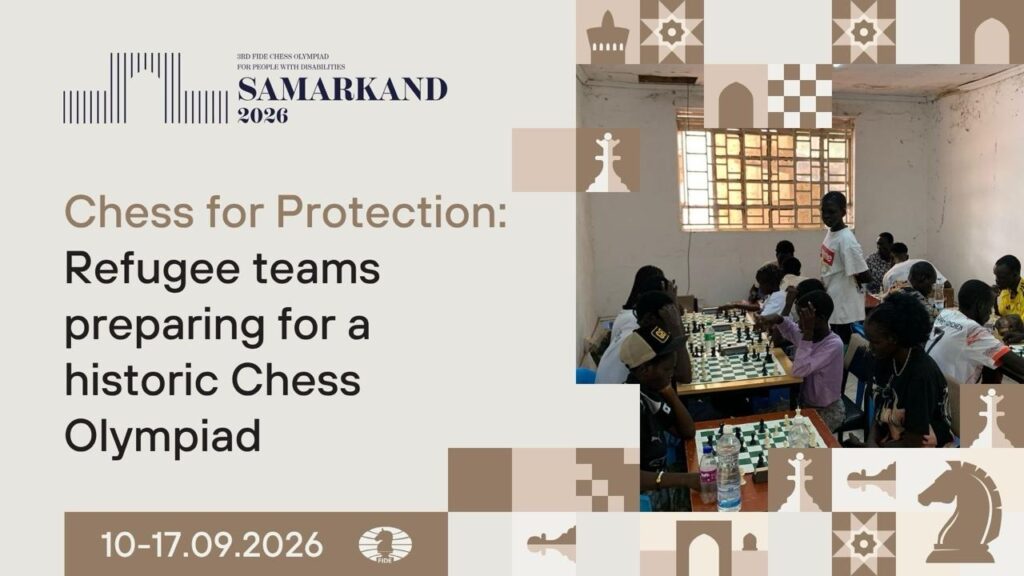
As the global chess community looks ahead to the 46th Chess Olympiad, set to take place in Samarkand, Uzbekistan, in September 2026, a powerful and historic initiative is gaining momentum. For the first time, refugee players are set to compete as organized teams at the Olympiad – marking a significant step not only for chess, but for international sport. At the heart of this effort is the Chess for Protection project, a joint initiative led by FIDE – through its Social Commission – in cooperation with UNHCR, the UN Refugee Agency. Launched in August 2021 and headed by Anastasia Sorokina, Chair of the FIDE Commission for Women’s Chess, the project supports displaced communities through chess by creating safe, structured spaces where children and adults can learn, connect, and develop valuable skills through chess. Reflecting on the broader meaning of the initiative, Dana Reizniece, Project Supervisor and Deputy Chair of the FIDE Management Board, noted: “This is not a Cinderella story waiting for a prince. It is a story of kids showing discipline and motivation and chess opening doors. For some of them – to the World Chess Olympiad, for all of them – to a better life.” Within this broader framework, the Girls Club represents the initiative led by the FIDE Commission for Women’s Chess, focusing specifically on empowering girls. Through regular training and targeted activities, it promotes confidence, inclusion, and long-term personal development – values that extend far beyond the chessboard. Photo: Stev Bonhage From community to competition: Building the teams Today, thousands of players are actively involved in the Chess for Protection programme, working consistently with coaches across different locations. From this growing community, two teams – men’s and women’s – have been carefully selected and are now preparing for the Olympiad. A defining strength of the programme is its coaching team. The Girls Club participants benefit from weekly training sessions led by highly experienced, world-class women coaches – International Master Salome Melia and Woman Grandmaster Anastasiya Karlovich. Their involvement provides not only top-level chess instruction, but also strong role models for the young players. At the same time, on-site training plays a crucial role. Latvian coach Sergey Klimakovs has travelled multiple times to Kakuma Refugee Camp in Kenya to work directly with the players, most recently in April. A training camp for 10 players – Olympiad team candidates – was held in Kakuma from April 4 to 15. During the camp, players worked on key aspects of practical play, including general positional principles, positional pawn sacrifices to seize the initiative, and transitions from defense to counterattack. Special attention was also given to learning how to use ChessBase and databases – important tools that will help them prepare for specific opponents during the Olympiad. Over the course of the camp, players demonstrated clear progress compared to previous training sessions, along with a strong motivation to continue improving. The experience not only strengthened their chess understanding, but also reinforced their readiness to compete as a team. Strengthening partnerships: Meeting with UNHCR A productive meeting took place on April 13 in Almaty between UNHCR, represented by Mahir Safarli (UNHCR Representative for Central Asia), and FIDE, represented by Gulmira Dauletova, Executive Director of the Kazakhstan Chess Federation and member of FIDE Commission for Women’s Chess, and Nadzeya Krauchuk, Director of International Relations of the International School Chess Federation and FIDE Social Projects Coordinator, together with the Kazakhstan Chess Federation. The meeting focused specifically on support for the refugee teams. Discussions centered on players from Kakuma Refugee Camp in Kenya, who, through the Chess for Protection programme, have demonstrated resilience and talent. Through chess, they have strengthened critical thinking, fostered inclusion, and built meaningful connections within their community. Efforts are currently underway to facilitate the participation of both the men’s and women’s refugee teams in the upcoming Olympiad in Samarkand. This collaboration reflects a shared commitment to supporting these players – not only in their chess development, but also in their journey toward international representation. Targeted support for Olympiad preparation As preparations intensify, targeted support has become essential in enabling the teams to train effectively. A key role in this effort has been played by long-standing partners, in particular The Gift of Chess and DGT (Digital Solutions), whose continued support has been instrumental for the development of the Chess for Protection programme. Equally important has been the provision of chess sets to the participating communities. These were made possible through the generous support of The Gift of Chess, in collaboration with Kijiji Solutions. What makes this contribution especially meaningful is the story behind it. The sets were produced by Kijiji Solutions, a Kenyan nonprofit that tackles plastic waste by recycling it into high-quality chess sets. Beyond their practical value for training, these sets carry a deeper message of sustainability, local impact, and community-driven change. Further strengthening the preparation process, a donation of a computer has significantly enhanced training possibilities. Thanks to the University of Magdeburg in Germany, which provided a powerful laptop for the project, players in Kakuma now have access to professional-level tools. As coach Sergey Klimakovs noted: “Thanks to the University of Magdeburg in Germany, which donated a powerful laptop with ChessBase installed for the project, the Kakuma players now have the opportunity to work on chess like professionals.” Donation of the laptop and a ChessBase program accepted by coach Klimakovs Together, these contributions ensure that players can train consistently and in structured conditions, supporting both their daily practice and long-term development as they prepare for the Olympiad. A historic opportunity At the heart of the project, and of the refugee teams’ journey toward the Olympiad, lies a deeply human mission. Reflecting on its impact, Anastasia Sorokina, who leads the initiative, shared: “Our project began in 2021 in partnership with UNHCR. Over the past five years, it has grown into one of the most meaningful social FIDE initiatives within the global chess community. For me, this project is first and foremost about people – those who have lost their
Arkady Dvorkovich advances chess development across Central America and the Caribbean
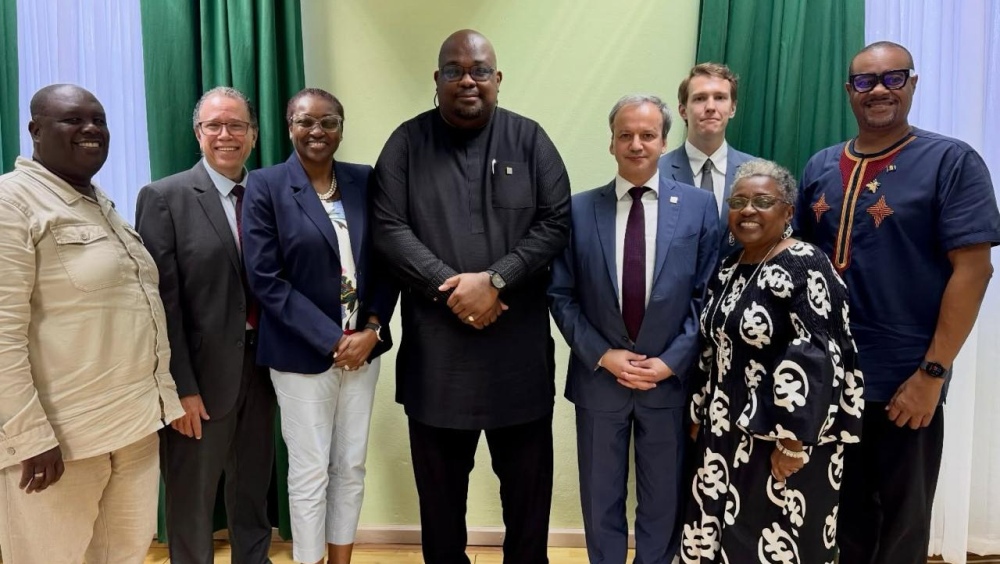
President of FIDE, Arkady Dvorkovich, recently completed a multi-stop visit across the Caribbean and Central America, reinforcing FIDE’s commitment to expanding chess through education, institutional partnerships, and competitive opportunities. In Barbados, Dvorkovich met with key officials, including the Minister of Educational Transformation, Chad Blackman, and the Chief Education Officer, Dr. Ramona Archer-Bradshaw, to discuss integrating chess into the national education system. Talks focused on using the game to enhance critical thinking and student development. He also engaged with the President of the Barbados Chess Federation, Allan Herbert, exploring opportunities to grow the sport locally. The FIDE President also met with the President of Barbados, Lieutenant Colonel Jeffrey Davidson Bostic, underscoring the importance of chess at the national level. Their discussions also covered social and educational initiatives in the country, including how chess could be integrated into them. The timing of the visit coincided with the 2026 Heroes Day Challengers Cup, hosted at the Central Bank of Barbados, further emphasizing the country’s active role in regional chess development. The International Conference on Education and New Learning Technologies, organized by World Research Society, is scheduled for October 03, 2026 in Bridgetown, Barbados. FIDE representatives were invited to participate. In Saint Lucia, the visit centered on institutional development. Meetings with the Saint Lucia National Olympic Committee addressed closer cooperation and the federation’s potential integration into the Olympic structure, alongside broader collaboration with the International Olympic Committee. In Panama, Dvorkovich marked chess’s debut in the South American Youth Games, symbolizing FIDE’s push to integrate chess into multi-sport events. He also held a series of meetings – both in person and online – with federations across the region. Summing up the tour, the FIDE President emphasized strong alignment across countries: “Following 25 in-person and online conversations… we share key priorities – from bringing chess to schools to training young talents and organizing events, including under the Olympic umbrella. Huge program ahead for FIDE AMERICA. Together!” The visit highlights growing momentum for chess across Central America and the Caribbean, with a clear focus on sustainable development and regional cooperation.
FIDE Open Aid Project returns in 2026
FIDE Open Aid Project returns in 2026 The FIDE Open Aid Project was launched during the pandemic to help tournaments stay afloat and to support chess professionals through a difficult period. Over four editions, the programme has grown into one of FIDE’s most consistent forms of direct support for the open circuit, reinforcing the value of classical tournaments as the backbone of competitive chess. Following numerous requests from around the world, FIDE announces the return of the Open Aid Package Project in 2026. The programme is run by FIDE with the support of Freedom Holding Corp, official Partner of FIDE for chess development programmes in 2026. Open tournaments held from June to December 2026 are eligible. Tournament organizers are now invited to submit their applications for the Aid Package. Applicants must accept the conditions, meet the requirements listed below, and complete the application form. Conditions & Requirements An application for the Aid Package shall be sent to gsc@fide.com by May 15, 2026 The Aid Package cannot exceed 20% of the initially planned prize fund and 10% of the total budget indicated in the application form; it cannot exceed €5,000 At least 10% of the total prize fund shall be allocated for women’s prizes and at least 5% of the total prize fund shall be allocated for veterans’ prizes FIDE may require the tournament to establish the lower fees (or absence of fees) for the agreed categories of participants (veterans, youth, women, representatives of developing countries) Mention “Financially supported by FIDE Open Aid Project” shall be visible on the tournament’s media resources (e. g. webpage, social media pages) FIDE may require that FIDE and its sponsors be reasonably represented at the tournament Application form The Organiser is requested to fill out the following APPLICATION FORM. All provided data will remain confidential. Selection criteria Events with classical time control will be prioritised Event’s history Event’s strength Geographical location Amount of the prize fund and its distribution Fair Play measures The list of selected Open tournaments will be announced by June 1, 2026. For any questions, organisers may contact gsc@fide.com.
Schackfyran: Sweden’s chess-in-education initiative bringing thousands of children together
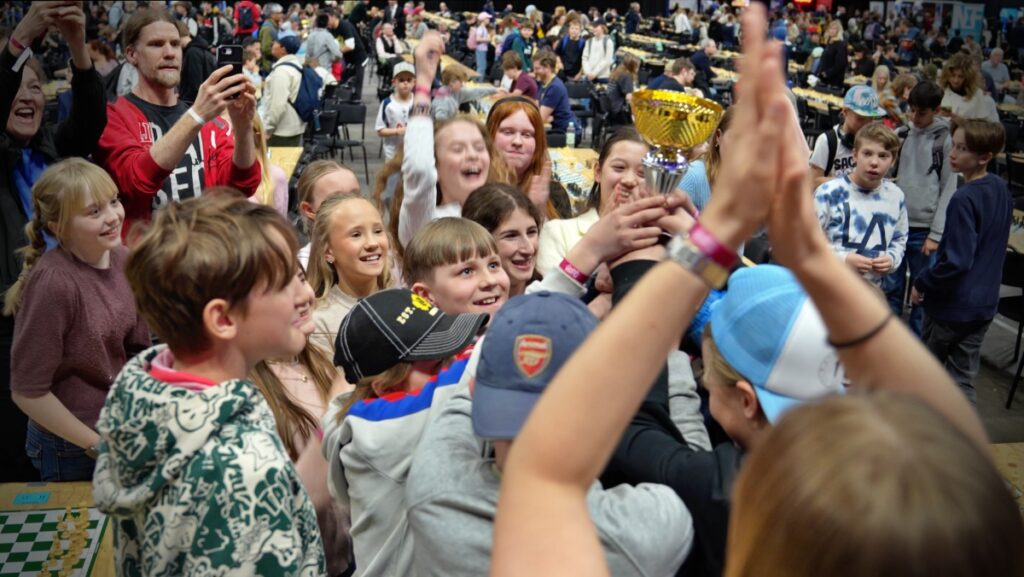
In Sweden, chess is not just a game – it is a powerful tool for education, inclusion, and community building. One of the most remarkable examples of this approach is Schackfyran, a nationwide school project that brings tens of thousands of children to the chessboard every year. Developed in 1978, Schackfyran has introduced more than half a million students to chess. Today, around 25,000 fourth-grade students from over 1,000 classes participate annually, making it one of the largest chess competitions in the world. But Schackfyran is far more than a competition. “This is a social project. We don’t care if the children become great chess players – the idea is to strengthen the group,” explains Jesper Hall, one of the key figures behind the initiative. Unlike traditional tournaments, Schackfyran focuses on participation rather than performance. Each student contributes to their class’s result: one point for playing, two for a draw, and three for a win. This system encourages full class involvement, where stronger players support and motivate their classmates. “It’s not about having a few strong players – it’s about the whole class. The strongest support the others, they teach and encourage them,” Hall adds. The project emphasizes teamwork, inclusion, and shared experience. Every participant receives a medal, reinforcing the idea that everyone plays an important role. The 2026 national final, held during the Chess Party in Stockholm, brought together more than 3,000 children in a vibrant celebration of chess. The atmosphere was closer to a festival than a traditional tournament, with students cheering for their classmates and celebrating achievements together. The impact of Schackfyran goes far beyond the chessboard. “Chess is not just about competition – it’s a powerful tool for education,” says Dana Reizniece, Deputy Chair of the FIDE Management Board. “It helps develop thinking, creativity, and social skills. You don’t have to be a champion to enjoy chess – it’s a game for everyone.” As part of the Year of Chess in Education 2026, Schackfyran stands out as a leading example of how chess can be integrated into schools not only as a cognitive tool, but also as a way to foster communication, teamwork, and a sense of community. By encouraging participation over results, Schackfyran teaches children valuable life skills – from structured thinking to collaboration and mutual support. More importantly, it creates an environment where every child feels included. With its unique format and growing impact, Schackfyran continues to inspire educators and chess organizations worldwide, proving that chess can be much more than just a game – it can be a bridge between students, a tool for learning, and a celebration of togetherness. Photos: KNZO Photography https://youtu.be/OQgj8KkUPtU?si=aiT-pyYV_GUXCHNh
ChessMom 2026: Registration now open
CHESSMOM 2026 – Follow up announcement and key details Important Dates * Application period opened * July 1 – Application deadline* July 10 – Selected participants will be announced Accommodation clarification Women’s team delegations normally receive accommodation for five players, distributed as two double rooms and one single room. For federations with a player approved under the ChessMom program, the total number of rooms does not increase. Instead, the single room is upgraded to a double room. This allows the player, together with her child and caregiver, to stay in the same room, while the other four players are accommodated in the remaining two double rooms. The total number of rooms assigned to each delegation remains unchanged. Clarification on Required Letters • Player’s Application LetterThis is a personal letter in which the player expresses her interest in participating in the ChessMom program. It must include her intention to participate, confirmation that she meets the eligibility criteria, as well as relevant information and motivation.If you are a player who qualifies for the program, please also complete the registration form: https://forms.gle/wuX5ra2pgyDTrwyE8 • Federation Letter This is an official letter issued by the National Federation. It must confirm that the player will be part of the national team and that the federation is aware of her participation in the program. For questions, please contact the Project Coordinator:Francisco Javier Cruz ArceEmail: fj_007@yahoo.comWhatsApp: +1-787-587-3409 FIDE and the FIDE Commission for Women’s Chess are inviting players, national federations, and the wider chess community to take the first step toward ChessMom 2026. Following its successful debut at the 2024 Chess Olympiad in Budapest, the ChessMom Project returns for the 46th Chess Olympiad in Uzbekistan. The programme provides financial and logistical support to professional women chess players who are mothers, allowing them to compete at the highest level alongside their children and a caregiver. If you are a player and a mother, or if you know someone who could benefit from the programme, please complete the short registration form via the link below. Register here: https://forms.gle/wuX5ra2pgyDTrwyE8 This early registration allows the FIDE Commission for Women’s Chess to: Identify players interested in the programme Share updated information as soon as the official Olympiad regulations are released Offer guidance and support throughout the application process Who is eligible Participation in ChessMom is for players who are part of the official delegations of their national federations for the 46th Chess Olympiad. For the 2026 edition, mothers with children under two years of age at the time of the Olympiad are eligible to apply – an expansion from the under-one limit applied in 2024. Application requirements Interested national federations and eligible players are invited to prepare the following information: Player’s full name, FIDE ID, national federation, and citizenship Visa requirements for Uzbekistan Child’s full name and date of birth Accompanying person’s full name, relationship to the player or child, and citizenship Letter of request from the player Letter of concurrence from the national federation confirming participation in the 2026 Olympiad A note for national federations Federations are encouraged to share this registration link with eligible players within their teams and to support the identification of potential beneficiaries. National federations participating in the Olympiad normally receive three rooms as part of their accommodation package. For delegations that include a player approved under ChessMom, the player’s single room is upgraded to a double room to allow the caregiver and child to stay together with the team. The total number of rooms allocated to each delegation remains unchanged. ChessMom reflects FIDE’s commitment to ensuring that no woman is forced to choose between motherhood and a professional career in chess. Six players from across the world were supported through the programme in Budapest 2024, and the 2026 edition continues that work with expanded reach and updated eligibility. Contact: Francisco Javier Cruz Arce – fj_007@yahoo.com.
Sardinia World Chess Festival returns for third edition with strongest field yet
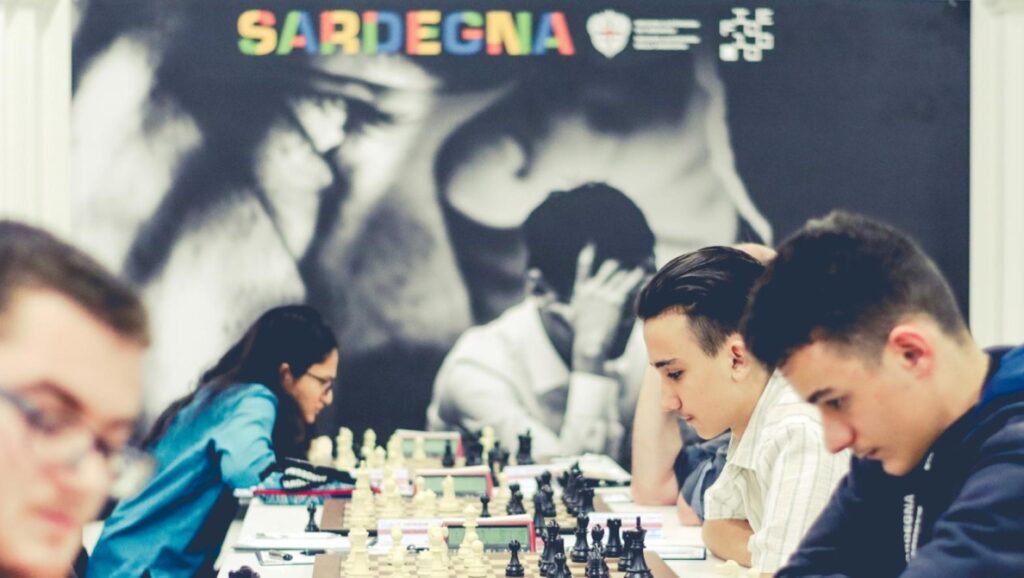
The third edition of the Sardinia World Chess Festival is set to begin on May 3, 2026, bringing world-class chess to the stunning Mediterranean setting of Sardinia. Hosted at the Club Hotel Marina Beach in Orosei, the event continues its rapid ascent and now features its strongest field to date, cementing its status as one of the premier open tournaments in Italy. Organized by EmmediSport ASD under the direction of International Organizer GM Roberto Mogranzini, the festival offers a prize fund of €50,100, and blends competition with a unique playing environment just steps away from one of Sardinia’s most beautiful beaches. A strong field led by world-class Grandmasters The 2026 edition is headlined by GM Ian Nepomniachtchi (2729), marking a rare appearance for the former World Championship challenger in an open tournament – and potentially his first time competing in Italy in this format. Photo: Michal Walusza He is joined by top grandmasters including: Parham Maghsoodloo, Ivan Šarić, Murali Karthikeyan, Frederik Svane, Haik Martirosyan. GM Daniel Dardha, winner of the inaugural 2024 edition, returns to the tournament aiming to reclaim the title. The field is further enriched by rising talents such as IM Faustino Oro, along with a strong Indian contingent, leading female players including GM Harika Dronavalli, and well-known chess content creators. FIDE Circuit stakes add extra tension Beyond the prize fund, the Sardinia World Chess Festival plays an important role in the FIDE Circuit, making it a battleground for players vying to qualify for the Candidates Tournament 2028. With valuable circuit points at stake, every game carries additional weight, raising the stakes far beyond the prize money alone. Prize fund The total prize fund amounts to €50,100, with the top prizes in Open A as follows: 1st place: €10,000 2nd place: €6,000 3rd place: €4,000 4th place: €2,000 5th place: €1,500 In addition, numerous prizes are awarded across rating categories, as well as for the best female players, juniors, and veterans, ensuring opportunities for competitors at all levels. Tournament format and schedule The festival features three sections (Open A, B, and C), all played over nine rounds in Swiss format with a time control of 90 minutes + 30 seconds increment per move. May 3: Round 1 (15:30)May 4: Round 2 (15:30)May 5: Round 3 (09:30), Round 4 (15:30)May 6: Round 5 (15:30)May 7: Excursion to Cala Goloritzé (09:00), Round 6 (15:30)May 8: Round 7 (15:30)May 9: Football match (10:00), Round 8 (15:30)May 10: Round 9 (09:30), Closing Ceremony (15:30) A unique chess experience All games take place at the Club Hotel Marina Beach, a four-star venue offering full-board accommodation, sports facilities, and direct access to a private beach. Participants will also have the opportunity to visit Cala Goloritzé, widely regarded as one of the most beautiful beaches in the world – combining elite chess with the natural beauty of Sardinia. Supported by the region of Sardinia The event is organized with the support of the Regione Autonoma della Sardegna – Department of Tourism, Handicrafts and Commerce, whose commitment to promoting sport, culture, and international tourism plays a key role in the continued growth of the Sardinia World Chess Festival. Follow the tournament The Sardinia World Chess Festival promises thrilling battles from the very first round. Updates on standings, key games, and highlights will be shared throughout the event. Follow all the action live: Live games: https://lichess.org/broadcast/sardinia-world-chess-festival-2026–open-a/round-1/eFzbzTyo Or https://www.chess.com/events/sardinia-world-chess-festival-open-a/games Standings & pairings: https://s2.chess-results.com/tnr1251111.aspx?lan=1&art=0&flag=30&SNode=S0 Official website: https://sardinia-worldchess.it