

Aleksandar Indjic wins Baku Open 2025
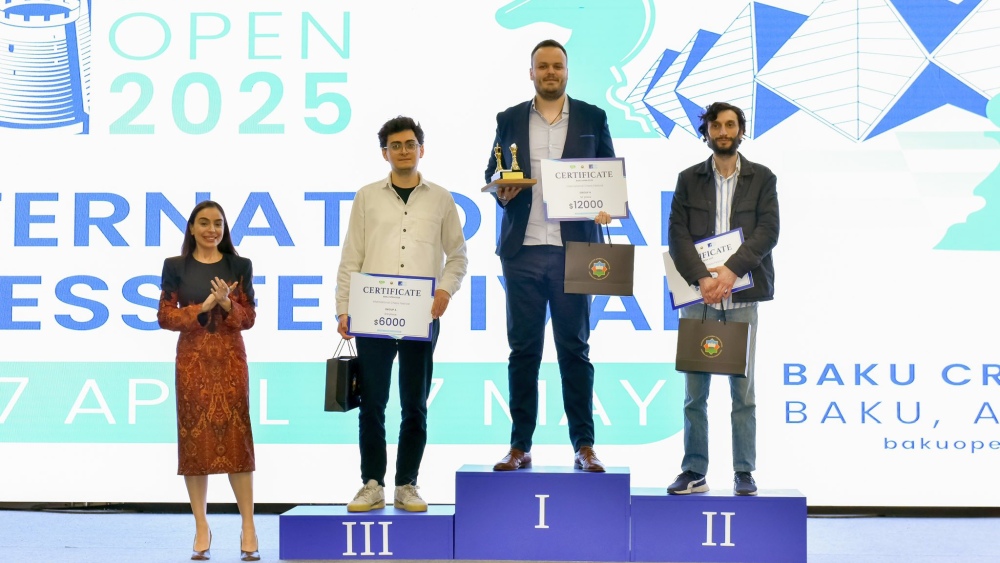
GM Aleksandar Indjic (Serbia) emerged as the sole winner of the 2025 Baku Open (Group A), confirming his status as the pre-tournament favorite. The 2025 Baku Open international festival featured three tournament sections—Groups A, B, and C—all 9-round Swiss tournaments with classical time control. Nearly 700 players representing 16 national federations participated. The total prize fund was $55,000, with $12,000 awarded to the winner of Group A. Home player and fifth seed Mahammad Muradli took an early lead by winning four consecutive games. However, in Round 5, top seed Indjic defeated him in a pivotal match to seize the lead—a position he maintained until the end. The 2024 European Champion, Indjic, completed the event unbeaten, clinching the title with an impressive score of 7/9. Baadur Jobava (Georgia), who also remained undefeated, and Vahap Sanal (Turkey) finished just half a point behind the champion, tying for second place. Jobava claimed silver based on the higher average rating of his opponents. Nikoloz Chkhaidze (Georgia) won the Group B tournament, while Akbar Mirzayev (Azerbaijan) edged out four competitors to secure the Group C title on tiebreaks (Buchholz system). Final standings (Groups A, B and C) The closing ceremony of the International Chess Festival “Baku Open 2025,” organized with the support of the Azerbaijan Chess Federation and the Ministry of Youth and Sports, featured several distinguished guests. These included Vice President of the Heydar Aliyev Foundation and Head of the IDEA Public Union Leyla Aliyeva; Assistant to the President of Azerbaijan Anar Alakbarov; Head of the Department of Youth Policy and Sports Affairs of the Presidential Administration, Assistant to the First Vice President Yusuf Mammadaliyev; Minister of Youth and Sports Farid Gayibov; FIDE’s 6th President Kirsan Ilyumzhinov; President of the Azerbaijan Chess Federation Mahir Mammadov; and other honored guests. After the announcement of the final results, top finishers in each category were awarded. Nazli Rustamli and Daniel Konovalov took first place among girls and boys under 8 years old, respectively. In the under-10 category, Yang Youping (China) and Yusif Ahadzadeh topped the rankings. Asnad Bakhshizadeh and Akbar Mirzayev secured first place among players under 12. In Group B, Dinara Huseynova (women) and Nikolaz Chikalidze (Georgia) topped the standings. Roman Shogdziyev (FIDE) was recognized in the U-16 category. In Group A, Ayan Allahverdiyeva (Azerbaijan) and Aleksandar Indjic (Serbia) were crowned champions. Photos: Azerbaijan Chess Federation Official website: bakuopen2025.chess.az/
WGP Austria: Badelka, Vaishali and Tan start with wins
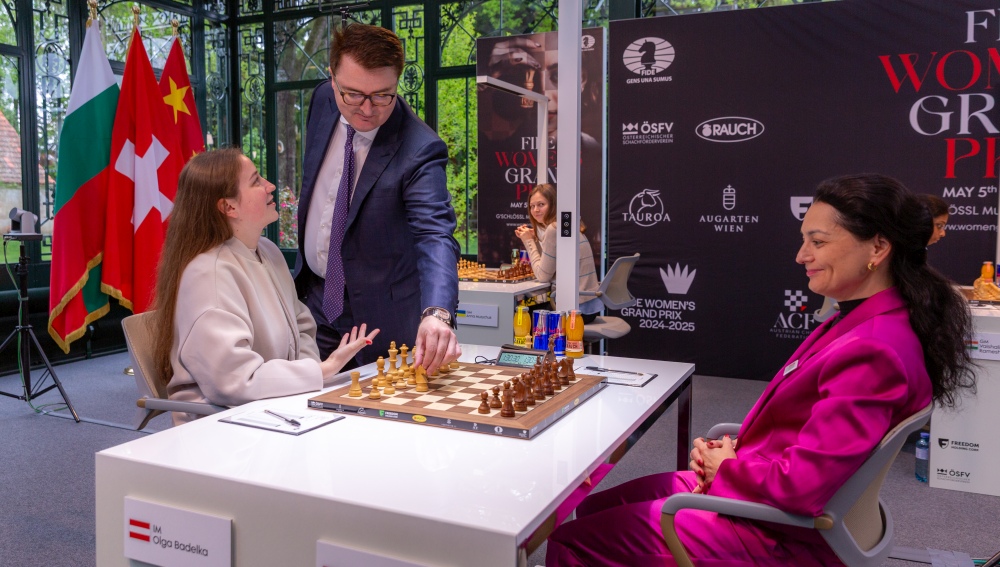
Round one saw a fiery start to the final leg of the 2024/2025 FIDE Women’s Grand Prix. IM Olga Badelka upset the former World Champion Alexandra Kosteniuk, Vaishali capitalised on Salimova’s time trouble and Tan emerged victorious as Black against Zhu in a marathon five-and-a-half-hour game. A strong start for the host country as Olga Badelka, representing Austria, defeated former World Champion Alexandra Kosteniuk. Despite being lower-rated and under time pressure, Badelka held her nerve and turned the tables in a sharp battle. One of the event’s favorites, Zhu Jiner, was under pressure and defended for a long time against Tan. Though both players missed chances in a complicated position, Zhu eventually cracked in a bishop vs rook endgame. Vaishali edged out Salimova in a balanced game, where better time management and control over the dark squares proved decisive. The Muzychuk sisters drew quickly in a short game. By contrast, Lela Javakhishvili and Nana Dzagnidze of Georgia fought for over five hours before agreeing to a draw in a grueling, evenly contested game. The tension at the start The small G’Schlössl Murtal in the southern Austrian hills was abuzz with tension as ten chess players arrived for the first round in the final battle of the Women’s Grand Prix. After clearing the Fair Play checks—which ensured no phones or electronic devices were brought in—the players took their seats. The venue, a picturesque orangery nestled in a tranquil park, offered a calming view as they settled in for round one. At 3 p.m. sharp, Chief Arbiter Gerhard Bertagnolli of Italy signalled the start of play. The President of the Austrian Chess Federation, Michael Stöttinger, made the ceremonial first move in the game between Austria’s Olga Badelka and former Women’s World Champion Alexandra Kosteniuk. As the clocks began to tick, the final leg of a six-tournament campaign was officially underway. But this Austrian stage will not be like the others. Instead, it will be the final verdict of the 2024/25 FIDE Women’s Grand Prix. Here’s a closer look at the games from round one. Olga Badelka vs Alexandra Kosteniuk, 1-0 The most exciting game of the round was played between the home player IM Olga Badelka (who commanded the white pieces) and GM Alexandra Koteniuk, representing Switzerland. Badelka chose the sharp Marshall Gambit in the Triangle Slav, signalling her intent to play for complications. In this well-known position, Kosteniuk has just snatched the g2-pawn with 9…Qxg2, which is considered to be very risky for Black. Unsurprisingly, the evaluation bar raced up for White immediately. The engine recommended the cold-blooded 10.Qd2—inviting Black to take the rook on h1 and walk into a likely ambush. Another well-known line starts with 10.Bf3 and also promises an advantage for White. However, Badelka played the more natural-looking 10.Qd6. After 10…Bd7 11.Bf3 Qg5 12.Rd1 0-0-0 Badelka, down two pawns, was compelled to keep pressing. The opponents traded errors in a very complicated position at this stage. Eventually, Kosteniuk grabbed her third extra pawn — emerging with a clear material advantage and a healthy lead on the clock. Badelka tried her last chance, throwing everything in, playing for time and trying to stay in the game. Somewhat surprisingly, it worked out for her! The last critical position emerged on move 35. Black is clearly better, but has to decide how to deal with her g7-pawn. Kosteniuk played 35…g6? (instead of the much stronger 35…g5!) which marked the beginning of her collapse. After 36.Qxh6 Rd4? 37.Qf8 Rd8? 38.h6 the tables have turned completely: White has advanced her h-pawn, regained the initiative and, within easy reach of move 40, escaped time trouble. The rest was a smooth sail for Badelka who won on move 43. The game was a fortunate break for the young Austrian IM. Despite being the underdog and in time trouble, she followed the cardinal rule: keep playing, don’t blunder, and survive to move 40. In the end, it was Kosteniuk who misplayed it all and lost. In the post-game interview, Badelka said she was “tired, excited and stressed” at the same time, noting that staying focused on the position and just wanting to “survive” kept her going. With just 25 points in the WGP, Badelka is not in contention for the top overall places. However, this victory is a welcome start for this event—not just for her, but also for Austria, as one of their own opens the tournament with a win on home soil. Vaishali Rameshbabu vs Nurgyul Salimova, 1-0 Roughly 10 minutes before Badelka sealed her win, India’s Vaishali Rameshbabu defeated Bulgaria’s Nurgyul Salimova. The youngest player in the tournament, 21-year-old Salimova, opted for the Caro-Kann and the opponents quickly entered uncharted waters. Vaishali grabbed advantage early on but played somewhat sluggishly, and with a timely move 14…c5, Black equalised. By move 19, the queens were off the board, but White had a slight edge thanks to a knight vs a “bad” bishop. At some point Salimova should have temporarily sacrificed her b3-pawn to activate her pieces, but she opted for a passive approach, allowing Vaishali to gradually take control. White is now winning. Soon, Vaishali captured the b3-pawn. With two queenside runners, it was a matter of technique—one Salimova didn’t care to test. She resigned on move 35. A great start for the Indian superstar in her third tournament of the year. Zhu Jiner vs Tan Zhongyi, 0-1 The longest game of the day – lasting five and a half hours – was played between one of the favourites Zhu Jiner, and former World Champion Tan Zhongyi. In the Classical Ruy Lopez, the opponents waged a protracted positional battle in a balanced game. A characteristic of this opening, but near the time control it turned into a real rollercoaster. The position is about equal, but both have to be very careful. 38.Nd6?? A serious mistake, handing Black a decisive advantage. After 38…Bxd6 39.Rxb5 Rxb5 40.exd6 Black emerged an exchange up, with a runner on the a-file and controls the main files. However, the
World Schools Team Championship Returns – this time in the USA!

Following the resounding success of its inaugural edition in Kazakhstan, the FIDE World Schools Team Championship is back — and it’s set to be bigger and more global than ever before! The 2025 edition of this landmark scholastic event will take place from August 2-7 at the renowned Episcopal High School, approximately 11 km south of downtown Washington D.C.. Organized by FIDE in collaboration with the International School Chess Federation (ISCF) and proudly supported by Freedom Holding Corp., the championship invites teams nominated by their national federations, representing general educational institutions from all over the world. Specifically aimed at grassroots school chess clubs, the Championship marks another important step in FIDE’s long-term commitment to expanding global outreach for chess in schools. Building on the energy and spirit of the 2023 event in Aktau, Kazakhstan, this year’s championship promises even greater participation – with more countries, more teams, and more bright young talents coming together for a truly one-of-a-kind international competition. “The inaugural edition in Kazakhstan was a huge success – not just in terms of numbers, but in the atmosphere of excellence and team spirit that defined the event,” said Emil Sutovsky, CEO of FIDE. “In 2025, we’re taking it to the next level. We expect a record number of teams and look forward to welcoming young chess players from every continent. We are deeply grateful to Freedom Holding Corp. for their unwavering support and commitment. I’m especially excited about the introduction of the Smart Moves Summit, which expands the impact of this championship by bringing together global thought leaders to explore how chess can transform education and empower the next generation.” The tournament will be played over 8 rounds, in a Swiss format, with each team consisting of four main players, mixed age, one reserve and one non-playing captain. Time control is 45 minutes + 10 seconds per move, with two games per day across four action-packed days. Smart Moves Summit Beyond the board, the event will also host the Smart Moves Summit — a conference designed to spotlight the intersection of chess and education. Parents, school leaders, researchers, edtech innovators, chess-related businesses, marketing partners, officials, and many other chess enthusiasts from over 20 countries will come together to share insights, case studies, and future-forward ideas on how chess can shape learning environments and empower students. Expect inspiring keynotes from top chess influencers, visionary educators, and thought leaders in cognitive science. Take part in practical teacher trainings, interactive panels, and global school partnerships — all focused on how chess builds confidence, critical thinking, and deeper learning in today’s classrooms. “We wanted to go beyond simply organizing another chess tournament for children. Our goal was to bring together school teachers and experts from around the world to share their experiences and enhance their chess programs with fresh approaches and ideas. This parallel program ensures that coaches, parents, and guests also have a meaningful and enriching experience while their teams compete,” said Timur Turlov, President of the Kazakhstan Chess Federation, CEO of Freedom Holding Corp., and President of the International School Chess Federation. Venue: Episcopal High School Located just outside Washington, D.C., Episcopal High School offers a stunning campus with state-of-the-art facilities, historic architecture, and a strong tradition of academic and extracurricular excellence. It’s a perfect backdrop for a tournament that aims to inspire students to think critically, compete fairly, and connect globally. The World Schools Team Championship 2025 is a milestone on the international chess calendar – a place where future stars are born, friendships are forged, and school pride shines on the world stage. For federations and schools interested in participating, registration will open soon. All official invitations and procedures will be communicated through FIDE channels. For inquiries and further information: E-mail: worldschoolteam@fide.com
Polka, wine and chess: Women’s Grand Prix finale opens in Austria
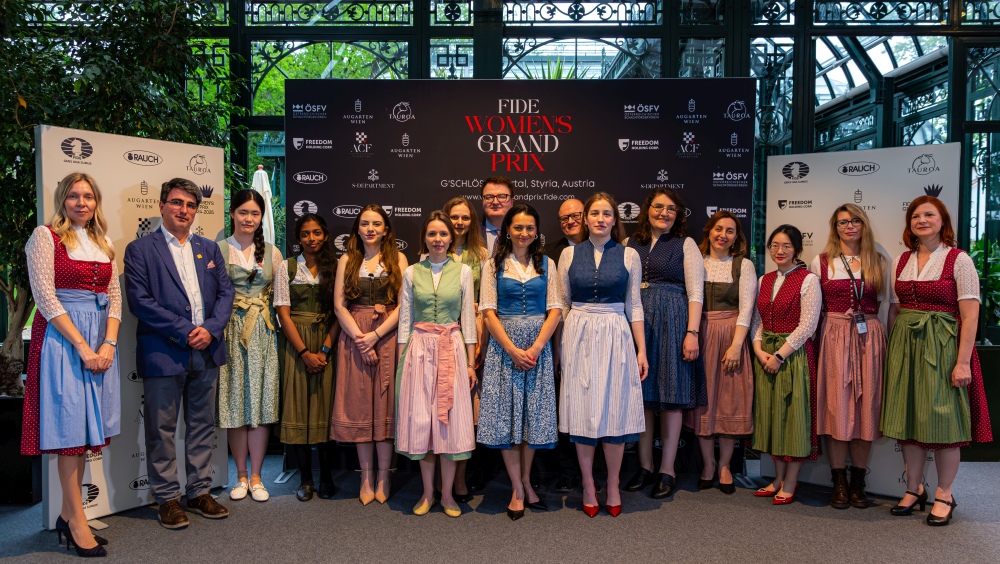
The final tournament of the 2024/2025 Women’s Grand Prix opened in Grosslobming with polka music, Austrian wine, and players dressed in traditional clothing. It is not often that an elite chess tournament takes place in the grounds of a small castle and that the opening ceremony starts with a brass band, fine wine and players wearing local traditional dresses. But in Grosslobming, Austria, the final leg of the FIDE Women’s Grand Prix began with exactly that. Michael Stöttinger, the mastermind of the event and the president of the Austrian Chess Federation, was determined to have an opening that reflected the precision and flair often associated with the German-speaking country: creative, measured, well-planned and meticulously executed. As guests toasted “Prost!” the Kleinlobming Music Association struck up polkas and Styrian folk songs. The southern state of Styria, often called Austria’s “Green Heart,” stretches from the Alps to the sunlit hills near the Slovenian border and is famed for its crisp white wines. “This is a great event for Austria and for women’s chess, and we are delighted to be the hosts. This is the first major event we’re organising as we want to bring chess closer to the Austrian public and do more to promote the game,” Michael Stöttinger said. He also made a point about the link between promoting chess in general and women’s chess in particular: “If you make an advertisement for women’s chess, it’s like making an advertisement for Coca-Cola Light. You always transport open chess [into it]. This was also one of the reasons why we asked to organise a women’s chess event, and I’m very grateful to FIDE for their trust”. Speaking on behalf of FIDE President Arkady Dvorkovich, the delegate and Chair of the Appeals Committee Sava Stoisavljevic (pictured below, second from the right) welcomed the players and reflected on the 2024/25 Grand Prix season: “As one of several women in senior positions within FIDE, I am pleased to see the organisation recognising the importance of women’s chess and offering greater support and visibility to women players. But – speaking also as a woman – I know there is still work to be done. Over the past ten months, the Women’s Grand Prix has travelled the world, promoting chess but also highlighting the vital role women play in our sport. From Georgia to Kazakhstan, Monaco, Cyprus and India, the presence and performance of these players have powerfully underscored their impact at the highest levels of chess”. The tournament is being held in the southern Austrian municipality of Grosslobming, on the grounds of a 19th-century manor near the Red Bull Ring Formula One circuit. The final, sixth leg of the Women’s Grand Prix will determine not only the winner of the series but also the top two qualifiers for the 2026 Women’s Candidates. The first round starts on Tuesday, May 6 at 3 PM local time. Round 1 pairings: Lela Javakhishvili – Nana DzagnidzeVaishali Rameshbabu – Nurgyul SalimovaMariya Muzychuk – Anna MuzychukZhu Jiner – Tan ZhongyiOlga Badelka – Alexandra Kosteniuk Written by Milan Dinic Photos: Przemysław Nikiel About the tournament: The tournament in Grosslobming is the final in a series of six tournaments in the 2024/2025 Women’s Grand Prix cycle. Format: Ten players play a round-robin tournament (9 rounds). The time control is 90 minutes for the first 40 moves, followed by 30 minutes for the rest of the game, with an increment of 30 seconds per move starting from move 1. Prize fund: €120,000 distributed among 10 participants based on placement (see Regulations) For more information about the event, visit: womengrandprix.fide.com/ About the Women’s Grand Prix series The FIDE Women’s Grand Prix (WGP) Series 2024-25 stands as a premier series in the international women’s chess calendar. In its seventh season, it serves as one of the crucial pathways to the Candidates. The event comprises six tournaments, hosted in different countries: Georgia, Kazakhstan, Monaco, Cyprus, India and Austria. The scoring system is conceptualised in a way that favours not just tournament victories, but consistency across events. Each player has a right to play in three out of the six events in the series. The event is part of FIDE’s World Championship cycle, and the top two players in the WGP will qualify for the 2026 Candidates tournament. The winner of the Candidates will become the challenger to the current Women’s World Champion Ju Wenjun, who successfully defended her title against Tan Zhongyi in their 2025 match.
Non-FIDE EDU Course Certification announced
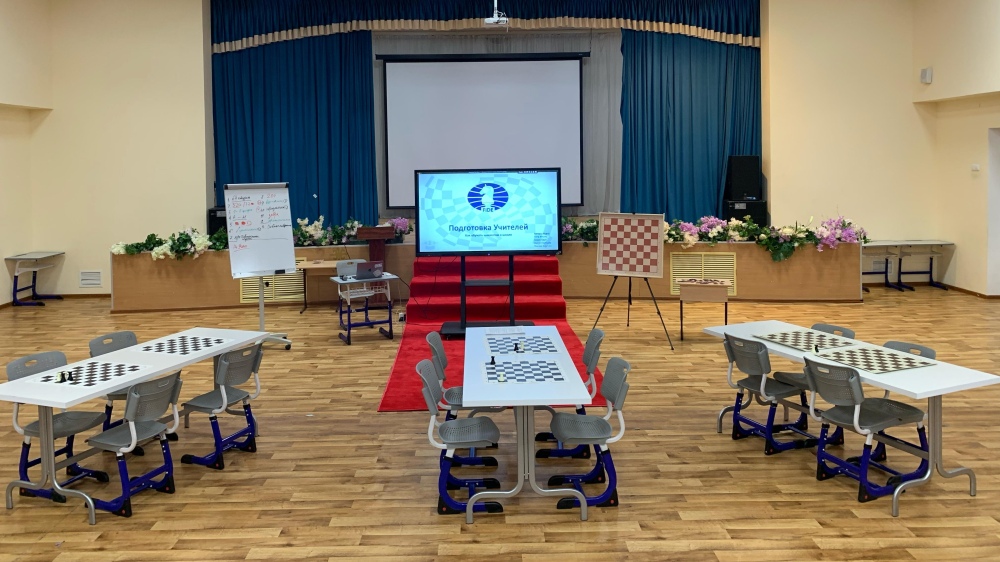
FIDE EDU is pleased to announce the approval of certification for non-FIDE courses. Recognizing the development of many high-quality educational programs suitable for teachers, FIDE EDU aims to support professional growth and facilitate license renewal for FIDE EDU titles through this new certification initiative. The EDU Course Certification is a four-year credential awarded to courses offered by federations, organizations, or individuals that apply and meet the established criteria. Course content may range from a focus on chess skill development to a broader blend of skill development that includes chess skills, teacher methodologies, and curriculum connections (including transversal and interdisciplinary applications) for chess. Online, in-person, and blended formats (combining online sessions with in-person or self-study components) are all welcome. Benefits of course certification for vendors: Assistance in marketing to a broader, motivated audience. Quality assurance for potential customers. FIDE logo on the course certificate. Applications are accepted on an ongoing basis and the review process normally takes up to six weeks. For more information, please, visit: Purpose Statement – edu.fide.com/non-fide-courses/purpose-statement FIDE Handbook – handbook.fide.com/chapter/NonFIDEEDUCourseCertification
Tin Jingyao of Singapore, Shafira Devi Herfesa of Indonesia top Zone 3.3 Zonals
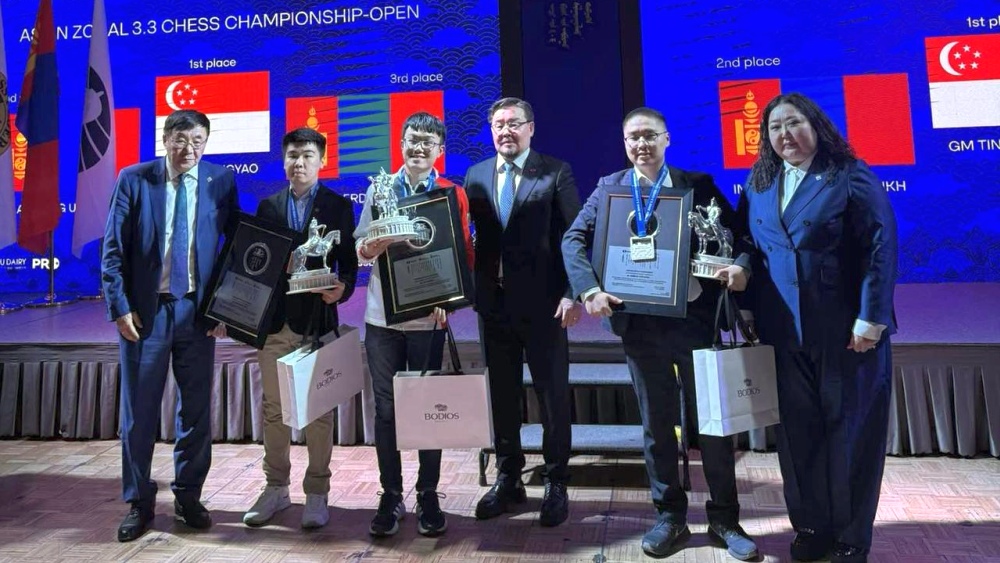
GM Tin Jingyao of Singapore (third from left) and IM Uurtsaikh Agibileg of Mongolia (second from right) finished first and second respectively, both scoring 7 points in the Zone 3.3 Zonals, thereby clinching the two qualifying spots for the 2025 FIDE World Cup. Also finishing with 7 points but placing third on tiebreak was IM Sugar Gan-Erdene of Mongolia (second from left). The Zone 3.3 Zonal Championship was organized by the Mongolian Chess Federation under the auspices of the Asian Chess Federation and FIDE. The event took place from 22 April to 2 May 2025 in Ulaanbaatar, Mongolia. A total of 109 players participated—55 women from five countries and 54 men from seven countries: Hong Kong, Indonesia, Malaysia, the Philippines, Singapore, Vietnam, and host nation Mongolia. The tournament offered a total prize fund of $15,000, with $9,000 allocated for the men’s division and $6,000 for the women’s. Congratulations to the Mongolian Chess Federation for hosting a well-organized event. Mongolian Chess Federation President Gombojav Zandanshatar (left) and Zone 3.3 President Senator GM Utut Adianto of Indonesia are pictured shaking hands during the ceremonial opening moves of the championship in Ulaanbaatar. In the women’s division, Shafira Devi Herfesa of Indonesia (center) tied with Enkh-Amgalan Enkhrii of Mongolia (left), each scoring 7 points. Herfesa secured the World Cup slot on superior tiebreaks. Visit chess-results.com for round-by-round results, final standings, and downloadable game files.
Kazakhstan dominates 2025 Western Asia Youth Championship
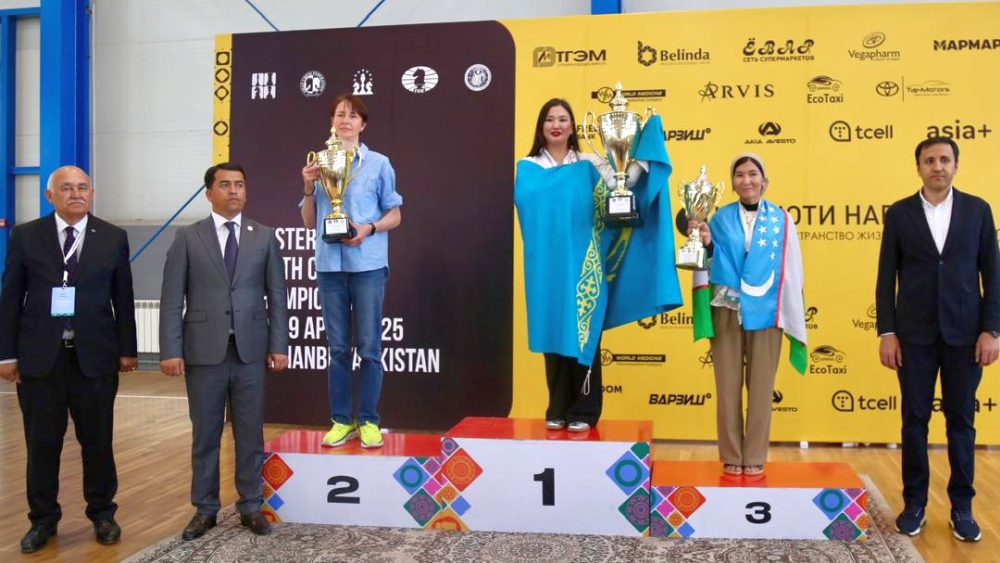
His Excellency Zulfiqor Gulahmadzoda (second from left), Chief Arbiter IA Husan Turdialiev (left), and Jamshed Mirza of the Tajikistan Chess Federation (right) presented the award for Best Federation. A record number of 391 children from 13 countries participated in the Western Asia Youth Chess Championship, held from April 20–29, 2025, in Dushanbe, Tajikistan. Organized by the Tajikistan Chess Federation under the auspices of the Asian Chess Federation and FIDE, the event brought together young players from Afghanistan, India, Iran, Kazakhstan, Kyrgyzstan, Kuwait, Maldives, Pakistan, Sri Lanka, Turkmenistan, Uzbekistan, host nation Tajikistan, and players competing under the neutral FIDE flag. The tournament was contested in Rapid, Blitz, and Standard (classical) formats. On the first day, Kazakhstan’s young players delivered an outstanding performance in Rapid chess, winning seven gold medals. Uzbekistan and FIDE players followed with two gold medals each, and India secured one gold. Midway through the standard chess competition, the Blitz championship was held. Once again, Kazakhstan led the field, earning five gold medals, followed by Uzbekistan with three and Iran with two. Asian Chess Federation General Secretary Hisham Al Taher of the UAE (left) and H.E. Zulfiqor Gulahmadzoda, Minister of Sport of Tajikistan and Vice President of the National Olympic Committee, awarded prizes to the winners of the Western Asia Youth Blitz Chess Championship in the Girls Under-8 category. Team medals were awarded separately for the Rapid, Blitz, and Standard events, based on the combined results of the top three players from each delegation or federation, with a minimum of two players required to qualify for team medals. Asian Chess Federation Deputy President Bharat Singh of India (left) and Deputy Sport Minister of Tajikstan Shaker Zadeh Mohammad Taleb (right) award medals to Boys under 8. Kazakhstan also topped the classical chess event, winning four gold medals. FIDE players followed with three golds, while Uzbekistan and Iran earned two each. Uzbekistan ranked ahead of Iran based on the number of silver medals. Complete results Full awards photos and final standings are available on the official website: Kazakhstan Rules Western Asia Youth Chess Championship – Asian Chess Western Asia Youth Team Awards in Standard Chess – Asian Chess Kazakhstan, Uzbekistan and Iran Top Western Asia Youth Blitz Chess Championship – Asian Chess Western Asia Youth Blitz Chess Team Awards in Dushanbe, Tajikistan – Asian Chess Awards Ceremony for Western Asia Youth Rapid Chess Championship – Asian Chess Team Awards for Western Asia Youth Rapid Chess Championship – Asian Chess
FIDE Circuit 2025: Praggnanandhaa seizes the lead
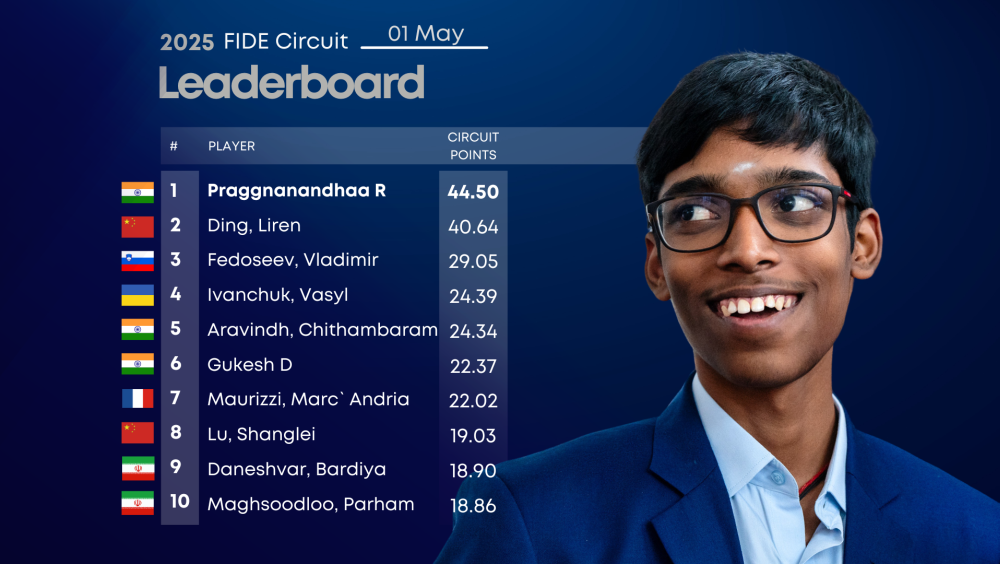
April brought a significant change to the FIDE Circuit 2025 leaderboard. As many expected, Praggnanandhaa overtook Ding Liren to claim the top spot, following his solid performance at the GCT Superbet Rapid & Blitz Poland, where he finished third and gained 8.44 circuit points. The event’s winner, Vladimir Fedoseev, collected 13.26 points and jumped straight to third place. Photo: Open Chess Menorca Meanwhile, legendary Vasyl Ivanchuk pushed Aravindh Chithambaram down to fifth after winning the Menorca Open, which earned him 12.67 points and fourth place on the leaderboard. Menorca runner-up Lu Shanglei climbed to eighth place in the standings, while Parham Maghsoodloo rounds out the top ten after his triumph at the Reykjavik Open, translating into 11.16 circuit points. Photo: Reykjavik Open Just outside the top ten are Nodirbek Abdusattorov and Ian Nepomniachtchi, each having played only one tournament that counts toward the FIDE Circuit 2025 so far. We maintain a dedicated page on our website for the FIDE Circuit 2025, featuring the latest information on eligible tournaments, current standings, and regulations. Visit: FIDE Circuit 2025
The moment of truth: Women’s Grand Prix heads to Austria for the decisive stage
As the 2024/2025 FIDE Women’s Grand Prix series draws to a close, three players remain in contention for the overall title. The final, sixth leg begins in Austria on May 6 In August 2024, the first stage of the six-leg FIDE Women’s Grand Prix (WGP) series began in Tbilisi, Georgia. There was perhaps no more fitting place to launch a top-level women’s chess event than in the country that has long dominated the sport. For decades, Georgian chess players—whether competing under the Soviet flag or their own—have stood among the world’s best, revered as national heroes at home. Since the breakthrough of Nona Gaprindashvili—one of the greatest women players of all time—in the 1970s, women’s chess has steadily progressed. The creation of the Grand Prix in 2009 marked a major shift—an organized series offering consistent opportunity. In recent years, FIDE has moved closer toward a structured approach in promoting women in the sport. What was once an exception is now a system, and the biggest expression of that is the Grand Prix series where the best and most talented women players are asserting their presence. With six international stops across the globe, boasting €600,000 in prizes and offering a path to the Women’s Candidates for the top two qualifiers, the Grand Prix is a serious contest but also a quiet revolution – giving a spotlight to the women’s role in the game. FIDE President Arkady Dvorkovich reflected on the progress: “Supporting women’s chess has gone from securing survival and a right to exist in the male dominated world, to making it into a strategy which is improving over time. The Women’s Grand Prix is one of the focal points of FIDE’s work and I’m pleased that in the forthcoming sixth and final leg of the event, we will mark another important milestone for women’s chess by concluding another successful series.” What’s at stake in Austria and who will be playing The sixth and final stage of the 2024/2025 FIDE Women’s Grand Prix will take place in Grosslobming, Austria. It is here where the champion of the series will be decided, but also – who will be the top two players qualifying for the Women’s Candidates in 2026. Photo: Niki Riga So far, Aleksandra Goryachkina is in the lead with 308.34 points. While her chances to qualify for the 2026 Candidates are very big, the crown in the WGP series and the Candidates spot are not a done deal for her. As Goryachkina will not be playing in this final stage, two other players have a chance to overtake her (if they win top places): China’s Zhu Jiner and Anna Muzychuk from Ukraine. Photo; Mark Livshitz Zhu has the best chance to overtake Goryachkina for first place. With 235 points, the Chinese player is currently 73.34 points behind. This means she would need to finish among the top three to secure the 2024/2025 WGP title. The challenge is significantly tougher for Anna Muzychuk, who trails Goryachkina by 119.17 points. To win the WGP, she must finish in sole first place in Austria and earn 130 points. Mathematically, this is possible – but it takes more than math to clinch a victory in an event like this! Photo: Anna Shtourman With the field including three former World Champions – Alexandra Kosteniuk, Tan Zhongyi and Mariya Muzychuk – this will be a tough tournament to do well in, let alone take sole first place. Ten players are taking part in the tournament in Austria, with the list as follows: Player Total WGP Points (Pre-Austria) Zhu Jiner 235 Anna Muzychuk 189.17 Tan Zhongyi 170 Nana Dzagnidze 121.67 Mariya Muzychuk 121.67 Rameshbabu Vaishali 85 Alexandra Kosteniuk 85 Nurgyul Salimova 70 Olga Badelka 25 Lela Javakhishvili 20 The road to Austria: Key results from the previous five stages of the WGP The road to Austria was anything but easy. In the five events that proceeded, the players faced a tough field split between the strongest and most experienced women players in the world on one side, and the up-and-coming rising stars on the other. Each player is eligible to compete in three of the six events. With some players withdrawing or unable to attend, Wildcards were given to participants in some events. In the first leg, in Tbilisi (August 2024), Alina Kashlinskaya (playing for Poland) won the tournament with six points. She came into the tournament as one of the two replacements, after Lagno and Khademalsharieh withdrew. With half a point ahead of the runner-up Bibisara Assaubayeva, Kashlinskaya – accompanied by her baby son at the event, still a rare sight at elite tournaments – took 130 points and was the first one to take the lead in the 2024/2025 WGP Series. The second leg was staged in Shymkent in Kazakhstan in October 2024. Former World Champion contender Aleksandra Goryachkina staged a spectacular performance: she completely dominated the event and secured victory with a round to spare. Tan Zhongyi (who was at that point preparing for the Women’s World Championship Match in 2025), finished in second place, half a point behind. Goryachkina then also won the third event in the series – staged in Monaco in February. Although not as dominant as in Kazakhstan, she emerged on top of a three-way tie for first place, with Batkhuyag Munguntuul and Koneru Humpy. This propelled Goryachkina to the sole lead in the WGP. In the fourth tournament, in Cyprus in March, Anna Muzychuk tied for first place with Zhu Jiner, with both ending on 6/9. The two finished a full point ahead of Goryachkina, who had another great performance. While Goryachkina secured a towering lead – with 308.34 points, Zhu and Muzychuk now joined the race for the top. Finally, this April in the fifth leg held in Pune (India), it was the native Koneru Humpy who emerged at the top, edging out Zhu on tiebreaks after both finished with seven points. This pushed Koneru to the second place in the WGP overall standings, with 279.17 points,
FIDE May 2025 rating list published

The May 2025 FIDE rating list was primarily influenced by the Women’s World Championship match, the fifth leg of the Women’s Grand Prix in Pune, India, the European Women’s Championship, and several strong open tournaments across Europe. Women’s World Champion Ju Wenjun successfully defended her title and gained 19 rating points in the process, consolidating her position as world number two on the women’s list. Photo: Anna Shtourman Humpy Koneru (+15) and Zhu Jiner (+16) climbed to women’s #5 and #6, respectively, following their dominant performances in the Pune leg of the FIDE Women’s Grand Prix. Meanwhile, the top 10 of the open list remained virtually unchanged. Biggest Gains in the Top 100 (Open and Women) Hrebenshchykova, Yelyzaveta WIM UKR 2353 (+57) Ivanchuk, Vasyl GM UKR 2644 (+40) Lu, Shanglei GM CHN 2647 (+29) Zhurova, Anna WFM FIDE 2350 (+27) Song, Yuxin IM CHN 2397 (+26) Maghsoodloo, Parham GM IRI 2706 (+22) Tang, Zoey FM USA 2347 (+22) Lu, Miaoyi IM CHN 2450 (+21) Narva, Mai IM EST 2391 (+20) Ju, Wenjun GM CHN 2580 (+19) Injac, Teodora IM SRB 2474 (+19) WIM Yelyzaveta Hrebenshchykova (Ukraine; pictured below) was the standout performer in April, thanks to her excellent showing at the Grenke Chess Open. She gained 57 rating points and made her debut in the top 100 Women. Photo: Mitar Djukanovic Her compatriot, the legendary Vasyl Ivanchuk, experienced a resurgence in April, earning 40 rating points after winning or sharing first place in three consecutive tournaments: the Reykjavik Open 2025, the IX Open Semana Santa San Vicente del Raspeig Costa Blanca, and the IV Open Chess Menorca. The Ukrainian GM made a triumphant return to the top 100 Open. Photo: Reykjavik Open Lu Shanglei also performed strongly across those three open tournaments, adding 29 points to his tally. Parham Maghsoodloo, winner of the Reykjavik Open, earned 11 points there and added another 11 in the Bundesliga, returning to the 2700+ club after a five-month hiatus. Two young Chinese players, Song Yuxin and Lu Miaoyi, had highly successful tours of European open tournaments. Song Yuxin impressed in both Iceland and Menorca, collecting 26 points, while the 15-year-old Miaoyi participated in three open events and one team competition, gaining 21 points and reaching a career-high ranking of 23rd on the women’s list. Photo: Mark Livshitz Teodora Injac, the 2025 European Women’s Champion (pictured above), made her debut in the top 20 Women, achieving a career-high rating of 2474. Podium finishers Mai Narva and Alexandra Matsevskaya also made significant rating gains, earning 20 and 15 points respectively.