

Ding Liren and Ian Nepomniachtchi head for final tie-breaker
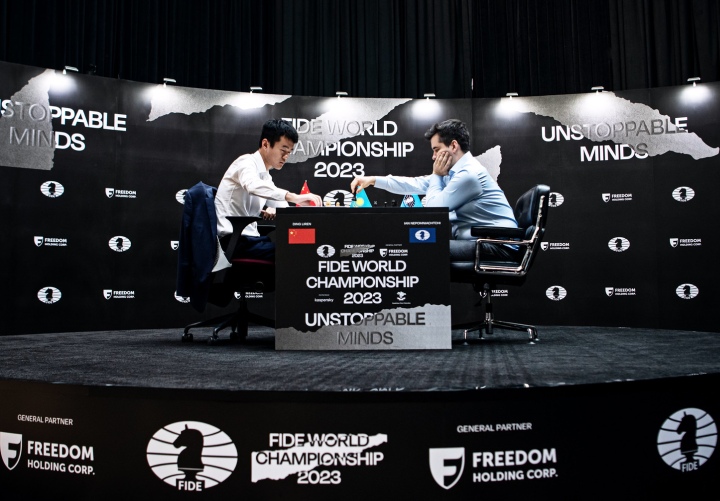
Following a draw in game 14, Ding Liren and Ian Nepomniachtchi are both on seven points and are headed for a final tie-breaker in the FIDE World Championship It was the game which could have decided everything. However, after a failed attempt by Ding to organise an attack early on, the two players went for an exchange of queens transpiring into an even position where Black had a slight edge. In the end, Nepomniachtchi was pushing for a victory in an even rook endgame, trying to drain his opponent’s energy and break him, but Ding defended well. In the first few moves of the Nimzo-Indian Defence, Ding and Nepomniachtchi followed the opening moves of game five in which the Chinese player achieved a decisive advantage but failed to capitalise on it. Ding decided to deviate from that game on move five but the position was calm as both sides were still in the opening phase. However, on move 12, Ding decided to start an attack on the black king’s castle. The move was coated with ideas of making brave and fierce sacrifices on the board, evoking the romantic era of chess where the player’s character and audacity were above calculation and precision. Nepomniachtchi wasn’t fazed by this and brushed off White’s overly ambitious advances. Ding was soon forced to confess that his idea had failed. He then went on for an exchange in the centre, leading to the queens and several pieces being removed from the board. The resulting position was even, with White’s doubled pawns giving Black a slight advantage. Undeterred, Ding opted for another ambitious and risky plan – to temporarily give up a pawn to get some activity – but ended up with his pieces being more exposed across the board. As the game moved on, the nature of the position was becoming ever more uncomfortable for White. Although the world championship was hanging on this game, Ding opted for risky strategies which effectively gave way to Black. At one point Nepomniachtchi achieved a significant advantage but with one imprecise move, he let White level the game. Despite treading a fine line, Ding managed to maintain his position and eventually discovered a splendid combination to simplify the game and reach a rook endgame where he was a pawn down but the position was even. Nepomniachtchi pushed on and Ding had to be very precise to prove he could hold a draw. Just as it seemed we were on the brink of a threefold repetition, Nepomniachtchi decided to play on as he sent his king towards the left flank and allowed Black to capture a pawn on the kingside. Despite things getting sharper and Ian trying to unsettle White, Ding found the precise moves to keep the position even. Nepomniachtchi was gradually chipping away at Ding’s time and nerves, hoping he will break at one point. However, the Chinese player managed to hold. After trying every single approach to find victory, on move 90 and after six and a half hours of play, the final classical game of the 2023 FIDE World Championship match ended in a draw. It remains to be seen whether this long and draining game will impact the players in their tie-break showdown on Sunday. In the drawing of lots it was determined that Ding Liren will be leading white pieces in the first game of the tie-breaks. Here follows a closer look at game 14 of the match. After 13 games which saw seismic swings in the play and the result, the score was even: 6.5 to 6.5. It was all down to the final, 14th game of the match. Ding Liren – who has played the role of the underdog throughout the match – was leading white pieces. Some five minutes before the round, Ding Liren arrived at the board, meticulously readjusting each white piece before scribbling his opponent’s name on the score sheet. As he took a sip of water, Ian Nepomniachtchi strode in – in a blue shirt and not wearing a jacket. The two rivals exchanged a handshake without meeting each other’s gaze. Ding stood up, removing his jacket and placing it on the back of his chair. The atmosphere was charged with anticipation as both players maintained an air of stoic calm, neither daring to make eye contact. The first move was made by MäulenÄşimbaev, The Chair of the Senate of Kazakhstan and Alanna Berikkyzy, winner of the FIDE World School Chess Championship. As the Chief Arbiter Nebojsa Baralic started the clock the two players shook hands. It was the first time their eyes met, but only for a second. 1.d4 Played by Ding.1…Nf6 2.c4 e6 3.Nc3 Bb4 Ian opted for the Nimzo-Indian Defence. This opening was seen once before in the match, in game eight where Ding Liren surprised Nepomniachtchi in the beginning, achieved a winning position but then dropped it all and allowed him to draw. “Quite exciting to see this. It reveals Ding’s attitude – he’s not going to play it safe I guess”, said Grandmaster Daniil Dubov upon seeing the opening moves. “The Nimzo is an invitation for a big game which Black cannot really avoid”, he added. In this opening, Black usually gives up a bishop pair but gets a better pawn structure and easier development as compensation. In the Rubinstein variation after 4.e3 0-0 5.Bd2 Ding chose not to play 5.a3 as in game eight, but a different move which has become popular in recent years. “A super solid 5.Bd2 Nimzo”, former world champion Vishy Anand called it. Ding stood up as he made the move, while Nepomniachtchi mischievously smiled when he saw what was on the board. “I didn’t buy it” said Nepo after the game, explaining his reaction. “I just didn’t see how it would work”. The opponents followed the footsteps of Donchenko and Wojtaszek (2021) up to move nine when Ian introduced a sensible novelty 9…dxc4, which is the first line of Stockfish. From this point on, Ding started spending more time
Ding gives respite to Nepomniachtchi as game 13 ends in a draw
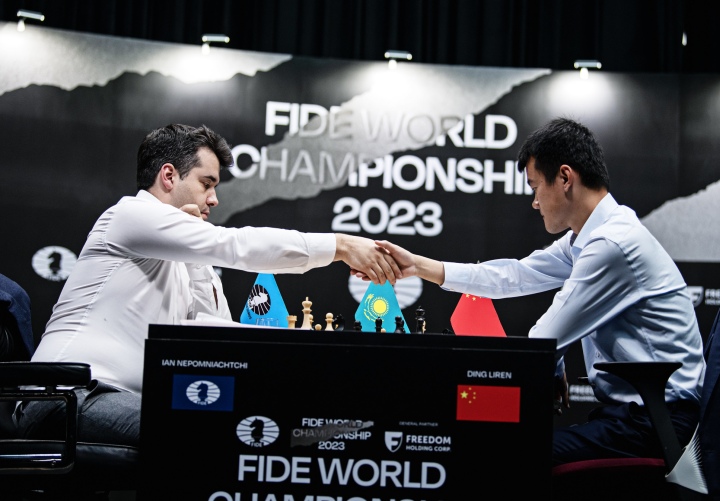
Despite creating a better position as Black, Ding Liren decided to simplify and entered a riskier endgame where he was on the back foot. With both players on 6.5 points, everything hangs on the final, 14th game of the match In today’s game, Ian Nepomniachtchi was White. Following a shocking defeat in Round 12 where he lost a winning position, and with just two more games to go, he was under more pressure – to regain his composure and push with white pieces. Instead of trying to seize the moment and further unsettle Nepomniachtchi, Ding opted for a line well-known by both. In the Closed Ruy Lopez with 6.d3, the two followed the game from round five of the match, which Nepomniachtchi won. It was Nepomniachtchi who decided to deviate from that game on move 10. It was also notable that he played slower in the opening, unlike in other games in this match. As the two reached the middlegame, Ding was the one who emerged from the opening with a more comfortable position: he stopped White from advancing in the centre, had better-coordinated pieces and had more chances to take the initiative. It seemed that things weren’t going Nepomniachtchi’s way and that Ding was on the path of making a huge break. However, after a mysterious move placing his rook in the centre, Ding started losing his way. As in previous games, he was falling behind on the clock and his choice of moves wasn’t the best. In a sharp position, Ding decided to simplify – he gave up a rook for a bishop and a pawn and exchanged the queens. Black had enough compensation, but he completely squandered the advantage. After a few more imprecise moves by Ding, the tables turned completely: the two reached an endgame where White was playing for a win, while Black had to be precise in defending. White was pressing, but neither side gave way. Just after three hours of play and 39 moves, the game ended in a draw. Everything now hangs on the final, 14th game of the match. If either side wins, they will take the crown. If it’s a draw, the World Championship match will go into tiebreaks. Friday will be the final rest day for both sides. Game 14 will take place on Saturday, 29th April at 3 PM Astana time. Here follows a closer look at Game 13 of the match. After a rollercoaster ride in Game 12, both Ian Nepomniachtchi and Ding Liren are teetering on the edge of their physical and mental limits. With just two rounds left and the score level, there is no time to take it slow. Nepo seemed to be in a more difficult position ahead of today’s round: he had a huge shock in yesterday’s game where he was on the brink of winning the title of World Champion, only to throw it all away in just one move. Today he was playing with white pieces and – with this being one of the final two games – he had to push which, after suffering a devastating defeat, is difficult. Ding seemed to be more at ease as game 13 started. 1.e4 Nepomniachtchi stuck to his main opening move. 1…e5 2.Nf3 Nc6 3.Bb5 a6 4.Ba4 Nf6 This line of the Ruy Lopez was played in the match twice so far. Grandmaster Daniil Dubov noted that “from the psychological point of view I don’t like this for Ding at all”, suggesting he should have used this opportunity to do more to destabilize Nepomniachtchi with a surprise given that he is in “a shaky state”. 5.0-0 Be7 6.d3 b5 7.Bb3 d6 8.c3 0-0 9.h3 Bb7 Up to this point, the two were following game five of the match which Nepo won as White. Here Nepomniachtchi opted for 10.Be3, instead of 10.a4 as in game five. This is a new move at the elite level, but the first time this was played was in 1977 in an amateur game. Former World Champion Vishy Anand made the following comment: “Nepo being very sensible, his White openings have worked well, so why deviate? Ding playing very natural moves as well. He doesn’t need to keep provoking today.” Following a series of natural moves Ian decided to break through in the centre but missed an important subtlety. 14.d4 Nepo spent 14 minutes thinking before this move. It was suggested by Grandmaster Robert Hess that, in the long run, White made the mistake of not taking axb5 first as that would open the a-file and the a4-square for his bishop. This decision might come back to haunt White, it was suggested. 14…exd4 15.cxd4 cxd4 Playing 15…c4 despite looking as threatening (with the idea of playing c3) is actually dangerous as White would take on b5, open the file for a rook attack on the knight and press with d5, leaving Black’s pieces hanging and in a risky position. Still, Ding paused here for eight minutes to reassess the situation. “A smart strategical choice”, noted Fabiano Caruana. 16.Nxd4 Nc4! An excellent move by Ding forcing an exchange of knights, with the idea of making it harder for White to defend the e4-pawn. 17.Nxc4 bxc4 and White switched to defense with 18.f3 but after 18…Bf8 Black got an edge. Ding has a strong grip on the centre and better coordination of his pieces. 19.Bf2 d5 It is time to push in the centre. 20.exd5 Nxd5 21.Be4 Gradually, White ended up on the back foot. “He hates this position, I can see it on his face”, commented GM Irina Krush analysing Nepomniachtchi’s body language. This was a critical point and Ding got into a long think here. “He is trying to be accurate. Ian is on the back foot. Ding recognises that he needs to find forward-looking moves. He knows he’s better and he needs to be very precise here,” said Grandmaster Robert Hess. 21…Re5?! Played after 25 minutes. However, this ambitious move seems to be premature. After natural 21…Rb8! White would have been virtually forced to take on d5 giving Black two-bishop advantage
Race for the title wide open as Nepomniachtchi suffers shocking defeat
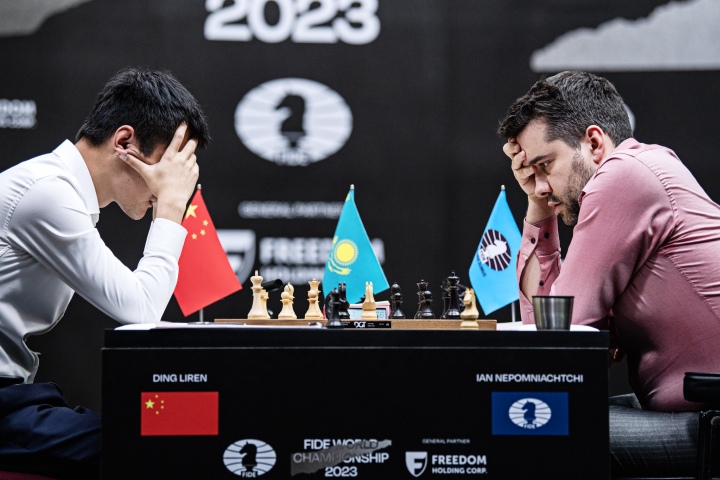
In a shocking game filled with dramatic turns of fortune, Ding Liren emerged victorious after Ian Nepomniachtchi played hastily and completely destroyed a commanding position. With Ding Liren equalising and just two more games to go, the race is now wide open for the next FIDE World Chess Champion Playing as White in game 12 of the match, Ding opted to go for the Colle System of Queen’s Pawn, aiming to avoid theoretical debates in the opening, but ended up in a well-known position emerging from Caro Kann but with an extra tempi. In an attempt to organise an attack on the black king, Ding played a premature pawn advance with 17.g4 and it quicly backfired. Ian Nepomniachtchi played all the right moves, neutralising White’s attempts and, at the same time, orchestrating a strong counter-attack on the kingside. After miscalculating his attack plan, White found himself in dire straits ending in a situation where Nepomniachtchi was dictating the game while Ding had no realistic chance of creating any play. It seemed that the game – and, potentially, the match – was in the bag for Nepomniachtchi, as Ding was also falling short on time. The Chinese made a desperate attempt for a break in the centre, which surprisingly worked very well for him. Black emerged with an extra pawn and initiative but after a seemingly unsuspicious move 27…Bb8, played after just one minute and 22 seconds, the tables have turned on Nepomniachtchi. The evaluation bar changed completely: from giving a decisive advantage to Black to assessing White’s position as much better. Luckily for Nepomniachtchi, Ding again did not demonstrate accuracy and returned the advantage to Black at least once. By this point, however, the two started playing very fast – despite still having enough time on the clock for the critical moment that transpired on the board. In a series of moves that followed – all played fast by both sides – White dropped the advantage, and the position was even. However, on move 34, Nepomniachtchi again played in haste and made a fatal blunder with 34…f5. The move was met with disbelief by grandmasters commenting on the game in live broadcasts and online. After that move, Black’s position completely collapsed. It was notable that Ding Liren was also surprised by the move as he gave Nepomniachtchi a puzzled look. It was clear that Nepo had lost his nerve. Nepomniachtchi could not hide his upset as he angrily and disappointedly looked away from the board. Now, there was no escape for Black, and Ding had a clear and simple path forward. A few moves down the line, on move 38, Nepomniachtchi resigned and left the board. With just two more games to go, the match is now wide open and with this shocking game, it seems that Ding is the one in the driving seat. Round 13 will take place on Thursday, 27th April, at 3 PM Astana time. Here follows a closer look at game 12 of the match. The honour of making the ceremonial first move was given to a world-famous singer, Dimash Qudaibergen, from Kazakhstan, who has achieved much success abroad. However, neither Nepomniachtchi nor Ding felt this game was “music to their ears”. Ding went for the rare Colle system, which isn’t considered to be forcing. While this system may not be particularly innovative, it can serve as a suitable choice for players seeking to steer clear of an excessively theoretical debate in the game. After 6…Bd7 (the move frowned upon by chess engines), played by Ian, the opponents ended up in a well-known position of the Exchange variation of Caro Kann but with extra tempi for White. Commenting on the opening, Grandmaster Robert Hess noted that it is possible that Ding thinks that Ian “doesn’t feel at home in this structure, and that’s why Ding picked it.” This position emerged in over a hundred games, but it was Black to move. Somewhat surprisingly, Ding did not manage to find good use of his extra tempi. After 9.Re1 (9.Qa4!?) e6 10.Nf1 Bd6 11.Bg5 0-0 Black is OK to compromise the pawn structure around his castle in exchange for having a pair of bishops and the open g-file for his rooks. 12.Bxf6 Ding spent nearly half an hour on this move. While this seemed most natural, the computer preferred Bh4 to get the bishop to g3 and remove the queen and bishop pin down the b8-h2 diagonal. After a series of logical moves, the opponents reached the first important position: 17.g4?! Somewhat rushed. 17.Kh1 or calmer g3 was considered a better move. 17…Rg8 18.Kh1 Ng6 19.Bc2? An inaccuracy by White played after 13 minutes of thinking. The logic of the move is to open the d3-square for the queen, to help the advance on the black king. However, it seems that Black can defend this easily with Rg6, Rg8 and f5. At the same time, the white king is also exposed to an attack. Ian quickly played 19…Nh4 and grabbed the initiative. Black quickly built up pressure with natural moves, transferring his pieces to the kingside. “This is Ian’s natural style, he’s intuitive…” said Caruana. With his back against the wall, Ding ventured upon a bold but erroneous move… 24.c4? dxc4 25.Qc3 trying to get his bishop to e4 and activate his defence. 25…b5! 26.a4 b4! – the strongest move in this position required precise calculation, although, from a practical standpoint, a cool-blooded 26…a6 might have been even more unpleasant for White – 27.Qxc4, we arrived at the second critical position. 27…Rag8 played by Ian, who did not demonstrate accurate calculation. It was a rushed decision instead of 27…Nf3, which is the obvious choice. Indeed, after 28.Qc6 Nxe1 29.Qxa8+ Rg8 30.Qe4 Nxc2 31.Qxc2 Qh4 (threatening mate in one) 32.Qd3 f5! 33.Qf3 fxg4 34.Rxg4 Rxg4 35.Qxg4 Qxg4 36.hxg4 b3! 37.Nf6 Ba3! And if 38.bxa3 b2 and Black is promoting. White should have taken an exchange with an inferior position, but Ding opted for 28.Qc6? 26…Bb8? Played quickly by Ian. A logical-looking move, but the evaluation bar now went all the way to Ding’s favour! 28…Nf5! was
FIDE Circuit: Levon Aronian emerges as the new leader
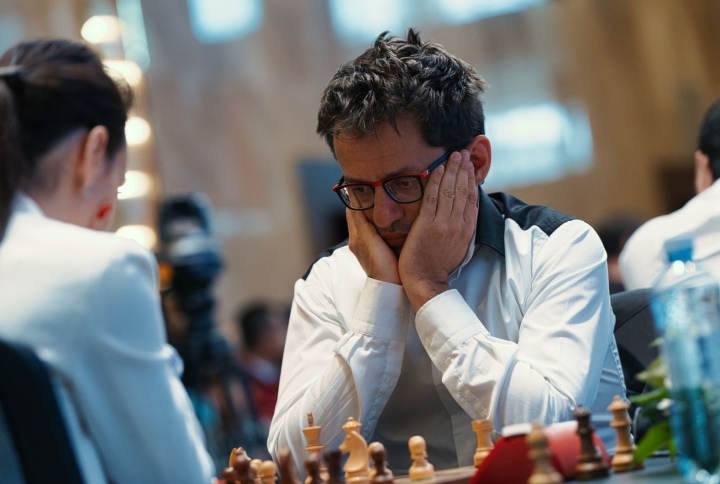
Levon Aronian is the new leader of the FIDE Circuit race following his strong showing at the Satty Zhuldyz rapid and blitz tournament. The stellar line-up of this event was a mix of true chess legends and upcoming stars. The American GM picked up FIDE Circuit 8.07 points, and with a tally of 32.81, he edged out Gukesh D to the second position. The composition of the top 10 remained unchanged. FIDE Circuit Race Top 10 as of April 25, 2023 On the last day of the Satty Zhuldyz rapid and blitz event, the final eleven rounds of blitz were played by some of the strongest players in the world battling for their share of an impressive $270,000 prize fund. A healthy mixture of legends of the sport, such as the 14th World Champion, Vladimir Kramnik, and four-times Women’s World Champion, Hou Yifan, and several famous players, namely Alexander Grischuk, Boris Gelfand, and Kateryna Lagno, fought with some of the most promising chess talents. This group included a local star and the top young lady in the world, WGM Bibisara Assaubayeva. Alongside her were the strongest chess prodigies in the world – Vincent Keymer (Germany), Arjun Ergaisi (India) and Javokhir Sindarov (Uzbekistan). During the pre-tournament press conference, former Blitz World Champion Levon Aronian joked about ensuring to “beat the prodigies while they are still young!” As they say, every joke has a grain of truth. Over three days of rapid and two days of the blitz, Aronian had the most consistent results, taking silver in the rapid tournament (with Arjun Ergaisi coming out on top) and finishing second in the blitz portion (with Haik Martirosyan claiming gold). Levon’s results across the two tournaments combined gave him overall gold. Arjun Ergaisi (pictured below) took the overall silver. The young Indian put up a dominant performance in the rapid tournament, finishing 1.5 points ahead of the rest of the field, but did not do so well in the blitz coming only 5th. Another youngster, Haik Martirosyan, claimed the overall bronze after winning the blitz tournament and finishing 5th in the rapid event, as the place in rapid was used as a tiebreaker in case of an equal score. During the closing ceremony that featured local celebrities, dignitaries, live music and a show, the players received money prizes, with Aronian pocketing roughly $50,000 USD for taking gold. Text: Maria Emelianova Photos: Maria Emelianova and Damir Kuzhumov
Scholastic chess x FIDE: the goal is 50 million kids

Photo by Mark Livshitz At FIDE, we believe that chess is a powerful tool for education, social inclusion, and personal growth. Chess can help children develop cognitive, emotional, and social skills while fostering creativity, critical thinking, and problem-solving abilities. That is why FIDE is dedicated to promoting and supporting chess activities for children and schools around the world. Currently, more than 25 million kids worldwide are involved in scholastic chess, and FIDE’s goal is to double that number. Through its various programs and initiatives, FIDE aims to make chess accessible, enjoyable, and beneficial for every child. The system of tournaments for children, especially the prestigious World Youth Championships in age categories from under 8 to under 18 years old, caters to the competitive spirit of future top players. Today’s stars were once kids competing in them. The photos from the 2002 U12 World Championship, featuring Magnus Carlsen, Ian Nepomniachtchi, David Howell and Dmitry Andreikin, are making the headlines today for the number of top grandmasters present on that pedestal. Photo by George Mastrokoukos The school competitions are equally important, as they appeal to the grassroots of every sport: the school environment. FIDE is determined to develop this direction and is ready to introduce new events this year which will line up in a coherent system of scholastic tournaments. The individual FIDE World School Championship just finished in Rhodes, Greece. It took place from 14-22 April in six age categories (U7, U9, U11, U13, U15, U17) in the Open and Girls sections. Check our final report to learn about all the winners! Photo: WSCC 2023 official website FIDE – ISF World School Teams Online Chess Cup 2023 is about to start its qualification stages from 29-30 April. The Finals will be played on 6-7 May. All the details are here: FIDE Online Arena (chessarena.com) This year, FIDE is introducing a new flagship youth event, which will become the pinnacle of the scholastic competitions, the World Schools Team Championship. It will consist of two stages. First, National Championships to determine the strongest teams in every country. And then, the World Finals: eight rounds over four days with the time control of 45 minutes plus 10 seconds per move. The first 50 National Federations to enter will be able to nominate one of their teams to have “invited team” status, which will entitle that team to free accommodation and a travel grant. The Championship will be held later this year, tentatively in August, and we will soon announce the details of when and where it will happen. Another new tournament will be held from 3-9 Jul by International School Chess Union (ISCU), FIDE, and the Romanian Chess Federation: International Schools Chess Festival in Romania. Any school can register a team of 4 players (two boys and two girls) aged 12 or younger. The time control is 45 minutes plus 10 seconds per move, to keep it on par with the World School Championship. This event could become a perfect training ground for that global summit. The unification of time controls, a stable system of recurring tournaments and clear qualification paths is what FIDE is ready to introduce this year and maintain in the future. It will help every school safely introduce chess into their routine activities and motivate children by the competitive aspect of the game. Photo by Anna Shtourman FIDE strives to improve chess education and training quality and standards by providing resources, guidance, and recognition for teachers, coaches, and organizers. The first day of the London Chess Conference in March was dedicated to Pre-schools chess, and all sessions of this prominent Conference were broadcast live on the FIDE YouTube channel. One of the side events of the World Championship match in Astana was an International Education Conference, co-organized by FIDE and Kazakhstan Chess Federation. Experts from the USA, Spain, Russia, Georgia, Hungary, and Armenia shared their experiences with educators from Kazakhstan. They learned how to use the game to teach kids mathematics, problem-solving, creativity and other essential skills. FIDE Educational Commission has just launched a new teacher training course to improve awareness for educational chess – not less than 1000 teachers will be trained this year, thus spreading the knowledge of chess being a great tool when it comes to skills-based education. In order to recognize those schools which have incorporated chess in their school life and meet certain quality criteria, FIDE will soon launch its school and program endorsement program.
Nepomniachtchi remains one point ahead of Ding after Game 11 draw
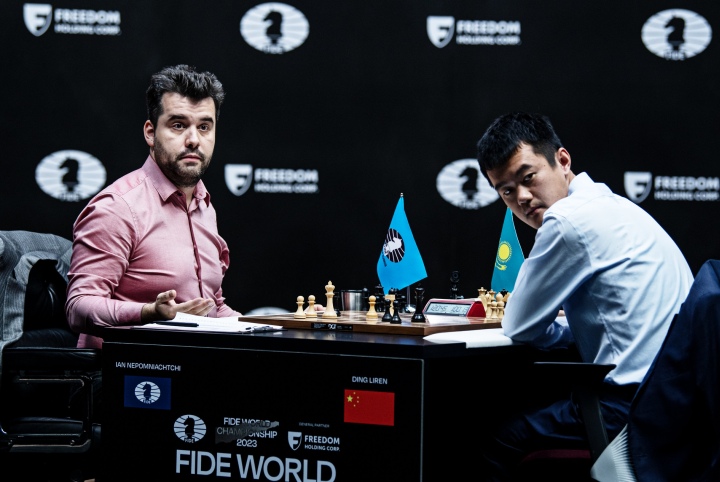
Ian Nepomniachtchi and Ding Liren split a point following a relatively quiet game. With only three games left to determine the ultimate winner, the pressure is mounting The eleventh game in the match for the title of World Chess Champion ended in a draw after 39 moves and just after an hour and 40 minutes of play. In the Anti-Marshall line of the Ruy Lopez, Ian Nepomniachtchi, playing as White, deviated from the c3-line he played before in the match and went for 8.a3, the move he tested against Ding at the 2020 Candidates and Carlsen in the 2021 title match. As the game developed, White managed to gain slightly more initiative and a more comfortable position on the board. After the somewhat premature move 15…c4 by Ding, opening some weaknesses, White had a chance to maintain tension and put more pressure on Black. Nepomniachtchi instead opted to simplify the position. After a series of exchanges on the board, the two entered a drawn rook endgame. Again, as in round nine, a position transpired on the board where White had an extra pawn in the endgame but it was a draw. Unlike in round nine where the debate in a drawn position lasted for two hours, here the two played much quicker and agreed to split a point. The score is now 6:5 for Nepomniachtchi. With just three more games left, the pressure is increasing for both players: Nepomniachtchi needs to maintain course and keep his guard up while Ding is under increasing pressure to secure a win. The players will rest on Tuesday, with game 12 taking place on Wednesday, 26th April at 3 PM Astana time. Here follows a closer look at the eleventh game of the match. After standard moves in the Anti-Marshall in Ruy Lopez Ian deviated from game 5 (in which he played c3 and h3) with more popular 8.a3. This variation was also noticed in the leaked prep games which have been linked to Ding’s preparation. If that preparation is Ding’s, this means that this line was also part of his prep as White. This line was also played between the two in the 2020 Candidates in Yekaterinburg which Nepomniachtchi won. After 8…Na5 9.Ba2 c5 10.Nc3 Be6 11.Bg5 0-0 12.Bxf6 Bxf6 13.Nd5 g6 14.Qd2 Bg7 the position is even, but White has slightly more flexibility due to the more active knight in the centre compared to Black’s f6-bishop who has limited range as he is facing his own pawn. White also has more options for a pawn push on the queenside, but Black is overall very solid as he has no weaknesses. At this point Ian introduced a logical novelty 15.Ng5, going for the e6-bishop and opening the f-file for a pawn push. “It probably reflects my bias, but I really like White’s position. It seems to me to be easy to play,” former World Champion Vishy Anand commented on Twitter. 15…c4 this bold and somewhat risky move with the idea of blocking the a2-g8 diagonal was played after 12 and a half minutes of thinking by Ding. 15…Nc6 or Ra7 were considered to be better options for Black. Daniil Dubov was not impressed by Ding’s move suggesting that positionally it doesn’t work. 16.Nxe6 fxe6 17.Ne3 Bh6 pinning the knight, that is pressuring the c4-pawn. 18.Rad1 Rb8! After Ding made this arguably the strongest move the opponents reached the critical position of the entire game. 19.dxc4 an imprecision by White who defused the tension too early. Ian could have played 19.Qe2, away from the black bishop’s pin and to maintain pressure on c4. As played, it quickly turned out that Black had sufficient counterplay. After 19…Nxc4 20.Bxc4 bxc4 21.Qxd6 Qxd6 22.Rxd6 Bxe3 23.fxe3 Rxf1 24.Kxf1 Rxb2 25.Rxe6 Rxc2 26.Rxa6 Ra2 27.Rc6 Rxa3 28.Rxc4 Rxe3 a hurricane of exchanges swept most pieces off the board and the two have reached an even rook endgame. White is a pawn up but it’s a dead draw. After 39 moves a draw was agreed upon a threefold repetition. “Ian didn’t push very hard to win in this line but I had to be careful” in light of the similarities of the game with the one in the 2020 Candidates which “is in bad memory for me”, said Ding Liren in the post-game interview. “I guess my play was much better than last time,” he said. “I will try my best in the last three games. Tomorrow is a rest day so I will have more time to prepare some extra ideas,” said Ding when asked about his plan for the last three remaining games in the match. Nepomniachtchi noted that Ding played well and he questioned his decision to take the pawn on c4. “I’m not quite sure I was right to take on c4. I thought that I will get this three vs two endgame, but that never happens… I should have played it slowly, Qe2 instead of taking on c4”. “I can’t say that I am fully satisfied with the result of the game, but a draw is a draw,” he added. Nepomniachtchi. Nepomniachtchi was also asked if he feels that he has secured victory in the match and that it’s all over. “You’ve got to be kidding,” he responded, ”of course, it’s not over yet.” Ding Liren was asked about what changes are necessary to the world championship format: “Now I think the tournament could be even longer,” he responded to Ian Nepomniachtchi laughed. Text: Milan Dinic Photo: Steve Bonhage and David Llada Official website: worldchampionship.fide.com/ About the match The 2023 FIDE World Chess Championship match between Grandmasters Ding Liren and Ian Nepomniachtchi takes place from 7th April to 1st May 2023 in Astana, Kazakhstan. The match consists of 14 games, followed by a rapid/blitz tiebreak in case of a tie. The time control for the standard games is 120 minutes for the first 40 moves, followed by 60 minutes for the next 20 moves, and then 15 minutes for the rest of the game, with an increment of 30 seconds per move starting from move 61. The first
1st FIDE Council Meeting 2023: List of decisions
1st FIDE Council Meeting 2023 Mexico City, Mexico April 4, 2023 LIST OF DECISIONS CM1-2023/01 To note President’s report. CM1-2023/02 To note Treasurer’s report. CM1-2023/03 To approve the proposal of the FIDE Council Working Group on National Chess Federations’ Arrears on course of actions regarding national chess federations in arrears. CM1-2023/04 To note information on FIDE major events calendar and approve the regulations for the Women’s World Championship match 2023. CM1-2023/05 To note the General Strategy Commission’s report. CM1-2023/06 To approve changes for the FIDE Circuit Regulations. CM1-2023/07 To note the Arbiters’ Commission’s report. CM1-2023/08 To approve recommendations of the Arbiters’ Commission on Seminars, Classification upgrades, Amendments to the lecturer list, FA norms and titles. CM1-2023/09 To approve the FIDE Arbiter Disciplinary Regulations which will come into force from 1st May 2023. CM1-2023/10 To approve the Arbiters’ Disciplinary Subcommittee membership as follows: C. Munoz (CRC), Norman Ronald King (RSA), Pablyto Robert Baioco Ribeiro (BRA), Jaroslav Benak (CZE), Gendel Oyunchimeg (MGL). CM1-2023/11 To note the Qualification Commission’s report. CM1-2023/12 To request the FIDE Legal Director according Qualification Commission’s proposal to draft the amendment to the FIDE Rating Regulations regarding the FIDE Council’ right to rate events in exceptional cases. CM1-2023/13 To approve a Direct Titles Report Form. CM1-2023/14 To approve the recommendations of the Qualification Commission on titles. CM1-2023/15 To instruct the Transfer Regulations Task Force to review and revert to the comments received from ECU, Council members and other parties updating their proposal accordingly. CM1-2023/16 To continue analysing the request of the ASEAN regarding the reinstatement of direct titles in ASEAN competitions in the context of questions raised by Qualification Commission. To continue consultations with Asian Chess Federation regarding this request before any changes to the Direct Titles rules, in particular regarding the three regional youth competitions, be made. CM1-2023/17 To note the Trainers’ Commission’s report. CM1-2023/18 To approve the recommendations of the Trainers’ Commission on titles and Academies. CM1-2023/19 To approve the Trainers’ Commission’s proposal related to the FIDE Endorsed Academies’ fees CM1-2023/20 To approve the Trainers’ Commission’s proposal regarding the award of the FIDE Senior Trainer (FST) Title. CM1-2023/21 To request the Trainers’ Commission to redraft their proposal related to the Captains/Trainers at official FIDE events To elaborate on the idea of having specific requirements for the team captains, especially where financial support of FIDE is provided To submit the updated proposal for the FIDE Council’s voting. CM1-2023/22 To note the Technical Commission’s report. CM1-2023/23 To accept the Technical Commissions’ recommendation that Millenium eBoard can be used in hybrid events under the following conditions: ● At the classic tournaments with at least 30 seconds increment per move ( 40 seconds increment per move is recommended). ● At the rapid tournaments with at least 15 seconds increment per move. ● At the tournaments with players rated under 2200. ● Well prepared arbiters with special technical training are present at the tournament. ● The online platform used needs to offer the possibility to the arbiter to take back one or more moves and reconfigure the clock. Simultaneously, the FIDE Rules Commission together with Arbiters’ Commission should propose changes to the existing FIDE Online Chess Regulations and the Technical Commission should continue the further cooperation with Millenium in order to improve its regulations to the Technical Commission’s recommendations. CM1-2023/24 To note the proposed FIDE eBoard Chess Regulations and to request the Rules Commission to discuss the proposal with the Arbiters’ and Athletes’ Commissions. CM1-2023/25 To conditionally approve use of the DGT 2500 clock, pending confirmation of the Technical Commission that the lever system has been improved and the noise has been reduced. CM1-2023/26 To accept the FIDE Technical Commission’s conclusion that the idChess in order to be used in FIDE-rated under 2200 only tournament games, must meet the requirement that according to the FIDE Laws of Chess, the notation belongs to the organiser of the competition, and update its regulations accordingly. Simultaneously, the inter committee work group (Arbiters’, Technical and Rules Commissions) to come with the proposal regarding the update of the relevant FIDE rules and regulations that will allow the use of the IdChess software under specific conditions and the Technical Commission should continue the further cooperation with idChess in order to solve the issue of illegal moves, promotion and importing of games, shortcomings with regards to the recording of the moves and broadcasting. CM1-2023/27 To approve the recommendations of the Events Commission on titles. CM1-2023/28 To approve that in exceptional cases, the organisers of the FIDE individual official youth events 2023 may accept individual registrations pending FIDE approval. In such cases, the players may be obligated to participate in the aforementioned competitions under the FIDE flag pending their request. CM1-2023/29 To award World Junior Chess Championships 2023 to Mexico City, Mexico. CM1-2023/30 To award World Senior Team Chess Championships 2023 to Ohrid, North Macedonia. CM1-2023/31 To award World Amateur Chess Championships 2023 to Muscat, Oman CM1-2023/32 To award the World Youth U-16 Chess Olympiad 2023 to Eindhoven, Netherlands. CM1-2023/33 To award World Seniors Championships 2023 to Buenos Aires, Argentina subject to the inspection. CM1-2023/34 To note that World Championship for Players with Disabilities will be organised in Lublin, Poland from August 18 to August 28 2023. CM1-2023/35 To note the Women’s Chess Commission’s report. CM1-2023/36 To note the Planning and Development Commission’s report. CM1-2023/37 To note the Commission on Chess Education report. CM1-2023/38 To note the Fair Play Commission’s report. CM1-2023/39 To approve the proposals of the Fair Play Commission on Seminars, Amendments to the lecturer list, norms and titles. CM1-2023/40 To approve the FPL Title Regulations and forms. CM1-2023/41 To note the Rules Commission’s report. CM1-2023/42 To note Continental reports. CM1-2023/43 To update the FIDE directory in respect of Asian zones. CM1-2023/44 To recommend the application of the Tonga Chess Federation for the ratification by the General Assembly pending the receipt of the documentation in respect of the national recognition. CM1-2023/45 To note the report of FIDE and ECU representatives regarding the situation with the Bulgarian Chess Federation and support their suggested way forward. To ask for the progress report and Constitutional Commission’s advisory opinion regarding the Bulgarian chess before the next meeting of the Council. CM1-2023/46 FIDE recognizes that Dr.
2023 1st FIDE Council Meeting: List of Decisions

FIDE publishes the list of decisions of the 1st FIDE Council meeting 2023, held on April 4 in Mexico City, Mexico. Download List of Decisions (PDF)
World Chess Championship enters final phase as Nepomniachtchi retains lead
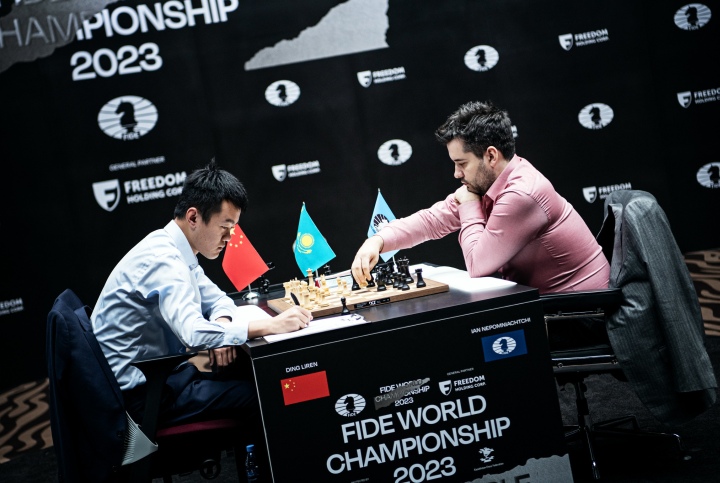
Despite Ding’s advantage of playing with the white pieces, he was unable to secure a win, getting only a slightly better position. With just four more games scheduled to take place, Nepomniachtchi maintains the lead with 5,5:4,5 In a tense match where every move counts, with the advantage of leading the white pieces and trailing Ian Nepomniachtchi, Ding Liren was under more pressure to play for a win in game ten. Despite White managing to create some initiative, Black was just in time to defend everything and held his ground in the endgame. In the Four knights variation of the English opening, Ian Nepomniachtchi opted for a sharper but solid line where Black leaves his king uncastled and pushes on the kingside. The two entered a position which Nepomniachtchi tested as White in 2020, meaning he was familiar with the line. Ding Liren played the optimal moves, got some initiative and even won a pawn but it seemed that Ian was in his preparation as he went for a slightly inferior but defendable ending. The endgame resembled the situation from game nine. In that game, White (Nepomniachtchi) had a pawn advantage in a dead-even draw but opted to press his opponent for another 30 moves. Now, it was Ding’s turn to return the favour as he pushed in an even position with a pawn up. Black managed to activate his rook on the queenside just in time to stop White from seizing more initiative. Ding played on, trying to edge a victory, but Nepomniachtchi defended well and was better on time. Gradually, all the pieces came off the board and, after three hours of play and with just the two kings left on the board, the game ended in a draw on move 45. A solid outcome for Nepomniachtchi. With just four more games left in the match, Nepomniachtchi is leading with a score of 5.5 to 4.5, giving him an advantage in the upcoming eleventh game where he will play with the white pieces. Ding, on the other hand, must win two games and not lose the other two if he wants to take the crown to China. In the eleventh game, he will be leading black pieces which makes it riskier to play for a win. Game eleven takes place on Monday, 24th April at 3 PM Astana time. The honour of making the first ceremonial move was given to Kunsulu Zakarya, a prominent Kazakh scientist in the field of biological safety and the head of the Kazakhstan Academy of Sciences. In the Four Knights variation of the English opening, the opponents followed the game Nepomniachtchi – Cardoso (2020) up to move 14 (which Ian won but had a very bad position at some point), where Ding deviated with a logical decision to castle. Nepo responded with 14…h4. The position is even, although the white king is more secure and as long as the queens are on the board, Black has to be more careful. After a logical sequence 15.Qd3 g5 16.exd6 cxd6 17.Bd6 Qxd6 18.Qxd6 Bxd6 19.Rxd6 Ding headed for an endgame where Whtie has an extra pawn but has a bad pawn structure. Commenting on White’s choice to go for the endgame, Grandmaster Daniil Dubov noted: “Ding could be a little bit annoyed with the previous game where he was tortured in an even endgame… So he is probably saying: you know what, now it’s my turn and I will play this dry position.” After 19…Be6 20.f4 White opened the f-file for the rook but Black has enough defensive resources. Ian’s only problem was his advanced and vulnerable h3-pawn. With this in mind, he timely brought his rook to the queenside and created a sufficient counterplay against White’s weaknesses. In subsequent play, Nepo confidently held his ground and forced the exchange of a pair of rooks closer to the time control. 34…Bb3! And now, it was time for the bishops to go off the board. After forced 35.Bxb3 35…Rxc3+ 36.Kh4 Rxb3 37.Rb5 Ra3 38.Rxb6 Rxa4 39.Kxh3 White preserved his extra pawn but the rook endgame that emerged is dead drawn. Just a few moves down the road the opponents shook hands. After the game Ding noted that he did achieve some initiative, but nothing substantial. “At one point I am wondering if I could retreat the bishop instead of taking on d6 so I played the more natural move. Ian defended quite well so I didn’t have many chances in the game”. Asked about his confidence level about winning the match, Ding said: “We still have more games left. I wouldn’t say how much confidence I have”. Nepomnianichtchi said that the whole line played in the game “is interesting”. He recalled the game from 2020 when he got into the same position as White against Carlos Jose Gabriel “and I got lost with White within a few moves”. “I thought it was quite a nice line. The move of the bishop to c5 looks a little bit scary, but if you go for some forcing lines then you take extra risk. As far as I know, there’s not much White can do here”, said Nepomniachtchi. One of the questions in the press conference referred to the report about Ding Liren’s preparation being leaked online. While Ding and his team refused to comment on this, Ian Nepomniachtchi was asked for his thoughts. “My team took a look. I wouldn’t say it should be as hyped as it actually is. I am still more or less doing what I was going to do. We didn’t change it too much I think”, said Nepomniachtchi. When asked about what fascinated him in chess when he was young, Nepo noted that he learnt chess as he learnt to read adding that he was “seeking for harmony between the pieces”. Text: Milan Dinic Photo: Stev Bonhage and David Llada Official website: worldchampionship.fide.com/ About the match The 2023 FIDE World Chess Championship match between Grandmasters Ding Liren and Ian Nepomniachtchi takes place from 7th April to 1st May 2023 in Astana, Kazakhstan. The match
Winners crowned at 2023 FIDE World School Championship
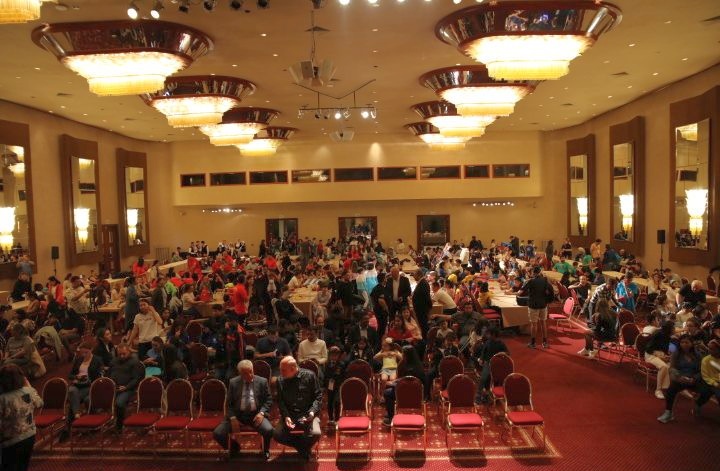
The FIDE World School Chess Championship, a part of the 4th Rhodes Chess Festival, is in the books. The event took place from April 13 – 23, 2023, at the Rodos Palace Resort Hotel. A very demanding and highly competitive event came to an end, with the winners crowned in each category. Round 9 started with a fast quick between WFM Anastasia Kirtadze and Lilian Eshkol, with Anastasia securing 1st place in her section. The players, coming into the final 9th round as the leaders, secured titles in almost all the categories. The only exception was U17 section where FM Adam Tarhan came out on top after scoring an important victory, while his main rival Azeri FM Suleyman Suleymanli drew his game although he had some winning chances in the final position. Final standing in the open categories: U07 McCallum, Elliot (8) CAN Nurshin, Nurali (7.5) KAZ Ulan, Rizat (7) KAZ U09 Kiringoda, Thehas Rithmitha (7.5) SRI Bissaliyev, Aisultan (7) KAZ Zhauynbay, Alimzhan (7) KAZ U11 Yilmaz, Baver (8) TUR Obidov, Biloliddin (7) UZB Kuandykuly, Danis (6.5) KAZ U13 Durucay, Uygar (9) TUR Tenguundalai, Ganbat (7.5) MGL Mamedov, Edgar (7) KAZ U15 Kiladze, Luka (6) GEO FM Celik, Hasan Huseyin TUR Raczek, Krzysztof (5.5) POL U17 FM Tarhan, Adar (7.5) TUR FM Suleymanli, Suleyman (7) AZE FM Filip, Andrei (6.5) ROU In the U13 Yugar Durucay became the only player of the tournament to score outstanting 9 out of 9, after his victory over Kuanysh Dzhumakanov in the final round. In the girls’ categories, there was no change in the final rankings after the last round. The top trios in all sections preserved their positions. G7 1. Gerelt-Oyu, Tsogtgerel (8) MGL2. Kinzyabulatova, Reana (7.5) FID3. Rayna, Ajay Patel (7) IND G9 1. Berikkyzy, Alanna (8) KAZ2. Tselmuun, Ider (8) MGL3. Zhu, Alicia (7) USA G11 1. Buyankhishig, Batpelden (8) MGL2. Pehlivanova, Aleksandra (6.5) BUL3. Diaskyzy, Daliya (6.5) KAZ G13 1. Siskou, Evangelia (7,5) GRE2. Urangoo, Gurvanbaatar(7,5) MGL3. Sodgerelt, Naranbold (6.5) MGL G15 1. WFM Kirtadze, Anastasia (7,5) GEO2. Regidor, Kaye Lalaine (7) PHI3. WCM Yildiz, Elif Zeren (6.5) TUR G17 1. WIM Kairbekova, Amina (8) KAZ2. WFM Ciftci, Zeynep (7.5) TUR3. Akat, Elifnaz (6.5) TUR The battle between the compatriots from Mongolia in the U13 Gurvanbaatar Urangoo – Naranbold Sodgerelt decided the 2nd and 3rd places in the category. Aleksandra Pehlivanova’s win over Kateryna Onipko lifted her to 2nd place on the podium in the U11 category. Closing Ceremony The Rhodes Chess Club “Ippotis” organized a huge celebration at the closing ceremony full of music, colors and endless smiles. The “Jupiter” hall was overflowed with feelings of joy, emotion, a sample of a perfectly organized event. The ceremony was attended by Kallistos Diakogeorgiou (Deputy Governor of Industry, Energy and Natural Resources) on behalf of the South Aegean Region, the President of ECU Zurab Azmaiparashvili, the General Secretary of ECU Theodoros Tzorbatzoglou, the President of the Rhodes Chess Club “Ippotis” Stamos Karavas, the President of the Mongolian Chess Federation Erdenebaatar Gurvanbaatar, the Turkish Consul in Rhodes Salim Kirciali, the Vice Presidents of ECU Gunnar Bjornsson, Eva Repkova, Alojzije Jankovic, Jean Michel Rapaire and FIDE representative Ozgur Solakoglu. The closing ceremony started with a wonderful concert by the youth choir of Michalis Kalaitzis followed by traditional dances performed by the dance group “Proodos”. Both acts enthralled all those present who clapped rhythmically to the Greek beat. The awards ceremony started with the Deputy Governor Mr. Kallistos Diakogeorgiou giving the trophies and customized medals to the G17 category, followed by Mr. Salim Kirciali with the U17 category, Ms. Eva Repkova in the G15, Mr. Zurab Azmaiparashvili in the U15, Mr. Theodoros Dzorbatzoglu in G13, Mr. Ozgur Solakoglu in U13, Mr. Erdenebaatar Gurvanbaatar in G11, Mr. Gunnar Bjornsson in U11, Mr. Jean Michel Rapaire in G09, Alojzije Jankovic in G07 and Mr. Giorgos Mastrokoukos – on behald of the organizing committee – in U07. The top 3 countries (medalists) of WSCC 2023 are:Kazakhstan 9 (2 gold, 2 silver, 5 bronze)Turkey 7 (3 Gold, 2 Silver, 2 Bronze)Mongolia 6 (2 Gold, 3 Silver, 1 Bronze) The championships were a joint event of the Rhodes Chess Club “Ippotis” with the South Aegean Region and the Municipality of Rhodes through the Municipal Organization of Culture and Sports (DOPAR) under the auspices of the World Chess Federation (FIDE) and the Hellenic Chess Federation (ESO). The organizers express their gratidude to the event’s sponsors: Xenakis Cars, Beekeeping of Dodecanese, J&D Rent a Car, Rodos Palace Hotel, Radio Taxi Diagoras, Accounting Office of Papadimitriou and Associates (Papadimitriou Panagiotis), AtHolidays, Cafe Auvergne & Restaurant Romaio, Tropaion, Odeon of Dodecanese and the communication sponsors Eleftheros Typos To facilitate transportation, Mr. Nikos Xenakis (Xenakis Cars) as the sponsor of electric mobility, provided 3 modern cars (electric – hybrid) covering the needs for the transportation of the organization’s executives. Official website: wscc2023.ippotis.com/ Text and photos: Official website