

Temur Kuybokarov wins Zone 3.6 Zonal Championship

The first chess Zonal in Asia, Australia and Oceania (Zone 3.6) in hybrid format was held over the consecutive weekends of March 20th and 21st and March 27th and 28th by the Zone President Paul Spiller and Oceania Chess Confederation under the auspices of FIDE and the Asian Chess Federation. The players could use traditional boards to think over their moves before uploading on their computers under the watchful eyes of Local Chief Arbiters, Zonal Chief Arbiter Dr. Peter Tsai, and Deputy Chief Arbiter IM Leonid Sandler (overall more than 20 arbiters). Full standard time control (90+30) was applied in this 8-player round-robin competition. The event was dominated by the highest-rated players, GMs Anton Smirnov and Temur Kuybokarov of Australia, who drew their direct encounter, won all other games and tied for first place scoring 6½ out of 7 each. The tie-break of two worthy opponents was a very close affair that came down to the wire: Kuybokarov and Smirnov drew both rapid games (25+10), exchanged blows in fast rapid (10+5), then split points in blitz (5+3). Having white pieces in the Armageddon game Kuybokarov (pictured below) pulled out so much-needed victory and punched his ticket to the FIDE World Cup scheduled for July 2021. Photo: aus2020.chesschamp.net/ Final standings: 1. Temur Kuybokarov (AUS 2530) – 6½2. Anton Smirnov (AUS 2597) – 6½3. Nic Croad (NZL 2316) – 54. Elmer Prudente (GUM 1991) – 3½5. Taione Sikivou (FIJ 1830) – 2½6. Thubalkain Dabuae (NRU) – 27. Fred Resture (SOL 1797) – 28. Angelo Salvadora (PLW 1730) – 1
Israel: “Chess for Every Child”

Chess keeps gaining space in the education system, and once in a while, a new square in this field is conquered. Recently, the Israel Chess Federation and the Ministry of Education in Israel have announced the expansion of the program “Chess for Every Child”, which consists of six special projects aimed at enabling second and third-grade children all over Israel to learn the game of chess during 20202021. The program will be funded by Mifal Hapais, the Israeli lottery organization, which is a “community interest company” whose core purpose is to raise funds from the public through lotteries, for investments in the community and Israel society as a whole. All of Mifal Hapais’s profits are invested in the community through innumerable social projects in education, welfare, community volunteerism, and the promotion of Israeli culture. “Chess is recognized by the public, heads of government, and senior government officials in Israel as an effective means of improving attention and concentration, developing strategic thinking, competitiveness and the value of victory among youth”, explains the Israel Chess Federation. “Mifal Hapais is investing many resources in this project because it realizes that chess is an excellent tool for developing thinking and improving capabilities among children, among them, patience, success, coping with failure, strategic thinking, the ability to solve problems requiring concentration, creativity, etc.” This program was funded with approximately €408,000 (NIS 1.6 million) in the 2019-2020 school year. Citing the growing interest of authorities and schools in Israel in the project, Dr. Zvika Barkai, Chairman of the Israel Chess Federation, made a petition to increase this budget. The proposal was accepted by the chairman of Mifal Hapais, Mr. Avigdor Yitzhaki, who decided to increase the budget to €918,000 (NIS 3.6 million) for the 2020-2021 school year. Given the fact that 2020 was a challenging year in the financing of non-healthcare projects, this is a substantial increase. The program was launched during the 2018-2019 school year, 40 second-grade classes from all the eight primary schools in Kiryat Yam participated in the chess lessons. The number was increased to 205 classes the following school year, 2019-2020, when the project grew and expanded to the third grades as well. Given the positive results and the enthusiasm of the students, numerous local authorities and school principals praised the project and requested additional hours and lessons. In some cases, they continued the chess lessons at their own expense. The increased budget will allow the Israel Chess Federation to expand the program to a total of 410 classes, a 100% increase. Mifal Hapais will oversee the implementation of the program, taking the demand into account and giving priority to minority groups and socioeconomically disadvantaged sectors.
University of Missouri wins Team Blitz Cup

The first FIDE World University Online Individual Blitz Championship, the competition that brought together 960 students from 78 countries also served as a qualifying stage for FIDE World University Online Blitz Cup with the four best universities advancing straight into the semifinals. Both semifinals and the final consisted of four sets and were played on March 27. The tournament regulations stipulate that in case of a tie on match-points, board points did not count so the team had to play a tie-break blitz match. In the semifinals, the University of Missouri faced off Armenian State University of Physical Culture and Sports University of Texas Rio Grande Valley took on Saint Louis University. The University of Missouri started with a bang by winning the first set 3:1; however, the Armenian State Institute of Physical Culture and Sport retaliated in the second set 2½:1½. It was a wake-up call for the higher-rated team as the University of Missouri comfortably took third and fourth sets by equal score 3:1. In the second semifinal, Saint Louis University won two close sets 2½:1½ and took the commanding lead. The top-rated Texas Rio Grande Valley came back in the third set 3:1 but did not manage to pull out so much-needed victory and the fourth set and the team from Saint Louis progressed into the final. A very tightly-contested final was a battle of two equal teams that exchanged blows in the first two sets and drew two others. It came down to a tiebreaker in which Mikhail Antipov and Christopher Repka tipped the balance in favour of the University of Missouri (2½:1½ ) that clinched the title. Final standings: 1. University of Missouri 2. Saint Louis University 3. University of Texas Rio Grande Valley 4. Armenian State Institute of Physical Culture and Sport
Statement regarding the FIDE World University Online Championships

In connection with the decision of the Fair Play Panel (FPP) of the FIDE World University Online Championships, FIDE confirms that the results of the women’s rapid final held on 25 March have been adjusted. All the results of IM Yulia Osmak are counted as a loss – in line with the tournament’s Regulations. The decision was not based solely on cheating-detection algorithms but was made by FPP after a thorough examination, that included all available evidence. The decision is final. FIDE Fair Play Commission upon reviewing all the data submitted by FPP will decide, whether the case shall be referred to the Ethics and Disciplinary Commission for further sanctions. FIDE relies on the dedicated work of FPP and encourages players to follow and value the principles of fair play.
#28
Israel: “Chess for Every Child” India: Chess in the academic curriculum How can chess help children with autism? FIDE Arbiters’ Manual 2021 The story of the African Chess Federations Chess keeps getting air time Anniversaries READ NEWSLETTER
European Online Chess Club Cup gets underway

European Online Chess Club Cup will be played from 27th-31st of March 2021, on Tornelo online platform with 91 teams participating. More than 500 players will take part in the event, including 404 titled players and more than 80 GMs rated 2600+, such as Shakhriyar Mamedyarov (AZE, 2770), Richard Rapport (HUN, 1763), Maxime Vachier-Lagrave (FRA, 2758), Jan-Krzysztof Duda (POL, 2743), Pentala Harikrishna (IND, 2732), Vidit Santosh Gujrathi (IND, 2762), Michael Adams (ENG, 2716), Nikita Vitiugov (RUS, 2715), Vladislav Artemiev (RUS, 2709), Evgeny Tomashevsky (RUS, 2706), Andrey Esipenko (RUS, 2701), Jorden Van Foreest (NED, 2701), Radoslaw Wojtaszek (POL, 2695), David Navara (CZE, 2697), Amin Bassem (EGY, 2695), Markus Ragger (AUT, 2680), Vasyl Ivanchuk (UKR, 2678), Parham Maghsoodloo (IRI, 2676), Luke Mcshane (ENG, 2674), Gawain Jones (ENG, 2670), Ivan Cheparinov (BUL, 2667), Gata Kamsky (USA, 2665), Nils Grandelius (SWE, 2663), David Howell W L (ENG, 2658), Rauf Mamedov (AZE, 2654) and many others. The event will be played within three stages: Qualification phase (27th-28th of March) – Groups consisting of 10 teams, each, play the Robin round event of 9 rounds. Two teams of each group qualify for Play-offs. Play-offs (29th of March) – The 18 qualifiers from the 1st phase divided into 3 groups of 6 teams. Best ranked 9 teams (3 from each group) proceed to the Finals. The final group (30th-31st of March) – 10 teams play Robin round tournament of 9 rounds. The 10th team is invited by ECU, the Winner of the European Women’s Online Chess Club Cup – Cercle d’Echecs de Monte-Carlo Official Regulations- European Online Chess Club Cup 2021 Lobby to follow – https://tornelo.com/chess/orgs/europechess Chess Results Start lists – http://chess-results.com/tnr553959.aspx?lan=1 Online Broadcast will be available through the ECU twitch channel and through the European Chess TV Youtube channel: Twitch – https://www.twitch.tv/europeanchessunion YouTube: http://www.youtube.com/c/europeanchesstv
Kirill Shevchenko and Julia Antolak win individual rapid
The FIDE World University Online Rapid Championship organized by the University of Texas Rio Grande Valley on Tornelo platform saw a huge turnout comparable with the blitz event: 884 university students took part in the qualifying stage (March 20-21, 2021). Six divisions of approximately equal strength played 12-round Swiss preliminary tournaments. One winner and the best female player from each group qualified for the final stage. The time control was 10 minutes for the entire game, plus a 5-second increment starting from the first move. The finals of the FIDE World University Online Rapid Championship were played on March 25 with the six division winners and six best female players battling for the titles in two short round-robins. After three rounds in the open final, the rating-favourite Grigoriy Oparin (University of Missouri) was leading the field followed by his teammate Mikhail Antipov and Kirill Shevchenko (Ivan Boberskyj Lviv State University of Physical Culture). In Round 4 Shevchenko beat Oparin with black pieces and pulled a half point ahead of his opponent together with Antipov who also won his game. Photo: Kirill Shevchenko Facebook As tournament fortune would have it, the leaders locked horns in the final round. Kirill Shevchenko (pictured above) scored a convincing victory and clinched the title. Mikhail Antipov got silver (it is his second medal after bronze in blitz) thanks to better tiebreaks over Grigoriy Oparin. Final standings open: 1. GM Kirill Shevchenko (UKR Ivan Boberskyj Lviv State University of Physical Culture) – 4 2. GM Mikhail Antipov (RUS University of Missouri) – 3 3. GM Grigoriy Oparin (RUS University of Missouri) – 3 4. IM Leon Livaic (CRO University of Zagreb) – 2½ 5. IM Robby Kevlishvili (NED Saint Louis University) – 2 6. GM Cemil Can Ali Marandi (TUR Saint Louis University) – ½ Despite losing the direct encounter to her main competitor Anna Sargsyan (Armenian State Institute of Physical Culture) in the women’s final, Julia Antolak (University of Texas Rio Grande Valley) won all her other games and secured the title. The champion of the blitz event Anna Sargsyan finished a half-point behind and took silver. Olga Badelka came in third and earned bronze. WIM Julia Antolak Photo: trojmiasto.pl Final standings women: 1. WIM Julia Antolak (POL University of Texas Rio Grande Valley) – 4 2. WGM Anna Sargsyan (ARM Armenian State Institute of Physical Culture) – 3½ 3. IM Olga Badelka (BLR University of Missouri) – 2½ 4. WFM Shengxin Zhao (CHN Shanghai University of Finance and Economics) – 1½ 5. WIM Isha Sharma (IND Mangalore University) – 1½ 6. IM Iulija Osmak (UKR University of Texas Rio Grande Valley) – 0
In memory of Vasily Smyslov

Photo: Koen Suyk / Anefo 2021 is a year of remarkable anniversaries. Vasily Smyslov was born on 24 March 1921, precisely 100 years ago. The winner of the famous Zurich 1953 Candidates Tournament, Smyslov played his first match against Mikhail Botvinnik in 1954. It ended in a draw, with seven wins from each side, so the champion retained the title. In the next cycle, Smyslov won the Candidates Tournament (Amsterdam 1956) again, this time to beat the patriarch 12½–9½ in 1957 and become the 7th World Champion. Photo: Boris Dolmatovsky Botvinnik took the title back in a rematch next year, but a short reign did not extinguish Smyslov’s passion for the game. Just like Korchnoi, Smyslov boasted exceptional longevity in competitive chess. To mark the date, the Chess Federation of Russia published an article in which GM Dmitry Kriakvin reflects on longevity and centenarians’ topic. We publish an excerpt dedicated to Smyslov. He was a member of the world chess elite until the 80s and accomplished the impossible – a record that will never be broken. In 1984, at almost 63 years old, Smyslov reached the Candidates Matches’ final to be stopped only by Garry Kasparov, who was soaring to the top. Right before that, Vasily Vasilievich finished second in the Interzonal (Las Palmas 1982), ahead of Jan Timman, Tigran Petrosian, Bent Larsen, Vladimir Tukmakov, Lev Psakhis, and other grandees. In a dramatic quarterfinal against Robert Huebner, he made it to the next round only by drawing lots. When all tiebreak games ended in draws, the qualification spot was decided in a casino. The German grandmaster did not have the nerve to attend the procedure. Smyslov, however, calmly took his place at the playing table and did not even blink when the ball halted on zero at the first attempt. The second spin favored the former world champion. Photo credits: D. Fligelis via chesspro.ru In the semifinals, Vasily Smyslov defeated Hungarian Zoltán Ribli, and although his dream to face Anatoly Karpov did not come true, he remained the most dangerous opponent for players of any level for a long time. For example, in a 1988 USSR Championship with a phenomenal lineup, Vasily Vasilievich finished in the middle of the final standings – he beat Viacheslav Eingorn, Vassily Ivanchuk, and Jaan Ehlvest. In Tilburg (1992), held in experimental at that time knockout format, he went through three rounds, eliminating much younger Boris Gulko and Grigory Serper. In the round of 16, Smyslov scored first against Evgeny Sveshnikov, but his opponent managed to bounce back and then snatched the victory in the match. Your author saw Vasily Smyslov for the first time at the Igor Bondarevsky Memorial in Rostov-on-Don in 1993. The battle for the first place in the main event unfolded between Sergey Tiviakov, Lev Psakhis and Vladimir Epishin, with the latter two finishing half a point behind in the end. Smyslov performed not too well but saved a fantastic endgame against Psakhis, which I did not manage to spectate till the end – it went dark, the hall got empty, and my parents took the young chess fan home. Nowadays, both computer and Lev Psakhis confirm that the veteran defended just amazingly. Photo: Alexander Yakovlev/TASS Vasily Smyslov was active for a very long time. His favourite competition was, without doubt, a then-popular match “Ladies against seniors”. He visited distant and hot India, competed in the Highest League of the Russian Championship and knockout world championships, was a sparring partner for young stars, and scored solid 2 out of 6 in the 1997 match-tournament facing Emil Sutovsky, Judit Polgár, and Loek van Wely. In his last match with the ladies (2001), at 80 years old, he netted 5 out of 10. Later he could not compete anymore because of the eyesight problems – doctors prohibited him from playing. The legendary chess player passed away on March 27, 2010, a few days after his 89th birthday.
Arbiter’s Commission programme for online and hybrid events

“Dear Member Federations, The FIDE Arbiters’ Commission is proud to release a new programme to support the development of arbiters in online and hybrid events. Two levels of seminars have been designed: A Basic Course (8 hours) to cover roles and duties of Online Arbiters and Local Chief Arbiters in hybrid events. An Advanced Course (8 hours) to cover the roles and duties of Chief Arbiters for online and hybrid events. Official FIDE events will soon require arbiters worldwide to supervise players in hybrid events. The Arbiter’s Commission has proposed that FIDE covers the training of at least 1 or 2 arbiters per federation on the Basic Course and we are very happy that we got strong support from our colleagues from the FIDE Planning and Development Commission and the FIDE Management. With this letter, we are inviting you to select 2 arbiters from your federation to take part in the Basic Course. This way, our objective is to train about 400 arbiters worldwide. The training fees of this first wave of training will be covered by the FIDE Development Fund, which means no cost for federations or selected arbiters. If your federation wishes to send more candidates, additional arbiters are welcome and may be included in the training at the standard cost of 30 €. Please note that in terms of planning we may consider initial trainees from federations as having the priority over the extra trainees so that we cover as many federations as possible in the short term. Please send to the FIDE Arbiters’ Commission (secretary.arbiters@fide.com and chairman.arbiters@fide.com) the names and email addresses of your selected arbiters so that we may plan their registration to the appropriate sessions. Please consider for selection, arbiters of the following profile: FIDE Licensed Arbiters (preferably IA or FA) Level of English strong enough to follow the sessions IT skills strong enough to connect to the sessions and understand/apply online concepts Arbiters likely to be involved for your federation in the local supervision of FIDE hybrid events You will also find attached a 1-page description of the courses for a better understanding of the content. Sessions will usually be 4 times 2 hours of online courses. As we intend to start the first sessions at the beginning of April, please get back to us as soon as you can and before the 4th of April 2021. Looking forward to a fruitful collaboration on this project, we wish you good health in this difficult period and successful online/hybrid chess events. FIDEOnline/HybridArbiter Training (PDF) Laurent Freyd, FIDE Arbiters’ Commission Chairman”
Emil Sutovsky on Viktor Korchnoi
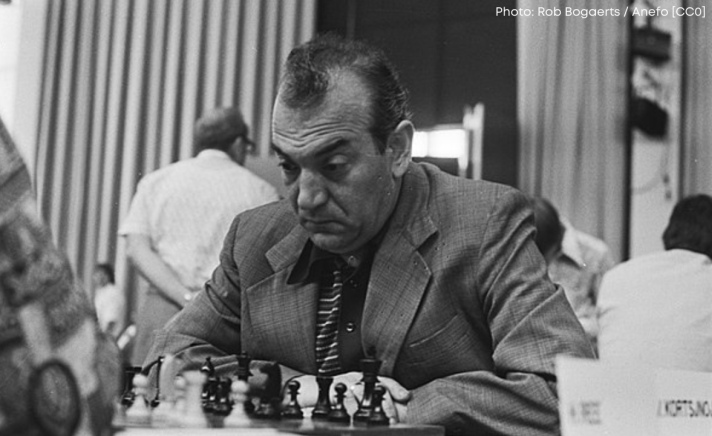
Viktor Lvovich Korchnoi would have turned 90 yesterday. He is one of those monumental figures one returns to time and again when writing about chess. What would most people know about Korchnoi nowadays? A strong player, an incredible fighter, a cranky guy. These traits can’t be argued, and they are well-known; I would like to give nuances and details on a character that were more hidden from the world. First and foremost, Korchnoi’s attitude towards chess. It was strikingly different from the approach of the majority of his colleagues, even the greatest ones. Arguably, Korchnoi became the first one to make “Fighting to the last bullet” his chess motto. He kept this aggression burning throughout his long career and probably was the best chess player in history when it comes to fighting spirit and resilience. Korchnoi was one of the few (perhaps along with Geller, Polugaevsky, and Fischer) who toiled over chess incessantly. It helped him to permanently stay in shape. Quite funny was to hear the young players lament exhaustion after working with the seventy-year-old Korchnoi at a training camp. Viktor Lvovich (simply Viktor back then) grabbed material in a way that was later to be labelled “computer-like,” but still was ready to fend off his opponent’s attacks (please note, that despite his pawn-grabbing propensity, Korchnoi rarely came under a crushing attack). The word “dangerous” was not in his vocabulary. He neither guessed nor made rough estimations; he just diligently calculated numerous variations. This, incidentally, explains his overwhelming record against Tal. Photo source: http://gahetn.nl It was Korchnoi who, 40-50 years ago, long before Carlsen was born, became a great (probably the best in the world) master of a complex endgame. He was particularly strong in rook endings. Striving for a real fight and for opportunities to overtake the initiative over the chessboard throughout his career, Korchnoi frequently used difficult openings (French Defence, Pirc Defence). But he also had a great opening intuition – in a letter, written in 1972 (published in the excellent book “Russians vs. Fischer”), Viktor Lvovich advised Spassky when in preparation for his match with Fischer: “From the play-to-equalize standpoint, I suggest paying attention to the Petroff Defence and 3…Nf6 in the Ruy Lopez”. Nowadays these continuations (along with the Marshall counterattack and the Sveshnikov Variation of the Sicilian Defence) are Black’s most solid response to 1.e4 – but back then both the Petroff Defence and the Berlin Variation of Ruy Lopez were in the fringes of opening theory! In fact, Korchnoi was the first and only one for decades to use the Open Variation of the Ruy Lopez – currently, the majority of the best players have this line in their opening repertoire. Korchnoi was never an easy man, and, drawing parallels to the present day, was a great master of trash-talking, so popular among the leading young chess players nowadays. On the other hand, “Viktor the Terrible” won over chess fans with his unfailing love of chess, ever-burning fighting spirit, and desire to give it all on the battlefield. Elegantly dressed, distinguished-looking, and always eloquent, but he could be different each time you met him – from prickly and caustic to charming or infectiously laughing. Korchnoi was invariably gallant in female society but often irritable and scathing with his colleagues. Ready to talk endlessly about chess and chess-related topics, he had tenacious memory. Viktor often quoted the classics of literature (Pushkin for example) and chess players of the past (“but Levenfisch said…”). At times Korchnoi was unexpectedly respectful and open with young colleagues outside the tournament hall, but one could see him nervous and at times aggressive during and immediately after a game. From Korchnoi’s personal archive, via ruchess.ru Usually, Viktor showed mercy to his defeated opponents, but once he remarked immediately after the game we played, in which I intuitively sacrificed a piece in a position with a huge advantage, but was unfortunately left high and dry: “Do you think you’re Tal? Even Tal didn’t sacrifice me a piece without calculating variations. And you are not Tal.” He was admired by many, but it was hard to imagine a person who could tolerate the irascible Viktor Lvovich. Frau Petra managed it, although not without difficulty – perhaps because their life together was based on mutual respect. Today you cannot imagine married couples who address each other exclusively as “You”. Another reason might be that she went through a school of hard knocks and became just as tough a fighter herself. Korchnoi as a chess player was treated with fearful respect, but an even greater number of people found his behaviour during/after a game unacceptable, and yet, the Greats are forgiven more sins than mere mortals. He was forgiven not only for his magnificent play but also for his dedication to chess, for that genuine commitment over the board. Karpov once said: “Chess is my life. But my life is not just chess”. Korchnoi could have easily discarded the second half of that quote. Viktor Lvovich pushed every conceivable boundary, surpassing even Lasker. At 70 he won a super-tournament in Biel finishing ahead Gelfand, Grischuk, Svidler, and others, and at 80 he put in a good performance in Gibraltar, defeating, among others, Caruana, who had already begun his meteoric rise… And yet Korchoi’s best period is the 1970s. His epic duels with Karpov are still talked about. But there were so many other remarkable battles: the matches with Spassky, Petrosian, Polugaevsky… Even in the match against Kasparov (1983), for the most part, he was fighting on equal ground. We often talk about the most interesting unplayed matches – one of the most interesting for me would have been the Candidates final between Korchnoi and Fischer (1971). But Korchnoi lost to Petrosian in a very strange semi-final. The duel with the American genius did not take place. It is a pity because Viktor Lvovich was effective against Fischer; he controlled the proceedings in their last game back in 1970. Korchnoi remains a controversial figure.