

Xu Xiangyu and Yan Tianqi win Chinese national titles, earn Chess Olympiad spots
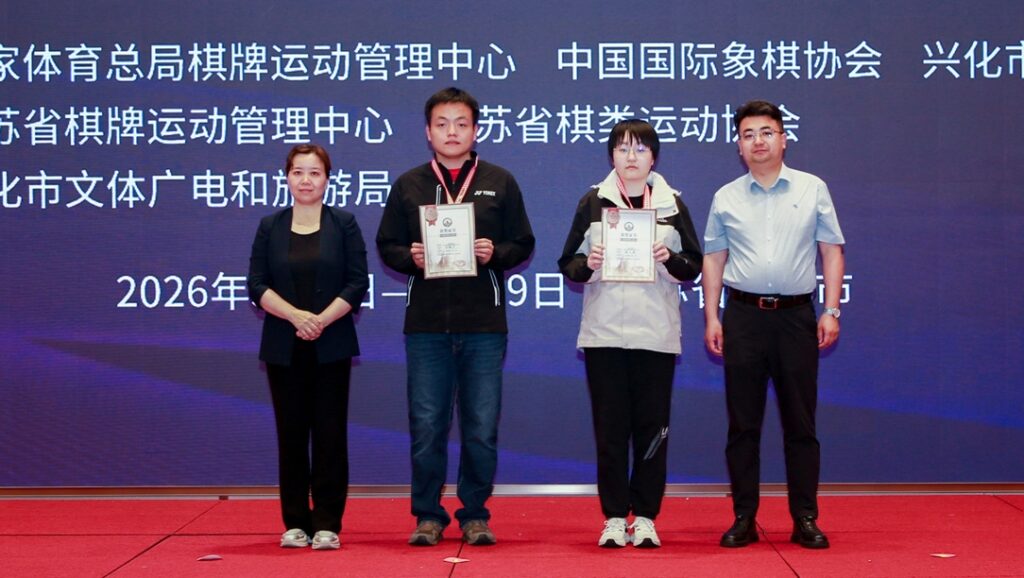
The 2026 Chinese National Individual Chess Championship took place in Xinghua, Jiangsu from 7-18 May, featuring separate Open and Women’s sections. After 11 rounds of Swiss play, GM Xu Xiangyu and WIM Yan Tianqi emerged victorious to claim their first national titles and secure spots on the Chinese team for the upcoming 46th Chess Olympiad. Xinghua is no stranger to chess fans – it’s the hometown of long-time world No. 1 women’s player and four-time women’s world champion Hou Yifan. This year marked the 18th consecutive edition hosted by the city since 2009, and the second year the event has used an 11-round Swiss format instead of the traditional round-robin. The total prize fund amounted to 500,000 RMB (approximately 73,500 USD), with the men’s champion receiving 120,000 RMB and the women’s champion 80,000 RMB. Open event The open section featured 66 players, including nine Grandmasters. The competition was tightly contested, with a sole leader – 17-year-old IM Kong Xiangrui – emerging only after Round 8. Top seed GM Xu Xiangyu caught up with him in Round 9, and the pair entered the final round tied on 7.5 points. Xu defeated GM Li Di while Kong had to work hard in a difficult position to salvage a draw against IM Lou Yiping. Xu Xiangyu scored 8.5 points (6 wins, 5 draws) and secured the title – his fist national crown after finishing second in 2023 and third in both 2022 and 2024. This victory also earns him a debut on China’s Olympiad team later this year. Kong Xiangrui and GM Xu Yinglun tied for second place on 8 points. Kong took silver for the second year in a row on tie-break, while Xu Yinglun completed the podium. With a performance rating of 2604, Kong earned his first GM norm. Another teenager, 15-year-old Xie Jiaxiang, secured an IM norm. Final Standing – Open: https://chess-results.com/tnr1389458.aspx Women’s event In the women’s section, 24-year-old WIM Yan Tianqi totaled 8.5 points (7 wins, 3 draws, 1 loss) to win her first national title. Like Xu Xiangyu, she earned a berth on the Chinese Olympiad team – also her first. Yan Tianqi entered the event with two WGM norms and delivered a performance rating of 2416, but fell short of her last WGM due to insufficient games against WGMs. 17-year-old WIM Chen Yining claimed silver with 8 points, while 15-year-old WIM Wang Qinxuanyi took bronze with 7.5 points. Top seed WGM Xiao Yiyi also scored 7.5 but finished fourth on tie-breaks. Chen Yining earned a 9-game WGM norm, Bai Xue got an 11-game WIM norm, and both Jiang Tianyu and Wang Xiaoyan completed 10-game WIM norms. Final Standing – Women: https://chess-results.com/tnr1389459.aspx Text and photos: Liang Ziming
Icelandic Championship 2026: Hilmir Freyurisson claims maiden title

IM Hilmir Freyurisson emerged as the winner of the 2026 Icelandic Championship, securing his maiden national title. The 2026 edition of the Icelandic Championship, a 10-player round-robin with classical time control, took place in Reykjavik from May 1–9. The event was a very close race, with as many as three players – Freyurisson (7/8), defending champion GM Vignir Vatnar Stefansson (6.5/8), and GM Hannes Stefansson (6/8) – having a shot at the title heading into the final round. Freyurisson took matters into his own hands and clinched the title by defeating FM Bárður Örn Birkisson. The champion’s record in this event is nothing short of remarkable: eight wins, one loss, and not a single draw. Vignir Vatnar Stefansson also pulled off a final-round victory over Gudmundur Kjartansson but finished half a point behind the champion. Notably, he was the only player to beat the champion and completed the event undefeated. Hannes Stefansson rounded out the podium with 6.5/9 following a quick draw with IM Dagur Ragnarsson in the final round. Final standings Photos: https://skak.is/ Official website: https://skak.is/
Arkady Dvorkovich advances chess development across Central America and the Caribbean

President of FIDE, Arkady Dvorkovich, recently completed a multi-stop visit across the Caribbean and Central America, reinforcing FIDE’s commitment to expanding chess through education, institutional partnerships, and competitive opportunities. In Barbados, Dvorkovich met with key officials, including the Minister of Educational Transformation, Chad Blackman, and the Chief Education Officer, Dr. Ramona Archer-Bradshaw, to discuss integrating chess into the national education system. Talks focused on using the game to enhance critical thinking and student development. He also engaged with the President of the Barbados Chess Federation, Allan Herbert, exploring opportunities to grow the sport locally. The FIDE President also met with the President of Barbados, Lieutenant Colonel Jeffrey Davidson Bostic, underscoring the importance of chess at the national level. Their discussions also covered social and educational initiatives in the country, including how chess could be integrated into them. The timing of the visit coincided with the 2026 Heroes Day Challengers Cup, hosted at the Central Bank of Barbados, further emphasizing the country’s active role in regional chess development. The International Conference on Education and New Learning Technologies, organized by World Research Society, is scheduled for October 03, 2026 in Bridgetown, Barbados. FIDE representatives were invited to participate. In Saint Lucia, the visit centered on institutional development. Meetings with the Saint Lucia National Olympic Committee addressed closer cooperation and the federation’s potential integration into the Olympic structure, alongside broader collaboration with the International Olympic Committee. In Panama, Dvorkovich marked chess’s debut in the South American Youth Games, symbolizing FIDE’s push to integrate chess into multi-sport events. He also held a series of meetings – both in person and online – with federations across the region. Summing up the tour, the FIDE President emphasized strong alignment across countries: “Following 25 in-person and online conversations… we share key priorities – from bringing chess to schools to training young talents and organizing events, including under the Olympic umbrella. Huge program ahead for FIDE AMERICA. Together!” The visit highlights growing momentum for chess across Central America and the Caribbean, with a clear focus on sustainable development and regional cooperation.
Building the future of chess far from the spotlight: How FIDE’s Development Fund is shaping chess around the world

By Milan Dinic While the global chess spotlight is usually fixed on elite competitions and players, a quieter transformation has been taking place behind the scenes. Over the past six years, FIDE has channelled nearly €9.4 million into grassroots chess development. Through its Development Fund, it has supported projects across continents and helped build chess in places rarely featured in the headlines. In July 2023, the Bahamas was celebrating the 50th anniversary of its independence. Across the islands, tourists mixed with locals at festivals showcasing Bahamian heritage, music and cuisine. Against the backdrop of the celebrations, a long-held dream was transforming into reality: the Bahamas Chess Federation brought together 16 talented junior players, including members of youth national chess teams from Central America and the Caribbean, for a summer chess camp to increase the number of rated players from the region. The programme was led by National Trainer CM Elton Joseph, and supported by two junior trainers, a female trainer as well as an experienced arbiter. It was seen as a firm step in building a grassroots youth chess initiative that has continued The project in the Bahamas is one of many supported by FIDE’s Planning & Development Commission over the years. This is all part of a global effort funded by FIDE to institutionally strengthen member federations through the provision of financial and technical assistance. The FIDE Development Fund Since 2019, the FIDE Planning & Development Commission (PDC) – which runs the Development Fund – has built a robust support mechanism to strengthen national federations, continental bodies and affiliated organisations. While PDC focuses on projects initiated by member federations and associations, the Development Fund also includes projects run directly by FIDE – such as in the Kakuma refugee camp, or Chess in Prisons or Chess in Slums. The Development Fund has enabled 801 projects totalling €5.65 million between 2019 and 2025. The vast majority of this funding has gone to continental associations and national federations, with smaller but meaningful support to FIDE commissions, zonal and affiliated organisations. In addition, continental associations receive €100,000 each year to support continental championships, zonal events, training and educational projects. FIDE has also provided more than €3 million in travel subsidies for the 2022 and 2024 Chess Olympiads, bringing the total amount of support to just under €9.4 million in the 2019-2025 period. The value of travel subsidies is expected to reach €2 million for the 2026 Olympiad. The travel subsidies were all directed to Level 3 to Level 5 federations, which would otherwise struggle to fund their participation in the Olympiads. The funding net is wide. Projects span from basic chess education, to coaching, cognitive development and inclusion. FIDE has supported federations through capacity building, arbiter training, event organisation, the purchase of boards, pieces and clocks, and travel and accommodation for players. The New Zealand Chess Federation, with the support of funding from PDC, successfully held the Bob Wade Memorial Masters as an IM norm tournament. It allowed IM Herman van Riemsdijk and GM Gabor Nagy to play in the 2025 New Zealand Championships. This helped make the event another norm tournament. “FIDE’s mission is to spread chess and use it as a tool to bring people and communities together. As with the Year of Social Chess or the ongoing Year of Chess in Education, we want to promote chess as a tool for cognitive development, social inclusion and a useful instrument in education systems and for that we need strong federations and grassroots initiatives,” says Dana Reizniece, Deputy Chair of the FIDE Management Board. “For FIDE, development is not a side project – it is the mission which we have been working on persistently, including through the Development Commission,” Reizniece added. How FIDE’s Development Fund works While support for federations existed before, since 2019, FIDE’s Planning & Development Commission has focused on promoting a more robust and consistent application and funding system. The Development Fund operates as a grant mechanism, with FIDE working directly with federations that need support. Beneficiaries have to apply for support through the PDC application process which publicly outlines criteria, guidelines and KPI frameworks that must be met for grants to be eligible for consideration. The funding cycle for 2026 opened in January. FIDE is also providing an incentive for early applications – an extra 10% in funding for applications submitted before July. “While FIDE has always worked hard on providing support to our member federations, since 2019 our goal was to make this process more formal and structured, providing clear guidance and equal opportunities to all federations to apply for grants,” says Laurent Freyd, International Arbiter and Chair of the FIDE Planning & Development Commission. This includes what PDC calls “soft support” for federations. PDC provides consultancy and capacity building through pitch meetings, helping federations improve project proposals, budgeting, and strategic planning. Pitch meetings also involve relevant commissions for cross-functional project evaluation, enabling real-time feedback and alignment. Institutional, not ad hoc support The Development Fund is financed from FIDE’s overall budget, which includes income from events and sponsorships linked to major FIDE competitions. The General Assembly’s 2026 budget shows that total income is projected to rise from €13.17 million in the 2025 budget to €18.85 million in 2026. The biggest driver of this growth is income from FIDE events, which jumps from €9.6 million in 2025 to €16.1 million in 2026. The increase in event-driven income means FIDE has greater resources for development programmes. For 2026 the organisation allocated €400,000 for national-federation support and €400,000 for continent funding, with additional support for zones, commissions and social/educational projects. As the funding is approved by the General Assembly and is independently audited, it is part of a structured financial system. For fairness and transparency, FIDE has introduced the Development Index to rank national federations based on their current capacity and capabilities. The index uses six parameters, grouped into three broad areas – chess population, activity and performance – to determine which level a federation will belong to. Level 1
Javokhir Sindarov breaks into top 5 on FIDE May 2026 rating list
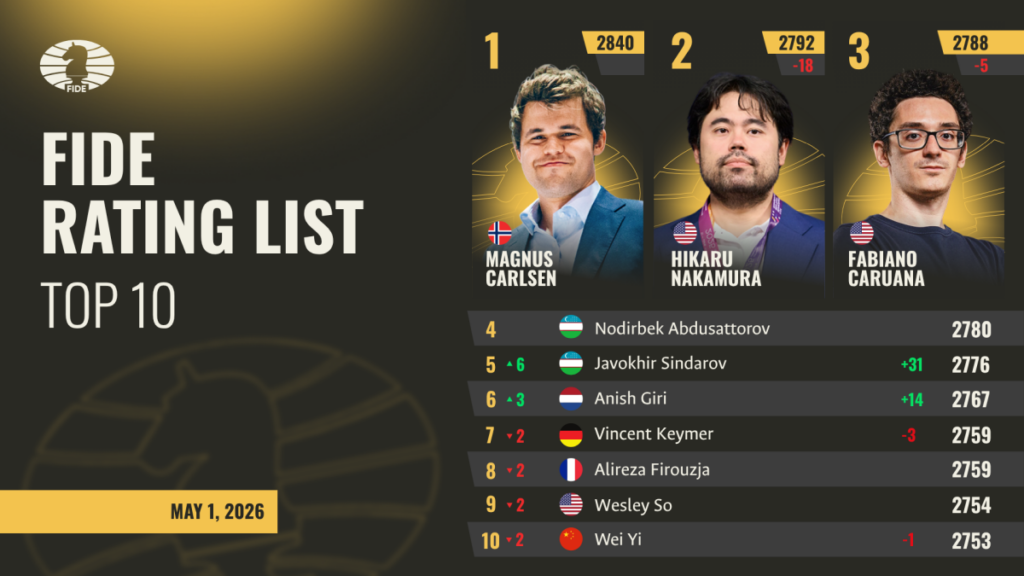
The May 2026 FIDE rating list was primarily shaped by the FIDE Candidates and Women’s Candidates, along with several strong open tournaments across Europe, including the European Individual Chess Championship. The top 10 Open saw two significant changes. The triumph at the FIDE Candidates 2026 earned Javokhir Sindarov 31 rating points and propelled him into the top 5 Open. The runner-up, Anish Giri, gained 14 points and climbing three places to No.6. Photo: Michal Walusza The second-place finish at the Women’s Candidates brought Bibisara Assaubayeva 11 rating points, lifting her to a career-high seventh position on the women’s list, while Aleksandra Goryachkina re-entered the top 5. Biggest gains in the top 100 Open and Women Kurmangaliyeva, Liya FM KAZ 2346 (+57) Yu, Jennifer FM USA 2358 (+38) Sindarov, Javokhir GM UZB 2776 (+31) Xiao, Yiyi WGM CHN 2389 (+28) Vaishali, Rameshbabu GM IND 2496 (+26) Savitha Shri B IM IND 2374 (+23) Erdogmus, Yagiz Kaan GM TUR 2708 (+21) Injac, Teodora IM SRB 2431 (+21) Milliet, Sophie IM FRA 2361 (+17) Shukhman, Anna WGM FID 2456 (+16) Photo: NZO Photography Liya Kurmangaliyeva (pictured above) recorded the biggest rating gain last month thanks to her excellent performances at the Reykjavik Open 2026 (+35 points) and the Grenke Chess Open 2026 A-Open (+22 points). Jennifer Yu returned to the top 100 Women after nearly seven years of absence, earning 38 points across those two tournaments. Xiao Yiyi shone in the 2026 Chinese Women’s Chess Team Championship, gaining an impressive 28 rating points, while Savitha Shri B overperformed at the Fagernes Chess International 2026 and Bratislava Norm Week – IM, adding 23 points to her tally. The Women’s Candidates winner, Vaishali R., earned not only the right to contest the title match but also 26 valuable rating points, bringing her within striking distance of the 2500 mark. Photo: Michal Walusza Turkish prodigy Yagiz Kaan Erdogmus (pictured above)dominated Veselin Topalov in their six-game match, convincingly winning by a score of 5–1. The result, worth 21 rating points, made him the youngest player to clear the 2700 Elo rating barrier (14 years, 10 months, and 13 days), surpassing the previous record held by Wei Yi by nearly a year. Teodora Injac (pictured below) emerged as the top female player at the recently concluded European Individual Chess Championship. Combined with a solid showing at the Reykjavik Open 2026, the Serbian IM returned to the Women’s top 30. Photo: Michal Walusza Sophie Milliet delivered at the CISF 2026 – Finale nazionale (+14 points), while Anna Shukhman proved her mettle at the V Open Chess Menorca 2026, gaining 16 rating points. Visit: https://ratings.fide.com/
Husan Turdialiev turns 70
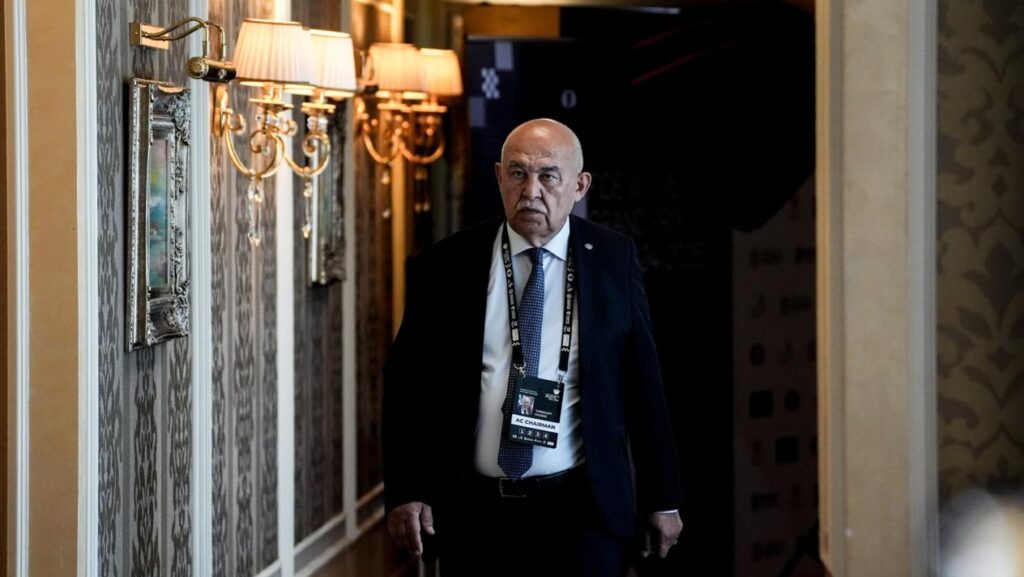
Renowned chess arbiter and organizer Husan Turdialiev has turned 70 today. Born in 1956 in Boysun (Southern Uzbekistan), Turdialiev graduated from Tashkent State University and after retiring from government structures, he devoted himself to chess, excelling in refereeing and organizing various competitions. In 2001, Turdialiev was awarded the title of International Arbiter and, for over 25 years, has compiled an impressive resume officiating major chess competitions, including the following: Chief arbiter at FIDE Zone 3.4 Championships (2008, 2011, 2013, 2015, 2017, 2019); the 2012 and 2014 FIDE Grand Prix and the 2013 FIDE Women’s Grand Prix legs in Tashkent; the 2023 Women’s Candidates; and the 2016 and 2023 editions of the Asian Championships, as well as many international tournaments in Beirut, Sharjah, Astana, Tashkent, and Samarkand. Line arbiter at the World Rapid and Blitz Championships (2018, 2019). Deputy chief arbiter at the 2014 World Championship match between Magnus Carlsen and Viswanathan Anand and the 2025 World Junior Championship. FIDE Chess Olympiads – 2004, 2006, 2008, 2010, 2012 (match arbiter); 2016 and 2024 (sector arbiter); 2022 (a member of the Appeal Committee). In 2002, he was elected President of FIDE Zone 3.4 and has held this position to the present day. FIDE sincerely congratulates Husan Turdialiev and wishes him many years of productive work and many happy returns of the day!
Winners crowned at World Senior Team Championship 2026 in Durrës, Albania
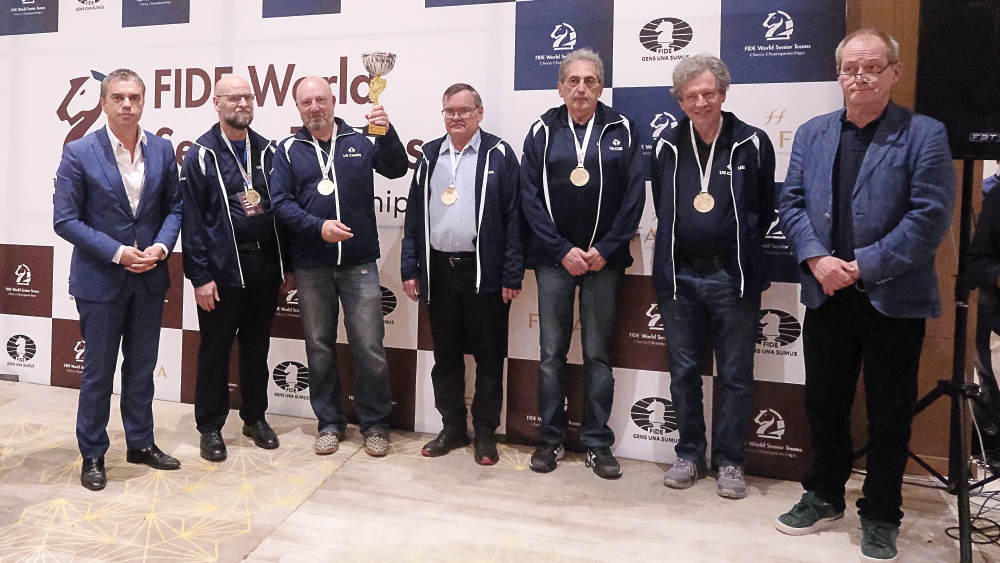
After ten thrilling days of competition, the World Senior Team Championship 2026 has concluded in Durrës, Albania.. In the final round, of the 50+ section USA 1 drew quickly on board 1 against Iceland, securing first place. The remainder of the podium was decided at the very last moment: Italy pressed hard against Norway Oslo on board 2 and ultimately won by 2.5–1.5. Despite catching up on match points with the leader, Italy finished behind the USA on tiebreaks (game points). Kazakhstan swept Iceland Vestfirdir 4–0 to take bronze, while England 1 defeated the USA Women’s team by the same margin to finish fourth. Iceland and Hungary followed closely in the final standings. Despite their loss in the final round, the USA Women retained first place in the women’s standings, ahead of Czech Republic Women and Kazakhstan Women. Final standings – 50+ In the 65+ category, things were much tighter going into the final round, with Germany – Lasker in 1st place on 13 team points and six teams were sharing 2nd–7th place and fighting for a spot on the podium. In the end, Germany – Lasker prevailed over Slovakia (2.5–1.5) to claim the title with 15 team points. Italy secured silver by defeating England 2 (3–1). A four-way tie for third ensued, with Iceland clinching the bronze medal on tiebreaks after drawing their match against England 1. Among women’s teams, the FIDE Women’s team held onto their lead with a final-round draw against Poland Amateurs 65, finishing as the top female squad. Germany Women and Latvia Women completed the podium. Final standings – 65+ Throughout the event, participants displayed exceptional fighting spirit, resilience, and sportsmanship – powerfully reaffirming that chess is a game for all ages. Text and photos: WFM/IA Georgia Grapsa Official website: https://wstcc.com/
From chessboards to classrooms: How AI is transforming education
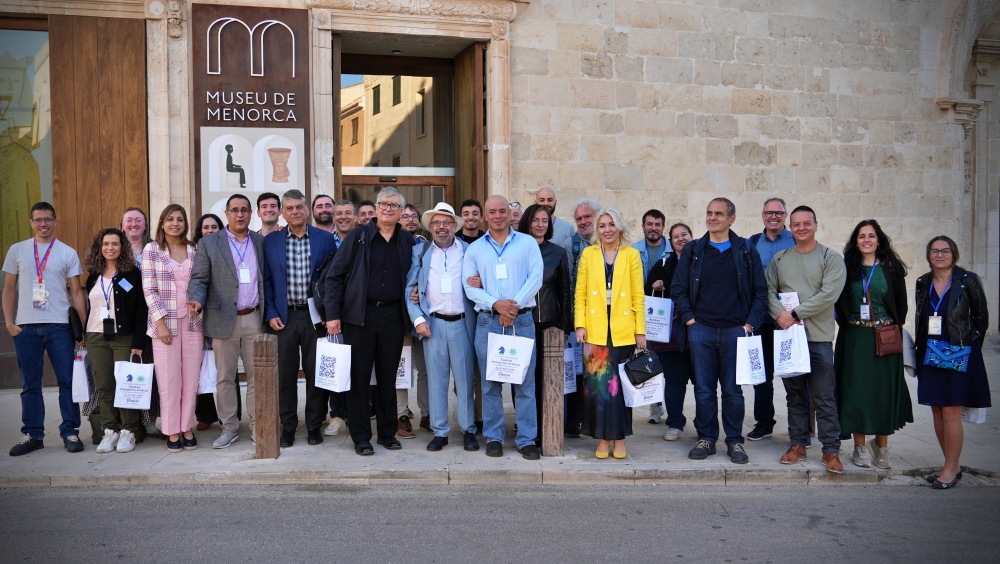
From April 24–26, international experts in education, technology, and chess gathered in Menorca, Spain, for the “Chess & AI in Education” Congress, organized under the framework of the FIDE. The event brought together leading voices to explore how artificial intelligence (AI) is reshaping the way chess is taught, learned, and applied—both inside and beyond the classroom. AI in education: Enhancing, not replacing The congress opened with a keynote by Dr. Mario Antonio Ramírez Barajas, a specialist in chess and education focused on how AI can enhance learning, coach training, and educational program development. His presentation highlighted the growing role of data-driven tools and personalized learning environments. Following this, Rita Atkins addressed one of the most pressing issues in modern education: the overuse and misunderstanding of AI. “They overuse it – they think they are obliged to use it because there is so much hype about AI… keep using yourself as the main instrument in the classroom and slowly introduce AI as a tool.” Atkins emphasized that AI should support – not replace – teachers, particularly highlighting its potential in special education: “AI is not replacing teachers… The chess classroom is mostly about playing with each other, and AI will never replace human interaction.” Bridging theory and practice in schools Practical applications were presented by Mauricio Arias, a key figure in educational chess within FIDE America, who shared his experience implementing chess programs in schools using digital tools. Dilda Nauryzbayeva examined how AI can enhance Chess in Education (CIE) through personalized learning and real-time feedback, while also acknowledging a critical gap between technological potential and measurable classroom impact. A unique intersection of chess and neuroscience One of the most compelling and memorable presentations came from Dr. Cristóbal Blanco, who shared a unique real-life case demonstrating the powerful connection between chess and brain function. During an awake brain surgery, the patient remained fully conscious while playing chess without sight of the board, announcing moves verbally throughout the procedure. This allowed the surgical team to monitor essential cognitive functions such as memory, concentration, and decision-making in real time. The operation was considered a success, and the patient was able to return to daily life, living two additional years with a good quality of life. Dr. Blanco emphasized that chess is far more than a game—it is a powerful tool for strengthening and evaluating cognitive abilities, even in the most critical medical situations. Inclusion through technology and chess The congress also highlighted chess as a tool for social inclusion and accessibility. Susana Gonçalves and Miguel Gonçalves presented Chess2Mind, a platform designed to make chess accessible for people with diverse needs. Their innovations include: Real-time voice interaction systems Tools reducing cognitive load Adaptive interfaces for users with speech or physical limitations These efforts reflect a broader vision of chess as a tool for community transformation and equal opportunity. The augmented teacher and digital innovation Mădălina-Maria Lejean-Anușca, leader of Romania’s national program “Education through Chess,” demonstrated how AI can enhance teaching through innovative pedagogy, combining chess with digital tools, creativity, and structured teacher training. Meanwhile, Fran Otero showcased technological solutions aimed at modernizing chess education and management. Dr. Isaac Lozano explored how artificial intelligence can be applied to game analysis, algorithm-assisted training, and data-driven learning tools, reinforcing chess as a testing ground for AI innovation. Beñat Lomas introduced practical approaches to using AI and digital systems to optimize clubs, tournaments, and educational programs, bringing efficiency into the organizational side of chess. Chess as a laboratory for innovation The congress also featured contributions from Dr. Jonathon Quest, founder of the first undergraduate chess degree program in the United States, and Andrea Manzo, who emphasized the need to move beyond using AI purely as a calculation tool and instead leverage it as a true educational resource. Educational experts Eloi Nortes Mesas and Ramón Pérez Rodríguez reinforced the importance of chess as a tool for holistic student development, integrating cognitive, social, and emotional learning. A shared vision for the future The event concluded with reflections from organizer Pep Suárez, who highlighted the transformative potential of AI: “Artificial intelligence is changing everything… and chess has always been a laboratory for innovation.” He also emphasized the importance of the international community gathered in Menorca: “These are top-level professionals from around the world… bringing strong energy and very good vibrations about the future.” The Menorca Congress demonstrated that the convergence of chess, artificial intelligence, and education is already shaping the future of learning. From AI-powered classrooms to neuroscience applications and inclusive technologies, chess continues to evolve as a powerful educational and social tool. The message was clear: The future lies in collaboration – between teachers, technology, and human creativity.
Sérgio Pereira and Ariete Almeida crowned São Tomé and Príncipe chess champions

The São Tomé and Príncipe Chess Federation (FEXASTP) is pleased to announce the successful conclusion of the 2026 National Absolute Chess Championship and Women’s National Chess Championship, held at Hotel Miramar in São Tomé. The open tournament was played over 11 rounds and brought together the country’s top players in a highly competitive field. The rating favorite Sérgio Pereira lived up to his top billing and emerged as the winner, scoring 8.5 points out of 11. Waldyr Espírito Santo finished in second place with 8 points, maintaining an unbeaten record throughout the tournament. Jeremias Costa placed third with 6.5 points and achieved the title of National Master. Final standings – Absolute National Championship In the Women’s Championship, a seven-player round-robin, Ariete Almeida delivered a dominant performance, winning all six of her games. Emelisa Malone and Carla Taraveira claimed silver and bronze, respectively. Final standings – Women’s National Championship The Federation congratulates all participants for their commitment, sportsmanship, and contribution to the continued development of chess in São Tomé and Príncipe. The overall level of play reflects the steady progress of national chess and reinforces FEXASTP’s mission to promote the sport both locally and internationally. FEXASTP extends its appreciation to Abnildo Oliveira, President of Parliament, and all partners, organizers, and the venue, Hotel Miramar, for their support in ensuring the success of the championships. Photos: CST and São Tomé and Príncipe Chess Federation Facebook
FIDE Circuit 2026-27: Abdusattorov maintains the lead; Sindarov closes in
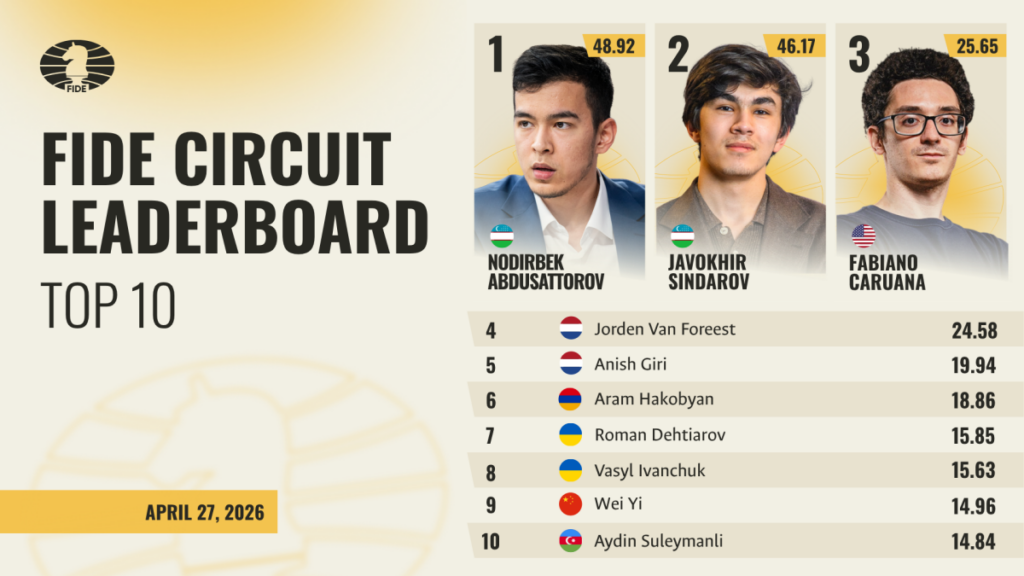
The recently concluded FIDE Candidates and the European Individual Championship have considerably reshaped the upper echelon of the FIDE Circuit 2026-27. Nodirbek Abdusattorov, who has not played classical chess since early March, preserved his lead, but Javokhir Sindarov trails him by only 2.75 points following his triumph in Cyprus. The runner-up and third-place finisher of the point-heavy FIDE Candidates tournament – Anish Giri and Fabiano Caruana – as well as Wei Yi, have also entered the Circuit’s top 10. Aram Hakobian moved up two positions after earning 6.2 circuit points for his third-place finish in the XXIII Karpov tournament, while Vasyl Ivanchuk collected 10.2 points in the Reykjavik Open and the X Open Internacional de Ajedrez Semana Santa San Vicente, placing third in both tournaments. Roman Dehtiarov, turning 18 this year, caused a major sensation in the European Individual Chess Championship by claiming the title. This result catapulted the Ukrainian teenager to 7th position in the circuit race. The bronze winner, Aydin Suleymanli, gained 10.09 points in this competition to round out the top 10. The FIDE Women’s Circuit 2026-27 also saw major shifts in the top layer, following the FIDE Women’s Candidates and the IV International Women’s Tournament in Uzbekistan. The winner of the Women’s Candidates, Vaishali Rameshbabu, surged to the top of the standings, followed by other top finishers: Bibisara Assaubayeva, Zhu Jiner, Aleksandra Goryachkina, and Anna Muzychuk. Ulviyya Fataliyeva’s victory at the IV International Women’s Tournament in Uzbekistan earned her 15.37 circuit points, propelling her to the fifth position in the race, while the runner-up, Nana Dzagnidze, broke into the top 10. We maintain dedicated pages on our website for the FIDE Circuit 2026-27, featuring the latest information on eligible tournaments, current standings, and regulations. Visit: FIDE Circuit 2026-27 and FIDE Women’s Circuit 2026-27