

Bharat Singh Chauhan Re-elected as Chairman of Commonwealth Chess Association
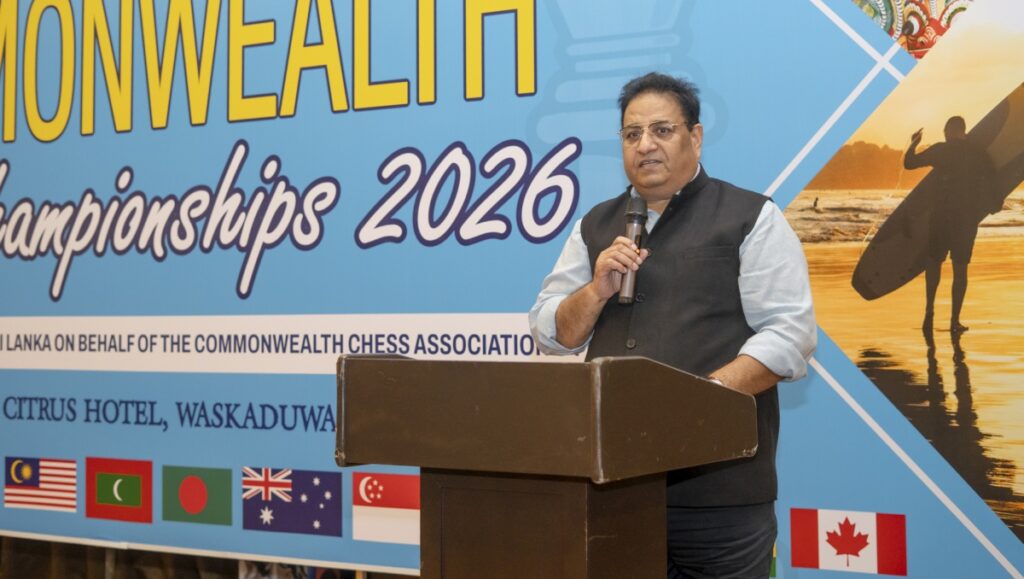
Wasakaduwa, Sri Lanka, May 18, 2026 – Continuing his remarkable contribution towards the growth and development of chess over the last five decades, Mr. Bharat Singh Chauhan of India has been re-elected unanimously and unopposed as Chairman of the Commonwealth Chess Association (CCA) for the term 2026–2030. The elections were held during the Annual General Body Meeting of the Commonwealth Chess Association at Citrus Hotel, Wasakaduwa, Sri Lanka, on Sunday. Mr. Akhramsyah Muammar Ubaidsh Sanusi of Malaysia was elected unopposed as Deputy Chairman, Mr. G. Luxman Wijesuriya of Sri Lanka as General Secretary, and Mr. Vicky Magu of South Africa as Treasurer. Mr. Hurrynarain Bhowany of Mauritius, Mr. Allan Herbert of Barbados, Mr. Benard Wanjala of Kenya, Mr. Craig Hall of New Zealand and Mr. Crition Tornaritis of Cyprus were also elected unopposed as Executive Members of the Association. The election process was conducted under the supervision of Hon’ble Santiago Pushpa Kumara Ekaratne, Retired Judge of the High Court, who served as the Returning Officer for the elections. During the meeting, the Association also resolved to introduce the Commonwealth School Chess Championship, with the inaugural edition scheduled to be held in Malaysia in October 2026. Mr. Chauhan’s re-election reflects the confidence and trust placed in his visionary leadership and longstanding dedication towards strengthening and promoting chess across the Commonwealth nations. Mr. Luxman Wijesuriya’s re-election as General Secretary is a testament to his exceptional administrative skills and valuable contribution to the smooth functioning and continued progress of the Commonwealth Chess Association.
Commonwealth Chess Championship 2026 opens in Sri Lanka
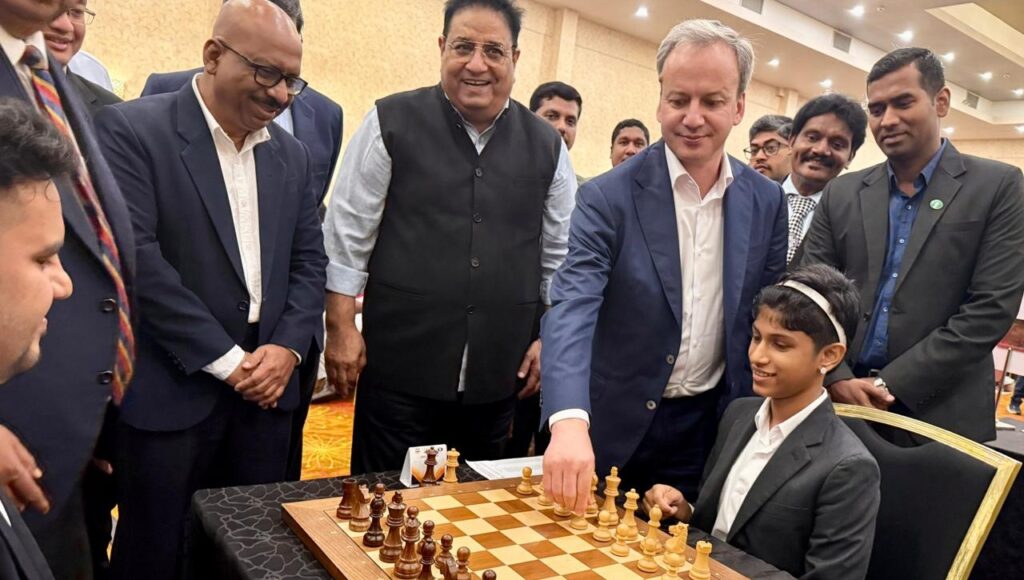
Commonwealth Chess Championship 2026 opens in Sri Lanka More than 500 players, representing 14 countries, participate in the competition, taking place from May 17-25, 2026. The opening ceremony was attended by FIDE President Arkady Dvorkovich as well as the Minister of Youth Affairs and Sports, Sunil Kumara Gamage. The Chess Federation of Sri Lanka (CFSL) is hosting the nine-day event on behalf of the Commonwealth Chess Association and FIDE. The tournament includes several categories. In addition to the Open Section, there are age group events for women and youth players, ranging from Under 8 to Under 18, in the classical format. There will also be Rapid and Blitz events held on the first three days. Luxman Wijesuriya, President of CFSL, said that it was a great honour for Sri Lanka to host the event for the third time in the last ten years: “Obviously it is a top-level event, and hosting it positions Sri Lanka as an excellent location for important chess events.” “It indicates the level of confidence that FIDE and the Commonwealth Chess Association have in CFSL… It must also be mentioned that hosting the event obviously makes for greater participation of the most talented Sri Lankans, enabling them to cross swords with the best players in their respective categories,” he added. “The Commonwealth Chess Association has been a valuable part of the international chess family since 1980, bringing together countries from across the globe, with very different chess traditions and levels of development. The hosts – Sri Lanka – have a proud and growing chess community, and here we see a strong commitment to the development of chess,” FIDE President Arkady Dvorkovich said. Dvorkovich noted that this is a “remarkable moment” for chess in Asia with world-class players, major events, and strong federations growing new talent. “This connects strongly with FIDE’s wider work in promoting chess, and we will continue to work closely with national federations, public institutions, and private partners to bring more opportunities to players across Asia and across the world.” Sunil Kumara Gamage, Sri Lanka’s Minister of Youth Affairs and Sports, welcomed all the players to his country, describing the tournament as a “remarkable celebration of intellect, discipline, and sportsmanship.” “I wish to extend our welcome to Mr. Arkady Dvorkovich, President of FIDE, whose leadership resonates strongly across the world. I also take this opportunity to respectfully acknowledge Mr. Bharat Singh Chauhan, a towering figure in the global chess community whose 50-year dedication to the game has inspired players across the world,” Kumara Gamage added. Bharat Singh and Luxman Wijesuriya: 50 years of chess life The Commonwealth Chess Championship was also an occasion to celebrate the dedication and work of two important figures in the chess world, Bharat Singh Chauhan from India and Luxman Wijesuriya from Sri Lanka. Bharat Singh Chauhan is a prominent Indian chess administrator, organiser, and International Arbiter who helped shape chess administration in India and beyond. He was instrumental in building the chess infrastructure in Asia through tournament organisation, international federation work, and the development and execution of plans to expand chess through schools, youth events, and stronger national systems. He served as Secretary of the All India Chess Federation and became one of the key figures behind India’s growing role in international chess. He was the Tournament Director of the 44th Chess Olympiad in Chennai in 2022. Bharat Singh Chauhan is the Chairman of the FIDE Advisory Board, Deputy President of the Asian Chess Federation, and Chairman of the Commonwealth Chess Association. Luxman Wijesuriya is one of the central figures in Sri Lankan chess administration. He serves as the General Secretary of the Commonwealth Chess Association and Vice President of the Asian Chess Federation. Wijesuriya is the brother of two prominent Sri Lankan chess players: Suneetha Wijesuriya, Sri Lanka’s 1992 Chess Olympiad individual gold medallist, and Vineetha Wijesuriya, an eleven-time Sri Lankan women’s champion. Through his work, Wijesuriya has helped shape the structure of organised chess in Sri Lanka for many years, strengthening the domestic tournament system, spreading knowledge of ratings and titles, and bringing official Asian events to the country on a regular basis. “Both Bharat Singh and Luxman Wijesuriya have played pivotal roles in the promotion of chess in Asia, laying the foundations for the continent’s current success,” FIDE President Arkady Dvorkovich said. “The chess community around the world is grateful for their exceptional work and unwavering support over the last five decades. We owe a lot to these great people, and I am honoured to have had the privilege of learning from them and working with both of them directly,” Dvorkovich added. About the Commonwealth Chess Association: The Commonwealth Chess Association (CCA) was founded in 1980 and unites the commonwealth chess federations while keeping strict neutrality in the internal affairs of the national chess federations. The CCA is concerned with supporting chess activity among the nations of the Commonwealth. Last year’s Commonwealth Chess Championship was held in Malaysia and was won by English Grandmaster Daniel Howard Fernandez. Official website: https://commonwealthchess.com/
David Navara and Joanna Worek crowned Czech Republic Champions

GM David Navara and WGM Joanna Worek emerged victorious at the 2026 Czech National Championship. David claimed his 14th (!) title – a remarkable achievement – edging out rising star Václav Finěk, while Joanna captured her second national crown. The 2026 Czech Championship, held in open and women’s sections, took place at the Bowling Brno area from May 7–16, 2026, and attracted most of the country’s top players. The open event was a 10-player round-robin, while the women’s competition followed an elimination system, comprising a preliminary round followed by the quarterfinals, semifinals, and finals. The open event evolved into a gripping duel between the two top seeds: Navara and Czech chess’s brightest young talent, Václav Finěk. Navara seized an early lead, but Finěk caught up with him after Round 5. The direct clash in Round 7 ended in a draw leaving them tied for the top position. Both finished strongly, winning their last two games and totaling 7.5/9 points, but the superior Sonneborn–Berger tiebreaker awarded the title to Navara. Both the champion and the runner-up completed the competition unbeaten. The bronze medal went to the experienced grandmaster Štěpán Žilka, who secured a draw against Richard Stalmach in the last round. The entire tournament was marked by uncompromising battles, with only 16 games out of 45 ending in a draw. Final standings – Open The women’s competition was arguably even more dramatic, with all medals matches decided in Armageddon tiebreak games. In the end, Joanna Worek won the gold medal, defeating WGM Kristýna Petrova. In the match for third place, WGM Tereza Rodshtein claimed bronze after overcoming WGM Olga Sikorová. Final standings – Women The PR manager of the Czech Chess Association and tournament director, Josef Bednařík, gave his thoughts on the Czech Championship during the closing ceremony: “I am thrilled with the course of this year’s Czech Championship. I would like to thank all the players for their fighting spirit and fair-play approach. The spectators certainly enjoyed the exciting games and the course of the tournaments, and I did too.” The 2026 Czech Championship was supported by the statutory city of Brno, the South Moravian Region, the Bowling Brno area, and the Hotel Velká Klajdovka. Special thanks go to the Mayor of the statutory city of Brno, JUDr. Markéta Vaňková, and the 1st Deputy Governor of the South Moravian Region, Jiří Crh, who served as personal patrons of the tournament. Photos: Czech Chess Federation (Facebook) Official website: https://www.chess.cz/
Registration opens for African Continental Stage of FIDE ISCF World Schools Team Championship 2026
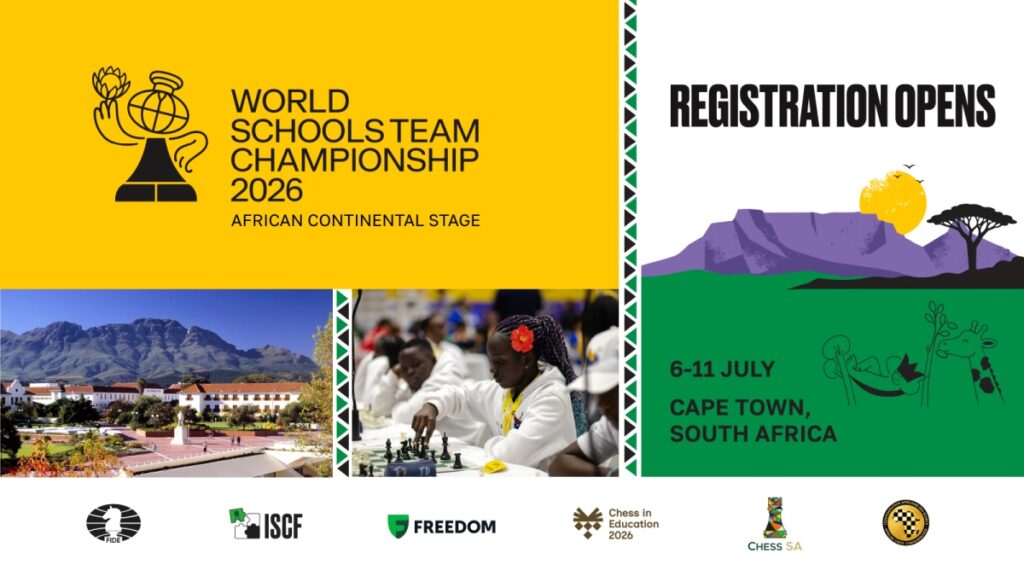
FIDE and the International School Chess Federation (ISCF), with the support of its general partner Freedom Holding Corp. invite all FIDE member federations from Africa to participate in the African Continental Stage of the FIDE ISCF World Schools Team Championship 2026 (WSTC 2026). The event will be held in the Cape Town area, South Africa, from July 6 (arrival) to July 11 (departure), 2026. The African Continental Stage will become the second continental qualifier of the new World Schools Team Championship cycle held within the framework of the Year of Chess in Education 2026 initiative. The best teams will qualify directly for the WSTC 2026 Grand Final, where the continental champions will compete for the title of FIDE ISCF World Schools Team Champion 2026. Team composition and eligibility Each team shall consist of: four main players; one reserve player; one non-playing captain Each team must include at least one boy and at least one girl, except in specific cases provided for in the Regulations for single-gender educational institutions. Players eligible to participate must be born between January 1, 2012 and December 31, 2018. National federations are responsible for confirming that all players are officially enrolled in the educational institution they represent during the 2025–2026 academic year. The tournament will be played over eight rounds using the Swiss system. Participation conditions and organizer support Within the framework of the Championship, selected teams will receive organizer support, including: full-board accommodation; airport and local transfers; economy-class flight tickets for designated supported delegations Detailed participation conditions are outlined in the official Invitation Letter and General Regulations. Educational and cultural programme In addition to the tournament itself, participants and guests will take part in a special educational and cultural programme organized in line with the Year of Chess in Education 2026 initiative. The programme will include: masterclasses and lectures by leading chess players and educators; interactive workshops; side activities promoting educational exchange and intercultural dialogue The Championship aims not only to identify the strongest school team on the continent but also to promote chess as a powerful educational and social development tool. Registration The registration deadline is June 18, 2026. National federations are kindly encouraged to complete the registration process at the earliest opportunity, as the number of places in the tournament is limited, and organizer support conditions outlined in the Regulations are available only for the first 20 teams fully registered in compliance with the official requirements. Teams may register only through their respective FIDE member federations using the official online registration form. Registration form:https://worldschoolteam2026.fide.com/registration-stage-africa Full Invitation Letter, General Regulations and registration details are available at:https://www.fide.com/wp-content/uploads/WSTC-2026-Invitation-Letter-African-Stage-1.pdf Contact e-mail: worldschoolteam@fide.comOfficial website: https://worldschoolteam2026.fide.com/
FIDE EDU announces cooperation with Opening Master x Chesspertise
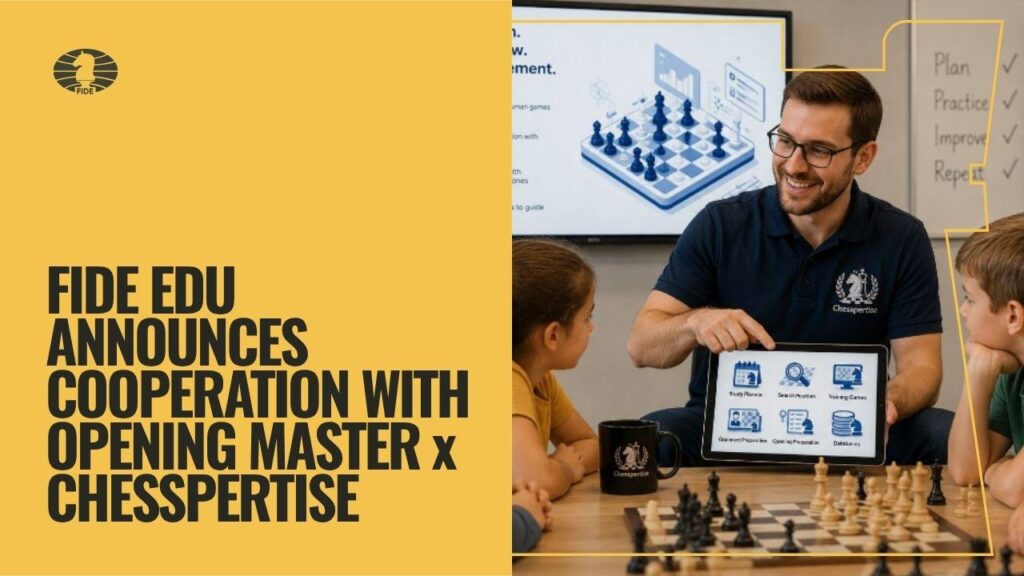
The FIDE Education Commission is pleased to announce a new cooperation initiative with Opening Master and its advanced chess education platform Chesspertise. This collaboration represents an important step toward strengthening structured chess education and improving access to modern training tools for chess players, coaches, federations, schools, and newcomers to the game. FIDE EDU continuously seeks innovative educational solutions that support the development of teachers and students at every level from beginners discovering the beauty of chess to experienced tournament competitors seeking professional preparation. Chesspertise is a next-generation chess training platform built around the renowned Opening Master database, offering access to: More than 10.4 million over-the-board (OTB) human chess games More than 2.2 million correspondence chess games Structured opening preparation Tactical training modules Advanced search and filtering tools Training and coaching environments Game analysis functions Performance-oriented study systems Data-driven chess improvement tools Integrated educational workflows for instructors and students The platform aims to address one of the greatest challenges in modern chess education – fragmentation of training resources by integrating learning, preparation, analysis, and coaching into one unified environment. Chesspertise is currently available on: Apple Store (iPad and Desktop/macOS versions) Google Play Store (Android Tablet version) Microsoft Windows Store (Windows version) The FIDE Education Commission particularly welcomes the initiative by Opening Master x Chesspertise to support Licensed FIDE School Instructors worldwide. As part of this cooperation, Opening Master x Chesspertise has generously offered more than 1,000 complimentary lifetime licenses to FIDE EDU title holders, enabling educators to access the platform and integrate it into their teaching activities. All future certified chess instructors will also receive free access to use the platform. We believe that modern chess education must combine tradition, pedagogy, technology, and structured data analysis and must be affordable to wide public. Tools such as Chesspertise can help federations, schools, academies, and private coaches create measurable and scalable educational programs for the next generation of chess players. The FIDE Chess in Education Commission looks forward to future collaboration opportunities with Opening Master x Chesspertise, including educational webinars, instructor support initiatives, and potential federation-level partnerships. We also encourage individual national chess federations to independently evaluate potential cooperation opportunities with Opening Master x Chesspertise on the national level, particularly in the areas of teacher training, coach education, youth development, and digital chess learning infrastructure. Chess continues to evolve globally, and educational innovation remains one of the key pillars of its future growth.
FIDE Elections 2026 Announced

Dear Candidates, FIDE is pleased to announce that the FIDE Congress will be held in Samarkand, Uzbekistan, between 20 September 2026 and 27 September 2026. The Meeting of the General Assembly will take place on 26-27 September 2026, when the elections will be completed. You are welcome to save the dates in your calendar. The Elections will take place for the following positions and in accordance with the following timelines in which applications can be submitted: The positions of President and Deputy President (on a joint ticket) – no later than 26 July 2026, 6.00 PM, CET time inclusive The position of elected Vice President – no later than 26 August 2026, 6.00 PM, CET time inclusive The position of Zonal President – no later than 26 August 2026, 6.00 PM, CET time inclusive FIDE invites all interested persons to submit Candidate Application Forms (attached hereto) to office@fide.com. Please note that electronic signatures or even scanned signatures on a pdf document can be considered valid if there are no doubts about the origin and the attribution of the document. FIDE also informs that the Candidate Application Forms must be endorsed by letters of support from Member Federations (recommended form attached hereto) under the following rules: Each candidacy for the Presidential ticket must be endorsed by nominations from at least five (5) Member Federations, among them at least one (1) from each of the four (4) FIDE Continents, but by no more than eight (8) Member Federations in total; Each candidacy for the position of elected Vice President must be endorsed by nominations from at least three (3) Member Federations; Please consider that each Member Federation is entitled to endorse only one (1) Presidential ticket, as well as one (1) candidacy for one of the positions listed above. Please note that the electoral campaigning and promotion of candidatures are allowed only to the extent permitted under the Electoral Rules and during the electoral period. The electoral period starts three (3) months before elections. “Promotion” means any act or action that may enhance the level of awareness of a particular candidature. It includes advertising, campaigns, or any organised or planned action for the election of a candidate. Electoral campaigning shall be understood as any activity undertaken by candidates or those acting or working for them with the aim of canvassing votes. Please be reminded that the “short statement” provided in Section 2.1 of the CANDIDATE APPLICATION FORM, together with the Candidate’s full name, will be published. If you have any questions, please email them to the FIDE Office at office@fide.com. Application form for President 2026 (DOCX) Application form for Deputy President 2026 (DOCX) Application form for Vice-President 2026 (DOCX) Application form for Zonal President 2026 (DOCX) Recommended Form of Nomination from Member Federation 2026 (DOCX) FIDE Elections 2026 Timeline (DOCX)
Kazakhstan’s Chess “Oscar”: KazChess Awards 2026 unites champions, legends, and the nation’s future
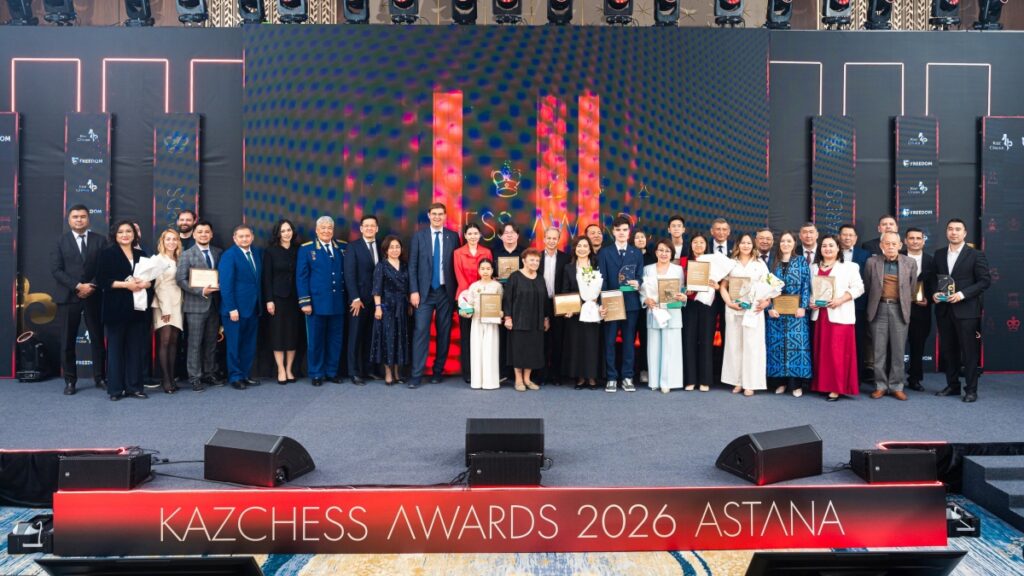
At the Hilton Astana in Astana, the KazChess Awards 2026 ceremony brought together world champions, coaches, arbiters, regional leaders, and distinguished guests from the international sports community. In just a few years, this national award has evolved into a true celebration – comparable in scale to the Oscars – except here, the spotlight is on intellect and strategic mastery. The evening opened with a “Renaissance” performance by the FLAME STARS dance ensemble – a fitting metaphor for the renaissance Kazakhstan’s chess has experienced in recent years. Athletes, coaches, officials, journalists, and patrons filled the hall, reflecting how chess in Kazakhstan has long outgrown its niche status. The KazChess Awards is more than an annual recognition of the best performers. It is a showcase of systemic transformation launched in January 2023 that has reshaped Kazakhstani chess. The results are measurable: 126 international medals in 2023, 160 in 2024, and 162 in 2025. These achievements form the foundation behind every statuette presented on stage. High-level representation A welcome address on behalf of Maulen Ashimbayev, Chairman of the Senate of the Parliament of Kazakhstan, was delivered by Nurtore Zhussip, Chairman of the Committee on Socio-Cultural Development and Science. Awards to para-athletes were presented by Major General Aidar Saitbekov, Deputy Minister of Internal Affairs. Nominations within the “Chess in Education” program were presented by Sayasat Nurbek, Minister of Science and Higher Education, and Aidos Zholmanov, Chief of Staff of the Ministry of Education. The final nominations were announced by Arkady Dvorkovich, President of FIDE. Such representation at a national sports award is rare in any discipline. The ceremony also featured a congratulatory letter from Olzhas Suleimenov, poet, diplomat, Director of the International Center for the Rapprochement of Cultures under UNESCO. His message emphasized unity, shared responsibility, and chess as a tool for societal development. International recognition In his remarks, FIDE President Arkady Dvorkovich noted that Kazakhstan has become a model for chess development worldwide, particularly through its youth system and grassroots expansion. These words are supported by data: hundreds of international medals, world team titles, and junior world champions in recent years. “Over the last few years, Kazakhstan, together with the Kazakhstan Chess Federation, has firmly established itself as one of the key global hubs for chess development – investing in school chess and education as well as in elite events. A huge part of this progress is connected to Timur Turlov and the Freedom Holding Corp., which he founded. Since 2022, Kazakhstan and Freedom have supported some of the biggest events in the global chess calendar – from the 2022 World Rapid & Blitz Championships in Almaty and the 2023 World Championship Match in Astana, to the 2024 WRB Teams as well as the WRB in New York that year, and many other initiatives worldwide. I am confident this is only the beginning. Many more ambitious projects are ahead, and Kazakhstan will continue to play an important role in shaping the future of world chess,” he said. Vision from the federation Timur Turlov, President of the Kazakhstan Chess Federation, highlighted the philosophy behind the awards: recognition not only of athletes and coaches, but also arbiters, managers, and educators working across the country toward a common goal–strengthening Kazakhstan through chess. What produces champions: The Young Talents Support Program A key distinction in Kazakhstan’s approach is between elite sports development and educational outreach. The Young Talents Support Program for athletes under 16 provides grants, training camps, international exposure, and professional coaching. In 2024, 18 national team players received support totaling 454 million tenge; in 2025, 21 athletes received 425 million tenge. Over three years, Kazakhstani players across age groups have won 448 medals in official international competitions. Standout achievements include: Bibisara Assaubayeva – three-time World Blitz Champion Women’s national team – historic Olympic silver in Budapest 2024 Kazybek Nogerbek – World Junior U20 Champion Alisha Bisaliyeva – multiple youth world titles Edgar Mamedov and Mark Smirnov – 2025 youth world champions Over three years, the federation awarded 5 new Grandmaster and 15 International Master titles. “Chess in Education”: 1,500 schools and 60,000 children Separate from elite sports, the “Chess in Education” program focuses on cognitive development for all children. The state target of 1,400 schools (2023–2027 plan) has already been exceeded: today, more than 1,500 schools and 60,000 students participate nationwide. Some 2,800 primary school teachers have been trained. In the 2025–2026 academic year, 204 students in five pedagogical universities enrolled in a specialized Minor program. Fourteen memorandums have been signed with universities. In September 2025, Almaty hosted the III International Conference “Chess in Education” with 281 experts discussing chess’s role in the era of digitalization and AI–positioning Kazakhstan among global leaders in this movement. Emotional highlights of the ceremony One of the most memorable moments was the presentation of the ‘Hope of the Year’ award, named after Toktar Aubakirov. The award was personally handed to eight-year-old world champion Alisha Bisaliyeva by the first Kazakh cosmonaut himself, prompting a standing ovation. The “Juniors of the Year” awards were presented by Olympic boxing champion Serik Sapiyev and President of the Kazakhstan Gymnastics Federation Aliya Yussupova. Special warmth filled the hall during the para-athlete awards. Winners included Erlan Nurkhaev, Aiganim Kambarova, and Nina Zhukovskaya. Regional emphasis Awards for the best university, best school, and best regional branch underscore a core principle: chess development extends far beyond the two largest cities. By 2025, the federation had established fully operational branches in all 17 regional centers and three cities of republican significance, supported by centralized funding and reporting. From the national championship to the awards stage Notably, many stars arrived directly from the National Classical Chess Championship final, which concluded just hours before the ceremony. The new national champions – 15-year-old Sauat Nurgaliyev and 16-year-old Zarina Nurgaliyeva – represent a generation shaped by this newly built system. A growing foundation In three years, the number of award categories has expanded from 9 to 18. This reflects a widening circle of recognition – athletes, educators, arbiters, managers, regional
Fraud alert: Fraudulent payment requests related to FIDE World Youth Chess Championships
Dear National Federations, We would like to alert you to a serious fraud attempt involving the impersonation of the FIDE Events Commission and/or the Organizing Committee of the FIDE World Youth Chess Championships. It has come to our attention that fraudulent emails requesting payments have been sent to national federations in connection with the event. Please note that this communication was not sent by the Organizing Committee, nor by any official representative of FIDE. We would like to emphasize that all official communications regarding registration, accommodation, and payments are handled exclusively through official FIDE and Organizing Committee channels. In particular, all official correspondence from FIDE is sent exclusively from email addresses using the fide.com domain. We strongly advise all federations to: Disregard any suspicious payment requests; Carefully verify the sender’s email address before making any payment; Contact the Organizing Committee or FIDE directly through official channels if there is any doubt regarding the authenticity of a communication. Given the seriousness of the matter and the potential risk of financial damage, we kindly ask all federations to remain vigilant and share this information with the relevant persons within their organizations. Thank you for your attention and cooperation!
Kazakhstan Championship: Sauat Nurgaliyev and Zarina Nurgalieva capture titles
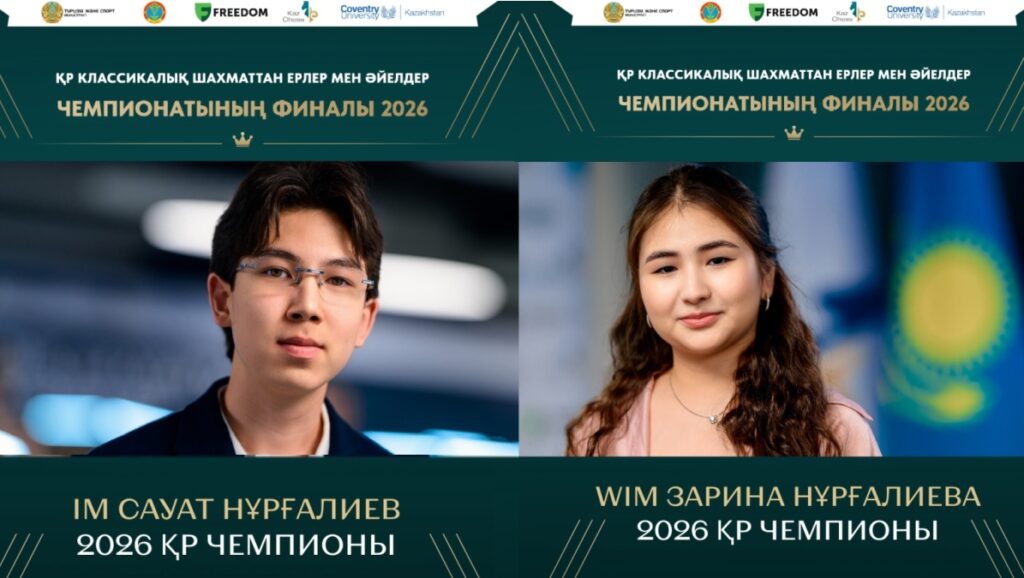
15-year-old IM Sauat Nurgaliyev and 16-year-old WIM Zarina Nurgalieva (no relation) are the newly crowned Kazakhstan chess champions, both winning their maiden national titles. The 2026 Kazakhstan Championship, held in open and women’s sections, took place in Astana from May 2–12. Both competitions were 14-player round-robins with classical time control (90 minutes + 30 seconds increment). Both competitions served as qualifiers for the national teams to represent Kazakhstan at the 46th Chess Olympiad in Samarkand. The open section proved exceptionally tight, as most participants were closely matched in rating. After Round 8, as many as three players – IM Zhandos Agmanov, the 2025 champion GM Kazybek Nogerbek, and Nurgaliyev – were sharing the lead on 5.5/8. A pivotal moment came in Round 9: Agmanov and Nogerbek split a point in their game, while Nurgaliyev defeated Vladislav Malygin and seized the sole lead, a position he maintained to the very end. Heading into the final round, a full point ahead of his closest rivals, Nurgaliyev made a quick draw with FM Dinmukhammed Tulendinov and secured the title with a score of 9/13. Agmanov pulled off a final-round victory and finished just a half-point behind the champion, becoming a three-time silver medalist. Notably, both the champion and the runner-up completed the event unbeaten. Heading into the final round a full point ahead of his closest rivals, Nurgaliyev made a quick draw with FM Dinmukhammed Tulendinov and secured the title with a score of 9/13. Agmanov pulled off a final-round victory and finished just a half-point behind the champion. Notably, both the champion and the runner-up completed the event unbeaten. Three players tied for third place on 8/13, with GM Ramazan Zhalmakhanov taking bronze based on his superior Sonneborn-Berger tiebreaker. Final standings – Open The women’s competition was even more thrilling, as four participants – WGM Liya Kurmangaliyeva, WIM Zarina Nurgalieva, the 2025 champion WIM Elnaz Kaliakhmet, and IM Meruert Kamalidenova – all crossed the finish line on 9/13, resulting in a four-way tie for the first place. The rapid single round-robin that followed failed to produce a clear winner the winner: Nurgalieva and Kamalidenova both scored 2/3 forcing a two-game blitz tiebreaker. Nurgalieva dominated both games, recording a 2–0 victory to claim the national title. Final standings – Women Photos: Kazakhstan Chess Federation
FIDE World Amateur Rapid & Blitz Championships in Nigeria: Registration now open

All FIDE Member Federations and eligible players are invited to participate in the inaugural FIDE World Amateur Rapid & Blitz Chess Championships 2026, open to players with a FIDE rating under 2300. The event will be held in Abuja, the Federal Capital Territory of Nigeria, from August 1 (arrival) to August 8 (departure), 2026. The Championships are open to players registered by their national federations. FIDE Member Federations have the right to enter an unlimited number of players. There will be separate Open and Women’s Championships across the following FIDE rating categories: under 2300, under 2000, and under 1700. A separate Women’s Championship will be organized in each category provided that there are at least twenty players from at least two continents. The Championships will be conducted using the Swiss System, with the number of rounds determined based on the final registration numbers. The time controls: Rapid: 15 minutes plus 10-second increment from move one Blitz: 3 minutes plus a 2-second increment from move one All participants who need to apply for a Nigerian visa must request an invitation letter no later than June 30, 2026. The registration deadline for participants and accompanying persons is also June 30, 2026. Invitation letter, regulations, schedule (PDF) E-mail: worldamateur_rb@fide.com