

World Senior Championships 2025 commence in Gallipoli, Italy
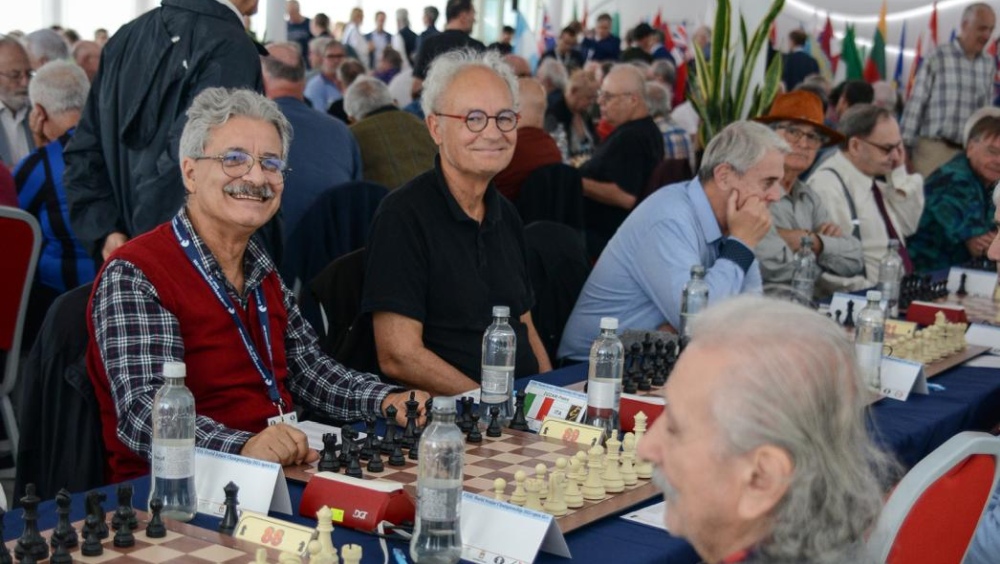
The 33rd FIDE World Senior Championships kicked off in the Grand Hotel Costa Brada, Gallipoli, Puglia, Italy, on October 21. The 2025 edition has set a new record, with 467 players participating. The players come from 67 different countries, with some even traveling halfway around the globe, flying in from New Zealand, South America, and South Africa. Of these, 55 participants are competing in the women’s competitions. The largest field is in the 65+ seniors category, with 247 players taking part. The championships are played as 11-round Swiss-system tournaments with classical time control (90 minutes plus a 30-second increment per move) and feature four categories: Open and Women’s sections for the 50+ and 65+ age groups. Four 2500+ GMs – Kiril Georgiev (BUL, 2526), Murtas Kazhgaleyev (KAZ, 2518), Alexandre Qashashvili (GEO, 2505), and Victor Mikhalevski (ISR, 2504) – headline the 50+ Open section, while reigning European Senior Champion GM Zurab Sturua (GEO, 2491) leads the 65+ Open starting list. GMs Pia Cramling (SWE, 2403), Ketevan Arakhamia-Grant (SCO, 2269; pictured above), IM Masha Klinova (ISR, 2235), and Monica Calzetta Ruiz (ESP, 2221) enter the 50+ Women’s competition as the top seeds. The legendary Nona Gaprindashvili tops the 65+ Women’s starting list. In recognition of the record turnout, FIDE has increased the total prize fund from €43,000 to €50,000. The category winners will receive: €5,000 (Open 50+), €2,100 (Women 50+), €3,000 (Open 65+), and €1,500 (Women 65+). In addition, the champions will be awarded free entry and complimentary hotel accommodation at the 3rd Cap Negret Senior Open (50+ and 65+), taking place from November 8–16, 2025, in Altea, Alicante, Spain. Special prizes for players aged 75 and above have also been increased. Several side activities will complement the main event, including two FIDE-rated blitz tournaments. The opening ceremony commenced with the playing of the Italian national anthem and the FIDE anthem, with all participants rising in a festive gesture. The competitions were officially opened by Tournament Director Cristina Rigo, co-organizer Matteo Zoldan (Chairman, WSCC 2025), and Yana Sidorchuk (FIDE Technical Delegate), who attended as the representative of FIDE. FIDE President Arkady Dvorkovich is expected to attend the award ceremony on November 1. Patrick Van Hoolandt (AC Chair) from Monaco delivered a welcome speech, wishing all participants wonderful experiences, new friendships, and many unforgettable memories throughout the tournament. Chief Arbiter Arno Eliens from the Netherlands reviewed the rules and officially signaled the start of the first round. Full results and pairings are available on Chess-Results. Official website: worldseniorchampionship2025.com/
2nd FIDE Chess Olympiad for People with Disabilities, Day 2: A celebration of strength, connection, and power of chess
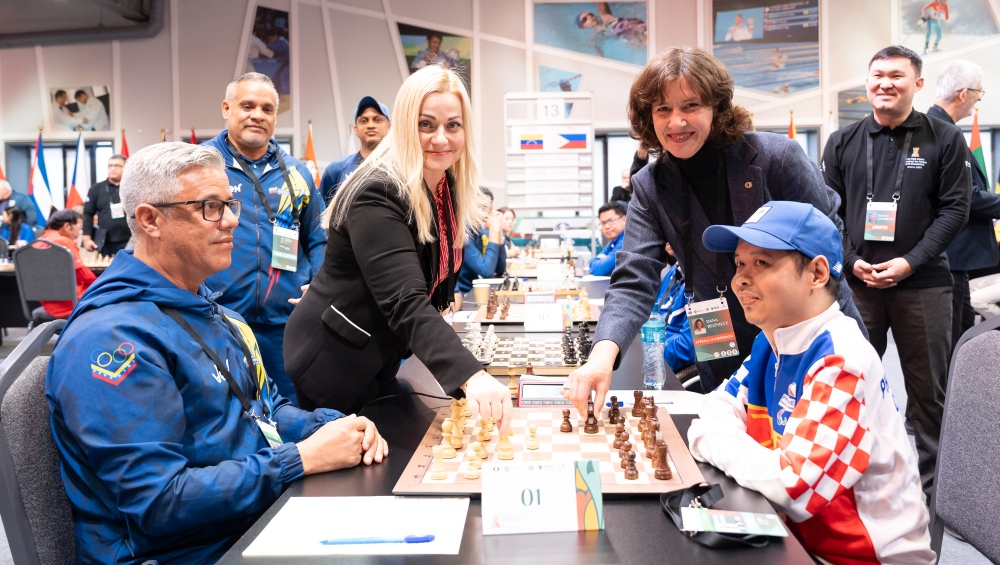
The atmosphere at the Paralympic Training Centre in Astana remains full of energy and inspiration as the 2nd FIDE Chess Olympiad for People with Disabilities continues into its second day. For many players, simply being here is already a victory – a triumph of willpower and perseverance over life’s challenges. Each move made across the chessboards carries a deeper meaning: determination, pride, and unity. Ceremonial first move with a message At the start of Round 2, the ceremonial first move was made by the Ambassador of Venezuela to Kazakhstan, Rosalba Lo Bué Antico, together with FIDE Deputy Chair of the Management Board, WGM Dana Reizniece. Ambassador Lo Bué Antico shared a heartfelt message about the event’s importance: “Today, in this 2nd Paralympiad for People with Disabilities, we see with great promise the possibility that Venezuela can develop major projects to promote chess – not only for people with disabilities, but also through educational programs in Venezuelan schools. Kazakhstan is a worthy example for Venezuela and the world.” Her words reflected the spirit of the Olympiad – an event that transcends competition and aims to make chess a global force for inclusion and opportunity. Dana Reizniece, who also made the ceremonial first move, expressed deep admiration for the players and organizers: “For me, it is not only 34 teams representing countries – for me, it’s 34 teams of people who are champions of their lives. They have a super strong character, and they are very humble. When you speak with them, you see it.” She praised the work behind the event’s organization: “The local organizers here in Kazakhstan made it possible not only with finances – thanks to Freedom Finance, the Kazakhstan Chess Federation, Astana Municipality, and the Government – but also by being brave enough to organize such an event.” Reflecting on the Olympiad’s evolution, Dana Reizniece added: “Many things have been improved. We know that there are many things that we can do even better – for example, invite more teams and provide this opportunity to play for even more countries worldwide.” And on the inclusivity of chess, she concluded: “Chess is, if not the, then one of the most inclusive sports – where people with disabilities or special abilities can play at the same level as professional players who have dedicated their whole lives to the game.” Inside the venue: Focus, friendship, and power of chess The Paralympic Training Centre in Astana – one of the most advanced accessible sports facilities in Central Asia – has become not only the stage for intense chess battles, but also a welcoming home for connection and community. Beyond the playing hall, the resting area offers players a place to relax, analyze games, and socialize. The atmosphere is warm and uplifting – filled with conversation, laughter, and mutual respect. When asked to describe chess in one word, players offered answers that capture the essence of the game:“Life. Love. Luck. Tenacity. Enjoyment. Pressure. Emotion. Equality.” For many, chess has been more than just a sport – it’s been a lifeline. As Roberto Fernando Elías, the Argentinian Chess Champion for the Blind, shared: “I’ve had my disability since the age of six. I believe that chess helped me avoid isolation and dedicate my time to a wonderful sport like chess. I’d like to express my gratitude to FIDE for creating this event.” His words mirror the feelings of many players who see this Olympiad as not only a competition, but a celebration – a place where friendships are formed and the joy of chess shines through. Position of the day: The art of trading pieces Many players believe that trading pieces leads to equality or draws. However, as today’s position of the day shows, every trade must be carefully evaluated. In the game between Axadxon Kimsanboyev (Uzbekistan) and Valeria Simone (Argentina), a critical mome nt arose: Black offered a bishop trade with 21. … Be5? to defend her d6-paw (21…Re5, sacrificing an exchange was a better option). Although logical, this decision proved costly – after the bishops exchange 22. Bxe5 Rxe5 the rook was kicked from the e5 with 23. f4 Re7 while Black’s dark-square became extremely vulnerable. A precise knight jump to f6 – 24. Nf6+ Kg7?, followed by 25. Qc3, sealed the fate of the game and the Argentinean player resigned, facing deadly threats. This instructive moment reminded everyone that in chess – as in life – not all trades are equal. Every exchange carries consequences, and true mastery lies in knowing when to simplify and when to keep the tension. Round 2 results After two rounds, seven teams – Poland, USA, Cuba, Israel, Philippines, IBCA, and FIDE 1 – are in the lead with a perfect 4/4 score. Full results and pairings for Round 3 are available on Chess-Results. A message beyond the board As the 2nd FIDE Chess Olympiad for People with Disabilities unfolds, it continues to highlight the unifying power of chess – a game where every move counts, and every participant inspires. For the players, organizers, and everyone watching, the message is clear: The board has no boundaries – and the spirit of the game belongs to everyone. Official website: dis-olympiad2025.fide.com/
India makes its move: Goa CM Pramod Sawant unveils FIDE World Cup 2025 logo and anthem
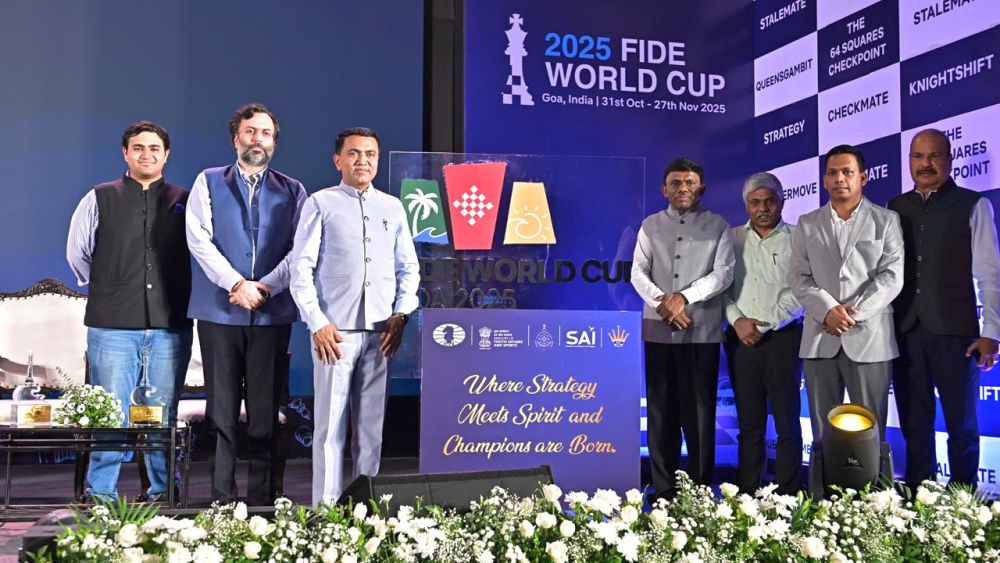
206 players from 82 countries to compete as music legend Daler Mehndi lends his voice to an anthem celebrating Goa’s cultural flair Panaji, October 21: A glittering ceremony celebrating Goa’s rich cultural heritage and India’s growing stature as a global chess powerhouse marked the launch of the official logo and anthem of the FIDE World Cup 2025, unveiled by Hon’ble Chief Minister Dr. Pramod Sawant in Goa on Tuesday. Returning to India after 23 years, the prestigious tournament will feature 206 players from 82 countries, with the anthem—voiced by music legend Daler Mehndi—capturing the spirit and vibrancy of Goa. The FIDE World Cup 2025, one of the most prestigious tournaments on the global chess calendar, will be held in North Goa from October 31 to November 27, 2025, bringing together elite players from across the world in a knockout contest for a prize purse of USD 2 million (approx. INR 17.58 crore). While the logo reflects Goa’s vibrant, culturally rich identity—capturing the essence of the state’s coastal charm and the strategic elegance of chess—the anthem, sung by legendary artist Daler Mehndi, adds a touch of grandeur and mystique to the event. Speaking at the launch ceremony, Honb’le Goa Chief Minister Dr Pramod Sawant said, “It is a moment of immense pride for Goa to host the FIDE World Cup 2025, one of the most prestigious events in global chess. This milestone not only reaffirms our state’s commitment to becoming a premier destination for international sport but also celebrates India’s rising prominence on the world chess stage. The official logo and anthem reflect the very soul of Goa — vibrant, creative, and deeply rooted in culture — while capturing the strategic elegance of chess. We are ready to welcome the world’s finest players to our shores for 28 days of top-class competition, camaraderie, and an experience that blends the spirit of Goa with the brilliance of the game.” The logo and anthem launch was also attended by Dr. Ramesh Tawadkar, Minister for Art and Culture, Tribal Welfare, and Sports and Youth Affairs, Nitin Narang, President of the All India Chess Federation (AICF) and Dev Patel, Secretary AICF. Dr. Ramesh Tawadkar, Minister for Art and Culture, Tribal Welfare, and Sports and Youth Affairs, said, “The FIDE World Cup 2025 is a remarkable opportunity to bring together culture, art, tourism, and sports on one grand stage. Goa has always been known for its vibrant heritage and hospitality, and this event will showcase how seamlessly our cultural identity blends with the global spirit of competition. The World Cup will stand as a testament to Goa’s ability to celebrate excellence — on and off the chessboard — while promoting our state as a world-class destination for sport and tourism.” Complementing the visual identity of the event is its official anthem — a dynamic celebration of India’s strategic prowess and youthful energy. Featuring the Hon’ble Prime Minister in its music video, the anthem brings together the spirit of the nation with the brilliance of chess. Iconic singer Daler Mehndi, known for his powerful and distinctive voice, infuses the anthem with his signature vibrancy, rhythm, and energy. Centered around the empowering theme “It’s Your Move,” the song captures the essence of India’s growing might in world chess while highlighting the vibrancy of its culture. The video also showcases India’s leading chess grandmasters and stars like World Champion D. Gukesh, Arjun Erigaisi, Koneru Humpy, Tania Sachdev, and Vidit Gujarati, symbolizing the new generation that is taking Indian chess to unprecedented heights. AICF President Nitin Narang thanked the Goa government for their support for the event and said, “Securing the hosting rights for the FIDE World Cup 2025 is a landmark moment for India and a testament to our growing credibility in the global chess community. Bringing a tournament of this magnitude to our shores — after 23 years — is not just a sporting success, but a proud national achievement. It will give Indian fans a rare opportunity to witness the world’s best players compete on home soil, inspiring a new generation to take up the sport. The anthem, with its energy and emotion, will revitalize chess across the country and take the game from clubs and academies into every home in India.” About the World Cup 2025 logo The logo feature three distinctive trapezoidal panels, the design captures different facets of Goa and the tournament itself. The Green Panel shows a white palm tree with a blue wave at the bottom. The Red Panel boasts of a diamond-shaped checkerboard pattern in white while the Yellow panel has a stylised sun with curved rays, representing Goa’s sunny weather and warm, welcoming vibe.
Daniel Naroditsky (1995–2025)
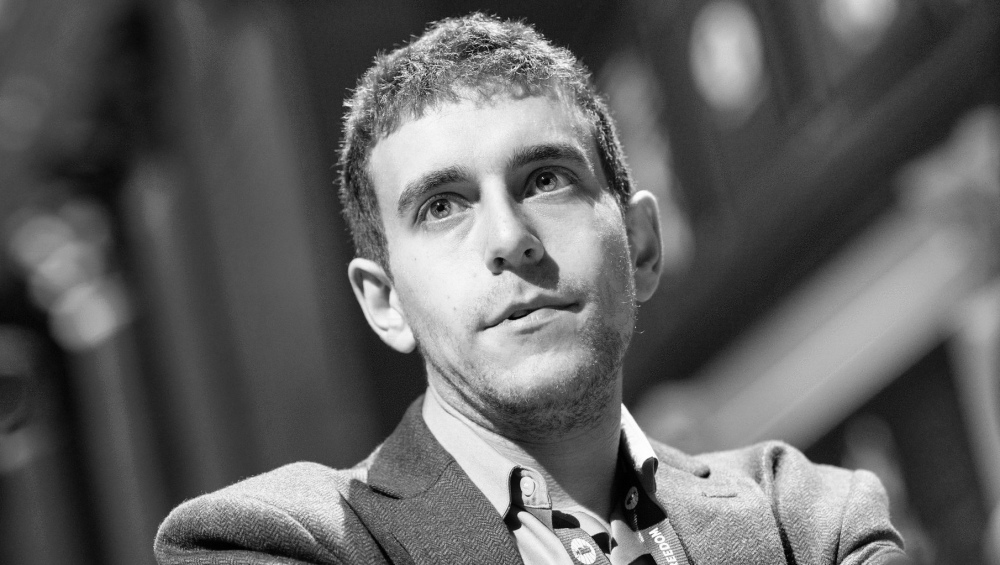
Born on 9 November 1995 in San Mateo, California, Daniel Naroditsky became a prominent Grandmaster, author, coach and streamer whose influence extended far beyond the chessboard. He died just two weeks before his 30th birthday. Chess entered his life at the age of six, when his older brother, Alan, brought several board games to entertain children at a party. Their father, Vladimir, an immigrant from Ukraine, taught them how to play chess. “I think a lot of people want to imagine that it was love at first sight and that my brother couldn’t pull me away from the chessboard… It was more of a gradual process, where chess slowly entered the battery of stuff we did to pass the time. A lot of my best memories are just doing stuff with my brother,” he told the New York Times in 2022, in an article announcing that he would be writing a chess column for the paper. Beyond chess, basketball was another of Naroditsky’s favorite sports. Like most players destined for success, Daniel Naroditsky began making his mark early. In 2007, he earned the FIDE Master title and won the U-12 section of the World Youth Chess Championship. He shared second place at the 2010 US Open, became an International Master in 2011, and won the US Junior Championship in 2013. That same year, he achieved the title of Grandmaster. His peak FIDE classical rating was 2647, reached in May 2017. Naroditsky was also an exceptional blitz and rapid player. He competed in major national and international events while simultaneously making a path for himself outside of chess, graduating with a degree in history from Stanford University. But Naroditsky’s greatest gift to chess was his ability to explain the game to those who were just starting to discover Caissa’s world. He was a teacher at the Charlotte Chess Center, and also had private students. He authored several books on chess, starting with Mastering Positional Chess which he published at the age of 14 – having begun writing it when he was just ten years old. Naroditsky often appeared as a commentator for prominent chess events, most notably on Chess.com, and also ran highly popular Twitch and YouTube channels. He was praised for the ability to calmly and simply explain the game to players of all levels. From 2014 to 2020 he also wrote a column for Chess Life. Naroditsky’s unexpected passing was announced on X by his family via the Charlotte Chess Centre. Chess players around the world spoke out following the news of Naroditsky’s death, praising him as a skilled player, a gifted educator and a generous spirit. Beyond the chessboard, Naroditsky played a pivotal role in popularizing chess content online, bridging the gap between professional and amateur chess. Speaking to the New York Times in 2022, he summed up his view of chess – and life – in the following well-known quote: “At the end of the game, both the king and the pawn go into the same box.” There are not many people in the world who manage to achieve so much before turning 30. Grandmaster Daniel Naroditsky will forever be among them. Written by Milan Dinic Photos: Maria Emelianova, Lennart Ootes and Michal Walusza
FIDE Olympiad for People with Disabilities, Day 1: A celebration of inclusivity and determination
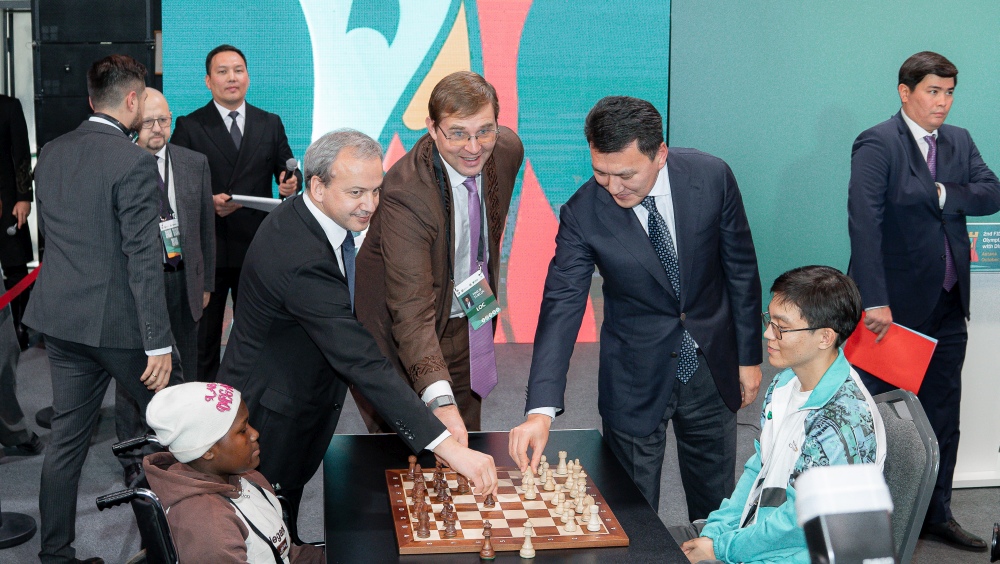
The 2nd FIDE Olympiad for People with Disabilities officially began in Astana, Kazakhstan, bringing together 34 teams from 29 countries. Additionally, eight more nations are represented through the teams of the IPCA (International Physically Disabled Chess Association), IBCA (International Blind Chess Association), and ICCD (International Committee of Silent Chess) — making it a truly global event, with participants from 37 countries in total. The games are hosted at the Paralympic Training Centre, one of the most advanced and accessible sports facilities in Central Asia. With two spacious playing halls, the venue offers perfect and comfortable conditions for all participants, reflecting the Olympiad’s core message of inclusion and equal opportunity. Opening ceremony The opening ceremony was held in a warm and inspiring atmosphere, attended by dignitaries, players, and guests who celebrated the start of this unique event. In the main playing hall, the first ceremonial move was made by Erlan Karin, State Counsellor of the Republic of Kazakhstan; Arkady Dvorkovich, President of FIDE; and Timur Turlov, President of the Kazakhstan Chess Federation. Timur Turlov spoke about the significance of this Olympiad, saying: “Chess is a great symbol of equality and an opportunity to play across the globe. Having differences doesn’t change that – chess unites.” In the second playing hall, the first move was performed by Baglana Musina, President of the Corporate Fund Freedom Shapagat; Oscar Santana Leon, Ambassador of Cuba; and Dmitriy Balandin, Olympic Swimming Champion. FIDE President Arkady Dvorkovich emphasized the importance of inclusivity in chess, noting that this Olympiad stands as a model of equal opportunity: “Chess is inclusive, and we must ensure that everyone has access to top events. The Olympiad for People with Disabilities proves that we are creating those opportunities for all.” He also highlighted FIDE’s broader commitment to social initiatives around the world: “Through projects like Chess for Refugees, Chess for Freedom, and Chess for Children with Autism, we’re showing that chess is truly for everyone. This Olympiad is our flagship event – a reminder that chess is accessible and brings happiness to all who play it.” Voices of the 2nd Olympiad for People with Disabilities The Olympiad is not only about the results – it’s about people and their stories. Every participant brings a story of resilience, courage, and passion for the game. Shantel Panashe Gweshe from Zimbabwe, a social worker and first-time Olympiad participant, shared her experience: “It’s my first time coming all the way from Zimbabwe, participating in this Olympiad. What I have seen here – there’s so much inclusivity for people living with disabilities. When I go back to Zimbabwe, the first thing I’m going to do is empower other people with disabilities to ensure inclusivity and participation.” Meanwhile, Henry Lopez from the Philippines (pictured above), who won a bronze medal at the first Olympiad in Serbia in 2023, reflected on how deeply chess has shaped his life: “Chess for me now is my source of living. I am a national team player in the Philippines, and I receive a stipend from the government. Chess is a universal language – it’s a great equalizer. No matter how old or young you are, or whether you have a disability, you can play. Chess is for everybody.” With determination in his voice, Henry added: “At the previous Olympiad, we got third – this time, frankly speaking, we are aiming for number one.” This is what the FIDE Olympiad for People with Disabilities is truly about – gathering players from all around the world, giving them opportunities to show the power of their minds, and celebrating the unifying strength of chess. Games and results The first round brought exciting games and strong performances by the top teams. Almost all favorites won their matches convincingly. Uzbekistan, India, Venezuela, and FIDE 1 began their campaigns with impressive 4–0 victories. There were, however, two notable ties: North Macedonia held the Czech Republic to a 2–2 draw, and ICCD (International Committee of Silent Chess) also drew with Argentina. You can find all results, pairings, and standings after the first round on Chess-Results: s3.chess-results.com/tnr1276749.aspx?lan=1&art=0&rd=1&SNode=S0 Side events in Astana In addition to the competition, today featured two important milestones for the global chess community. A Memorandum on Declaring 2026 the Year of Chess in Education was signed between FIDE President Arkady Dvorkovich and President of the International School Chess Federation Timur Turlov, who also leads the Kazakhstan Chess Federation. Following the signing, Timur Turlov said: “I hope that it will help a lot of kids to discover themselves better – to train their ability for strategic thinking, to keep concentration, to build clubs, and to make friends across the globe.” FIDE President Arkady Dvorkovich highlighted that this initiative aims to significantly expand chess participation among young people: “Our goal is to double the number of children playing chess worldwide, and our partnership with the International School Chess Federation will help us make that a reality.” Another memorandum was signed between Turkey, Kazakhstan, Uzbekistan, Turkmenistan, and Kyrgyzstan, establishing an Association of Turkic-Speaking Countries. This new initiative aims to bring the work of these nations closer together, strengthening cooperation in chess development and the organization of joint events. A celebration of unity and inclusion The first day of the 2nd FIDE Olympiad for People with Disabilities set the tone for a remarkable event – one that celebrates not only competitive excellence, but also the human values of inclusion, equality, and respect. The Paralympic Training Centre in Astana has become a home for players from all corners of the world, united by one timeless truth: chess is for everyone. Official website: dis-olympiad2025.fide.com/
Arkady Dvorkovich’s interview for ChessBase India

The FIDE President discussed the Total Chess World Championship Tour, changes to the 400-point Rating rule, the success of the Year of Social Chess, and the state of FIDE. In an online interview with Sagar Shah of ChessBase India, one of the leading chess media outlets, Arkady Dvorkovich highlighted the importance and the role of the new Total Chess World Championship Tour which was recently announced by FIDE. “FIDE has for a long time been thinking about a new format where we can combine different time controls and adjust to the reality of the faster, digital world, but also reflect the existing high interest in classical and blitz chess. We were happy that Norway Chess came up with the initiative to do something like that. It was the right time, the right moment and the right partners. From the very beginning, we had a clear understanding that we can do it only together,” Dvorkovich said. “We do believe this [project] will bring many new spectators and excitement to the players. Most of the top players believe that it is a very interesting format”. Dvorkovich emphasized FIDE’s position that the classical world championship title “is the most important one… but we believe it is the right time to increase the importance of other formats as well”. The new partnership with Norway Chess is a long-term commitment, based on an eight-year contract with an option to renew for an extended period. “I do believe that – based on the concept that we have – it will be at least equally important as Rapid and Blitz, but potentially much bigger,” Dvorkovich added. On the subject of how the rising number of global chess events in a year has an impact on the annual chess calendar, Dvorkovich said that “in an ideal world, we should have agreements with all top events and – like in tennis – put them in a universal tour where every top event will count, but that’s not easy”. The FIDE President expressed a commitment to working with all partners to achieve a future ‘universal tour,’ similar to tennis, where every top event counts, and where a consensus on time control, aligned with the exciting World Cup format, can be reached. Chess in India “India is the motherland of chess, and everyone respects that. We always have at least one major event every year in India,” said Dvorkovich. When asked about the forthcoming World Cup in Goa – one of the longest events planned for this year, lasting nearly four weeks – the President of FIDE expressed his confidence in the All India Chess Federation and the local organisers, saying that progress [on organising this event] is made every day, adding that FIDE has “trust that everything will be fine”. Another major event towards the end of the year is the Tech Mahindra Global Chess League, which FIDE has a stake in. The event will take place in Mumbai in December. The media-friendly concept of the event has put a new spotlight on chess globally, and Dvorkovich expressed his support for the project, noting that it has become commercially sustainable. Photo: Aditya Sur Roy “I think it’s good that two big events are in India [this year]. Doha is also not far away, so it’s convenient [for those players participating in the World Rapid and Blitz at the end of the year]”. A more competitive approach to wild cards In recent years, FIDE has refined its approach to the use of ‘wild cards‘ – special invites that ensure the participation of both talented up-and-coming players and chess legends in top world events. “We always give chances to very young players because we can see their potential. This way, we are showing we are aware of the fast growth of these players. Also, we have it as a rule that we give wild cards to veterans”. The FIDE President noted that the approach to issuing the special invites has evolved. “We started using a competitive approach for wild cards, telling players that they can play against each other” to determine who will qualify. No “farming of rating” to be allowed Speaking about the recent targeted amendments to the FIDE Rating Regulations, Dvorkovich said that the organisation does “not allow farming of rating” by top players playing against significantly lower-rated opponents. Acknowledging that such a matchup is possible in an open event or an Olympiad, Dvorkovich noted that “many games like that” clearly suggest “it’s artificial”. “I think we found a good solution,” said Dvorkovich, noting that the goal of the change was never to prevent any player from qualifying for the Candidates. On the subject of FIDE rating in general, including in relation to the question of ratings of inactive players, Dvorkovich acknowledged that it is an “extremely difficult” complex system, with opinion polls and discussions showing a deep split in the chess community about any changes. “When we ask players, normally there is no consensus at all. But most players are not happy about keeping inactive ratings in the system. People do want ratings to reflect the real strength of players,” Dvorkovich said. From the Year of Social Chess to the Year of Chess in Education The interview also touched on the social initiatives, which have become one of the key tools in FIDE’s approach to engage the broader, non-professional, chess audience. “We showed the whole world that chess is a combination of a professional and a social mission to improve society”. Noting that the Year of Social Chess helped “many governments in the world see the social value of chess,” leading to them starting to provide more support for the game not just on a competitive basis but as a tool for social engagement and levelling. “Here we are not talking about medals but [about] society. From this perspective, the year was successful. It doesn’t mean we will finish those projects on the 31st of December – we will continue them. For next year, there is already an
FIDE and ISCF declare 2026 as the Year of Chess in Education

Following the Year of Social Chess, 2026 will be dedicated to chess in education, underscoring FIDE’s focus on integrating chess into the global school curricula worldwide. On 20 October, at NGS School in Astana, FIDE and the International School Chess Federation (ISCF) signed a Memorandum of Cooperation to jointly promote scholastic chess globally. The initiative builds upon the successful 2025 Year of Social Chess and aligns with FIDE President Arkady Dvorkovich’s proposal – made at the recent Smart Moves Summit in Washington, D.C. –to make education one of key focus areas for 2026. Under the agreement – which will guide future cooperation – ISCF will work closely with FIDE to organise a series of international school team tournaments under the name “World Schools Team Championship League 2026” (WSTCL), which will serve as a flagship event of the “Chess in Education 2026” programme. The tournaments will unfold in two stages: Continental Championships for Africa, the Americas, Asia and Europe. Grand Final featuring the winners of respective Continental Championships. The parties expressed their intent to draft an action plan for additional events alongside each WSTCL 2026 tournament, aiming to expand scholastic chess and promote chess as an educational tool. The memorandum was signed by FIDE President Arkady Dvorkovich and Timur Turlov, President of the International School Chess Federation. “Education is the foundation for a good and successful life, and chess is a proven and powerful tool to underpin that goal,” said FIDE President Arkady Dvorkovich. “Investment in chess education, youth and school events has been one of the goals of my team since taking the helm of FIDE. I am delighted that after a successful Year of Social Chess, we are continuing with the Year of Chess in Education, launching new projects and initiatives and getting more schools and educational facilities involved in chess.” The memorandum will serve as a foundation for implementing initiatives aimed at developing school chess and popularising intellectual sports in school education. “Inclusion and equal opportunities have always been close to my heart. With the backing of our Freedom Shapagat Foundation, we have consistently supported social initiatives that help children and promote a more compassionate and humane society. That is why hosting these initiatives within the framework of the FIDE Olympiad for People with Disabilities feels especially meaningful,” said Timur Turlov. “It is only natural that in this year — declared by FIDE as the Year of Social Chess — together with the International School Chess Federation, we take the next step and announce 2026 as the Year of Chess in Education. From early childhood, it is through learning that we build a society grounded in respect, empathy, and support for every child,” he added. The “Chess in Education 2026” initiative marks a major milestone in FIDE’s global efforts to promote chess as a valuable component of learning, supporting both cognitive and social development among students worldwide. About ISCF: The International School Chess Federation (ISCF) is dedicated to the global promotion and integration of chess within the educational system globally. Launched in September 2024 as a FIDE-affiliated organization, the ISCF operates as a main institutional platform for advancing chess in schools — developing educational programs, supporting national federations, and fostering cognitive and social growth among students through the game of chess.
5th FIDE Intercontinental Online Chess Championship for Prisoners: India, El Salvador and Iran claim titles
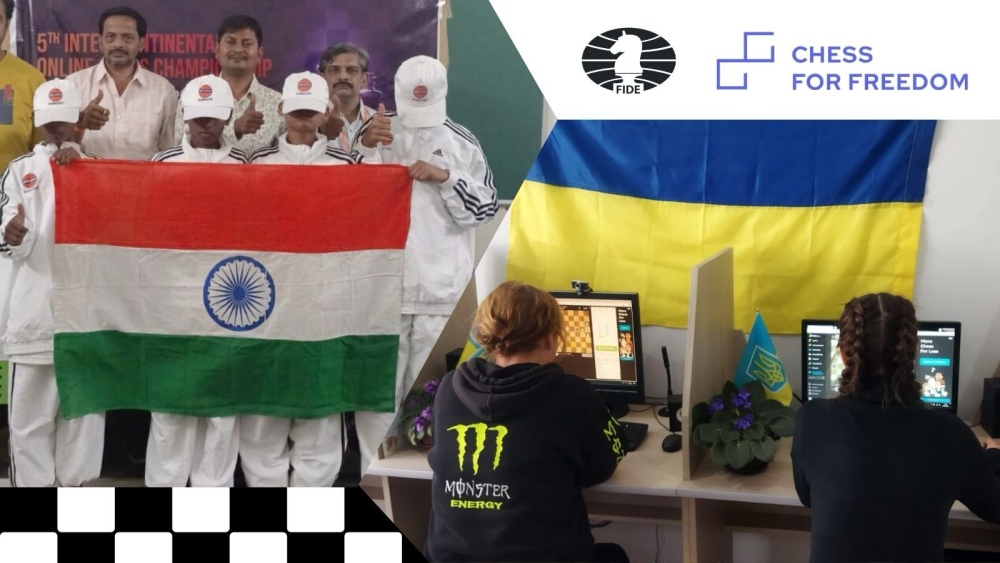
India won the male competition after a decisive Armageddon game in a tense final match against El Salvador. The women’s tournament was also closely contested, with El Salvador taking the title after beating Ukraine. The Youth competition title went to the all-female team from Iran, which defeated England. The fifth FIDE Intercontinental Online Chess Championship for prisoners concluded after three days of play with winners crowned in the Male, Women’s and Youth categories. The event unfolded across three stages: group qualifiers (14 October), the championship stage (day two), and the finals, which concluded today. In most international chess competitions – from the Olympiad to continental team championships – players typically leave the board once their own game concludes, retreating to analyse their moves or decompress in private while their teammates fight on. But in the prison chess championship, the atmosphere was strikingly different. Here, players lingered long after finishing, following the remaining boards to offer quiet encouragement and moral support to their teammates. Even through prison facility cameras, the sense of solidarity was palpable – a team spirit born not just of competition, but of shared circumstance. In the Men’s final, India faced El Salvador in a tightly contested four-match series. El Salvador started with a 3:1 win only to be defeated by India with 3:1 in the second match. In round three, India scored a narrow victory 2.5:1.5 but in the final round they were completely dominated by El Salvador with 3:1. The results took them to tiebreaks: in the Armageddon match, Indian top-board was better, securing the crown for the team. Mongolia took third place after beating Serbia 3 in the Blitz playoffs. El Salvador also stood out in the Women’s competition, where their team beat Ukraine. Despite the narrow loss in the first match (2.5:1.5), El Salvador stormed back winning all three remaining matches with 3:1. El Salvador also had a team in the fight for third place (El Salvador 2) in the Women’s event, but they fell to Mongolia. The Youth competition saw England and Iran face off in the finals. The all-female Iranian youth team defeated England 3:1 in the first match, while the second ended in a draw. Third place went to India, defeating Ecuador in both matches 3.5:0.5. Starting with 42 teams in 2021, the fifth edition of the FIDE Intercontinental Online Chess Championship featured 135 teams from 57 countries. After five years, certain countries have shown consistent strong performance, specifically, Mongolia, Serbia and India who have so far (with the exception of Serbia this year) have consistently won a medal. “The true victory lies in the personal transformation that chess has unlocked” In his congratulatory message to the winners, FIDE President Arkady Dvorkovich stated that “although today we recognise those who have come up first, every single player who participated is a winner”. The FIDE President went on to say that “the true winners of this event were not determined by the final round result or the scoresheet. In fact, the true victory lies in the personal transformation that chess has unlocked, and I hope you will see it through”. The successful conclusion of the FIDE Intercontinental Championship for Prisoners is a notable highlight of the Year of Social Chess which celebrated the game’s transformative power, providing the means for self-improvement and change. “I hope chess will continue to be a loyal part of your life, guiding you and making you happy, challenging you to move forward and improve. The games are over, but the future is wide open. Make your next move really count, make it your best move”, Dvorkovich concluded. Written by Milan Dinic About the Chess for Freedom project The Chess for Freedom project officially started in May 2021 with an online conference and an exhibition tournament with four participating countries. In October of the same year, the first International Online Chess Championship for Prisoners was held, growing each year and attracting more teams and countries. The goal of the project is to use chess as a tool for education, personal development and change, helping inmates prepare for life after release from prison. In prisons, just as in broader society, the impact of sport and games can be far-reaching. The experiences demonstrate that chess improves behaviour, helping to reduce inmate violence and developing communication skills, while promoting positive use of leisure time. Chess also drastically improves the decision-making capabilities of a group of people that, very often due to the lack of opportunities and access to proper education, has ended up in jail after making a wrong choice in life. The project is closely coordinated with the Chess For Freedom Network which operates under the auspices of the FIDE Social Commission. To get involved or get more information about the project, please visit: chessforfreedom.fide.com.
FIDE World Youth U14, U16 & U18 Championships 2025 conclude with celebration and pride
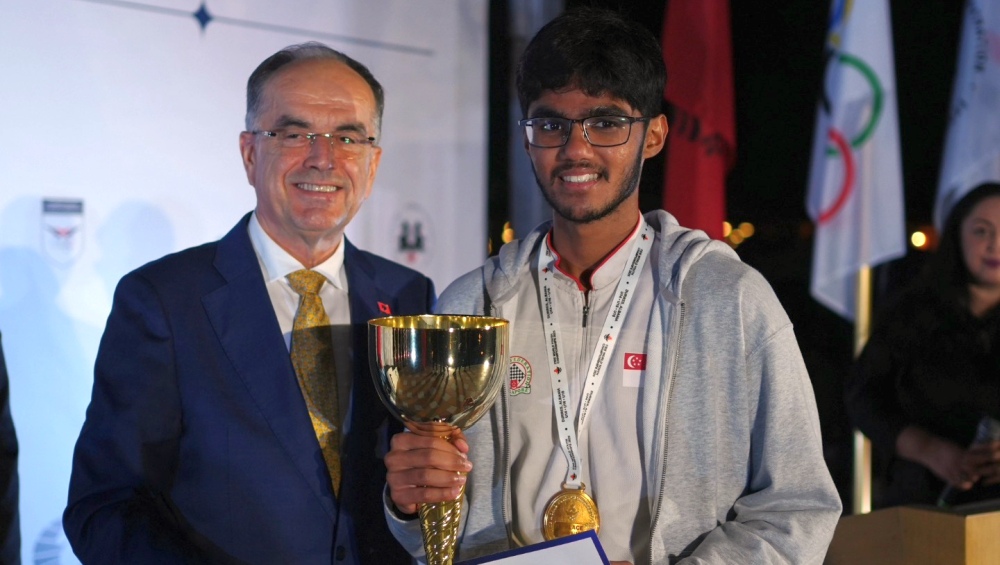
The curtains have closed on the FIDE World Youth U14, U16 & U18 Championships 2025, marking the end of two unforgettable weeks of competition, friendship, and global unity through chess. Hosted at the Grand Blue Fafa Resort in Durrës, Albania, the championship brought together 720 players from around 90 federations — the world’s most promising young talents — in an atmosphere of excellence and fair play. After 11 intense rounds, the world’s best young talents were crowned in six categories: U18 Open GM Siddharth Jagadeesh (Singapore) IM Artiom Stribuk (FIDE) IM Adarsh Uppala Sriram (India)U18 Girls WIM Gao Muziyan (China) WIM Manon Schippke (France) Valeria Kleymenova (FIDE)U16 Open GM Edgar Mamedov (Kazakhstan) IM Sauat Nurgaliyev (Kazakhstan) FM Alexandr Volodin (FIDE)U16 Girls WFM Diana Khafizova (FIDE) WFM Marija Kuznecova (Latvia) Chen Yining (China) U14 Open FM Mark Smirnov (Kazakhstan) IM Haochen Jiang (China) CM Artem Lebedev (FIDE)U14 Girls WFM Polina Smirnova (FIDE) Rukiya Olimova (Uzbekistan) Jamaicah Yap Mendoza (Philippines) Each winner received their medals from distinguished guests, underlining the spirit of unity and respect that defined the championship. Applause filled the hall as the young players stood proudly, representing not only their countries but also the future of chess worldwide. The closing ceremony The closing ceremony, held on October 15, was a fitting celebration of talent and achievement, blending official addresses, cultural performances, and heartfelt moments of recognition. The evening began with the National Anthem of the Republic of Albania and the FIDE Anthem, performed by the Durrës City Band, setting a tone of dignity and international solidarity. Opening the ceremony, moderator Kozeta Kurti welcomed guests and participants, expressing gratitude to everyone who made the championship possible — from organizers and arbiters to volunteers and partners. She highlighted the event as a “celebration of friendship, respect, and shared values that connect us all through sport and intellect.” Erald Dervishi, President of the Albanian Chess Federation (FSHSH) and Grandmaster, addressed the audience with pride, emphasizing Albania’s growing role in the international chess scene: “Under the guidance of FIDE, and with the support of our partners, we have successfully hosted another world-class event that brings together young champions from around the globe. This tournament is a testament to what passion, teamwork, and vision can achieve.” The ceremony also honored the presence of distinguished guests: Erald Dervishi – President of the Albanian Chess Federation (FSHSH) Bajram Begaj – President of the Republic of Albania Fidel Ylli – President of the National Olympic Committee of Albania (KOKSH) Eduard Shalsi – Honorary President of the Albanian Chess Federation (FSHSH) Gentian Kallmi – Deputy Mayor of Durrës Ozgur Solakoglu – Technical Director of the Event / Representative of the World Chess Federation (FIDE) Fatos Çerenishti – President of FAFA Group Their attendance symbolized the recognition of chess as not only a sport, but also a tool for education, discipline, and cultural diplomacy. Honoring excellence and announcing a new partnership Before the medal presentations, the Albanian Chess Federation proudly announced a new partnership with the Kasparov Chess Foundation Academy (KCF Academy). As part of this collaboration, full scholarships will be awarded to all category champions, granting access to a 164-hour online program featuring lessons from some of the greatest chess minds — including Garry Kasparov, Fabiano Caruana, Levon Aronian, and Veselin Topalov. The announcement received enthusiastic applause, signaling a powerful continuation of the champions’ educational journey beyond the tournament. A cultural celebration The evening featured vibrant performances, including a Traditional Dance from the Mirdita region by the National Folk Ensemble and a Folk Dance from Central Albania performed by the Durrës Folk Group — celebrating Albania’s cultural richness and warm hospitality. A memorable farewell In the closing remarks, participants were thanked once more for their dedication and sportsmanship. Moderator Kozeta Kurti concluded with an uplifting note: “This concludes the Closing Ceremony of the FIDE World Youth U14, U16 & U18 Championships 2025. We congratulate all participants and champions and invite you to enjoy one last performance. Have a good night — and see you at the next championship.” A legacy for the future The 2025 FIDE World Youth U14, U16 & U18 Championships in Durrës leave behind more than medals — they mark a milestone for Albania as a growing hub for international sports and youth development. With the joint efforts of FIDE, FSHSH, KOKSH, Durrë Municipality, Ministry of Culture, Ministry of Education and Sports and local partners, the event showcased how chess continues to inspire minds and connect communities worldwide. Photos: Vlera Zenjullahi and Dardan Bajrami Official website: fideworldyouth.achf.org.al/
2nd Chess Olympiad for People with Disabilities: Chess dissolves boundaries
From October 19 to 26, 2025, the city of Astana, Kazakhstan, will host the 2nd Chess Olympiad for People with Disabilities – a landmark event that celebrating inclusion, unity, and the power of the human mind. Organized by FIDE and hosted by the Kazakhstan Chess Federation, this Olympiad will bring together 34 teams from around the world, featuring players with visual, hearing, and physical impairments. While each participant may face unique challenges in daily life, at the chessboard they meet as equals—united by a shared passion for the game. The Paralympic Training Centre in Astana, one of the most advanced accessible sports venues in Central Asia, will serve as the stage for this inspiring event. The city of Astana is a perfect location – a modern and welcoming capital that has already hosted major chess events, including the 2023 FIDE World Chess Championship Match between Ding Liren and Ian Nepomniachtchi and the 2024 FIDE World Rapid & Blitz Team Championship. Photo: Anna Shtourman The Year of Social Chess FIDE has declared 2025 the Year of Social Chess, a global initiative dedicated to highlighting chess’s positive impact on society. Throughout the year, FIDE supports projects that make the game more accessible, inclusive, and transformative. The 2nd Chess Olympiad for People with Disabilities stands as one of the initiative’s flagship events—demonstrating how chess connects people of all abilities and backgrounds. From online beginnings to global growth The Chess Olympiad for People with Disabilities has a short but meaningful history. It began in 2020 with the first Online Olympiad for People with Disabilities, which brought together 61 teams from 45 countries and nearly 400 players. Held in conjunction with the United Nations International Day of Persons with Disabilities, the event saw Poland claim gold. Photo: Mark Livshitz In 2023, the dream of meeting over-the-board became reality with the 1st Chess Olympiad for People with Disabilities in Belgrade, Serbia. 23 from all continents participated, and Poland once again finished first, followed by the IPCA (International Physically Disabled Chess Association) team and the Philippines. Made possible through the collaboration of FIDE and the international organizations IBCA (International Braille Chess Association), ICCD (International Chess Committee of the Deaf), and IPCA, the event marked a historic step toward a more inclusive global chess community. Photo: Mark Livshitz Now, in 2025, the Olympiad arrives in Astana with a record 34 teams—a testament to the rapid global growth of this movement. Teams and favorites The field in Astana will be stronger than ever. The Polish team, with an impressive average rating of 2296, enters as the top seed and favorite to win their third consecutive title. Other strong contenders include Israel (2189), FIDE 1 (2176), and Cuba (2164). Teams from the USA, Philippines, Hungary, Czech Republic, Serbia, and many others will also be fighting for top places. This year’s lineup spans every continent – from Argentina to Uzbekistan, Egypt, Bangladesh, Zambia, and Kenya –showcasing chess’ unique power to unite people across cultures and abilities. Format and schedule The Olympiad is a team event: each team consisting of four players and one captain or reserve player. While there is no fixed women’s board, at least one player of each gender must compete in every round. The tournament will be played using the Swiss system, over six rounds. Time control: 90 minutes for the first 40 moves, followed by 30 minutes for the rest of the game, with a 30-second increment per move starting from move one. The default time is 15 minutes. The opening ceremony will take place on Monday, October 20, at 14:00 local time, right before the first round begins at 15:00. Rounds will be played daily at 3 PM local time, and the final, sixth round will be held on Saturday, October 25, at 11 AM. Global network of inclusion The three international organizations – the International Braille Chess Association (IBCA), International Chess Committee of the Deaf (ICCD), and International Physically Disabled Chess Association (IPCA) – have been instrumentla in promoting chess for people with disabilities. Their work, together with FIDE’s leadership, ensures that every player, regardless of physical ability, can participate in international events, connect with others, and enjoy the beauty of chess. The Chess Olympiad for People with Disabilities provides a dedicated platform for these athletes to compete, connect, and inspire one another. More than a tournament Beyond medals and standings, this Olympiad is about connection, courage, and opportunity. It affirms that true strength lies not in physical ability, but in creativity, determination, and the will to overcome challenges. In Astana 2025, the message will be clear: Chess dissolves boundaries – and the power of the mind knows no limits. Written by Angelika Valkova Official website: dis-olympiad2025.fide.com/