


In the summer of 2025, Kristen Hou, a rising sophomore at Benet Academy, traveled with her school to a chess festival in Iași, Romania. While playing in the scholastic tournament, she met players from around the world who shared her love for the game. Through these friendships, she began to understand that talent is not the only determinant of opportunity. Throughout the world, many talented players cannot afford to travel, train, or compete internationally. Seeing their dedication despite limited resources opened Kristen’s eyes to a reality beyond her own experience. Chess connects us, but socioeconomic inequality stands in the way of many dreams.
“What started as a personal passion has become a commitment to share chess with the world, ensuring that talent and love for the game, not financial circumstances, determine how far a player can go,” said Kristen Hou.
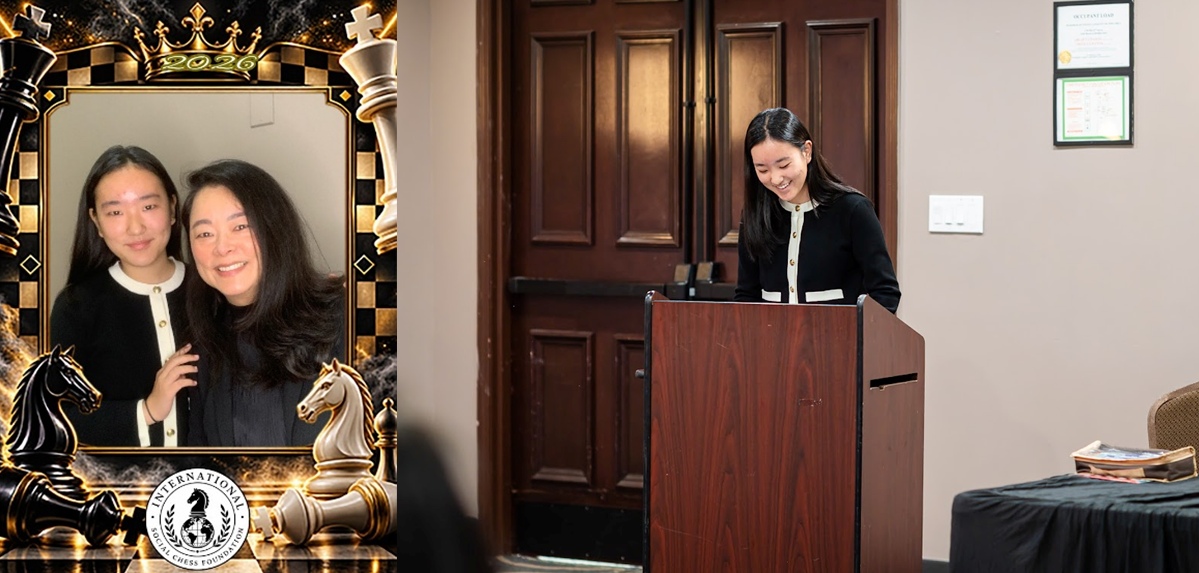
Throughout the tournament, Kristen’s mother, Linda Hou, saw how chess had shaped her daughter’s character, building discipline, confidence, and resilience. With her mother’s full support, Kristen founded the International Social Chess Foundation (ISCF), a registered 501(c)(3) non-profit organization, in December 2025 (www.isocialchess.org). This led to the creation of the World Youth Leadership Forum – the first-ever international initiative designed to bring young people together from around the world through chess, education, and cultural exchange.
On August 12, 2026, representatives from the United States, Switzerland, Romania, Ukraine, and El Salvador gathered to discuss developing leadership skills, share ideas to foster chess in society and education, and build meaningful global connections in an inclusive and supportive environment.
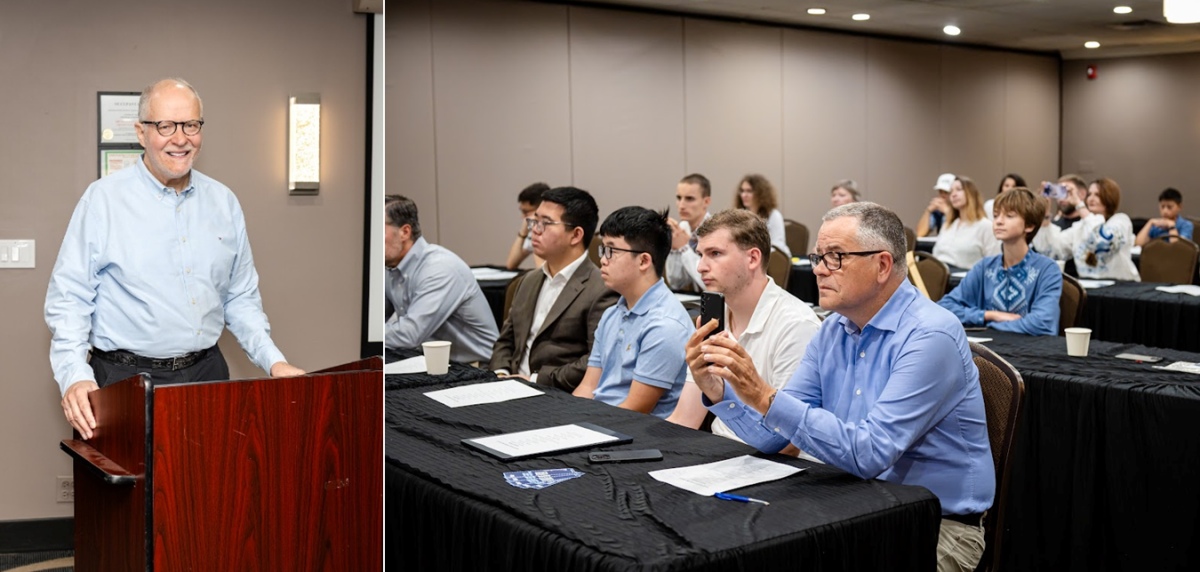
The keynote speaker was Paul Vallas, former superintendent of four United States cities and CEO of both the Chicago Public Schools and the School District of Philadelphia. Mr. Vallas has dedicated his career to public service and educational leadership.
During his tenure with Chicago Public Schools, he brought chess education to dozens of schools across the city. He shared insights on the role of chess in today’s technological world and its potential to foster international cooperation, especially among young people.
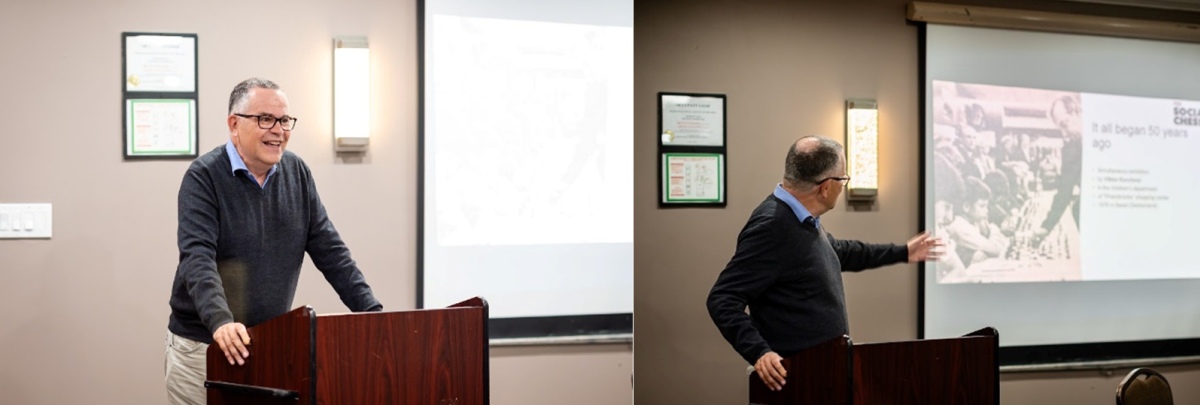
André Vogtlin, President of the Swiss Chess Federation and Chair of the FIDE Social Commission, shared eight leadership tips for young leaders:
- Accept the challenges that come to you.
- Delegate! Delegate! Delegate!
- Ask a lot of questions before deciding, but then decide!
- Things will often be bigger than you. Try to detach from problems, challenges, and criticism.
- Don’t be bossy with your team! Listen to them and let them work. Intervene only when real problems arise.
- Have your meeting rituals. Say “Thank you!” Communicate in a timely, concise, and bulleted manner.
- Believe in the purpose of your projects and job assignments! Leadership will be much easier.
- Go for it and see where you land!
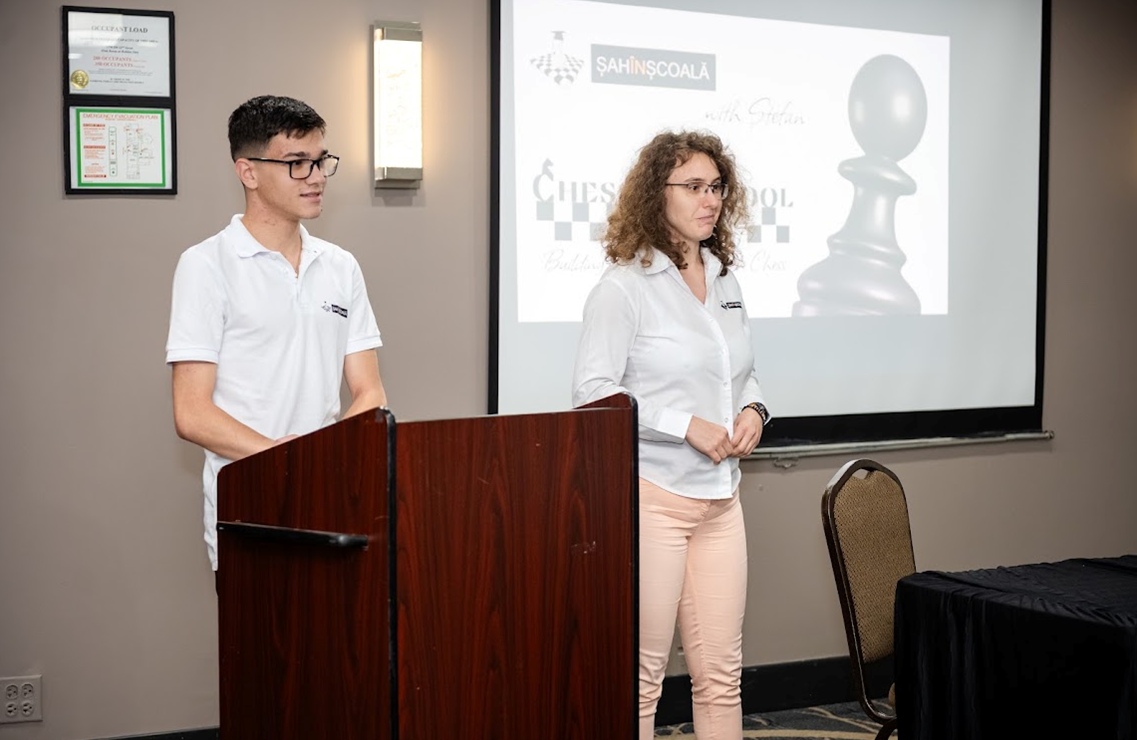
Dariana Didiliuc and Ștefan Cotei from Romania shared details of the Chess in Schools project, where 37 out of 42 counties, representing more than 150,000 students, participate in one of the largest worldwide educational chess projects.
“We want every child, regardless of where they live or their background, to have the opportunity to experience everything chess can offer.”
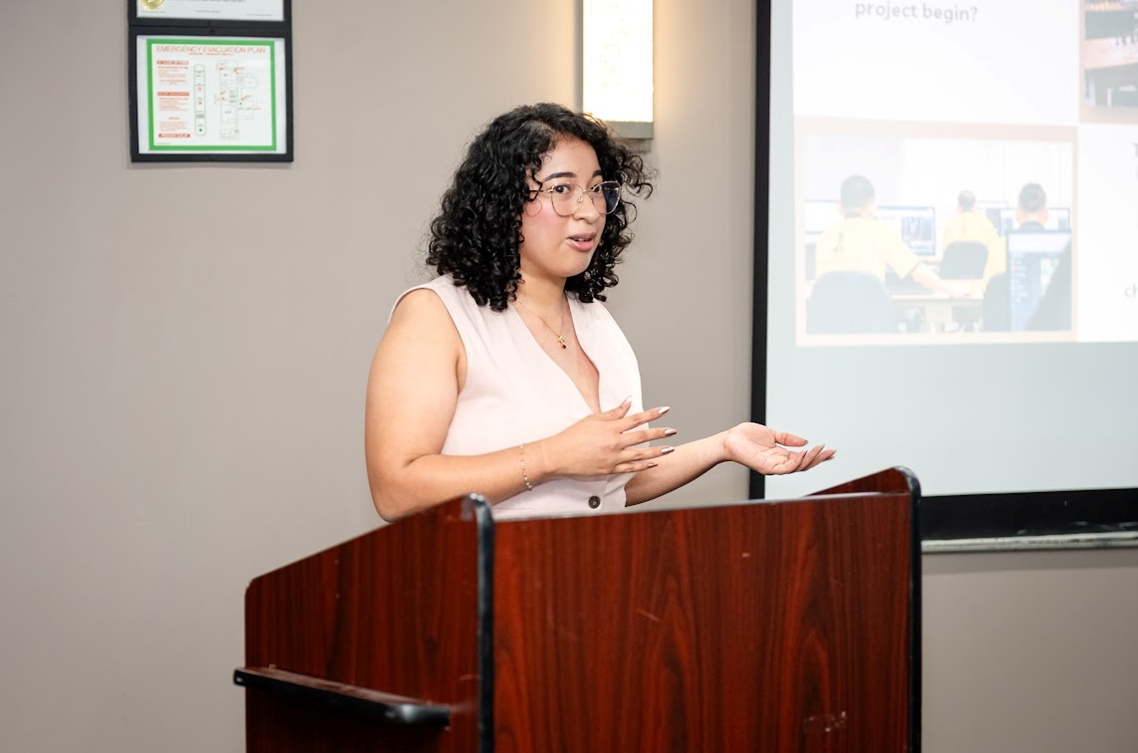
Alejandra Zavala from El Salvador discussed the Chess for Freedom (chess in prisons) project, which she has been involved with since its inception in 2021. The initiative is now an important part of the “Plan Cero Ocio” by the Government of El Salvador. The project’s current focus in the country is to:
- Expand chess programs to more inmates—men, women, and youth—across the country.
- Include inmates’ chess teams in in-person and online chess events.
- Provide educational resources to inmates who have discovered a passion for teaching chess.

Florent Vogtlin, President of the Chess Club in Muttenz, Switzerland, stated that in just two years, the club went from the edge of closing to a lively, growing community. New faces show up every session, and the average age has dropped sharply.
This was the result of replacing classical games with faster, more social formats, including blitz and rapid events. A “Chess to Go” initiative even brought the club to a local café.
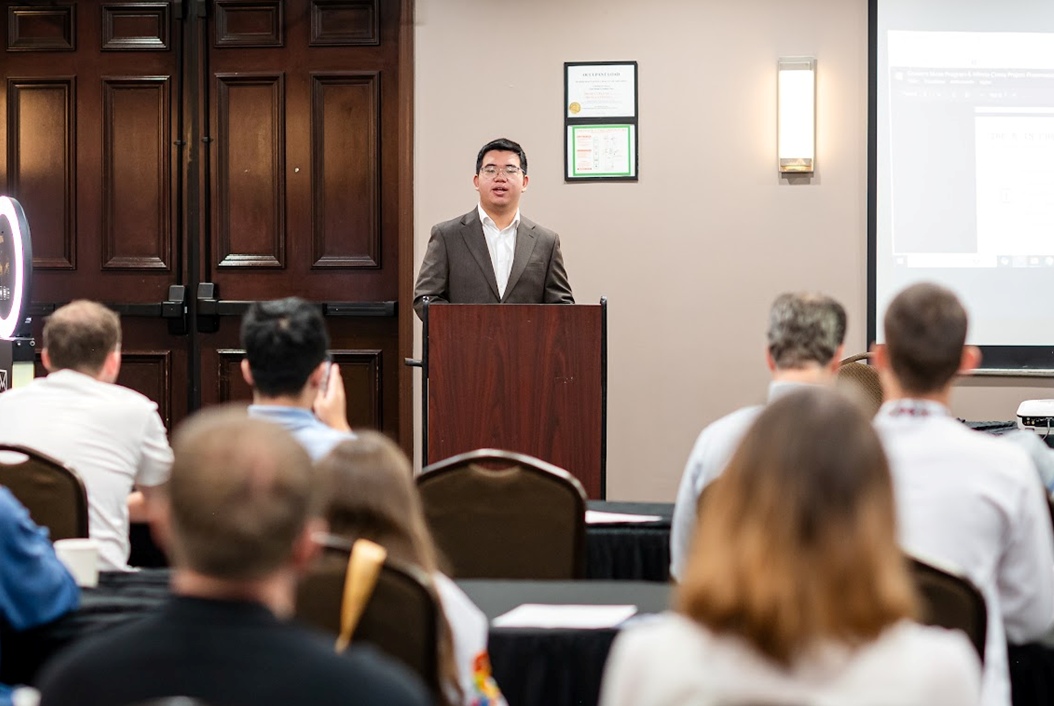
Jonathan Chen from California founded the Infinite Chess project for children with autism. He and his sister co-founded a non-profit organization that has raised over $125,000 to support various chess projects in the United States and worldwide.
A highlight of the day was the presentation by two deeply moving speakers from Ukraine: Danylo (12) and Esmeralda (11), who shared their experiences using chess as a rehabilitation tool during wartime in their home city of Odesa.
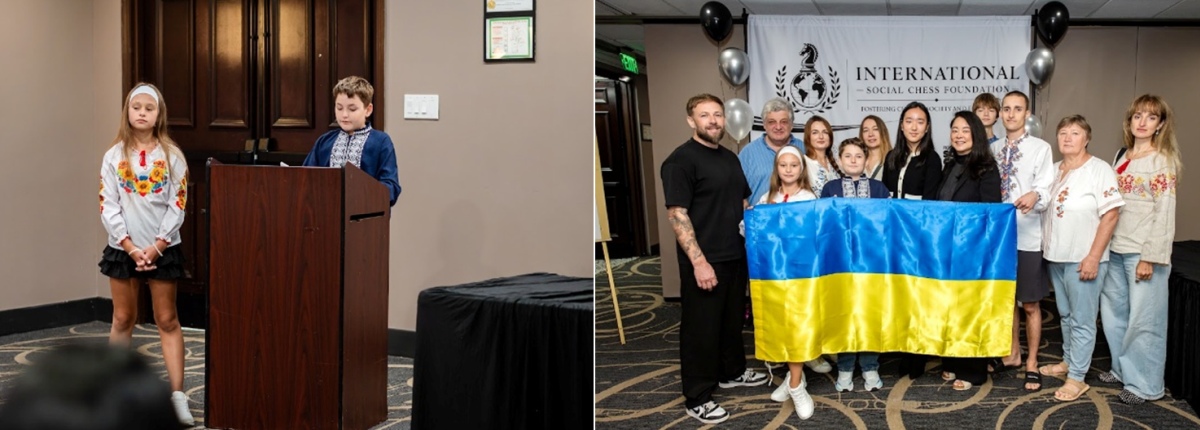
“Every game teaches me to think, make decisions, be patient, and never give up,” said Danylo. “Sometimes we wake up at night because of air raid sirens, and sometimes we have to spend several hours in bomb shelters. In moments like these, chess comes to our aid.”
Both Danylo and Esmeralda added: “We hope that after this week’s events in Chicago, you will remember not only our games, but also Ukraine – a country where, even in difficult times, children do not lose hope, continue to grow and learn, and look to the future with confidence.”
International Chess Organizer Dr. Mikhail Korenman, who alongside International Chess Organizer Jeff DiOrio, works on the International Youth Forum and Intercontinental Scholastic Chess Tournament, concluded the first International Youth Forum with a thank-you note to all participants. He emphasized that while this was the first-ever Youth Forum, it will not be the last.