

Policymakers, educators, researchers, chess leaders and social innovators from around the world gathered in Samarkand for the FIDE Summit on Chess in Education, one of the flagship events of the 2026 FIDE Year of Chess in Education.
Held during the 46th FIDE Chess Olympiad and Congress, the Summit brought together experiences from countries at very different stages of integrating chess into education – from established nationwide programmes to emerging initiatives – around one central idea: chess can be much more than a competitive sport. Used effectively, it can become an accessible educational tool for developing concentration, critical thinking, decision-making, creativity and other skills that extend well beyond the chessboard.
The opening segment of the Summit featured addresses by FIDE Interim President Viswanathan Anand, Deputy Minister of Preschool and School Education of the Republic of Uzbekistan Farkhod Bokiyev, and President of the International School Chess Federation Timur Turlov.
Chess as a tool for learning
Drawing on his experience with chess education programmes in India, Anand recalled an initiative launched around 25 years ago to introduce chess in schools and study its impact on children.
After several years, feedback from teachers suggested that students exposed to chess had become more confident when approaching complex subjects such as mathematics and science. Anand also recalled being struck by the confidence and sophisticated vocabulary of young children participating in the programme. For the five-time World Champion, however, the value of chess education is not limited to measurable academic outcomes.
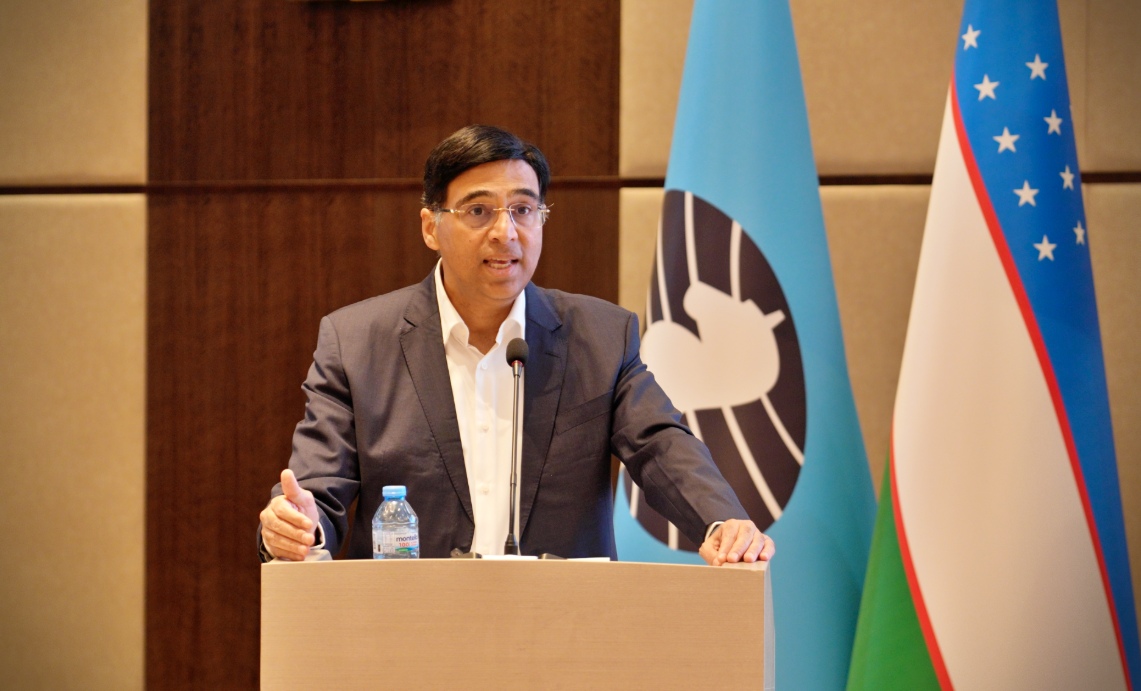
“We shouldn’t lose track of the fact that playing chess is fun,” Anand said. “You can’t take a move back. You have to make a decision. You have to choose a move. You have to critically evaluate yourself. All these skills are taught in a pleasant, fun way through chess,” he said
Anand also stressed that there can be no single model for Chess in Education. Drawing on India’s experience, where individual states have their own education policies, he argued that programmes must be adapted to local circumstances while countries continue learning from one another.
Uzbekistan: investing in chess means investing in human capital
Representing the host country, Farkhod Bokiyev presented Uzbekistan’s efforts to develop chess across preschool and school education.
According to figures presented at the Summit, more than 100,000 students, including 70,000 girls, are involved in chess clubs across the country. Specialized chess classes have been established in more than 100 schools, while since 2024 an annual chess championship has also been organised for preschool children aged five to seven.
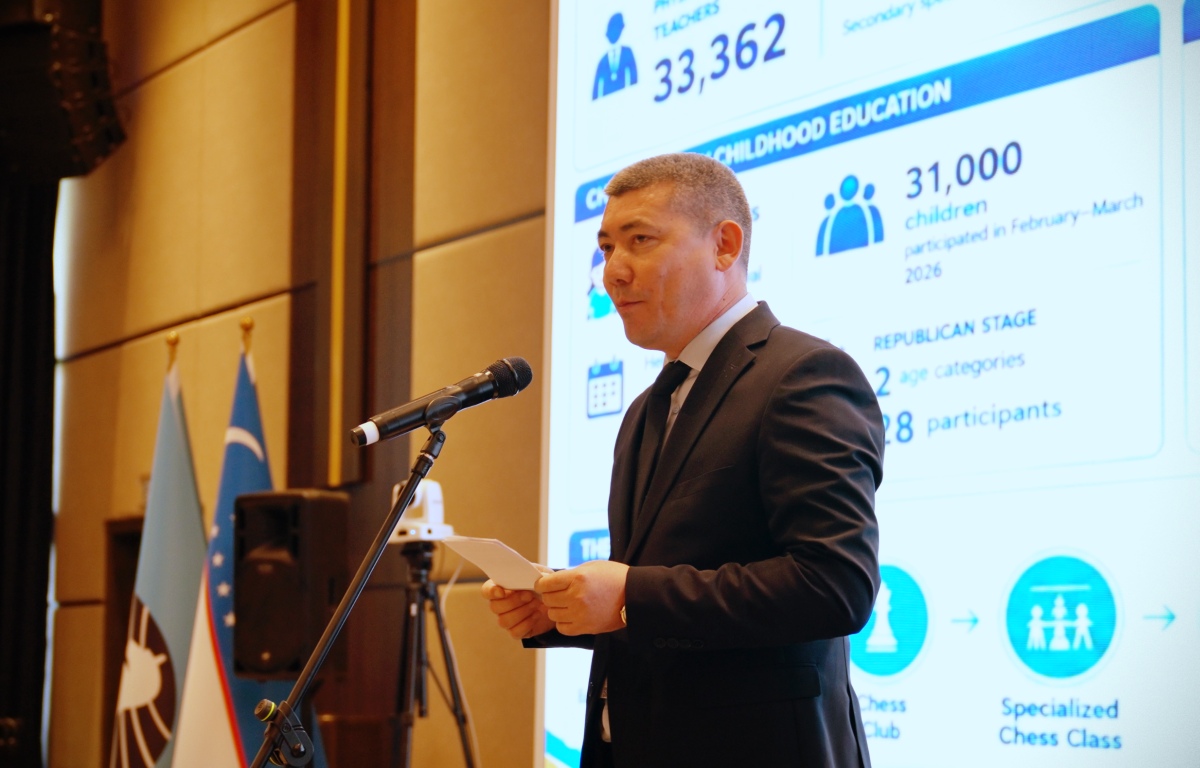
The long-term ambition, Bokiyev explained, is to transform chess from a popular activity into a continuous system of intellectual development – giving children an opportunity to discover the game, identifying talent early and creating conditions for further development.
He described chess as a universal language in which knowledge, thinking, hard work and skill matter more than nationality, language or social background.
“We consider every investment in chess, first and foremost, an investment in human capital,” Bokiyev said.
A child sitting at a chessboard today, he noted, may become tomorrow’s scientist, engineer, entrepreneur or community leader.
Building systems that can grow
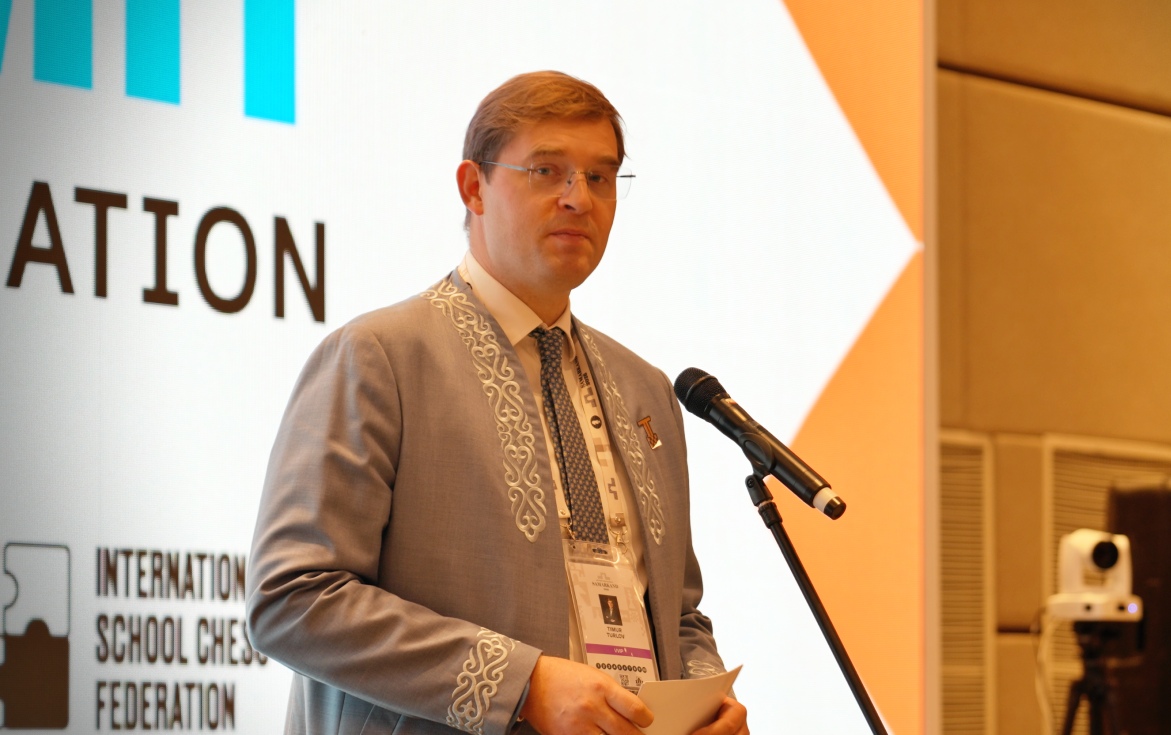
ISCF President Timur Turlov focused on the importance of making educational chess systematic, sustainable and scalable.
He pointed to Uzbekistan as an example of a country taking a long-term approach to chess and shared Kazakhstan’s experience of rapidly expanding its own school programme. Turlov said a pilot that began with 42 schools in 2023 has since expanded to around 2,500 schools, alongside extensive teacher training.
He highlighted another challenge facing modern education: the increasing difficulty children have maintaining concentration in an environment dominated by smartphones, social media, short-form video and digital entertainment.
“Chess is a quite unique subject because it helps kids to slow down, calm down and enjoy concentration,” Turlov said.
He stressed that the objective is not necessarily to produce professional chess players. Instead, chess can help children develop skills they can later use as engineers, doctors, developers or in other fields.
Turlov also emphasised the accessibility of chess: equipment is relatively inexpensive, the basic rules can be taught widely, and programmes can reach children in both urban and rural areas.
During the opening segment, Turlov also announced Donald Rojas Fernández as Vice President of the International School Chess Federation.
Recognising impact through education
The first part of the Summit also celebrated individuals and organisations already using chess to create educational opportunities.
The ISCF Impact Awards recognised initiatives supporting girls through chess and education. Honourees included Karandeep Singh Kapany, Regional Marketing Director for India and South East Asia at Duolingo, for expanding opportunities through the Duolingo Dreamers initiative, and H.E. Dr. Auxillia Mnangagwa, First Lady of Zimbabwe, for advancing opportunities for girls through education and chess.
Seven 2026 FIDE Year of Chess in Education Awards followed.
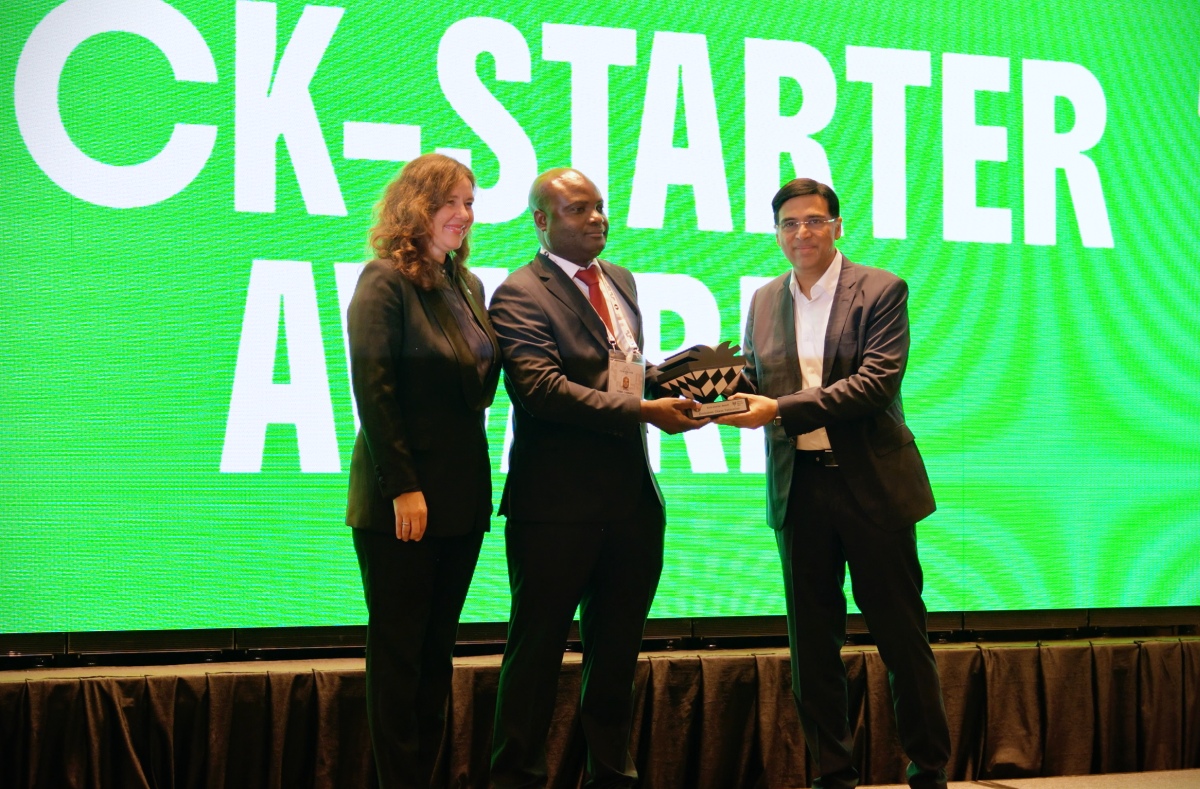
John Foley received the Educator of the Year Award; the Catalan Chess Federation received the Presidential Award; Zimbabwe received the Kick-starter Award; the Armenian State Pedagogical Institute received the Academic Vanguard Award; Prof. (Dr.) Achyuta Samanta received the Education Philanthropic Award; the Ministry of Sport of Costa Rica, represented by Donald Rojas Fernández, received the Visionary Opening Move Award; and Freedom Holding Corp., represented by Timur Turlov, received the Chess Capital Award.
From discussion to action: Barbados partnership
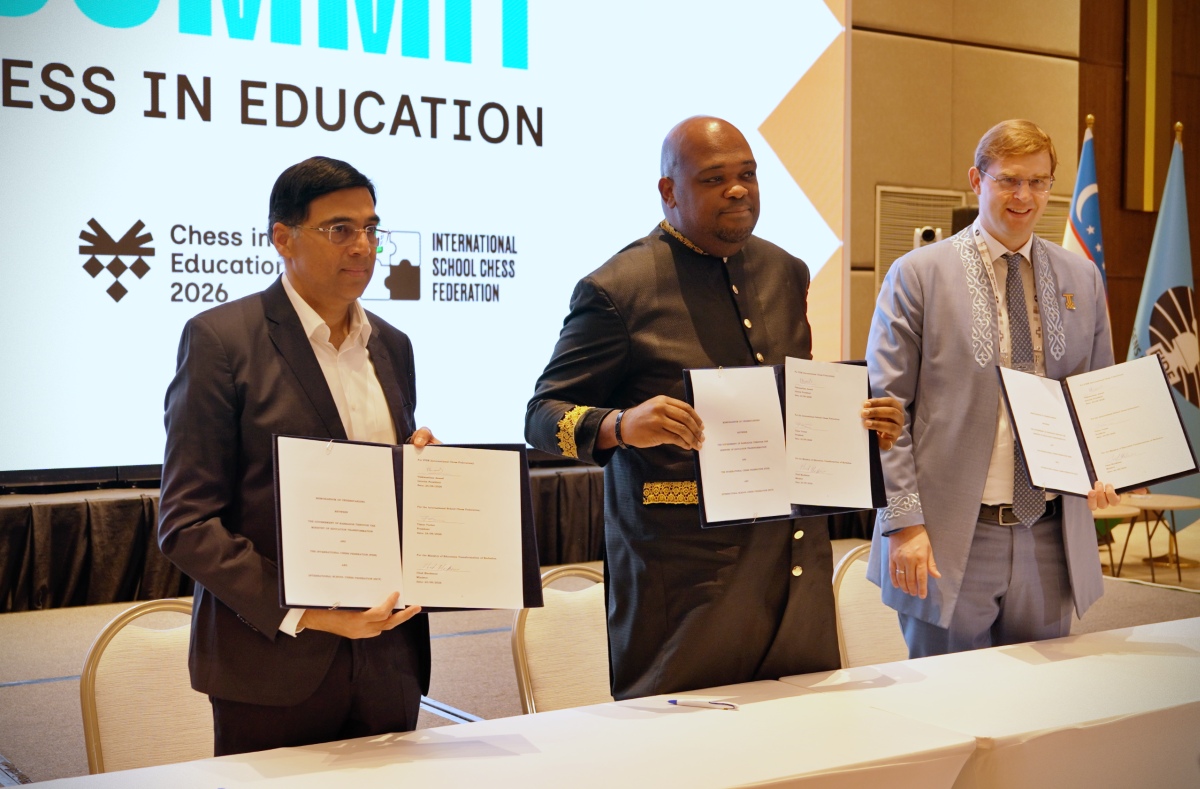
The Summit also translated its discussions into concrete commitments. FIDE, the International School Chess Federation and the Ministry of Educational Transformation of Barbados signed a Memorandum of Understanding aimed at integrating chess into Barbadian schools.
The agreement, signed by Viswanathan Anand, Timur Turlov and Barbados Minister of Educational Transformation Hon. Chad Blackman, focuses on cooperation in areas including curriculum integration, teacher training and international competition, with chess used to support skills such as critical thinking and problem-solving.
The partnership reflected one of the Summit’s recurring themes: successful Chess in Education programmes require cooperation between chess organisations, governments and educators rather than isolated initiatives.
Global perspectives on Chess in Education
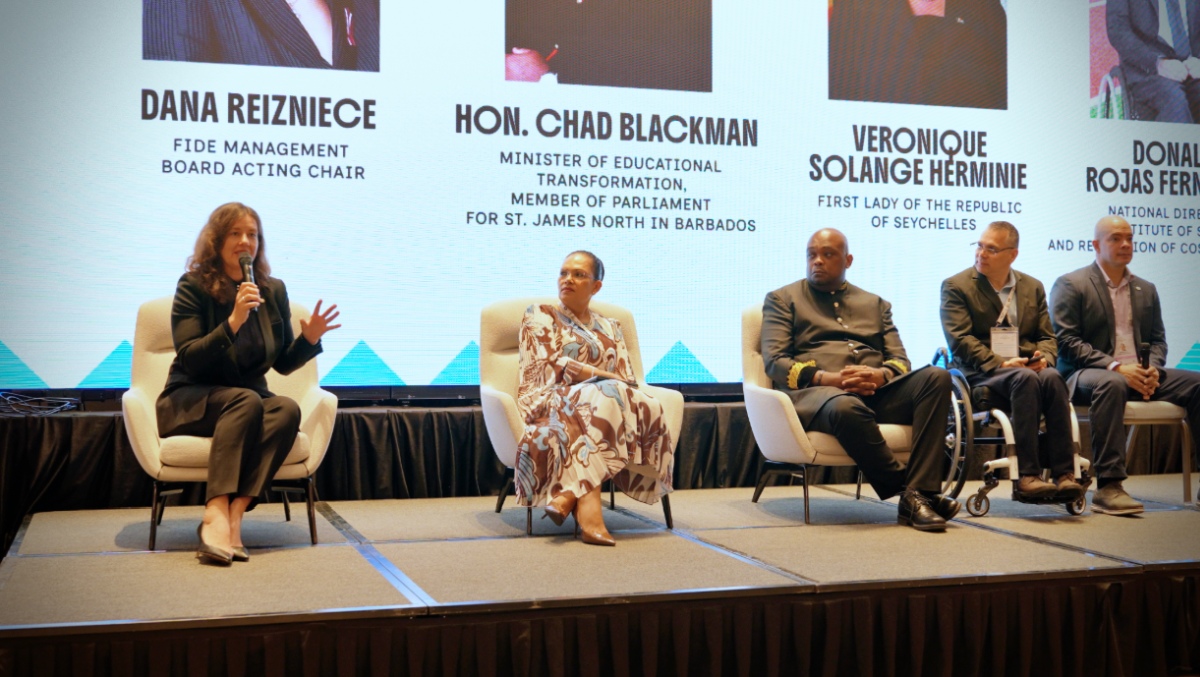
A high-level discussion then brought together Dana Reizniece, Acting Chair of the FIDE Management Board; Hon. Chad Blackman; Véronique Solange Herminie, First Lady of Seychelles; and Donald Rojas Fernández of Costa Rica, connecting Chess in Education with broader questions of public policy, social development and international cooperation.
Herminie placed education within the wider framework of the UN Sustainable Development Goals, including quality education, health and well-being, poverty reduction and gender equality. She stressed the importance of partnerships and creating safe spaces for learning and stronger communities.
Rojas Fernández described how Costa Rica’s understanding of chess had developed beyond sporting results and medals towards its potential as an educational and social tool.
The country’s long-term ambition, he explained, is to progressively bring chess into schools, homes and communities, helping children develop their ability to think, make decisions and solve problems.
“It is a long-term vision: from the school to the family, from the family to society, and from there towards greater development of our country,” Rojas Fernández said.
How FIDE can support national programmes
Reizniece used the discussion to outline how FIDE can help national federations and governments develop sustainable Chess in Education programmes.
She highlighted several areas of support: advocacy and engagement with governments, teacher training, educational materials, research and data analysis, international awareness and seed funding for programmes in their early stages.
According to Reizniece, FIDE has already conducted more than 150 teacher-training sessions in over 40 countries, reaching almost 3,000 teachers.
One of the key developments is a greater emphasis on training schoolteachers themselves rather than relying solely on chess coaches. The aim is to provide teachers with practical classroom tools and show how chess can support learning in subjects ranging from mathematics and programming to languages.
Research also plays an increasingly important role, she stressed, helping policymakers understand where programmes are succeeding, where gaps remain and which approaches can be scaled.
Reizniece summed up the philosophy behind FIDE’s educational work in one sentence: “Every move matters and every lesson counts.”
Rahul Bose: “People in sport transform people”
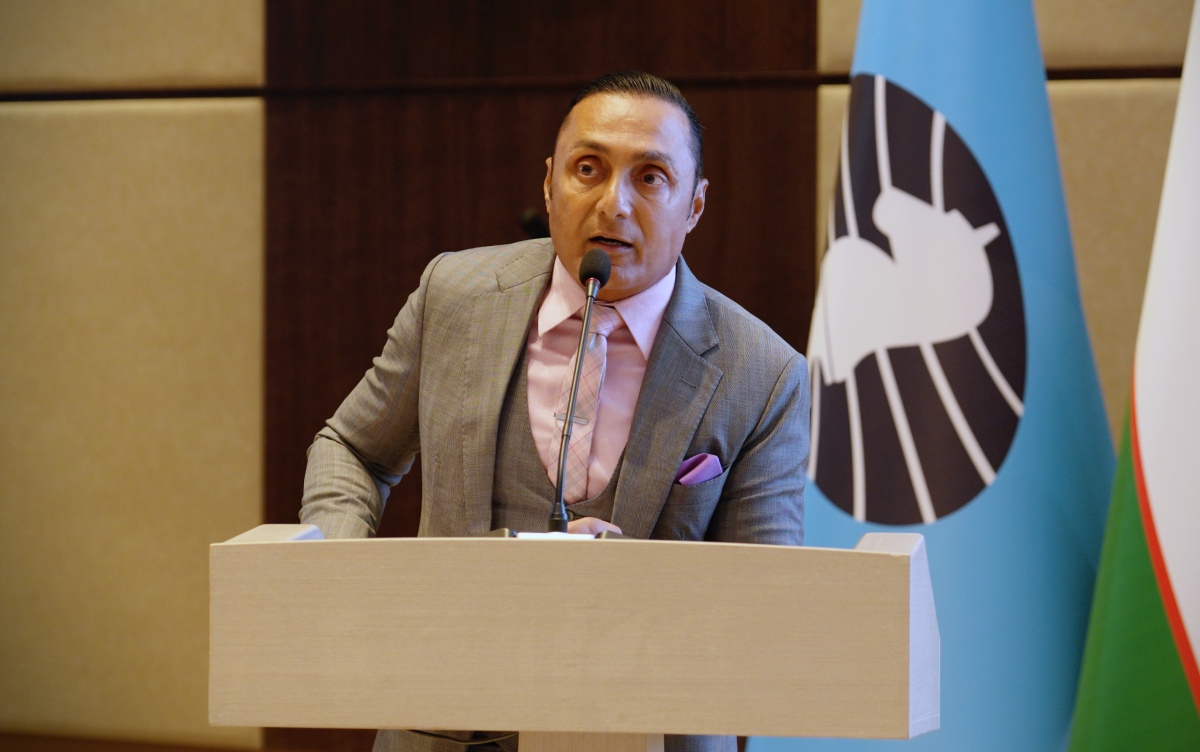
Indian actor, director, philanthropist and former international rugby player Rahul Bose delivered one of the most personal contributions of the opening programme with his keynote, “How Sport can be Transformative for Athletes at the Bottom of the Pyramid.”
Bose challenged the assumption that sport automatically changes lives.
“Sport doesn’t transform people. People in sport transform people,” he said.
To illustrate the point, Bose recalled approaching Anand in 2010 while raising funds to educate children from disadvantaged and remote communities in India.
Anand offered his gold medal from the 2008 World Championship in Bonn for auction. When Bose hesitated to accept something representing such an important achievement, Anand explained that playing chess itself mattered more to him than medals. He then offered another major trophy from his career.
Bose recalled Anand explaining that if those objects could help change children’s lives, that was what mattered.
The keynote broadened the discussion beyond chess. Drawing on his experience in Indian rugby, Bose described the barriers facing talented athletes from disadvantaged communities: inadequate nutrition, poverty, family pressures, lack of equipment, gender stereotypes and difficult home environments.
His message echoed a broader theme of the Summit: providing an activity is only the beginning. To create meaningful opportunities, the structures surrounding children must also support their development.
A second partnership closes the opening block
At the conclusion of the first part of the Summit, another institutional partnership reinforced the shift from discussion to implementation.
FIDE, the Kalinga Institute of Industrial Technology (KIIT) and the Kalinga Institute of Social Sciences (KISS) signed a Memorandum of Understanding aimed at expanding Chess in Education initiatives across the institutions.
The partnership was connected with the recognition of Prof. (Dr.) Achyuta Samanta, founder of KIIT and KISS, with the FIDE Education Philanthropic Award, honouring his contribution to creating educational opportunities for disadvantaged and underserved young people.
As Dr. Samanta was unable to attend the Summit in person, the award was accepted on his behalf by Dwiti Vikramaditya, Vice President of KIIT University.
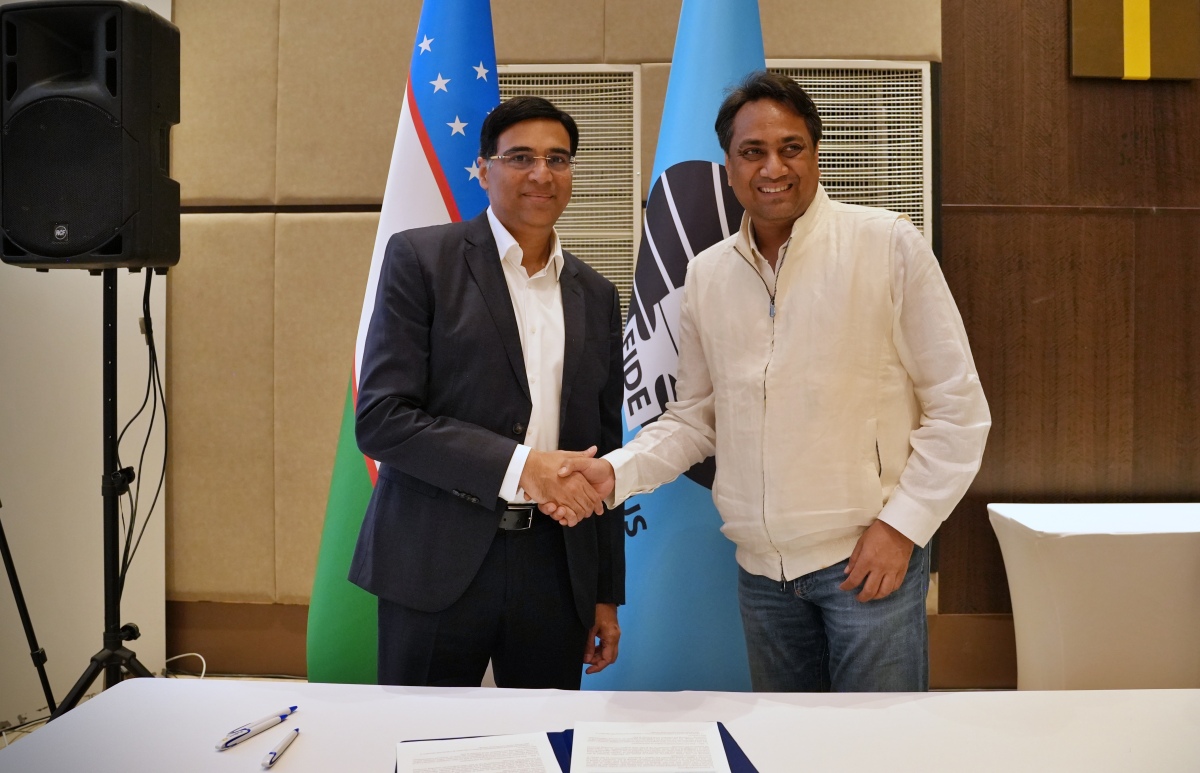
The signing provided a fitting conclusion to the opening block: alongside discussion of what Chess in Education can achieve, new partnerships were being established to put those ideas into practice.
Innovation, research and practical experience
The Summit continued with Education Innovation Lectures, moving from high-level policy and partnerships towards practical implementation, research and educational methodology.
The programme explored how to make chess engaging and enjoyable for every child, how chess can support refugees and conflict-affected communities, FIDE EDU’s journey in Chess in Education, the role of the 64 squares in inspiring learning and community connections, and the findings of the 2026 Chess in Education Global Survey.
Speakers included Anzel Laubscher, Magnus Wolfe Murray, Rita Atkins, Abel Talamantez, George Chitiyo and Nadzeya Krauchuk. The official Summit programme describes the event as a platform for sharing best practices, research on the cognitive and social benefits of chess, global participation data, and approaches to using chess to support academic and life skills.
Past, present and future
The final part of the Summit, “Past, Present and Future of Chess in Education,” brought together practitioners representing different stages in the development of educational chess.
The Past panel focused on established programmes and lessons from long-running initiatives, with Arpine Lputyan, Darmen Sadvakassov and Ramon Chalmeta.
The Present explored the challenges facing new pilot programmes through the experiences of Mauricio Arias Santana, Mads Jacobsen and Ton That Nhu Tung.
Finally, the Future looked at the growing role of higher education and non-profit organisations, with Prof. Katerina T. Frantzi, Leontxo Garcia and Dilda Nauryzbayeva.
Together, the day’s discussions, awards and new partnerships reflected how far Chess in Education has developed – from individual initiatives to teacher-training systems, academic research, government programmes and international cooperation.
The challenge ahead is not simply to put more chessboards into classrooms but to build sustainable systems around them: trained teachers, appropriate curricula, research, institutional support and partnerships adapted to each country’s educational environment.
In a year dedicated to Chess in Education, the Samarkand Summit demonstrated a shift from ideas to implementation – and from individual projects towards a global network working to make chess an accessible educational tool for children around the world.
Written by Angelika Valkova