

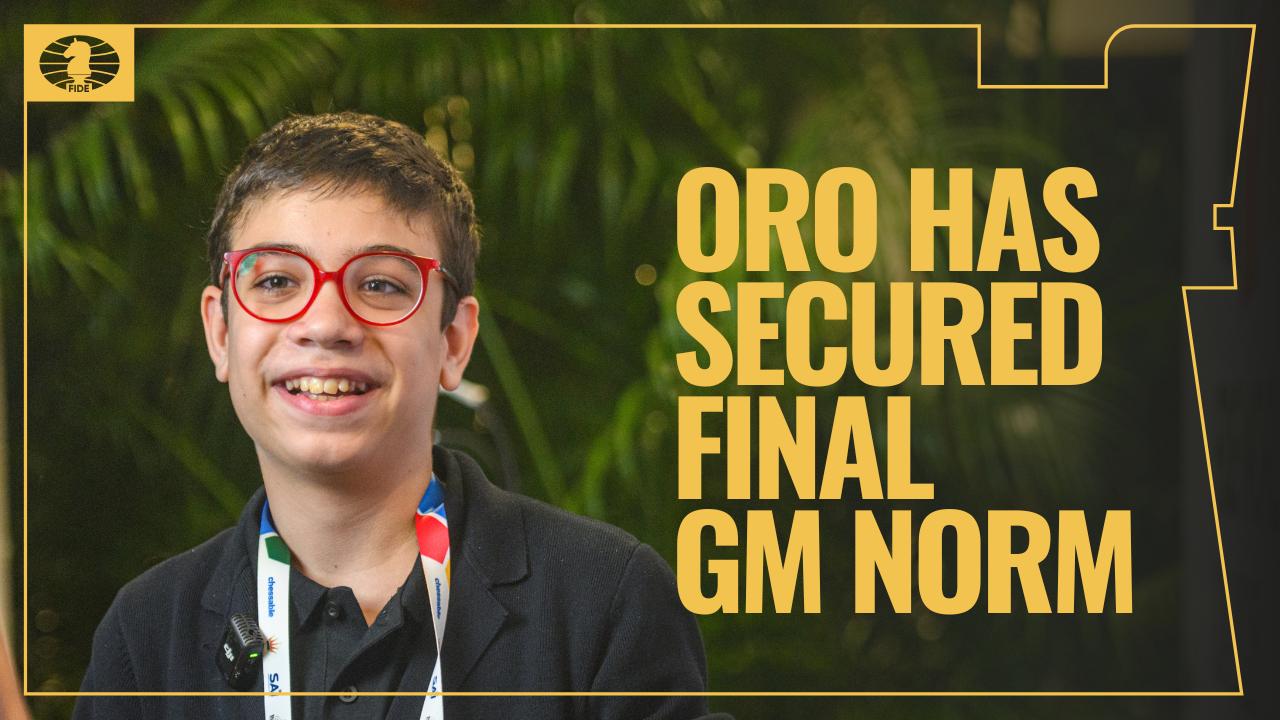
Faustino Oro, often hailed as the “Messi of chess,” achieved a historic milestone in his chess career, becoming the second-youngest Grandmaster in history.
Born on October 14, 2013, in Buenos Aires, Argentina, Faustino was introduced to chess at the age of six by his father – a chess enthusiast and active member of the local chess community. This happened during the early months of the COVID-19 pandemic lockdown in May 2020. He quickly mastered the game’s fundamentals, displaying extraordinary talent, and soon began formal lessons – supplemented by online training sessions.
Faustino’s rapid ascent includes breaking multiple age-related records, such as the youngest player to achieve a 2300 rating, the highest-rated 11-year-old in history, and the youngest player to attain an IM norm (later broken by Ethan Pang). He was ten when he beat reigning world number one Magnus Carlsen in an online bullet game, in a clip that went viral within hours. Faustino became an IM at the age of 10 years, 8 months and 16 days (another record, later broken by Roman Shodzhiev). At eleven, he became the first under-12 in chess history to cross 2500, a rating reached by fewer than 200 active players in the world. In November of last year, at twelve, he became the youngest player ever to win a match at the FIDE World Cup.
In his pursuit of the coveted Grandmaster title, he cleared the first hurdle and achieved his first GM norm at the Legends & Prodigies 2025 tournament with an undefeated 7½/9 score, surpassing the 2500 rating mark along the way. His second norm came three months later on home soil in Buenos Aires, at the Magistral Szmetan-Giardelli, where he scored 5.5/9 and reached a 2516 rating.
At the Aeroflot Open 2026, Oro came at the striking distance of becoming the youngest GM in history, but lost a crucial final-round game and had to wait for another chance.
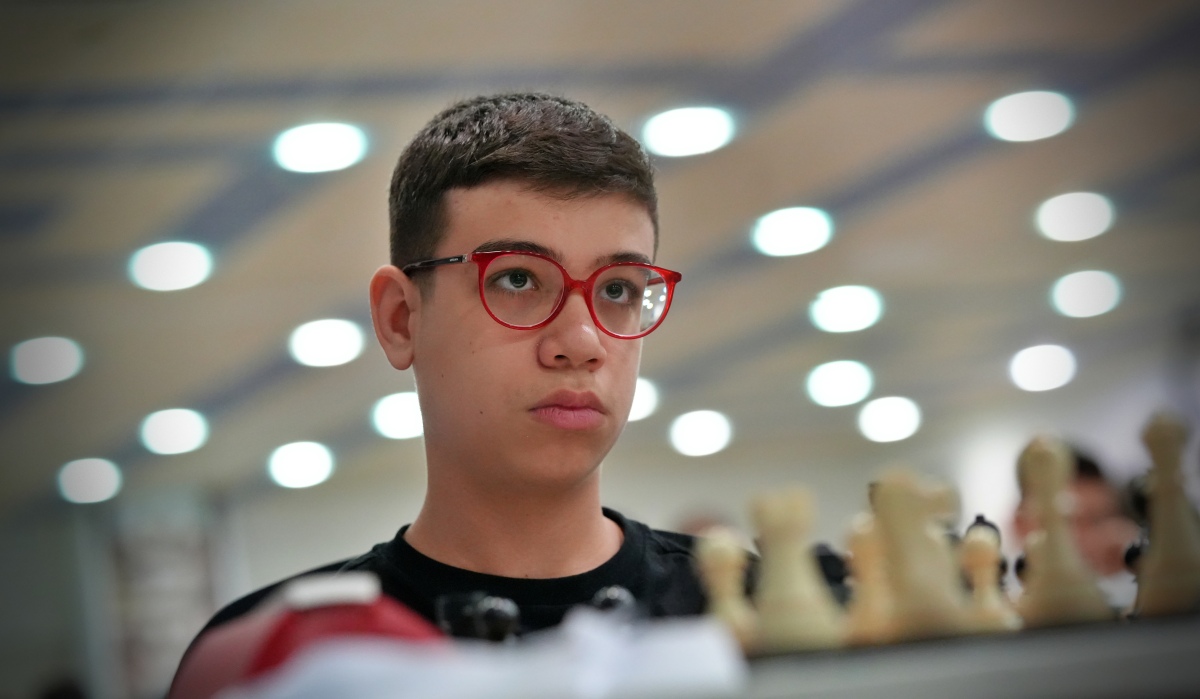
Faustino clinched his final norm at the Sardinia International Chess Festival, scoring 6/9 and finishing 16th.
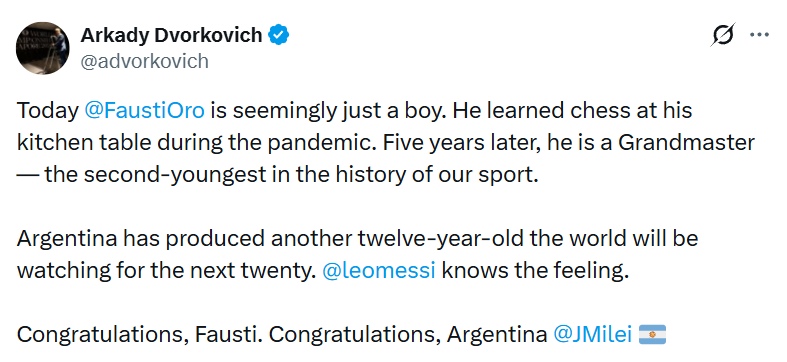
Oro’s meteoric rise has resonated across Argentina and South America, sparking a surge in youth chess participation. The president of the Argentine Chess Federation (FADA) described it as a “revolution,” highlighting its broad impact. As one of the world’s oldest chess federations (founded in 1922), FADA has long supported young talent through sponsorships, school programs, and partnerships such as its cooperation with SENAF. Faustino’s success exemplifies the effectiveness of these initiatives.