

2023 FIDE Online Zonal Council: Minutes

FIDE publishes the Minutes of FIDE Online Zonal Council Meeting which was held on December 14, 2023. FIDE Online Zonal Council Meeting Minutes (pdf)
Magnus Carlsen strikes back to win 2024 Chessable Masters

GM Magnus Carlsen powered through to win Division I of the 2024 Champions Chess Tour Chessable Masters on Wednesday. GM Alireza Firouzja took the first set of the Grand Final, impressively winning the first two games in a row, but the world number-one struck back in the second set. Carlsen won the match reset with a 2-0 sweep. It was Carlsen’s 14th victory in 17 CCT finals. He made $30,000, gains 100 tour points, and earns direct entry into both Division I of the next event and the live Finals at the end of the year. Carlsen was a favorite against his 13-years-younger opponent, as he would be against just about anyone. Carlsen won their only previous Grand Final encounter in the 2023 Julius Baer Generation Cup. Firouzja’s been in two Grand Finals but has yet to win one. Firouzja was in nearly full control in the first set. After the French number-one won the first two games back-to-back, the Herculean task of winning twice on demand was too much even for the former world champion. GM David Howell, commentating on the action during game one, said: “We couldn’t have hoped for a more exciting beginning to this game.” By quality of play and intrigue, it was the best of the first four games. Firouzja, with Black, sacrificed a piece for a wall of pawns. The two grandmasters played a perfect game for 41 moves, and just one slip, 41.Qf7?, lost the game for Carlsen after 41…h6! — cementing 99.1% accuracy in the game—made Firouzja’s king untouchable. Firouzja shocked the commentators and fans alike in game two by outplaying the world’s endgame maestro in the endgame. In hindsight, it’s easy to appreciate the way he activates his king from move 34 to 38 so that it becomes a leader in threatening checkmates. “He outplayed me completely,” said Carlsen about this game after the match. “He is just dominating Magnus Carlsen!” said Hess after the second win, while Howell concluded: “It’s one-way traffic right now.” Carlsen played the London System and won a nice rook endgame in game three, but he seemed to run out of steam in the fourth game. After he made a mistake, he himself offered a draw to throw in the towel. Carlsen later explained: “I just missed Be2 and I was kind of pissed about that and there were no winning chances, so I thought, it’s fine, I get White the next game, I start anew.” Then the Reset Match started. They sometimes say that you have to beat a grandmaster three times to win one game—meaning they keep fighting their way back in. From this perspective, Carlsen can be like the mythological Hydra—you cut off one head, two grow in its place. “I don’t know if he lost energy, if he got nervous, but it’s hard to keep it up,” said Carlsen after winning the next, and last, two games. The first game was the better one, where we were treated to a dynamic, opposite-sides castling position that arose from the Trompowsky Opening. A sharp middlegame turned into a winning endgame, which Carlsen converted with exceptional power. Firouzja was much better, and very close to winning, in the second game. But when Carlsen traded queens—still much worse—endgame magic happened. Firouzja’s best chance would have been 33.Rf1, but after drifting into an equal position, 37.Re4?? was the nail in the coffin. Carlsen needed just three moves to finish the game. There have been 32 CCT tournaments in total and Carlsen has won 18 of them. After this latest win, he started the interview with: “I really needed my extra life today, that’s for sure.” The former world champion, true to his nature, reflected: “It was not a sparkling event for me by any means, but it feels awesome to win.” Firouzja still pockets $20,000 and 80 tour points for reaching the Grand Final. He also gains direct entry to Division I of the next event, as does GM Vincent Keymer for winning Division II. There are just three more CCT events before the live Finals at the end of the year, and so the clock is ticking for everyone whose name is not Magnus Carlsen. Adapted from NM Anthony Levin’s report for Chess.com. To read the full report with game analysis, click here. The Champions Chess Tour 2023 (CCT) is the biggest online tournament of the year. It is composed of five events that span the entire year and culminate in live in-person finals. With the best players in the world and a prize fund of $1,700,000, the CCT is Chess.com’s most important event. For further info contact: Leon Watson Head of PR, Chess.comleon@chess.com+447786 078 770
FIDE Aid Package to Open Tournaments 2024
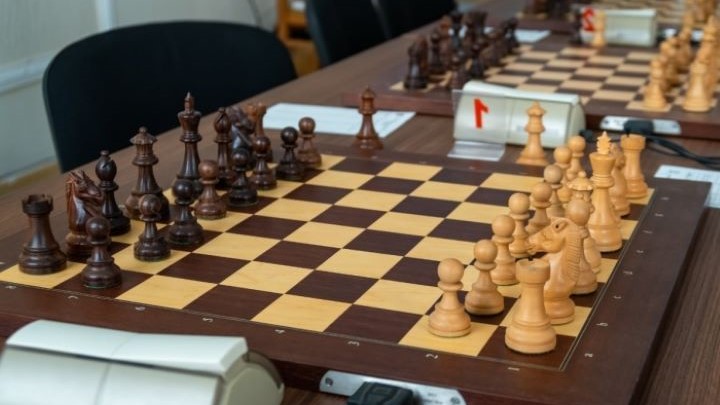
The FIDE Open Tournaments support project has enjoyed remarkable success in its first three years. Introduced during the challenging pandemic period, the initiative was met with widespread appreciation from organizers worldwide. It played a crucial role in helping many tournaments survive and supported chess professionals navigate through those difficult years. We have already received dozens of applications from organisers for the year 2024. Today, we are excited to announce the 2024 edition of the Open Aid Package Project, taking place in the historic year of FIDE’s 100th anniversary. Tournament organisers are invited to apply for the FIDE Aid Package 2024. They shall accept the conditions, meet the requirements listed below and fill out the application form. CONDITIONS & REQUIREMENTS An application for the Aid Package shall be sent to gsc@fide.com by 15 February 2024 The Aid Package cannot exceed 20% of the prize fund and 10% of the total budget indicated in the application form At least 10% of the total prize fund shall be allocated for women’s prizes and at least 5% of the total prize fund shall be allocated for Veteran’s prizes FIDE may require the tournament to establish the lower fees (or absence of fees) for the agreed categories of participants (veterans, youth, women, representatives of developing countries) Mention “Financially supported by FIDE Open Aid Project” shall be visible on tournament’s media resources (e. g. webpage, social media pages) FIDE may require FIDE and its sponsors to be reasonably represented at the tournament The Organiser is requested to fill out the following form (all the provided data will remain confidential). IMPORTANT: If the provided information does not match with the real data, the planned aid package can be decreased of fully cancelled. The Organiser is required to specify how exactly the Aid Package is supposed to be used (added to the prize fund, used for titled players invitations, other…) SELECTION CRITERIA Events with the classical time control shall be prioritised Event’s history Event’s strength Geographical location Amount of the prize fund and its distribution Fair Play measures The list of the selected Opens shall be announced by 20 February 2024.
Baadur Jobava wins 2024 Georgian Championship

Baadur Jobava is the new champion of Georgia. The 40-year-old native of Gali claimed his fourth national title after winning this event in 2003, 2007 and 2012. The Georgian Chess Championship 2024 took place from January 29 to February 7, 2024, in the country’s capital Tbilisi. A 10-player round-robin with classical time control brought together all the best Georgian players, including the defending champion Mikheil Mchedlishvili. The rating favourite Baadur Jobava (pictured above) and Luka Paichadze got off to a great start, scoring 3 points in the first four rounds. In Round 5, however, their paths diverged. Luka suffered a defeat at the hands of Giga Quparadze, while Baadur drew with the 2022 champion Levan Pantsulaia and took the lead. He then pulled away by notching up two consecutive victories in Rounds 6 and 7 and never looked back. Going to the final ninth round a full point ahead of Giga Quparadze and Mikheil Mchedlishvili, Baadur convincingly outplayed Luka Paichadze and took the title with an excellent score of 7/9. The champion became the only unbeaten player in the event. Nikolozi Kacharava (pictured above, left) pulled off a crucial last-round victory over Giga Quparadze and caught up with Mikheil Mchedlishvili (pictured above, right), who drew his game with Luka Kiladze. Both netted 5.5/7 and tied for second place, but silver goes to Nikolozi thanks to a greater number of victories. Final standings: 1 GM Jobava, Baadur 2591 7 2 GM Kacharava, Nikolozi 2523 5½ 3 GM Mchedlishvili, Mikheil 2569 5½ 4 GM Quparadze, Giga 2491 5 5 GM Gagunashvili, Merab 2562 5 6 GM Paichadze, Luka 2503 5 7 GM Sanikidze, Tornike 2449 4 8 FM Tsomaia, Nikoloz 2231 3 9 GM Pantsulaia, Levan 2561 3 10 FM Kiladze, Luka 2179 2 Photos: Georgian Chess Federation Facebook page Official website: gcf.org.ge
FIDE delegation meets with Pakistan’s President and PM
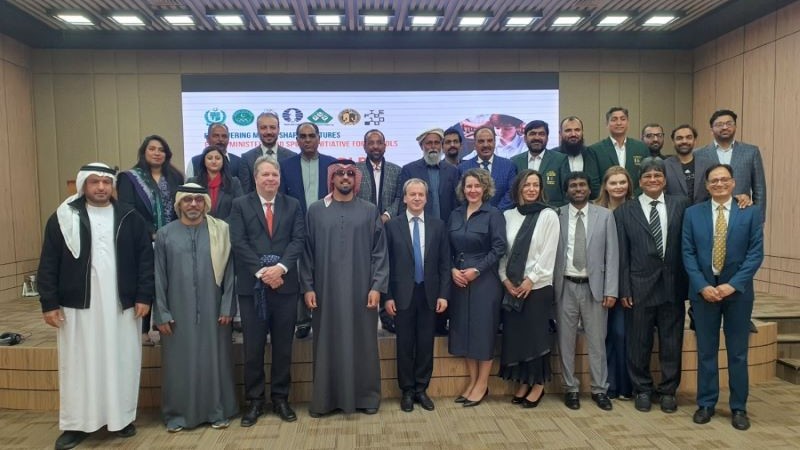
Pakistan’s government makes a strong push towards promoting chess, starting with 10,000 schools The delegation of FIDE, headed by President Arkady Dvorkovich, met with the President of Pakistan, Dr Arif Alvi, and Prime Minister Anwaar-ul-Haq Kakar on Friday in Islamabad for the launch of Pakistan’s National Mind Sports Initiative. Promoted by the government, the initiative aims to introduce chess and other activities in schools and to the public, fostering the development of mind sports in the country. During the meeting in Islamabad, FIDE officials and representatives of Pakistan’s chess federation discussed strategies to increase the popularity of chess in Pakistan. Currently, Pakistan’s top player, Mohamed Zohaib Hassan, has a rating of 2269. Recognizing the mental and educational benefits of chess and its positive impact on intellectual development, the government of Pakistan introduces chess into its educational system. Following the meeting, it was announced that Pakistan, with 236 million residents, will promote chess in the country, particularly at the grassroots level, through programs aimed at schools. FIDE, Prime Minister Anwaar-ul-Haq Kakar, and other Pakistani state officials discussed how this could be done, with a focus on the primary school level, modeling on FIDE’s successful project “Chess in schools,” implemented in many countries worldwide. As part of the mind games project, chess is to be introduced in 10,000 public schools across Pakistan, starting with 100 schools in Islamabad, the country’s capital. “Some 6,000,000 children in 10,000 schools in Pakistan will have the chance to get access to this game,” said Arkady Dvorkovich. He promised FIDE’s support in coaching teachers for the chess in schools initiative. FIDE’s Development Director Nigel Short and Secretary of FIDE’s Chess in Education Commission Rita Atkins continue to tour Pakistan with chess in schools lectures, simultaneous game exhibitions, and meetings with prison authorities in promotion of the Chess for Freedom project. Pakistan’s Prime Minister Anwaar-ul-Haq Kakar said he was happy that he made a commitment to this special cause, and he will also continue to support and promote this cause in the future. He added that every school in the country should have access to this game. Apart from Arkady Dvorkovich, FIDE’s delegation included Sheikh Sultan bin Khalifa Al-Nehayan (President of the Asian Chess Federation), Dana Reizniece-Ozola (Deputy Chair of FIDE’s Management Board), GM Nigel Short (FIDE’s Development Director), Hisham Al Taher, Secretary-General of the Asian Chess Federation, as well as Jauhar Saleem, Chief Patron of the Chess Federation of Pakistan. Late Mian Sultan Khan given Grandmaster Title Photo by unknown cameraman, 1932 The federal minister for inter-provincial cooperation, Fawad Hassan Fawad, noted the legacy of Mian Sultan Khan (1903–1966), a native chess player from Sargodha in northeast Pakistan, who won the British Chess Championship in 1929, 1932, and 1933. Arkady Dvorkovich presented Pakistan’s officials with the document awarding the title of Honorary Grandmaster to Mian Sultan Khan. A Punjabi chess player, and a citizen of Pakistan is thought to have been the strongest chess master of his time from Asia. Mian Sultan Khan, who beat some of the world’s top players despite growing up with little access to chess books and knowing next to nothing about the theory of chess, became the first Pakistani grandmaster.
14th “Preparation of Teachers” course announced
Dear chess friends, Save the dates: February 23-25, 2024, for our 14th edition of the “Preparation of Teachers” course – a golden opportunity to become a certified FIDE School Instructor. Conducted in English, this 3-day online course is designed to boost your teaching skills using chess as an educational tool. Learn innovative methods for the 4C’s (critical thinking, communication, collaboration, and creativity). Bonus: Successful candidates get lifelong access to OPENING MASTER PREMIUM chess databases. Read the detailed course description here. Presented by commission members Anzel Laubscher and Boris Bruhn, this course is perfect for teachers, chess educators, beginner and advanced players with basic chess knowledge, and anyone with experience working with children. To secure your spot, kindly complete and return this registration form. Registration closes on February 19, only 20 spots available! If you have any questions, please feel free to contact us at edu.courses@fide.com
Budapest gets ready for the 2024 Chess Olympiad
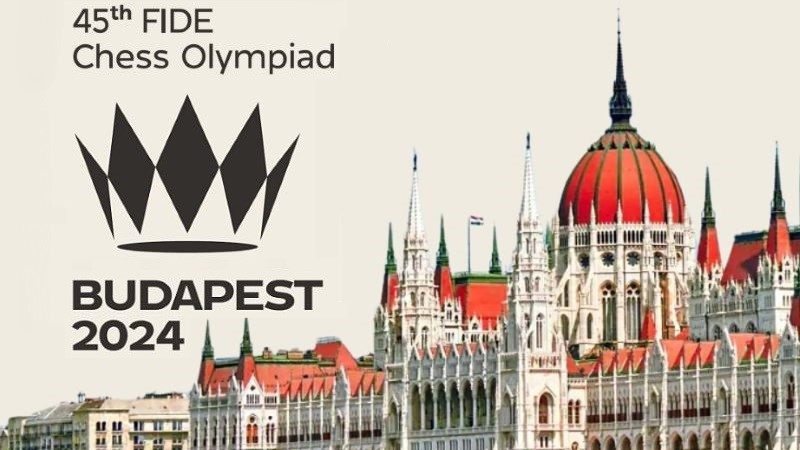
Budapest is set to proudly host the 2024 Chess Olympiad, a monumental event to take place from September 10 to 23. The highly anticipated 45th Chess Olympiad is bringing together acclaimed heavyweights and rising stars, promising a showcase of chess brilliance from top-tier players from all across the globe. The event will be another milestone in Hungary’s rich chess history. With 12 team medals from Chess Olympiads, Hungary is one of the most successful chess nations. Home to many great chess players, from Géza Maróczy to Andor Lilienthal and from Laszlo Szabo to Lajos Portisch, Andras Adorjan, Zoltan Ribli and Peter Leko, including the most recognizable Hungarian chess marvels – the Polgar sisters (Judit, Susan and Sofia) – it is no surprise that chess is at home in Hungary. Photo: Jorge Franganillo The Olympiad will take place at the BOK Sports Hall, one of Hungary’s most modern event centers that hosts over 120 events annually and can accommodate up to 10,000 people. In a historic move toward inclusivity, the 2024 Chess Olympiad will welcome a team of refugees, as officially approved by the United Nations High Commissioner for Refugees (UNHCR). This groundbreaking decision aims to promote diversity and support displaced individuals, reinforcing chess as a tool for positive change. As part of the event’s commitment to gender equality, the organizers and FIDE will seek to increase the participation of women’s teams. The Budapest Chess Olympiad will not only be a battleground for the world’s chess teams but will also feature other events, including cultural programs and events for children. Concurrently, the FIDE Congress will be hosted alongside the Olympiad, accompanied by marking 100 years since the formation of FIDE. “We are proud and happy that Hungary will play host to the 45th Chess Olympiad, given the country’s astonishing chess legacy and place in today’s chess world. It is also nice to see the Chess Olympiad return to Europe. The organizers, in collaboration with FIDE, aspire to make this Olympiad a memorable and inclusive experience for participants and spectators and make them truly feel like they are at home in Hungary,” said FIDE President Arkady Dvorkovich. “One of the best things in chess is that it’s international. Just like music, or love. The Olympiad brings us all together and tells us once again that chess is not just black and white. Owing to the sports strategy of our government, Hungary has become a professional host to a series of world events in recent years. It is an honour to have the Chess Olympiad in this line, and we’ll do our best to make it memorable for all our guests.” – added Dr Zoltán Polyánszky, President of the Hungarian Chess Federation. With a huge commitment from the Hungarian Chess Federation and the government, the Chess Olympiad 2024 promises to be a testament to Hungary’s chess legacy, welcoming players from around the globe to engage in the noble game of strategy and intellect. The registration portal will be launched soon and the organizing committee will start pre-registration of teams and Congress delegations. Logins and passwords for the registration portal access will be sent to the official e-mail addresses of national federations. The detailed registration will be available on the same website from March 10, 2024 Regulations of 45th Chess Olympiad (pdf)
Tickets for the 2024 Candidates tournament go on sale

FIDE is delighted to announce the launch of the official website of the FIDE Candidates Tournament and the FIDE Women’s Candidates Tournament. The event will take place in Toronto from April 03-23, 2024. Candidates.fide.com contains all the relevant information about the upcoming tournaments including the history of the event, player biographies as well as the schedule of the rounds. Once the tournament starts, the website will feature live games and commentary. The FIDE Candidates will be open to the public through a ticketing system. Starting today, tickets can be purchased online via the official website. The ticketing policy includes general admission tickets with access to the playing hall balcony and the fan zone and VIP passes, which also include the VIP room with drinks and snacks, a personalised experience and priority registration for side events. Besides, daily tickets and packages for all rounds of the tournament are available in all categories. For a limited time, chess fans can purchase coveted Candidates tickets at the special Early Bird pricing. This pricing will be in effect until midnight on February 15, Toronto time. Here are the Early Bird prices in Canadian Dollars (CAD): • General Admission, one day: $49 (Saturdays and Sundays $64) • All rounds General Admission package: $549 • VIP, one day: $169 (Saturdays and Sundays $199) • VIP Grand Package: $1999 More info about the FIDE Candidates and a link to the ticketing system at candidates.fide.com
20th International Solving Contest: Sharing the love for chess art
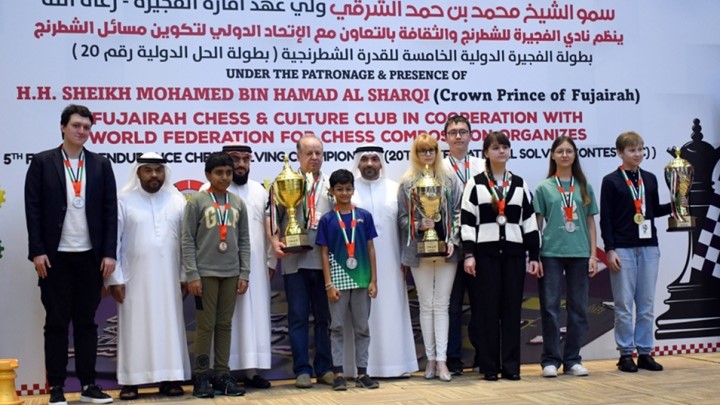
The 20th International Solving Contest 2024 brought together 669 solvers from 46 countries. Although located in more than 40 different cities around the world, participants ranging in age from 5 to 84 competed simultaneously with each other while solving the same problems and endgames. It was the 20th anniversary of the competition established to promote chess art and unite people from faraway countries. Under the supervision of the World Federation for Chess Composition, the ISC couldn’t have happened without without the unwavering dedication of numerous volunteers, from the main organizing team up to all the local controllers across different cities. ISC in Cluj-Napoca, Romania The project based on dedication of many volunteers The ISC project was conceived and created by the late Grandmaster of Chess Composition, Uri Avner (1941-2014). Among all the volunteers who have contributed over the last 20 years, Axel Steinbrink from Germany deserved the most recognition for the ISC’s success. Most often, he served as ISC Central controller, involved in the selection of compositions for participants to solve. He communicated with local controllers before and after the competition, checked the solving sheets, compiled final reports, and handled other essential tasks. One of the most challenging responsibilities is supervising thousands of solving sheets in different languages. When Axel stepped down from these duties last year, a whole new team of volunteers emerged to help the ISC. Arvydas Mockus (pictured below) from Lithuania assumed the most demanding role of ISC Central Controller; Bohumil Moravčik (Slovakia) accepted to be the main selector of compositions, while Luc Palmans and Andy Ooms (Belgium) checked the solving sheets from the 1st and the 2nd Category. As in the previous ten editions, Borislav Gadjanski (Serbia) diligently created and administrated the daily presentation of results on the Mat Plus website. Those are the devotees who deserved the most applause for the ISC 2024. The Solving Contest produced some surprises, the biggest ones sprang by the “old guard”. The 1st category event, designed for the most experienced solvers, ended in victory for former World Champion Andrey Selivanov (56), ahead of the current World Champion Danila Pavlov (22). The 3rd place went to another former World Champion, John Nunn (69), and the 4th went to another senior, Valery Kopyl (67). The 15-year-old prodigy Anna Shukhman proved her dominance among women. ISC 2024 in Le Vesinet, France Category 1 winners Rank Name From Points Time Overall 1 Andrey Selivanov FID 60 237 2 Danila Pavlov FID 56 240 3 John Nunn GBR 55 216 Women 1 Anna Shukhman FID 42 240 2 Irine Kharisma Sukandar INA 17,5 240 3 Daria Dvoeglazova ISR 13 230 Juniors 1 Danila Pavlov FID 56 240 2 Ural Khasanov FID 53 240 3 Kevinas Kuznecovas LTU 51 217 Seniors 1 John Nunn GBR 55 216 2 Valery Kopyl UKR 53 238 3 Roland Baier SUI 50,5 233 Category 2 (solving rating below 2000) saw another kind of surprizing domination, with female solvers taking 3 out of the top 5 places. The winner is Nadezhda Ilchenko, ahead of Dejan Omorjan and Alexandru-Vasile David, followed by two young girls, Anastasiya Chekina and Viktoriya Merkulova. Category 2 winners Rank Name From Points Time Overall 1 Nadezhda Ilchenko FID 57 240 2 Dejan Omorjan SRB 50 240 3 Alexandru-Vasile David ROU 49 207 Women 1 Nadezhda Ilchenko FID 57 240 2 Anastasiya Chekina FID 49 240 3 Viktoriya Merkulova FID 48 237 Juniors 1 Dejan Omorjan SRB 50 240 2 Anastasiya Chekina FID 49 240 3 Viktoriya Merkulova FID 48 237 Seniors 1 Zivan Susulic SRB 237 45 2 Dietmar Jahn GBR 236 39 3 Milan Simic SRB 236 37 The 3rd Category was for juniors born in 2011 and younger. Unlike the first two categories, with 12 problems to solve in 4 hours, youngsters had only 6 problems for 2 hours, and the level of difficulty was adjusted to their age. So, it wasn’t unusual to have 11 participants with a maximum of 30 points, and the shortest time for solving (27 minutes) brought victory to Matvey Dubovkin. Yaroslav Kengurov and Taras Rudenko, who shared the 2nd place, spent just three more minutes than the champion. The best girl was Blanka Eysimont. Category 3 winners Rank Name From Points Time Overall 1 Dubovkin, Matvey FID 30 27 2-3 Kengurov, Yaroslav FID 30 30 2-3 Rudenko, Taras UKR 30 30 Girls 1 Ejsymont, Blanka POL 30 78 2 Vujovic, Vera SRB 30 96 3 Hajizada, Hurrijan AZE 26 120 Fujairah – the new home of chess composition The Solving Contest in Fujairah (UAE), a part of the FIDE 100th anniversary, gathered the strongest ISC field, this time with the six best from the World Chess Solving Championship 2023, including the best female solver, among 114 participants. It was expected, since Fujairah became the new home of chess composition, wholeheartedly supported by H.H. Sheikh Mohamed bin Hamad Al Sharqi. Later this year, when the luxurious new building of the Fujairah Chess & Culture Club is set to open, it will become the residence of the WFCC main office. The solving hall in Fujairah The fruitful cooperation of chess and chess composition in Fujairah began in 2017, when Dr Abdulla Ali Aal Barket, the current WFCC Vice-President, introduced a “biathlon” competition for domestic players, combining solving and blitz tourneys. That was the 1st Fujairah Endurance Championship, and the 5th edition of it had the 20th ISC as the most important part, with a generous prize fund of USD 35,500. In a tough competition for popularity among better-known UAE chess organizers from Dubai, Sharjah and Abu Dhabi, Fujairah
FIDE February 2024 rating list: Wei Yi debuts in top 10 Open
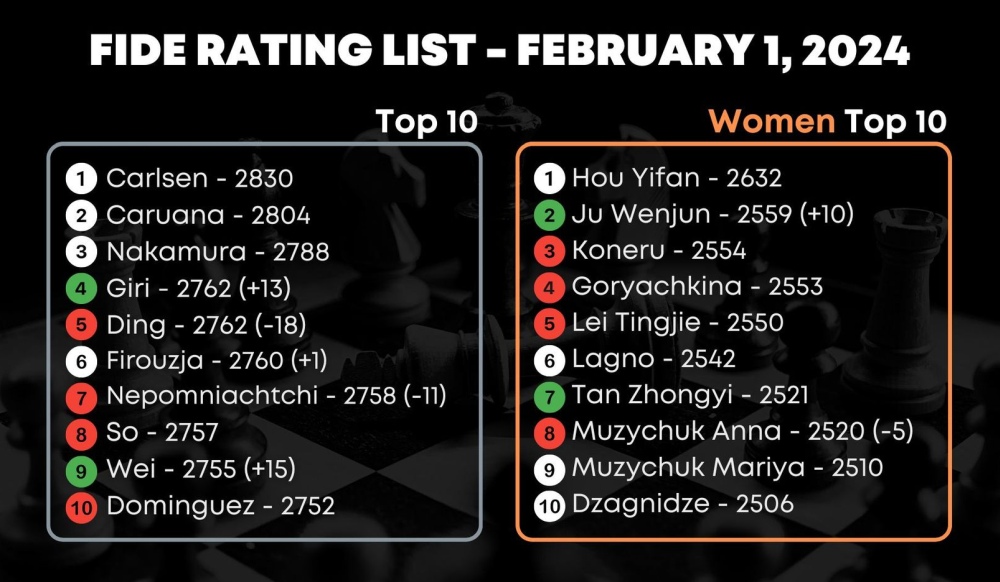
Traditionally, January is all about Tata Steel tournaments, and the first month of 2024 was no exception. The recently completed “Wimbledon of Chess” impacted the February 2024 rating list the most. Anish Giri picked 13 rating points and returned to the 4th position for the first time since November 2019. Photo: Lennart Ootes – Tata Steel Chess Tournament 2024 The event winner, Wei Yi, the youngest player ever to reach the 2700 mark at 15, made a breakthrough in January. The 24-year-old Chinese GM earned 15 rating points and is debuting in the top 10 Open. The Women’s World Champion Ju Wenjun scored just 4.5/13 in Tata Steel Masters but this result in such a strong field translated into 10 rating points and the return to the second position in the women’s rating list. Photo: Lennart Ootes – Tata Steel Chess Tournament 2024 Biggest gains in top 100 Open and Women: Gukesh D IND 2743 (+18) Abdusattorov, Nodirbek UZB 2744 (+17) Socko, Monika POL 2427 (+17) Wei, Yi CHN 2755 (+15) Efroimski, Marsel ISR 2449 (+15) Giri, Anish NED 2762 (+13) Amin, Bassem EGY 2671 (+10) Shevchenko, Kirill ROU 2661 (+10) Ju, Wenjun CHN 2559 (+10) Gukesh D became the player to make the greatest progress (in the top 100 Open and Women) thanks to his excellent performance at the Tata Steel Masters. The young Indian edged out Nodirbek Abdusattorov (+17) with whom he tied for first place, and Monika Socko, who earned 17 points in the Rilton Cup and Fraubundesliga. Photo: Jurriaan Hoefsmit – Tata Steel Chess Tournament 2024 Marsel Efroimski collected 15 rating points in the Israel National League and Israel Open Championship, while Kirill Shevchenko (+10) and Bassem Amin (+10) did a great job in the Bundesliga. Tata Steel 2024 brought about many changes in the junior list, as many high-ranked youngsters participated in both Masters and Challengers. Praggnanandhaa, Abdusattorov and Gukesh D top the February 2024 junior list following their strong showing in the Masters, while the winner of the Challengers Leon Luke Mendonca, Marc’Andria Maurizzi and Daniel Dharda, who shared second place in this competition reached their career high. When it comes to absolute numbers of rating gains, junior players are unchallenged. Kudos to Rose Awell (+239), who skyrocketed from 91st to 14th position in the girls’ junior list, Miaoyi Lu (+117), and Iris Mou (+131).