

WR Chess Masters R4: Burned bridges and kicked down doors
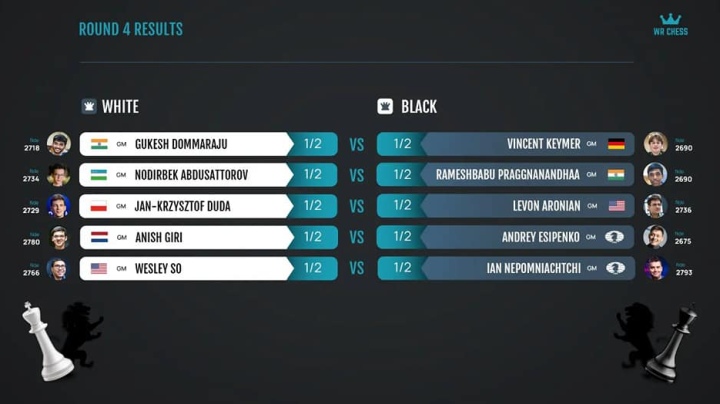
It smelled like a draw shortly after move 30, when a symmetrical rook ending had developed between Nodirbek Abdusattorov and Praggnanandhaa. More in jest, almost giggling, Yasser Seirawan and Anastasia Karlovych listed the academic advantages of the white position on the livestream: a little more space, a slightly more active king, a slightly more active rook. They didn’t say it, but let it slip that they expected a peace deal at any moment now. In the livestream, Anish Giri lectures on the difference between human and machine advantage. One grandmaster on the sofa, Giri second Jan Gustafsson, is listening attentively. The other, tournament director Sebastian Siebrecht, is already busy planning for the Carnival Monday. | Photo: Lennart Ootes The two experts were wrong. Until move 58, Abdusattorov tried to turn his mini-advantage into something tangible. Only when each of them was left with a single rook did the Uzbek and the Indian make peace. Their flawless game may serve as proof that it’s not for lack of fighting spirit that draws are recorded after the dust has cleared. Five such draws were recorded in the fourth round. When observers had long since put the game to bed, Praggnanandhaa had to fend off continued attempts by Nodirbek Abdusattorov. | Photo: Lennart Ootes Jan-Krzysztof Duda and Levon Aronian had such a game on the board, not as long, but with more dust. Just how much they both wanted it was soon evident from the fact that they both ignored the safety of their king. Instead of keeping their own lines closed, they blithely charged the lines opposite of them, a game along the motto of “burn bridges behind me, kick down doors in front of me”. However, in chess, this kind of action can lead to forced sequences. The foreseeable wild skirmish only rudimentarily took place. Then Duda spotted such a forced move sequence, one that secured him a perpetual check and half a point. And, more importantly, no alternative presented itself. Since anything else would have been punished by mate, Duda took the perpetual check and the half point. Anish Giri spared the audience chess tantrums like the one in the paragraph before this one when he dissected his game against Andrey Esipenko in the stream following the draw. Giri instead had insights to offer. In chess, he said, there are two kinds of advantage, the human-organic one and the one that comes from better knowledge of engine variations. The latter, Giri lectured, was much more difficult to convert. Indeed: If a man has gained an advantage on the basis of his plans and manoeuvres, then the basis for expanding this advantage is already given. If a man sits in front of a position in which he only knows that the engine evaluates it with “+0.5”, then his planning and manoeuvring start at zero. Giri, who may be the most knowledgeable player in the world in terms of chess theory, unfortunately, achieves engine advantages much more often than organic ones. And he fails to exploit them – as he did on Sunday against Andrey Esipenko. Vincent Keymer would be happy to find any advantage at all, regardless of its nature. With 0.5 points from 3 games, a target was looming on his back, and now he was facing his third black game, against Gukesh this time. Still, it was time for Keymer to strike, Seirawan felt – he might do a comeback as Praggnanadhaa had done the day before, securing a win after two losses. The local hero didn’t have a choice anyway. Gukesh, possibly assuming that he was facing a battered opponent, immediately instigated a brawl. Spread across the board, Keymer had to tame an intermediate move here, a mate there, a skewer here, and a running passed pawn there. The German number one had no choice but to let up his guard and parry what came. Keymer didn’t show any weakness but also didn’t find a gap through which to counter – draw. Most chess players are happy to have the bishop pair, and in the face of an extra pawn, not only the self-confessed “pawn-grabber” Yasser Seirawan clicks his tongue. Wesley So had both a bishop pair and an extra pawn against Ian Nepomniachtchi. Ian Nepomniachtchi conceded a pawn and the bishop pair to Wesley So. That had nothing to do with the joy of giving. | Photo: Lennart Ootes However, Nepomniachtchi had voluntarily given him both, first the pawn, and then the bishop. He was by no means motivated by the joy of giving but by the assessment that So would not be able to make anything out of the two advantages in the given constellation. The prospective world championship finalist was to be proved right. After the first time control, this game also ended in a draw. Interviews and game analysis in the feed Text: Official website Photo: Lennart Ootes Offical website: wr-chess.com/
Svetozar Gligoric Award for fair play
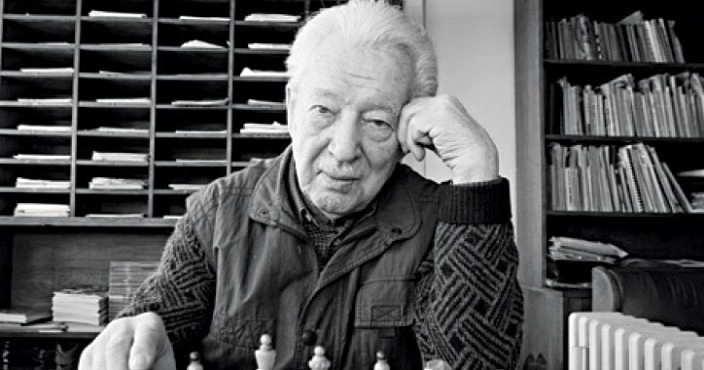
Last year, at the first quarter Presidential Board meeting, FIDE decided to establish a fair play award named after Svetozar Gligoric. In the 1950s and 1960s, Svetozar Gligoric was one of the top players in the world and one of the World’s most prominent, owing to his particularly engaging personality. At the chessboard, Gligoric was an uncompromising fighter and at the same time a symbol of gentlemanhood and correctness. His impeccable reputation has been a deserved result of his success in chess games and fair-play manners. Gligoric’s trademark was high respect to his chess opponents: his main principle was – It’s chess pieces, not a man I play against! It is no coincidence that the book of Gligoric’s selected games is called “I play against pieces!”. The spirit of the “Fair Play Svetozar Gligoric Trophy” is to give recognition to an individual who, during the previous year, had displayed exemplary behavior that promotes the spirit of fair play and sportsmanship in chess. We would like to stress that this is an award for the nominee’s accomplishments during the previous year, and NOT a recognition of a lifelong career. Unfortunately, most of the applications we have received didn’t meet this particular criterion. In view of this, the Commission in charge of this award, chaired by FIDE Vice-Presidential Mr. Mahir Mammedov (AZE), has decided to extend the deadline for submissions. The new deadline will be July 15, 2020. The applications must be in connection with accomplishments during the period January 1st, 2019, to July 15, 2020. The regulations can be found below. Along with Mr. Mahir Mammedov, the other two members of the Svetozar Gligoric Award Commission are the Grandmasters Mrs. Judit Polgar (FIDE Honorary Vice-President) and Mr. Eugenio Torre. REGULATIONS Svetozar Gligoric Award is a recognition of sportsmen who exercise the fundamental values of Fair Play both during and beyond the game. It’s a way of thinking rather than a mere behavior and includes the concept of: FairnessTo enjoy the victory is not enough. Triumph must include fairness and honestyRespect Written rules are mandatory. Unwritten rules of respect to all are obligatoryFriendshipRivalry in sport does not exclude friendshipTeam SpiritA genuine consideration for othersEqualityCompeting on equal terms is essentialToleranceThe ability or willingness to accept what you may not agree withCareTrue champions care about each other Nomination Criteria Along with the above, the winner of Svetozar Gligoric Trophy shall have demonstrated during the period January 1st, 2019, to July 15, 2020, the following accomplishments: – Outstanding gesture or action of sportsmanship during the sports event.– Outstanding contribution to the popularisation of the values and principles of Fair Play.– Outstanding support towards initiatives on enforcement of ethical values.– Promotion of integrity and high ethical standards. Nomination Procedure The winner of Gligoric Trophy is selected annually by the Award Commission chaired by Mr. Mahir Mammedov and its two members, the Grandmasters Mrs. Judit Polgar (FIDE Honorary Vice-President), and Mr. Eugenio Torre. Proposals for Nominations (Nomination Letter) shall be submitted by Continental Federations, National Federations, and FIDE Commissions, to the Gligoric Trophy Award Commission (gligorictrophy@fide.com) no later than July 15, 2020. Individual nominations, including self-nominations, are permitted, but they should be channeled through the Federation associated to the nominee. Please note, that Commission’s decision is final and not open to discussion, nor shall the members of the Commission be requested to give any justification beyond what they wish to, with their final announcement. The Award Ceremony will take place during the 44th FIDE Olympiad in Moscow, August 2020. Sincerely Yours,Fair Play Svetozar Gligoric Trophy Award Commission
WR Chess Masters, Round 3: Levon Aronian, the dragon slayer
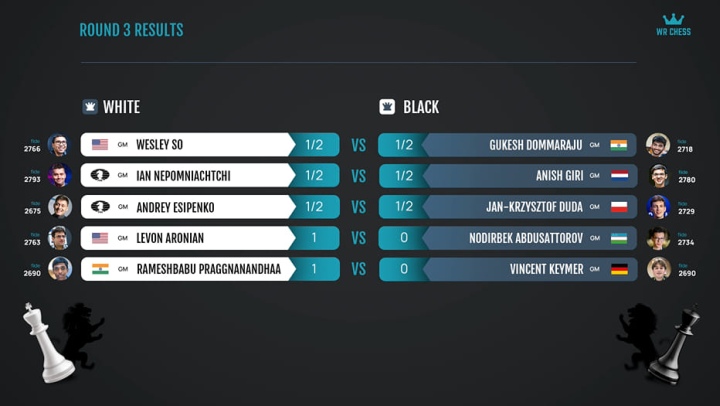
With a strategic masterpiece, Levon Aronian has taken the lead in the WR Chess Masters. Aronian gave Nodirbek Abdusattorov’s Sicilian Dragon no opportunity to breathe fire. Already at the end of the opening, the US-Armenian with the white pieces had transferred the game into an endgame without prospects for Black. With 2.5 /3, tournament senior Levon Aronian (40) tops the table. | Photo: Lennart Ootes In the live stream, Levon Aronian revealed the secret of his joy in playing: he is currently watching a “depressing” TV series from 1979, “Berlin Alexanderplatz”. The plot in 1920s Berlin is so sad, he said, “that it makes me happy as soon as I can sit at the board again. Everything is quite wonderful then.” And that obviously had an effect on his games, he said. A scandal and ahead of its time when it was released in 1980, Berlin Alexanderplatz by Rainer Werner Fassbinder, based on the novel of the same name by Alfred Döblin has since become a recognized masterpiece. With 2.5 points from 3 games, the US grandmaster is now alone in front. The other end of the standings is graced by the only player who was able to take half a point from Aronian so far. Vincent Keymer has only that half-point to his name after his third-round loss to Praggnanandhaa. “Pragg,” on the other hand, stopped the streak of two losses with a full point – and what a point it was. After Keymer missed a good opportunity to obtain counterplay with a central break and fully equalize the game after in the Ruy Lopez, he gradually got caught up in a king attack that soon became unstoppable. “To be on the scoreboard with a point is a good thing, of course,” the Indian rejoiced. What should I do: Vincent Keymer and Praggnanandhaa debriefing their game. | Photo: Lennart Ootes The other duel of players with 1.5 points from two games besides Aronian-Abdusattorov, Wesley So vs Gukesh, found no winner. Against Gukesh’s assumed Queen’s Gambit, the super-technician So seemed to get a position to his liking – a bit more space, a bit more activity – but it turned out that nothing tangible was up for grabs. After just 33 moves, a symmetrical endgame with 3 vs 3 pawns on the kingside was on the board, and the opponents agreed on a draw. So and Gukesh now share second place in the ranking with 2 points from 3 games each. Black is okay: Gukesh left nothing to chance against Wesley So. | Foto: Lennart Ootes The nominal tournament favourite, Ian Nepomniachtchi, doesn’t quite get going, at least in the first third of the tournament. In an English game against Wijk winner Anish Giri – number two against number five in the world – the upcoming World Championship finalist with the white pieces even had to be careful not to fall into a substantial disadvantage. Here, too, the matter was resolved around move 30 into a rook ending with nothing to gain for either side. Three games, three draws: Anish Giri, solid. | Photo: Lennart Ootes Jan-Krzysztof Duda was confronted with a Catalan opening for the second time in the tournament with Black against Andrey Esipenko. He avoided the mishap of the first round when he fell into a familiar trap against Wesley So. Nevertheless, things looked critical for a while. While Duda’s queen on the sidelines was doing no discernible work, a storm seemed to be brewing over his kingside. But all the worries of the Polish observers about their number one were unfounded. Esipenko managed no more than an endgame with a token advantage at best. After 44 moves, the opponents made peace. Interviews and analysis after round 3: Anish Giri – Interview after Round 3 of WR Chess Masters 2023 Wesley So – Interview after Round 3 of WR Chess Masters 2023 Levon Aronian analyses his game against Nodirbek Abdusattorov Rameshbabu Praggnanandhaa analyses his game vs Vincent Keymer Standings after Round 3: 1. Levon Aronian – 2½; 2-3. Wesley So and Gukesh D – 2; 4-7. Anish Giri, Ian Nepomniachtchi, Andrey Esipenko and Nodirbek Abdusattorov – 1½; 8-9. Jan-Krzysztof Duda and Rameshbabu Praggnanandhaa – 1; 10. Vincent Keymer – ½. Text: Official website Photo: Lennart Ootes Offical website: wr-chess.com/
The first Bahrain Chess Championship runs big
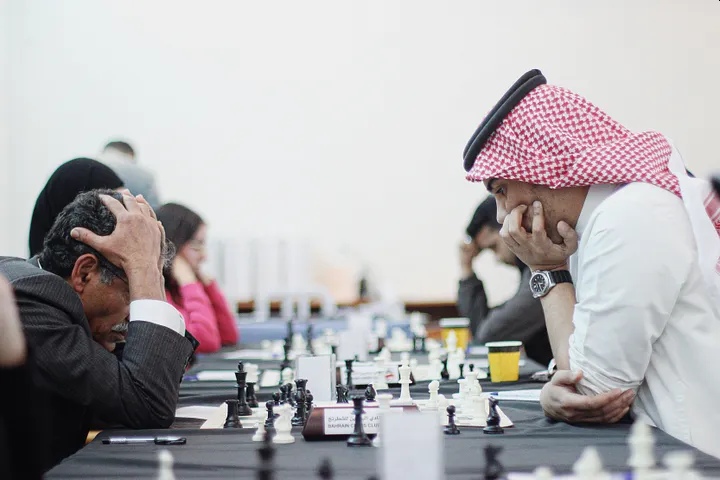
The first Bahrain Chess Championship took place in 2023 and was a great success. The event brought together Bahraini chess players from all over the country, and offered a great opportunity for the community to come together and enjoy the game. The future of the Bahrain Chess Championship looks bright, and the local chess community is looking forward to next year’s edition. With the support of HH Shaikh Khalid bin Hamad Al Khalifa, the Bahraini Chess Federation will continue to grow and bring out the best from Bahrain’s vast pool of talent. The team of organizers is committed to creating a vibrant and friendly atmosphere for all participants so that everyone can enjoy the game of chess. HH Shaikh Khalid bin Hamad Al Khalifa at Bahrain Chess School Tournament in 2022 The first Bahrain Chess Championship made a milestone in the history of chess in Bahrain. It has been made possible due to the edict issued in Jan 2023 by His Highness Shaikh Khalid bin Hamad Al Khalifa, which led to the formation of the Bahraini Chess Federation. The opening of the first Bahrain Chess Championship in 2023 was a remarkable celebration for the entire nation. Over 120 players from various governorates gathered to participate in this massive event that stretched over three weeks. The atmosphere of camaraderie permeated the whole tournament, and the enthusiasm for the game was clear to see as people eagerly discussed their moves and strategies. What began as just another regional event ended up becoming a high-energy gathering whose wholesome appeal quickly spread through word-of-mouth, drawing in more chess fans than initially believed possible. The national men’s team of Bahrain for the year 2023, which was formed after the tournament, consists of the champion Husein Ayyad (pictured below), Maher Ayad, Khalaf Boukhlef, Ibrahim Burshid and Ali Al-Ghasra. Bahrain Women’s Champion (2023) Hawra Sharaf Final standings: 1 FM Ayyad, Husain 2220 8½ 2 FM Ayyad, Maher 2090 8 3 Bukhalaf, Khalaf 1836 7 4 Al-Burshaid, Ebrahim 1704 7 5 CM Al-Ghasra, Ali 2048 7 6 Shaker, Musab 1709 7 7 Taqi, Mohamed 7 8 Monther, Alfardan 6½ 9 Sharaf, Hawra 1272 6½ 10 Obaid, Abdulrahman 1280 6½ You can find complete results here: https://chess-results.com/tnr721779.aspx?lan=1&art=4&turdet=YES&flag=30 The national women’s team of Bahrain for the year 2023 was also formed following the tournament and consists of Hawra Sharaf, Maram Al-Mousawi, Wafaa Ibrahim, Naglaa Ahmed and Sondos Obaid. Bahrain Women Champion (2023) Hawra Sharaf Based on the tournament results, various boys teams, Under 20, Under 18, Under 16, Under 14, Under 12 and Under 10 were formed. The top players in each category are Mohamed Taqi (Under 20), Abdul Rahman Obaid (Under 18), Ronen Abdullah (Under 16), Sayed Hashim Ali (Under 14), Mahmoud Al-Mousawi (Under 12) and Jad Tariq Jawad (Under 10). Similarly, for the girls, the players chosen for each category are Honorable Mention Hawara Sharaf (Under 20), Maram Al Mousawi (Under 18), Sondos Obaid (Under 16), Dania Obaid (Under 14), Reem Al Salman (Under 12) and Joud Al-Faraj (Under 10). All these players are highly talented and have the potential to bring glory to Bahrain in international tournaments. The event was officiated by a team of arbiters as follows: Chief ArbiterFA/FT/CM/SI Larbi Ben Yahya, Deputy Chief ArbiterNA Mohsin, Basim A. Arbiter : IM/FT/NA/ Mohamed Tissir| NA Mostafa Salah| NA Amal Jawad Alhashemi| NA Ahmed Ebrahim Hasan The event’s arbiters The first Bahrain Chess Championship was a resounding success, with many participants and spectators. This popularity is only set to increase in Bahrain and the broader region as chess continues to gain traction. With its rich history and strong foundations, Bahrain is poised to become a leading force in the world of chess. We hope to see you at the next edition of the Bahrain Chess Championship! Text: Ebrahim Al-Burshaid Photo: medium.com
WR Chess Masters: Gukesh and Abdusattorov join the leaders
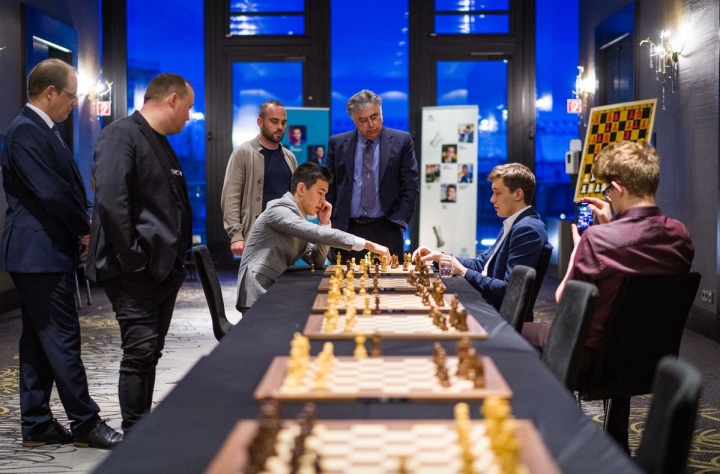
Gukesh and Nodirbek Abdusattorov have joined the leaders with wins in the second round of the WR Chess Masters. Together with Wesley So and Levon Aronian, the two youngsters make up the quartet at the top of the table with 1.5 points from 2 games. A “fantastic game”, according to Yasser Seirawan, who was happy to watch Nodirbek Abdusattorov and Andrey Esipenko analyze the complications afterwards. Gukesh fought a fierce, wide-open battle in the Indian duel against Praggnanandhaa, who made a mistake under time pressure. Gukesh conjured up a remarkable mating final, which his compatriot did not want to see until the end. Praggnanandhaa is now alone at the bottom of the table with 0/2 – a snapshot. A fierce, wide-open battle between the two Indians Gukesh and Praggnanandhaa. | Photo: Lennart Ootes Nodirbek Abdusattorov showed nothing less than “a fantastic game” (Yasser Seirawan) against Andrey Esipenko, who had had to struggle for more than seven hours for his full point against Vincent Keymer the day before. On Friday, he was caught after just over an hour by a double-piece sacrifice from Abdusattorov, who got an almost irresistible attack in return. Three games ended in draws, including the rather uneventful encounter between Anish Giri and Wesley So, who gave the Dutchman the bishop pair in an almost symmetrical endgame – and proved that it meant no added value in that constellation. Jan-Krzysztof Duda seemed to have carved out some initiative against Ian Nepomniachtchi’s Russian Defense, but Black found enough counterplay to let matters fall flat. It was a similar story between Vincent Keymer and Levon Aronian. What initially looked like a threatening king attack was not nearly enough to shake the black bastion. Nodirbek Abdusattorov – Andrey Esipenko 1:0 After the game, Nodirbek Abdusattorov solved a mystery of the previous day, interviewed by Elisabeth Pähtz: Hadn’t he been virtually at a loss in his Benko Gambit after seven moves against Ian Nepomniachtchi? “Yes, I was,” the Uzbek admitted. He had confused a move sequence from his preparation, which led to 7…Be7? That could have been a fatal mistake. Esipenko’s luck: “Ian trusted that I knew what I was doing.” Had Andrey Esipenko not played for more than seven hours the day before, perhaps he would have found time to exchange ideas with his opponent Vincent Keymer about the cutting-edge Nimzo-Indian Variation that was on the board between Abdusattorov and Esipenko on Friday. Keymer associates it with intense memories of his debut in the German national team in November 2021, when he peppered a knight into the castling position of his opponent Jonas Buhl Bjerre – only to find out that the Dane was prepared for it. It was precisely this sacrifice and some related subtleties that Abdusattorov showed in the live stream after the game, a visual example of what’s in store against the two under-defended black Achilles heels, f7 and h7. The impact 15.Bxh7! on one of these weak points, followed by the conquest of the second by means of 16. Qh5+ should be particularly favourable. 14…Nxd2 had been a mistake, Abdusattorov explained, but an understandable one: It was already difficult to find a good move, and the exact consequences of the double piece sacrifice (White doesn’t intend to capture the knight on d2) were hard to calculate. In the course of the skirmish, which was hard for mere mortals to follow, Esipenko was offered one chance to save himself: 21…Qe8 would have kept black’s chances of survival intact. Esipenko instead played the natural-looking 21…Qg5, which leads to a loss – if White sees how to continue. On Twitter, grandmaster, author and chess coach Jacob Aagaard demonstrated how difficult this is by giving two best moves and asking which is now the correct 24th move. Position after 23…cxd4. White moves and wins – how? What Aagaard demonstrated as the best sequence, the two highly talented players on the board calculated and played in exactly the demonstrated way. Now on move 24 the key is that it’s not the tempting 24.Rh3 clinches the game, but only 24.Qf7! Abdusattorov played that too, and Esipenko soon ran out of ideas about how he could still pose problems. With this win, Abdusattorov, who has only just broken into the world’s top 20, moves into the vicinity of the top 10. He is now ranked 14th in the live list. Vincent Keymer – Levon Aronian ½-½ The extent to which players from the 2700 class are prepared was hinted at by Vincent Keymer after his game against Levon Aronian. Already on move five he had left well-trodden paths with the quasi-novelty 5.Bxc6 followed by 6.f4. “You have to try something in every game, after all.” But Keymer noted, even in this new position, “Levon knew one of the equalizing paths.” Structurally it looked good for White in the course of the game, “potential was there,” but Keymer failed to turn that potential into something tangible against Aronian’s precise play. The 18-year-old is nevertheless flirting with scoring a full point as soon as possible after his loss in the opening game. However, that requires a balancing act with veritable opponents like those in Düsseldorf: challenging fate in an exaggerated manner could “very easily lead to further defeats”. Jan-Krzysztof Duda – Ian Nepomniachtchi ½-½ With six weeks to go, Ian Nepomniachtchi will play a world championship match. On Friday in Düsseldorf, memories of his World Championship match at the end of 2021 against Magnus Carlsen may have come back to him. For 13 moves, Duda and Nepo followed the 4th match game, and then the Pole deviated. Meanwhile, Yasser Seirawan celebrated in the live stream his explanation of what it’s all about for White: pressure against d5. That’s why White should eliminate the white-squared bishops (which Duda did immediately with 17.Rxe7 and 18.Ba3), in order to be able to plant a rook on e5 in the medium term. The Nh4, meanwhile, would have the task of jumping to e3 or f4 via g2 in order to target d5 from there. The
Ofer Comay wins 19th International Solving Contest
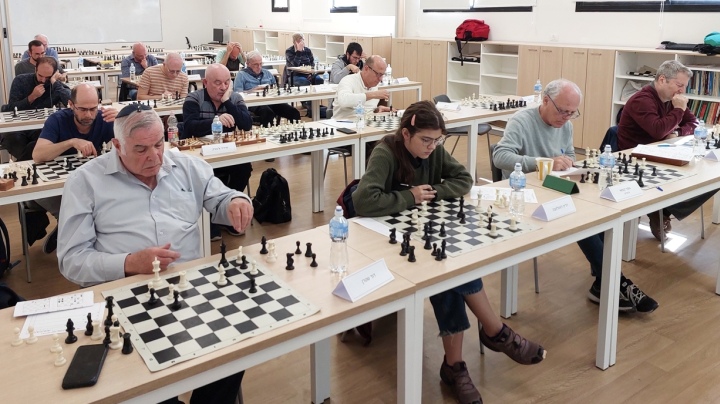
Photo above: Israel Chess Composition Society The International Solving Contest (ISC), traditionally held on the last Sunday of January, has marked the beginning of solving seasons for almost two decades. It’s a hybrid competition, with the same groups of chess problems and endgames distributed around the world to be solved at the same time. This year, it attracted 601 solvers from 28 countries in 38 different locations. Each location had a local controller responsible for the integrity of competition and communication with the Central controller Axel Steinbrink. Solvers in Chennai, Rio de Janeiro, Ulaanbaatar and Tokyo | Photo: Mount Chess Academy, Lucas Roland, Tongon Sumiya and Tadashi Wakashima The problems, adjusted to three different levels of skills, were carefully prepared by a group of most devoted FIDE Solving Judges: Axel Steinbrink (Germany), Ivan Denkovski (North Macedonia) and Luc Palmans (Belgium). Miodrag Mladenović (Serbia) helped to enter results in the Solving Tournament Manager program (STM), and Borislav Gadjanski (Serbia) took care of the daily live transmission of results on the Mat Plus website. Axel Steinbrink did the most delicate part of the work, checking over a thousand scanned solving sheets. He was on duty for the 14th time! FIDE Solving Judges Ivan Denkovski and Axel Steinbrink | Photo Fujairah Chess & Culture Club They were the real heroes of the ISC 2023, each of them volunteering for the solvers’ entertainment, the way most of the projects by the World Federation for Chess Composition (WFCC) are done. The ISC is a friendly and easy-to-join competition aimed at popularizing chess art in the first place. After the careful supervision of the solving sheets, the ISC 2023 Winners were announced. The 1st and the strongest Category had 12 problems split into two rounds of 120 minutes each. Together, there were two problems from each of the six different genres: mate in 2, mate in 3, mate in more moves, endgame, helpmate and selfmate. (This year, because of the sanctions, there were no competitions of the 1st and 2nd Categories in Russia and Belarus). In spite of the relatively long average time of 20 minutes per problem, it’s usually extremely difficult to get the perfect 60 points result (5 points per problem) in Category 1, and the 2023 edition was no exception. The main hitch was the following endgame: White to play and draw What looks like an elementary ending hides, in fact, a long sequence of the only moves on both sides before all resources get exhausted. The most successful solvers ended their search before the 9th move and got 3 points out of 5. There were five more moves to find, and only the Indian Grandmaster Karthikeyan Murali got 4 points. The ISC winner, Ofer Comay of Israel (second from the right on the first photo), also netted 3/5 in this endgame, but overall he scored 58 points and spent a shorter time (215 minutes) than Eddy van Beers from Belgium (2nd place) and Kacper Piorun of Poland (third place). The win of a senior solver (65+) may sound like a huge surprise, but the skills of the triple World champion in solving should never be underestimated. Ofer won WCSC in his first appearance back in 1980 and did it again in 1985 and 1996. Solvers in Lativa | Photo: Latvijas Problēmšaha Biedrība The best lady was Woman Grandmaster Laura Rogule (pictured above), 12 times chess champion of Latvia, and Ilija Serafimović (18) from Serbia was the most successful among the youngest participants (U23). The ISC Category 2 was for the participants with solvers rating up to 2000. It had the same format and genres as Category 1, but the problems were less difficult. The top result by the 15-year-old Daniel Dumitrescu and the 3rd place-finish by Radu-Cristian Fluerariu (20) confirmed the rise of the Romanian solvers, while the 2nd place was another success of the Latvian talent Emils Tabors (16). Among the obstacles to overcome, the next mate-in-five raises a tricky question: how to activate Rook and King – to the left or to the right side? The answer turned out to be – to both sides. White to play and mate in five moves The ISC Category 3 was a youth U13 competition (for those born in 2010 and later). It lasted 120 minutes and included 6 problems: 4 of them in 2 moves, 1 in 3 moves, and 1 endgame. This time youngsters had no trouble reaching the maximum of 30 points. No less than six of them did it, and the three winners were extremely fast. Grigory Filin spent only 22 minutes, Taras Rudenko – 26, and Viktoriya Merkulova – 28 minutes! To get the feeling of the traps the kids had to avoid, you may try to crack the following three-mover. Out of several seemingly equal choices, only one leads to the goal! White to play and mate in three moves The season of international solving competitions continues with the open championships of Finland (February 18), the Netherlands (March 4), and Poland (March 4-5). All of them are legs of the World Solving Cup, organized by the World Federation for Chess Composition. The solutions to the problems from ISC 2023 (with points in brackets) 1. (Martin Minski, Original for Seven Chess Notes 2023) 1. f4! Kxf4 2.Nf2 [1] 2. … K 3 3.Ng4+ Ke2 4.Ne5 [1] 4. … Bd7+! 5.Kc7! Bg4! 6.Bf1+! [1] 6. … Kf2! 7.Nd3+! Ke3! 8.Nb2 Kd4 9.Bb5! [1] 9. … Kc3 10.Bd7 Be2 11.Na4+ Kb4 12.Nb2 Kb3 13.Nd3! [1] (13. … d1Q 14.Ba4+! Kxa4 15.Nb2+) 2. (Isai Hillel Rozenfels, Shakhmaty v SSSR 1954) 1.a4! b5 2.Kg1 bxa4 3.Rf1 a3 4.Be1 & 5.Bc3# [2.5] 1…b6 2.Rd1 b5 3.Ke1 bxa4 4.Kd2 a3 5.Bc3# [2.5] 3. (Vladimir Bron, 1. Pr. Ukraine T. 1952) 1.Rd7! e5 2.Qa2+ & 3.Qa8# 1…Kf8 2.Qc5+ & 3.Qc8# 1…e3 2.Qxf3 & 3.Qa8# 1…Kh8 2.Qh4+ Kg8 3.Qd8# Text: Marjan Kovačević, WFCC President Official website: https://www.wfcc.ch/
Alexandr Fier wins VI Montevideo Open “Marcel Duchamp Cup 2023”
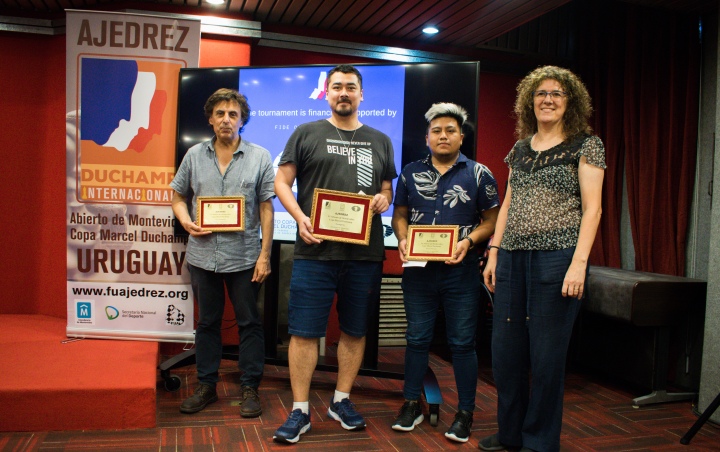
By Julieta Lopez At the beginning of February, the capital of Uruguay hosted the VI Montevideo Open “Copa Marcel Duchamp 2023”. The event with a total prize fund of $6,000, brought together 134 players from 12 countries. The event, organized by the IM-IO Bernardo Roselli Mailhe and IA Sabrina de San Vicente as a Chief Arbiter, who was also in charge of the first 32 electronic boards broadcast, would not have been possible without the great contribution of the Argentines Tomas Darcyl and Ricardo Costianovsky who sponsored it, as well as the support of FIDE through its FIDE Open Aid Project program. Red Room of “Intendencia de Montevideo” The magnificent Red and Gold rooms of the “Intendencia de Montevideo” (Montevideo’s Municipality) saw many great players such as GMs Alexandr Fier and Everaldo Matsuura from Brazil, Neuris Delgado from Paraguay, Carlos Garcia Palermo from Italy, Aleksa Strikovic from Serbia and the local Alejandro Hoffman battle it out. Other prominent chess players such as IM Pablo Ismael Acosta, winner of the tournament’s fourth edition, and WGM Claudia Amura (pictured below), a legendary figure in Argentine chess who returned to the competition on this occasion, added to that list. A total of 33 titled players took part in the event. GM Carlos Garcia Palermo came to the final 9th round as the only leader with 7/8 and faced IM Pablo Acosta (6/8) with the black pieces on the first board. Meanwhile, on board 2, GM Alexandr Fier (pictured below), who trailed the leader by a half-point, took on Aleksa Strikovic. The fate of the title was decided on these two boards. After White triumphed in both encounters, the current Brazilian champion, Alexandr Fier, came out on top and finished the event undefeated on 7.5/9. As many as four players tied for second place on 7/9, with Carlos Garcia Palermo taking second prize thanks to superior Buchholz; Pablo Ismael Acosta came third, followed by two local players, FM Manuel Larrea and IM Claudio Coppola, who managed to win in the last round. There were no major surprises in the Women’s category since the favourites WFM Candela Francisco (pictured below)and WGM Claudia Amura finished first and second, respectively, both with 6/9. Young Uruguayan player Nahiara Fabra and a multiple times Olympic representative from Uruguay, WCM Natalia Silva Rosa, took third and fourth places, both scoring 4.5/9. IM Leon Piasetski from Canada (pictured below) won the Senior Category (+65), netting 6 points. Norbert Krueger of Germany finished second, a half-point behind the winner. A local representative, Jaime Escofet, came in third with 5 points. Alongside the tournament between Monday the 6th and Friday the 10th, several exciting events open for all were held: on Monday the 6th, Master Class with GM Carlos Garcia Palermo; on Tuesday the 7th, a talk on Psychological Training at Chess by FM Psych Mateo Arcos Facio, Wednesday 8th Workshop of Arbiters by IA Sabrina de San Vicente, on Thursday 9th GM Aleksa Strikovic gave a presentation on Chess and Mathematics Problems, and on Friday 10th WGM Claudia Amura and IM Bernardo Roselli taught about women’s chess, youth chess and motivation. All of them were a great success. You can see all the photos of the event here: https://cutt.ly/S3O9VbA All details and games can be found at chess results: http://chess-results.com/tnr710523.aspx?lan=2&art=1&rd=9&flag=30
WR Chess Masters: Fighting Round 1, three joint leaders
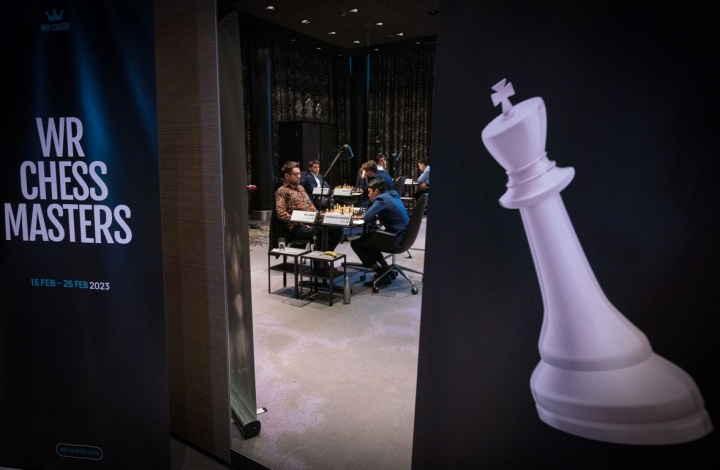
The first of nine rounds of the WR Chess Masters started on Thursday, February 16, at 2 p.m. German time and brought three wins and two draws, one of them fought out over seven hours. Ian Nepomniachtchi – Nodirbek Abdusattorov ½-½ The game that started in the most combative way ended first. After 1.d4 Nf6 2.c4, the 18-year-old Uzbek’s double-edged 2…c5 was already a fighting proposition, and 3…b5 even more so. Benko Gambit! This is rarely seen at this level. Fruit of targeted opening preparation, Abdusattorov’s exotic opening choice was not, instead, an intuition. “I hadn’t expected 1.d4,” he explained in the interview after the game. Recently he had looked at the Volga Gambit, “so I played it.” Perhaps he’d been watching the old main variations that Yasser Seirawan and Elisabeth Pähtz were discussing in the live stream: take the gambit pawn with 5.bxa6 or reject the gambit with 5.b6? Meanwhile, if you let your Stockfish calculate 50 or 60 half-moves deep on the fifth white move, you get shown that the machine likes 5.e3 best. And that was what Nepomniachtchi played. Abdusattorov explained that after Nepo’s 9.b3, he was out of the book, a mysterious explanation because, according to the engine’s evaluation he had been almost lost two moves earlier: 8.Nxf6 Bxf6 9. Qd5 followed by Qxc5, and black compensation for the two minus pawns is hardly visible. Nepomniachtchi played 8.Nf3 instead. At first glance, it looked as if the world number two, with two bishops shining magnificently on the black king, was building advantageous prospects despite this missed opportunity. Abdusattorov engaged in loosening his kingside – rightly so, as it turned out. What looked dangerous was not in practice, and on move 15, Nepomniachtchi had to make a fundamental decision: submit to a repetition of the move or play on without a tangible advantage? 15.Qxe7 after which Black forces a draw by Rf7-f8-f7 or 15.Qg3? Confronted with these choices, Ian Nepomniachtchi took almost fifteen minutes to convince himself that he’d rather take the half-point here than tempt fate after 15.Qg3. Levon Aronian – Praggnanandhaa 1:0 Most VIPs who make the ceremonial opening move have to watch afterwards that the player takes it back and starts again. Vadim Rosenstein was spared this fate. The tournament organizer and name giver had agreed on 1.c4 with Levon Aronian. Aronian left the neatly placed pawn in the center of the square without any j’adoubing – expecting a symmetrical English, as he and Praggnanandhaa had on the board before. Instead, a very unorthodox English soon developed. What Aronian called a “cheap trick” after the game represents the reason why he is one of the most exciting chess players, even at an advanced age (by professional chess standards): his creativity. 11.g4!? Who would have come up with that? The idea behind it did not appear on the board. If Black is tempted to play 11…Ne5, 12.g5 Nf3+ 13.Qxf3! follows, and White enjoys splendid compensation for the sacrificed queen. Praggnanandhaa played 11…h6 instead. “Unfortunately, nobody falls for my cheap tricks,” Aronian grinned afterwards. The Indian was on the losing track only five moves later. Where to put the king? In fact, short castling is not recommended in view of the lever g4-g5 and the Bc3 radiating to g7. The problem: long castling is not recommended either because then f7 hangs. The solution to the problem: stay cool. 15…Rc8 or 15…Rd8 is considered playable and roughly equal according to chess engines. Aronian agrees: “Not so bad for Black, no need to worry.” Praggnanandhaa castled long, forfeited the f7 pawn, and quite soon ended up in a desolate and prospectless rook ending that White gradually played out to the full point. Andrey Esipenko – Vincent Keymer 1:0 Already in January at Tata Steel Chess, Vincent Keymer had earned the nickname “Marathon Man”. He was usually the last to sit at the board, often defending a critical endgame. At the opener in Düsseldorf, this scene was repeated. The others had finished, but Keymer was still sitting and defending this endgame: Theoretically, the position is unwinnable for White. But in practice, after six tough hours of chess, things look different. The black task is more than thankless. Yasser Seirawan summed it up in the stream, “Vincent must be suffering.” Naturally, Esipenko kept the thumbscrews on – and was rewarded with the full point after 101 moves. That it could come to this endgame was the result of a lapse by Keymer in the opening. His move 14…Nd5 looks quite natural, but it has a concrete hook, which Andrey Esipenko threw out on move 16: 16.Nec4! This not-so-obvious piece sacrifice almost leads to Black’s lost position. Black has nothing better than to capture the knight. But after that, the g7-pawn will fall on the black side, h7 too, and Black will find neither coordination nor development. Wesley So – Jan-Krzysztof Duda 1:0 Jan-Krzysztof Duda has to reproach himself for falling into a well-known Catalan opening trap. On the other hand, he is in good company. For example, the former world-class player Ljubomir Ljubojevic or the Dutch top grandmaster Loek van Wely have already seen this position from Black’s perspective after 15.Bh6! Black has nothing better than the sad retreat 15…Bf8, after which he remains underdeveloped and with his king in the centre – lost in a higher sense. 15…0-0 would be even worse as 16.Bxg7! wins on the spot. The same applies to 15…Bxf2+ 16.Kg2 0-0 17.Bxg7! +-. To see what Black should have done, we have to rewind two moves: Not the tempting 13…Qb6, but only 13…Qa5! which is not particularly logical at first sight, gives Black good play. The idea is that white ideas with Bh6 0-0 Bxg7 (as in the game) now don’t work well. Black counters with …Bxf2+, then plays …Kxg7, and White has no check on g5 because of the black queen on a5. Anish Giri – Gukesh ½-½ White is playing for two results, Elisabeth Pähtz noted in the live stream. Yasser Seirawan explained it more like
Bela Khotenashvili wins 80th Georgian Women’s Championship
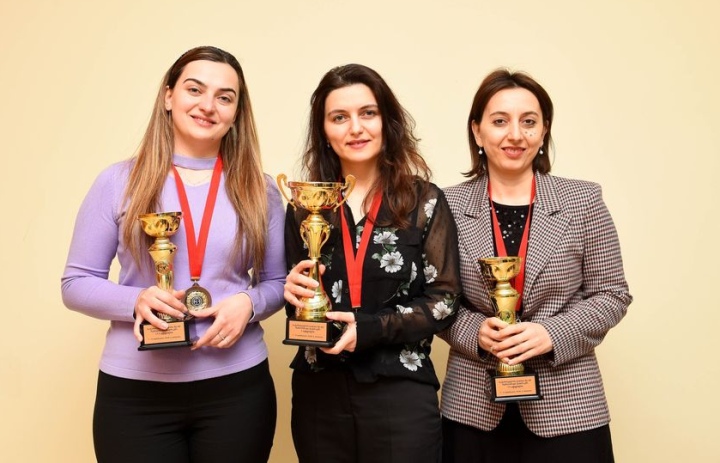
GM Bela Khotenashvili is the new women’s chess champion of Georgia. The native of Telavi turned in a commanding performance in the 80th Georgian Women’s championship and clinched her fourth national title. She previously won this event in 2012, 2017 and 2021. The 80th Georgian Women’s Chess Championship was a 10-player round-robin with classical time control, held in Tbilisi from February 06-15. Bela Khotenashvili (pictured above) scored an impressive 8/9, conceding her opponents just two draws, but still, it was a very close affair as IM Lela Javakhishvili was hard on the leader’s heels most of the way. Coming into the final round a half-point ahead of her main rival, Khotenashvili sealed the deal by defeating Tamari Esadze with the black pieces. Javakhishvili, meanwhile, drew with WFM Anastasia Kirtadze and allowed IM Meri Arabidze, who pulled off four straight victories at the finish, to catch up with her. Still, the silver medal goes to Lela Javakhishvili (pictured below), thanks to superior Sonneborn-Berger. Both the champion and the runner-up completed the event undefeated. Final standings: 1 GM Khotenashvili, Bela 2485 8 2 IM Javakhishvili, Lela 2440 7 3 IM Arabidze, Meri 2427 7 4 GM Batsiashvili, Nino 2493 6½ 5 WFM Tsotsonava, Elene 1955 5 6 Donghvani, Nia 2030 3½ 7 WFM Kirtadze, Anastasia 2002 2½ 8 Esadze, Tamari 1981 2½ 9 Diasamidze, Lulu 1541 1½ 10 Tsetskhladze, Mariam 1747 1½ Photo: Georgian Chess Federation Facebook
Singapore Champioship: Kevin Goh and Gong Qianyun clinch titles
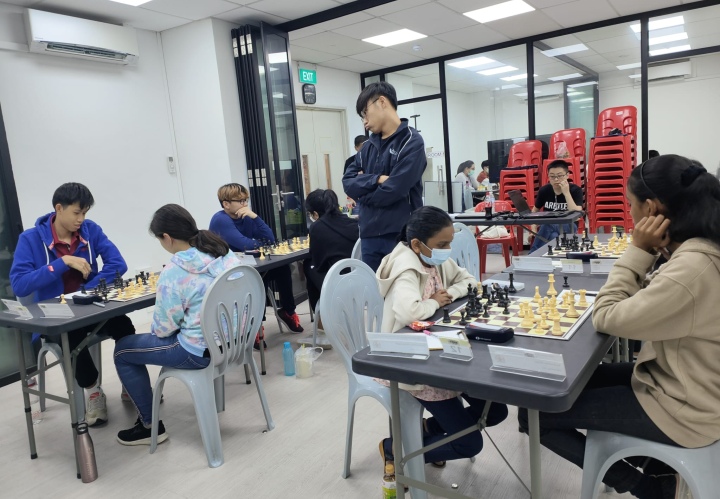
The finals of the 74th Singapore National Chess Championships concluded on 12 February 2023. This tournament, with a total prize fund of S$15,000, spanned over three long weekends, with one round held each day. The National Championships has a rich history dating back to 1949 when it was first won by the founder of the Singapore Chess Federation, Professor Lim Kok Ann. Over time, the Championships have created many legends, most notably Mr Tan Lian Ann, who has won this tournament a record-breaking ten times in his career. This year’s edition was arguably the strongest in history, with GM Tin Jingyao (pictured below) as its top seed. Tin Jingyao, a 5-time national champion, has made waves on the local and international chess circuit of late and was the pre-tournament favourite, but Grandmaster Kevin Goh Wei Ming, the defending champion Andrean Susilodinata and Singapore’s top female player Gong Qianyun were also gunning for the title. Singapore’s first Grandmaster and a 4-time Champion, Wong Meng Kong, also made a surprise return from retirement, making this the first tournament in Singapore history to feature all 3 Singaporean homegrown Grandmasters. The tournament also allowed young players to participate through a series of qualifiers. The youngest candidate to qualify was 7-year-old Ashwath Kaushik (pictured above), well-known on the local scene for giving players older than him a difficult time over the board. Ashwath is more than half the size of his fellow competitors; he brings around a booster cushion to be placed on his seat so that he can see the board and move the chess pieces. This year’s Championships also saw the Women’s Category merging with the Open in a combined event for the first time in 13 years. Woman Grandmaster Gong Qianyun (pictured above), who recently emerged 13th in the World Rapid Chess Championships, quipped, “I like to challenge myself and enjoy playing against male GMs and IMs – for me, it is less stressful compared to playing with ladies.” She also has the following advice for female players playing in a field dominated by men: “Just focus on the game itself – do not get distracted by other things, and you will not be intimidated by your opponents.” At the end of a long and grueling tournament, it was GM Kevin Goh (pictured above) who emerged as the champion, winning his 8th National Championship title. Gong Qianyun also became a 9-time National Woman’s Champion by finishing as the highest finisher among female players. However, she admitted that the path was far from easy. Qianyun said, “It was a difficult tournament competing with many young and promising players, and fortunately for me, I managed to pull through with a narrow margin over my competitors.” “I believe many of these young players will continue to improve, and next year’s tournament will be even stronger.” By winning this title, Qianyun also gains custody of the Chan Lai Fung challenge trophy for one year, named after WIM Chan Lai Fung for her accomplishments in Singapore chess and her generous contribution to Singapore Chess in many ways. Final standings Open: 1st – GM Kevin Goh Wei Ming2nd – IM Enrique Paciencia3rd – GM Tin Jingyao Women: 1st – WGM Gong Qianyun2nd – Saravanan Durga3rd – Lauren Rice You can find complete tournament results here: https://chess-results.com/tnr719719.aspx?lan=1&art=1&rd=9&fed=SGP Text: Kevin Goh CEO, Singapore Chess Federation Photos: Singapore Chess Federation Facebook Page